Nguyen Anna F, Kuo Nai-Wei, Showalter Laura J, Ramos Ricardo, Dupureur Cynthia M, Colvin Michael E, LiWang Patricia J
Departments of Molecular Cell Biology and Chemistry and Chemical Biology, and the Health Sciences Research Institute, University of California Merced 5200 North Lake Rd, Merced, CA 953402, USA.
Department of Chemistry & Biochemistry, University of Missouri-St. Louis, St. Louis, MO 63121, USA.
Int J Mol Sci. 2017 Aug 16;18(8):1778. doi: 10.3390/ijms18081778.
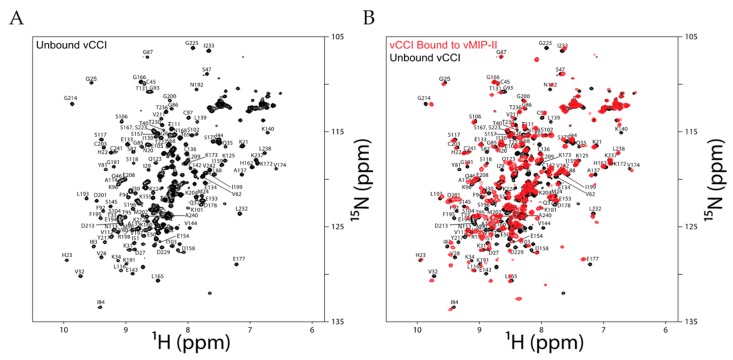
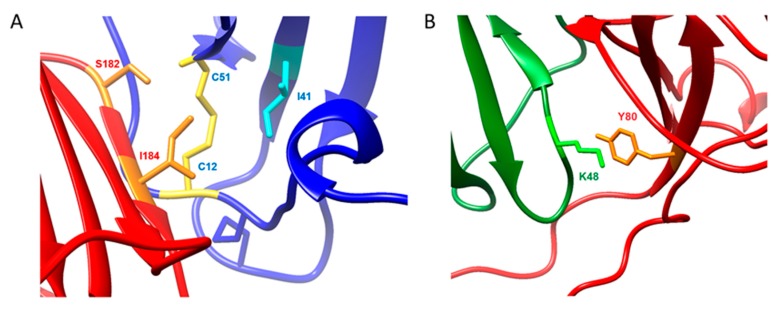
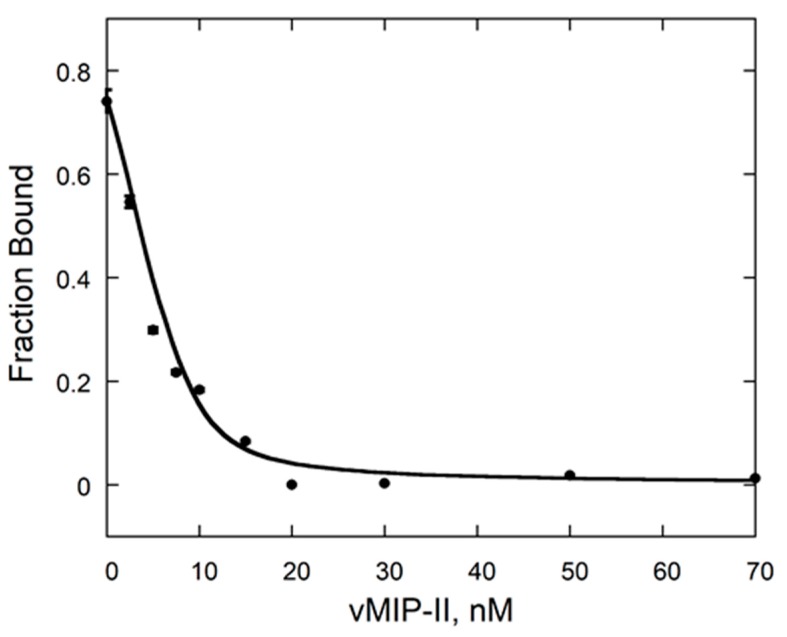
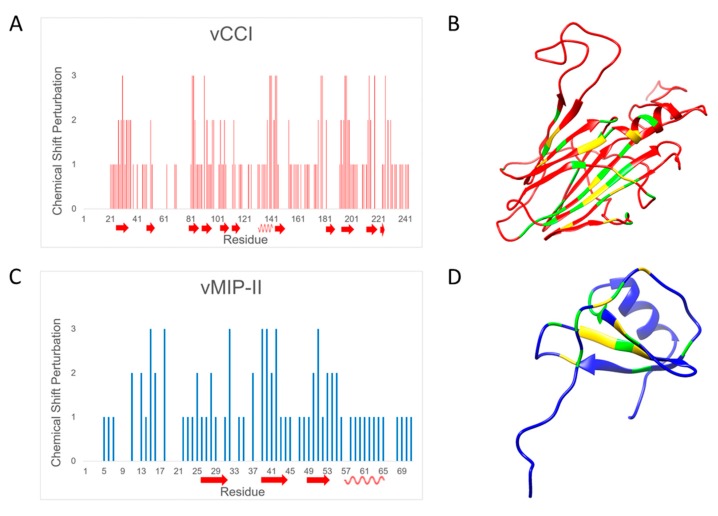
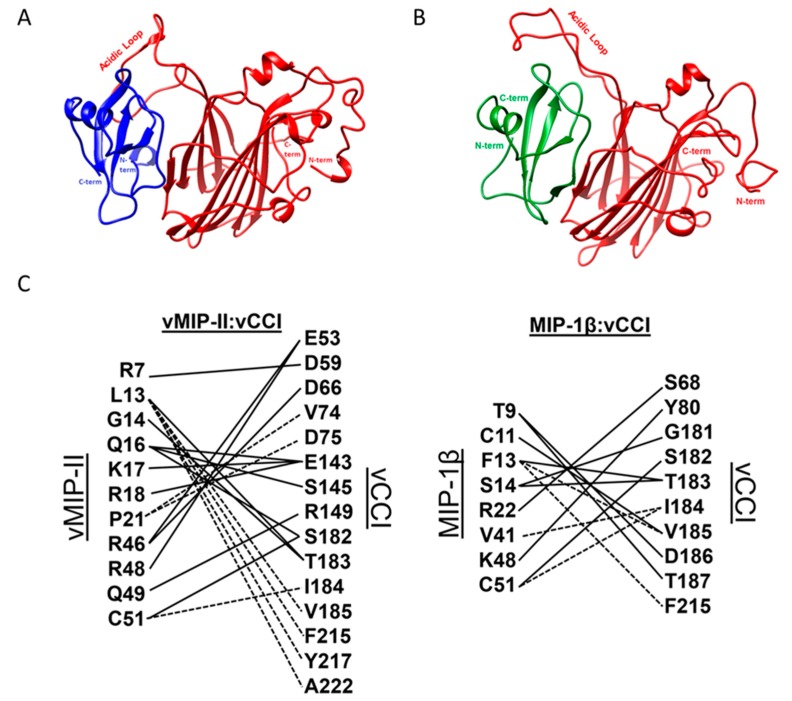
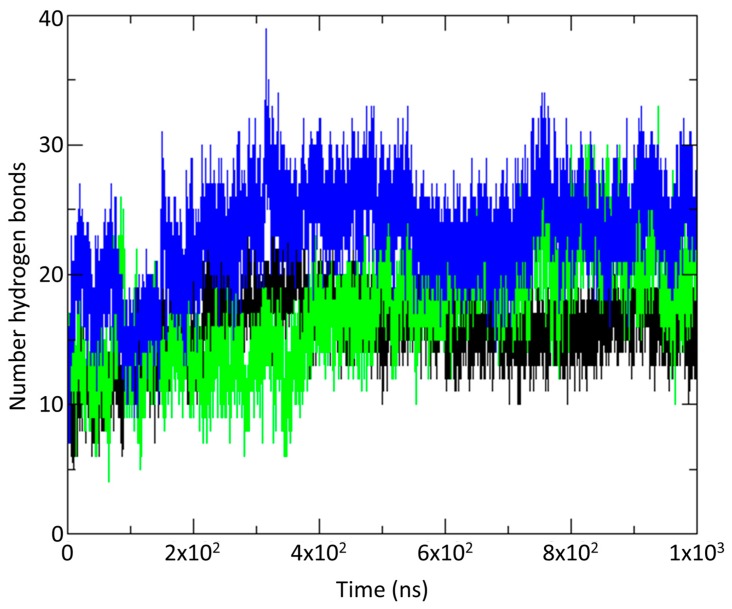
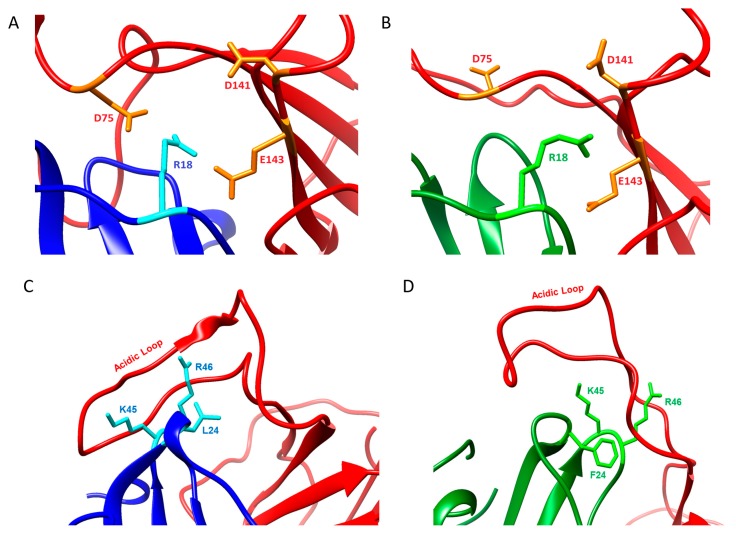
Certain viruses have the ability to subvert the mammalian immune response, including interference in the chemokine system. Poxviruses produce the chemokine binding protein vCCI (viral CC chemokine inhibitor; also called 35K), which tightly binds to CC chemokines. To facilitate the study of vCCI, we first provide a protocol to produce folded vCCI from (.) It is shown here that vCCI binds with unusually high affinity to viral Macrophage Inflammatory Protein-II (vMIP-II), a chemokine analog produced by the virus, human herpesvirus 8 (HHV-8). Fluorescence anisotropy was used to investigate the vCCI:vMIP-II complex and shows that vCCI binds to vMIP-II with a higher affinity than most other chemokines, having a of 0.06 ± 0.006 nM. Nuclear magnetic resonance (NMR) chemical shift perturbation experiments indicate that key amino acids used for binding in the complex are similar to those found in previous work. Molecular dynamics were then used to compare the vCCI:vMIP-II complex with the known vCCI:Macrophage Inflammatory Protein-1β/CC-Chemokine Ligand 4 (MIP-1β/CCL4) complex. The simulations show key interactions, such as those between E143 and D75 in vCCI/35K and R18 in vMIP-II. Further, in a comparison of 1 μs molecular dynamics (MD) trajectories, vMIP-II shows more overall surface binding to vCCI than does the chemokine MIP-1β. vMIP-II maintains unique contacts at its N-terminus to vCCI that are not made by MIP-1β, and vMIP-II also makes more contacts with the vCCI flexible acidic loop (located between the second and third beta strands) than does MIP-1β. These studies provide evidence for the basis of the tight vCCI:vMIP-II interaction while elucidating the vCCI:MIP-1β interaction, and allow insight into the structure of proteins that are capable of broadly subverting the mammalian immune system.
某些病毒有能力破坏哺乳动物的免疫反应,包括干扰趋化因子系统。痘病毒产生趋化因子结合蛋白vCCI(病毒CC趋化因子抑制剂;也称为35K),它能紧密结合CC趋化因子。为便于对vCCI进行研究,我们首先提供了一种从(.)产生折叠态vCCI的方案。本文表明,vCCI与病毒巨噬细胞炎性蛋白-II(vMIP-II)以异常高的亲和力结合,vMIP-II是由人类疱疹病毒8型(HHV-8)产生的一种趋化因子类似物。利用荧光各向异性研究vCCI:vMIP-II复合物,结果表明vCCI与vMIP-II结合的亲和力高于大多数其他趋化因子,解离常数为0.06±0.006 nM。核磁共振(NMR)化学位移扰动实验表明,复合物中用于结合的关键氨基酸与先前研究中发现的相似。然后利用分子动力学将vCCI:vMIP-II复合物与已知的vCCI:巨噬细胞炎性蛋白-1β/CC趋化因子配体4(MIP-1β/CCL4)复合物进行比较。模拟结果显示了关键的相互作用,如vCCI/35K中的E143与D75以及vMIP-II中的R18之间的相互作用。此外,在对1微秒分子动力学(MD)轨迹的比较中,vMIP-II与vCCI的整体表面结合比趋化因子MIP-1β更多。vMIP-II在其N端与vCCI保持着MIP-1β所没有的独特接触,并且vMIP-II与vCCI柔性酸性环(位于第二条和第三条β链之间)的接触也比MIP-1β更多。这些研究为vCCI:vMIP-II紧密相互作用的基础提供了证据,同时阐明了vCCI:MIP-1β相互作用,并有助于深入了解能够广泛破坏哺乳动物免疫系统的蛋白质结构。