Peng Kuo-Ti, Hsieh Ching-Chuan, Huang Tsung-Yu, Chen Pei-Chun, Shih Hsin-Nung, Lee Mel S, Chang Pey-Jium
Department of Orthopedic Surgery, Chang Gung Memorial Hospital, Chiayi, Taiwan.
Department of Surgery, Chang Gung Memorial Hospital, Chiayi, Taiwan.
PLoS One. 2017 Aug 16;12(8):e0183271. doi: 10.1371/journal.pone.0183271. eCollection 2017.
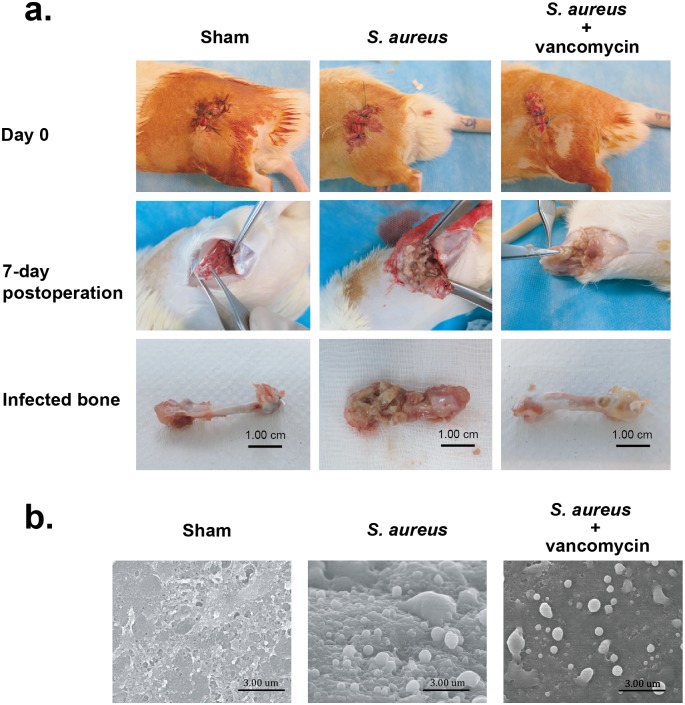
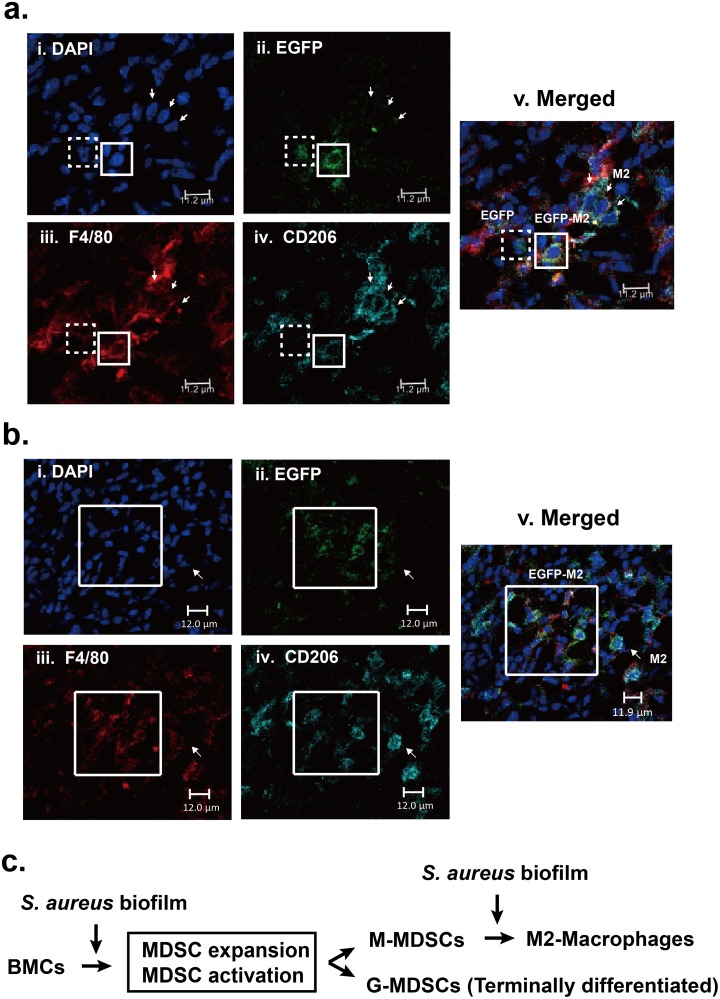
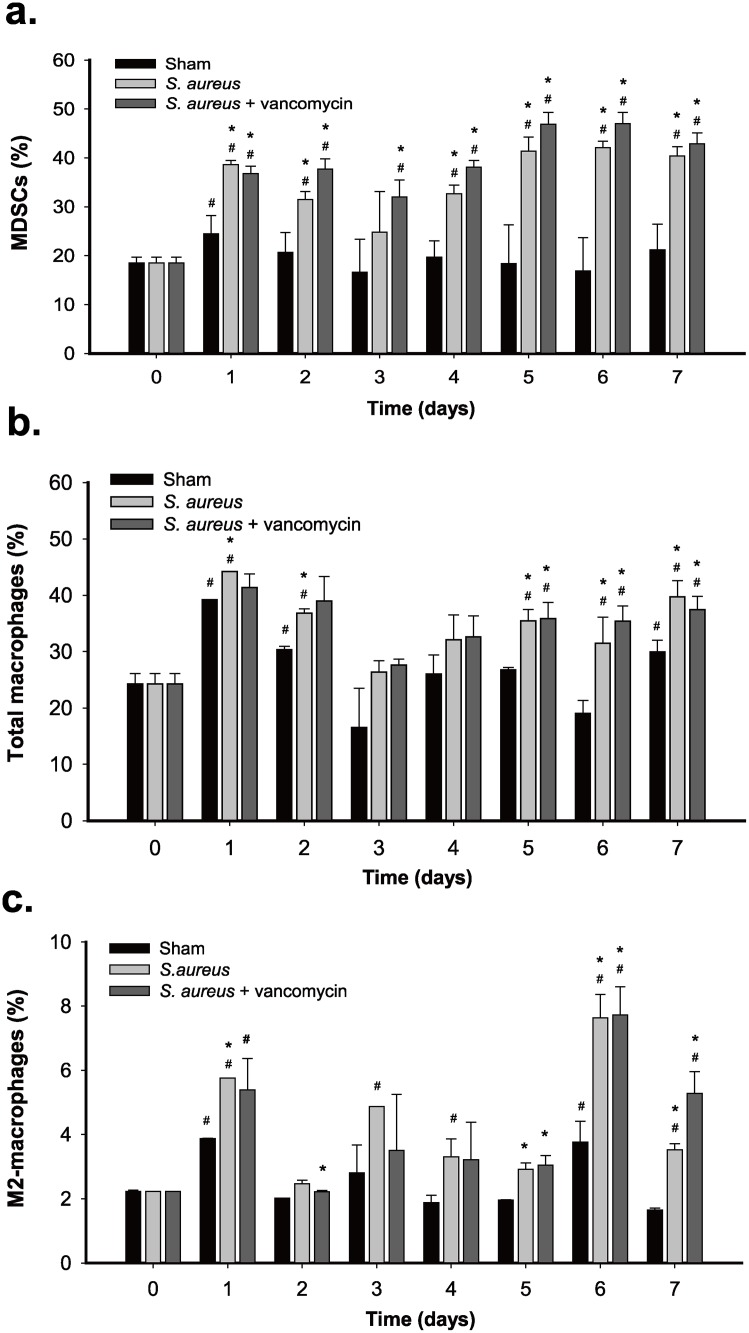
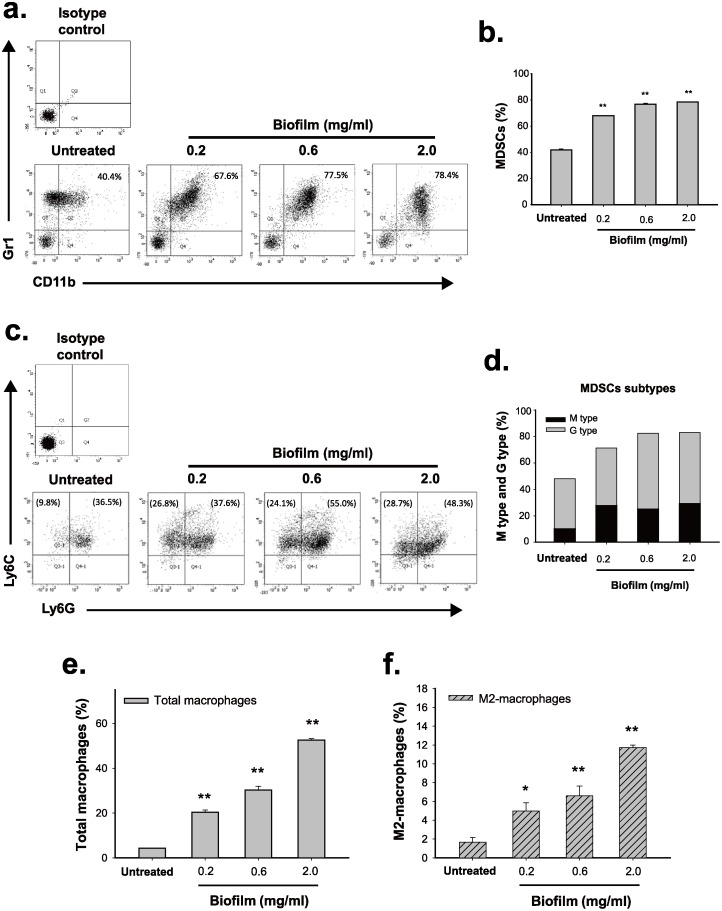
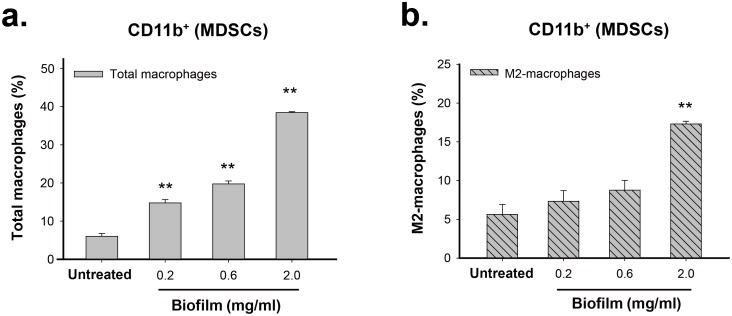
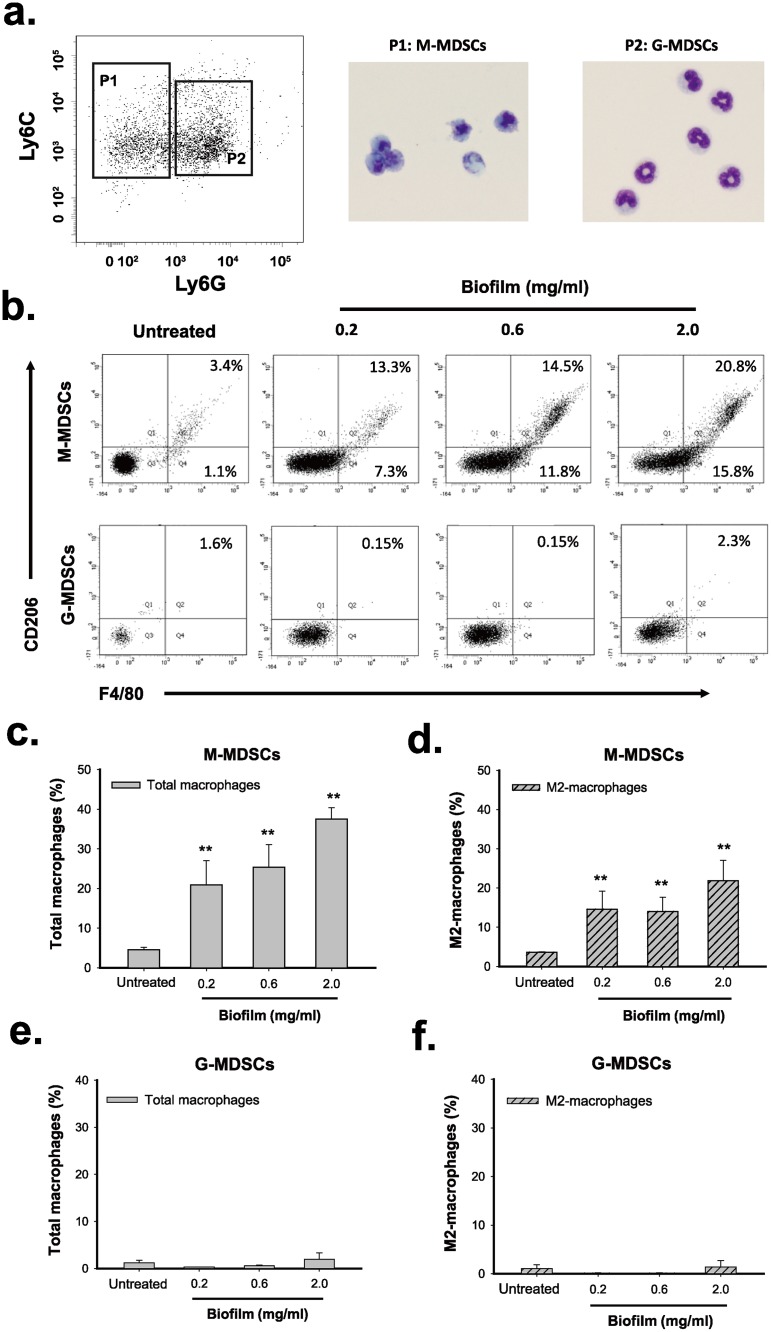
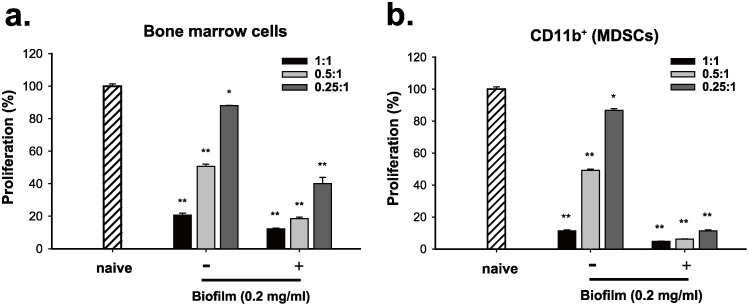
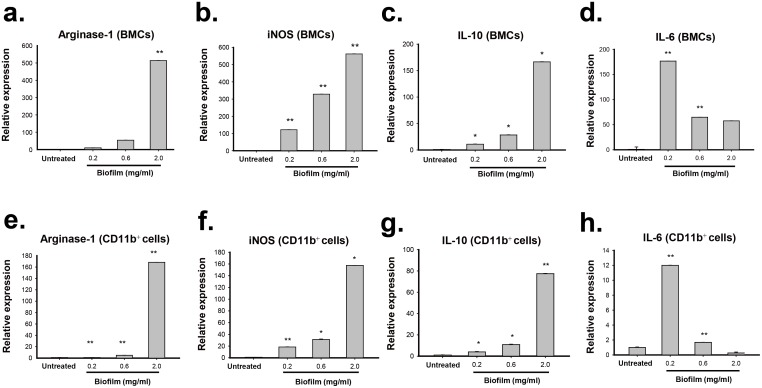
Staphylococcus aureus (S. aureus) is one of the most common causes of biofilm infections in periprosthetic joint infections (PJIs). Accumulating evidence has shown that the immunosuppressive environment established by S. aureus biofilm infection in PJIs involves the presence of myeloid-derived suppressor cells (MDSCs) and M2-macrophages. Due to the diversity of MDSCs, little is known about whether S. aureus biofilm preferentially expands specific MDSC subsets or whether MDSCs can further differentiate into M2-macrophages during S. aureus biofilm infection. Here, we show that in agreement with the results from an established rat PJI model, S. aureus biofilm cocultured with freshly isolated bone marrow cells (BMCs) in vitro significantly increases the proportions of MDSCs, total macrophages and M2-macrophages. Interestingly, we find that treatment of the BMCs in vitro with S. aureus biofilm preferentially promotes the expansion of monocytic MDSCs but not granulocytic MDSCs. Biofilm treatment also substantially enhances the overall MDSC immunosuppressive activity in addition to the MDSC expansion in vitro. Importantly, we provide evidence that S. aureus biofilm is capable of further stimulating the conversion of monocytic MDSCs into M2-macrophages in vitro and in vivo. Collectively, our studies reveal a direct link between MDSCs and M2-macrophages occurring in S. aureus-associated PJIs.
金黄色葡萄球菌是人工关节周围感染(PJI)中生物膜感染最常见的病因之一。越来越多的证据表明,金黄色葡萄球菌生物膜感染在PJI中建立的免疫抑制环境涉及髓源性抑制细胞(MDSC)和M2巨噬细胞的存在。由于MDSC的多样性,关于金黄色葡萄球菌生物膜是否优先扩增特定的MDSC亚群,或者在金黄色葡萄球菌生物膜感染期间MDSC是否能进一步分化为M2巨噬细胞,目前知之甚少。在此,我们表明,与已建立的大鼠PJI模型的结果一致,体外将金黄色葡萄球菌生物膜与新鲜分离的骨髓细胞(BMC)共培养,可显著增加MDSC、总巨噬细胞和M2巨噬细胞的比例。有趣的是,我们发现体外用金黄色葡萄球菌生物膜处理BMC优先促进单核细胞MDSC而非粒细胞MDSC的扩增。除了体外扩增MDSC外,生物膜处理还显著增强了MDSC的整体免疫抑制活性。重要的是,我们提供的证据表明,金黄色葡萄球菌生物膜在体外和体内均能够进一步刺激单核细胞MDSC转化为M2巨噬细胞。总体而言,我们的研究揭示了在金黄色葡萄球菌相关PJI中发生的MDSC与M2巨噬细胞之间的直接联系。