Rossetti Andrew, Chadha Manjeet, Torres B Nelson, Lee Jae K, Hylton Donald, Loewy Joanne V, Harrison Louis B
Louis Armstrong Center for Music & Medicine, Department of Music Therapy, Mount Sinai Beth Israel Medical Center, New York, New York.
Department of Radiation Oncology, Mount Sinai Downtown Union Square, Mount Sinai Health System, New York, New York.
Int J Radiat Oncol Biol Phys. 2017 Sep 1;99(1):103-110. doi: 10.1016/j.ijrobp.2017.05.003. Epub 2017 May 8.
Radiation therapy (RT) is associated with high stress levels. The role of music therapy (MT) for patients receiving RT is not well described. This study evaluates the impact of MT on anxiety and distress during simulation in patients with newly diagnosed head and neck or breast cancer.
This institutional review board-approved randomized trial of MT versus no MT at the time of simulation included the pre-State-Trait Anxiety Inventory (STAI-S Anxiety) questionnaire and Symptom Distress Thermometer (SDT). Patients randomized to MT received a consultation with a music therapist, during which music of the patients' choice to be played during simulation was selected. The no-MT patients did not receive the MT consultation, nor did they hear prerecorded music during simulation. Subsequent to the simulation, all patients repeated the STAI-S Anxiety questionnaire and the SDT.
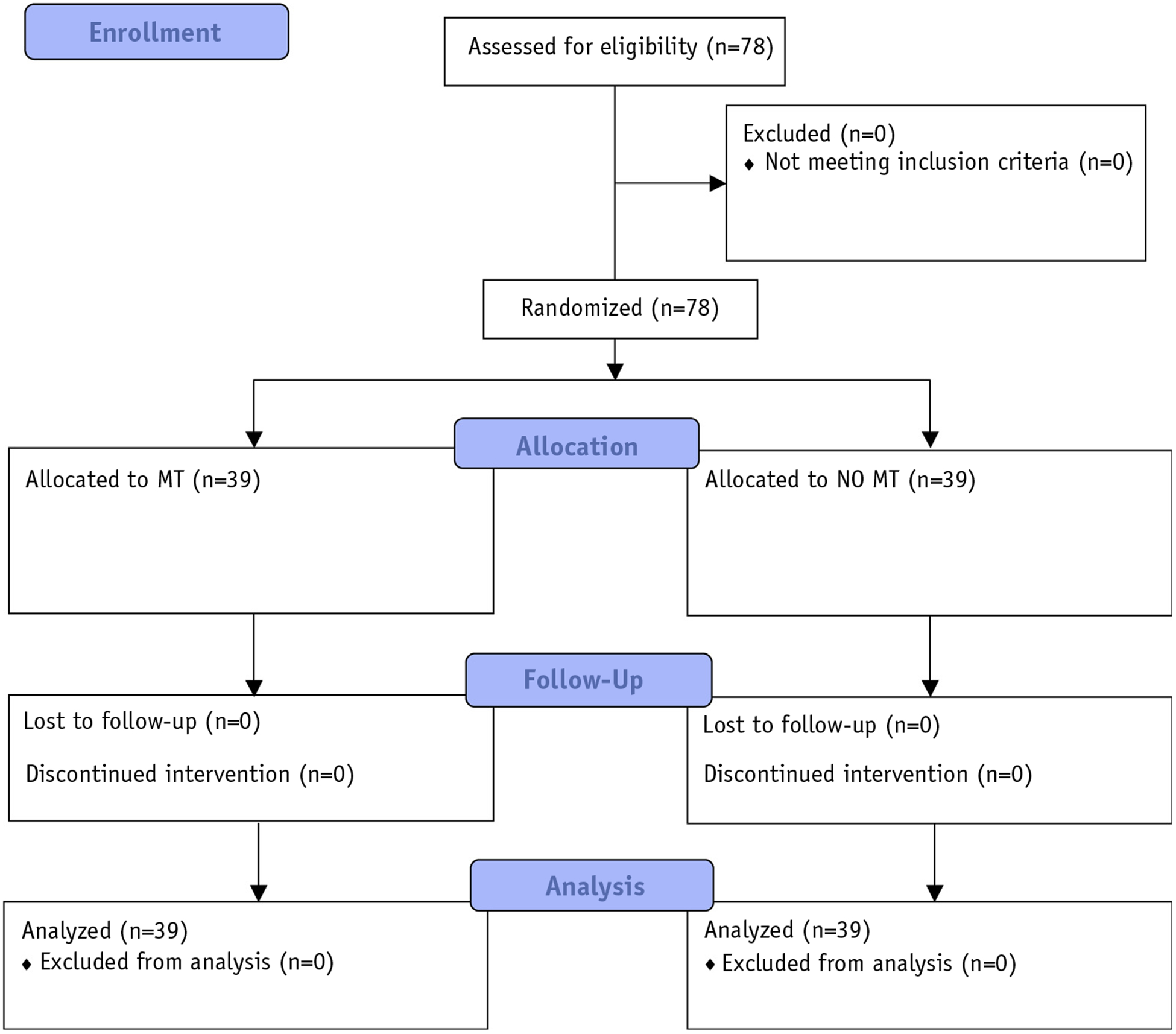
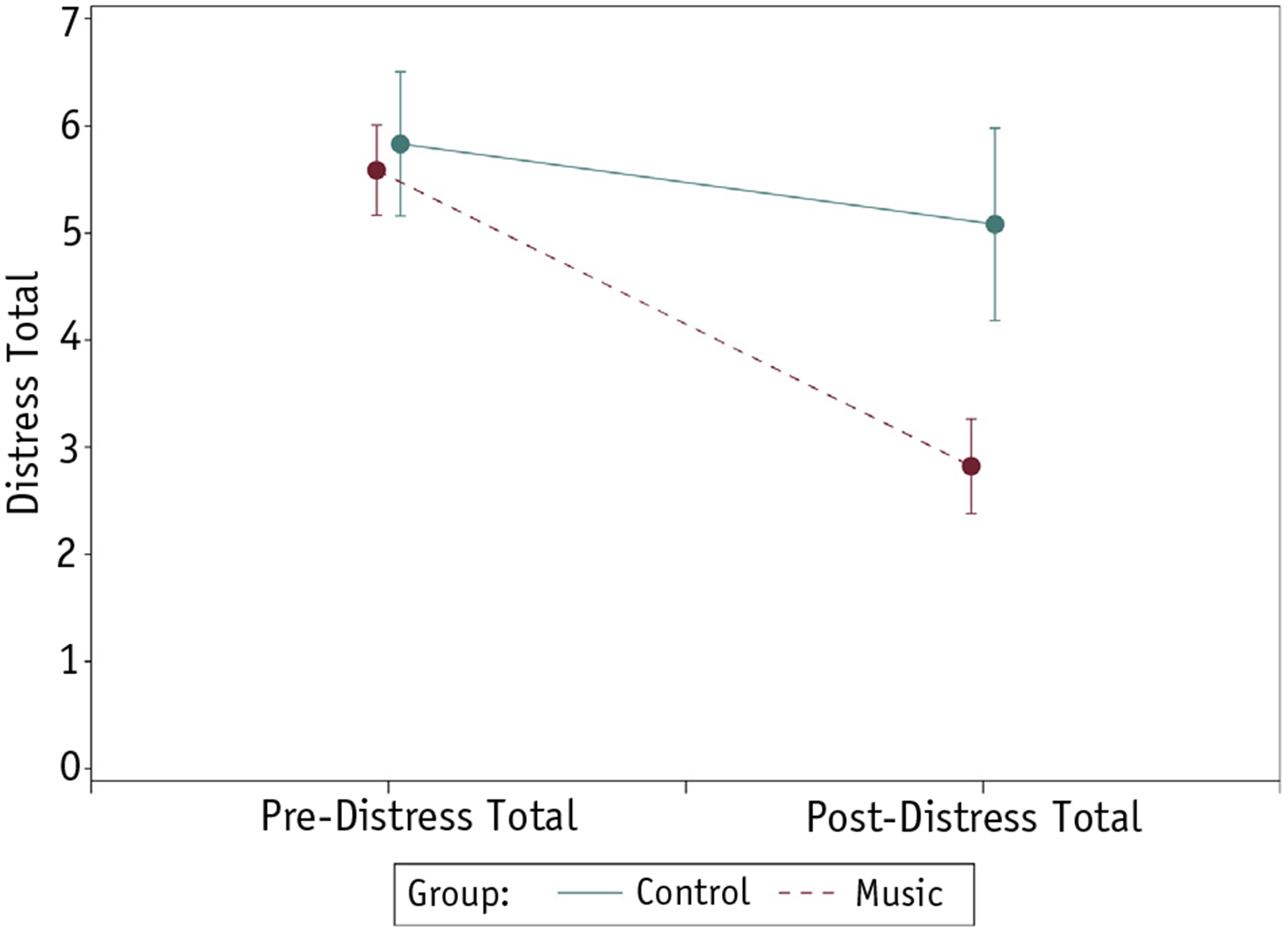
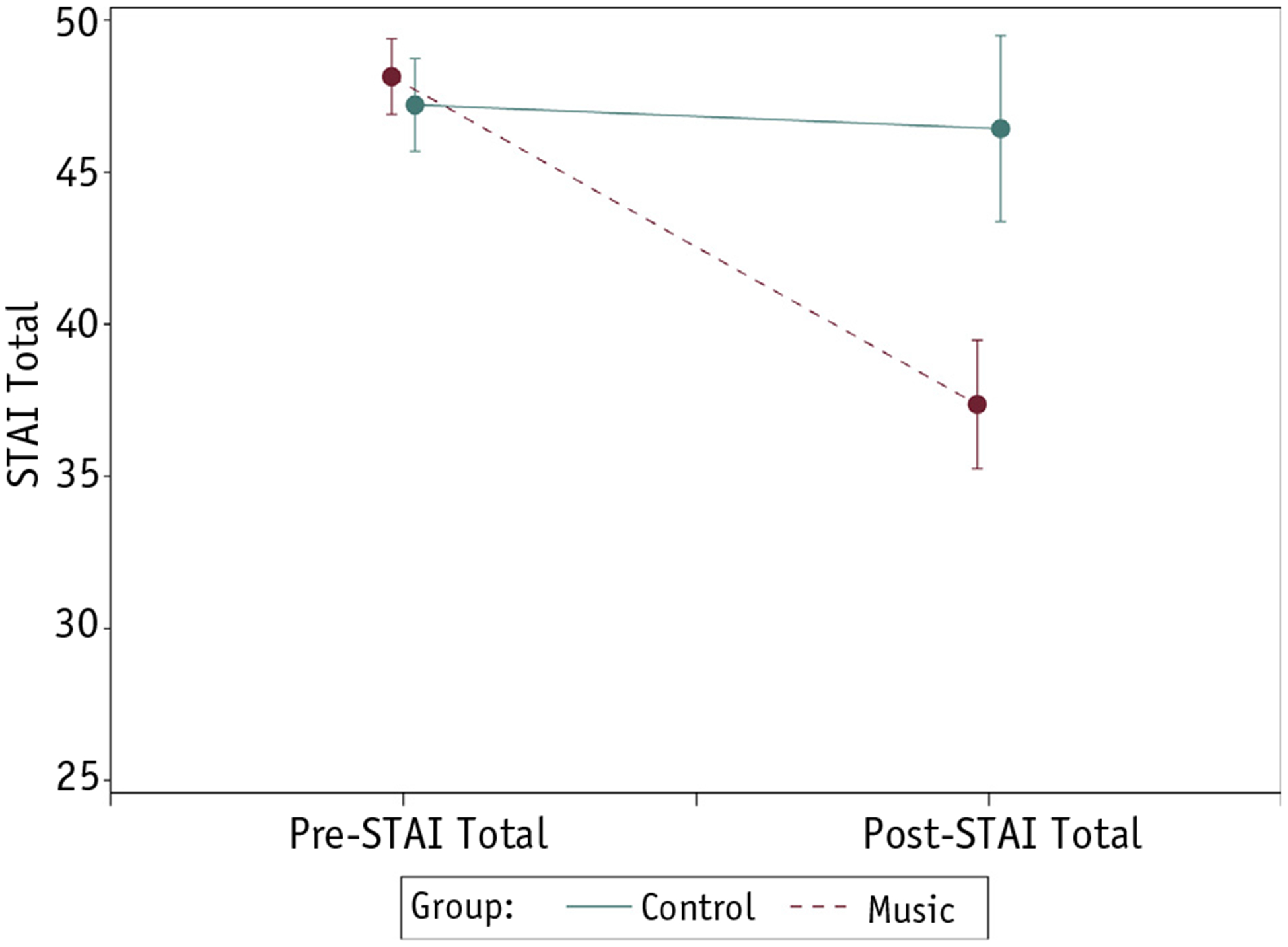
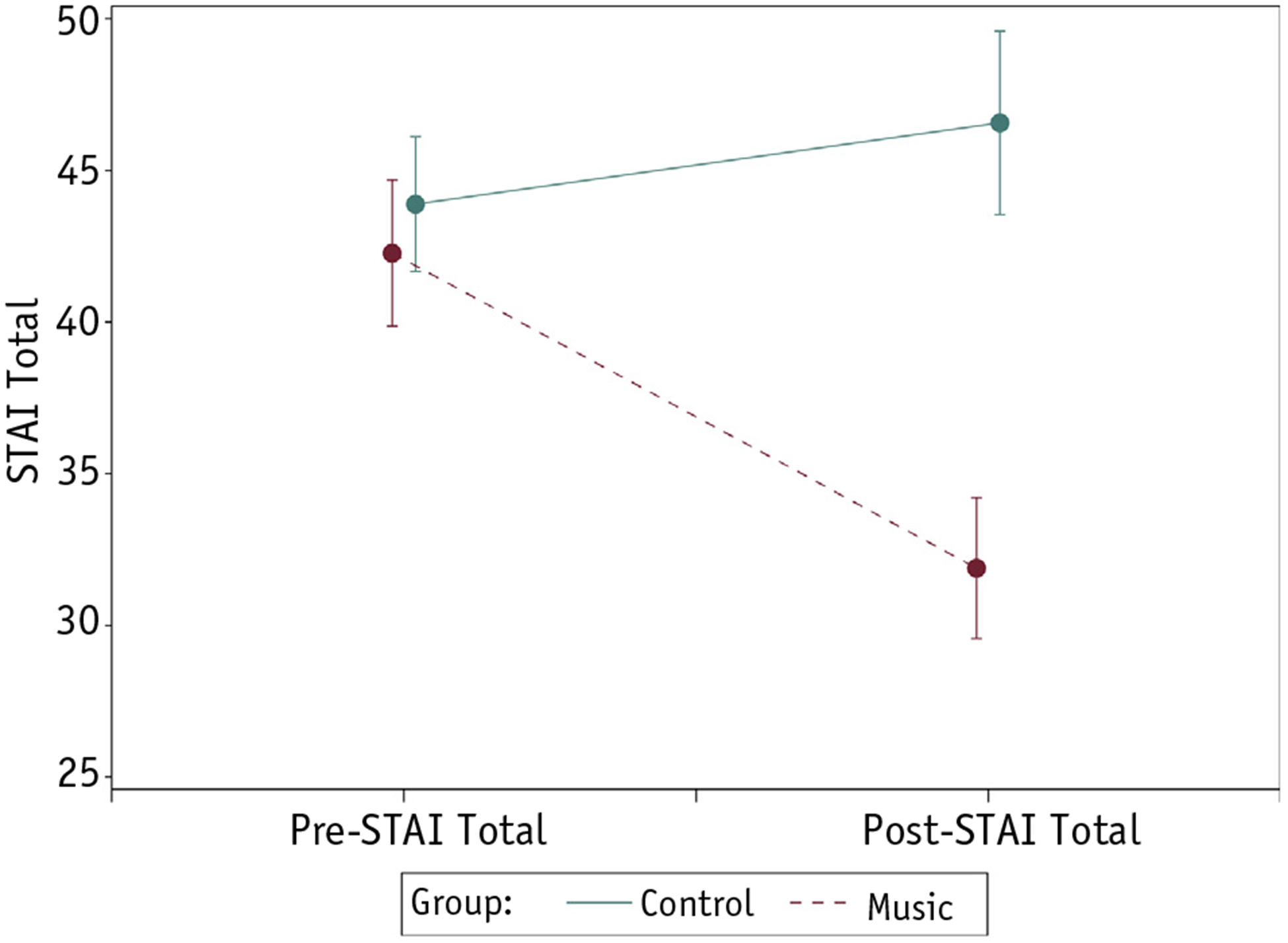
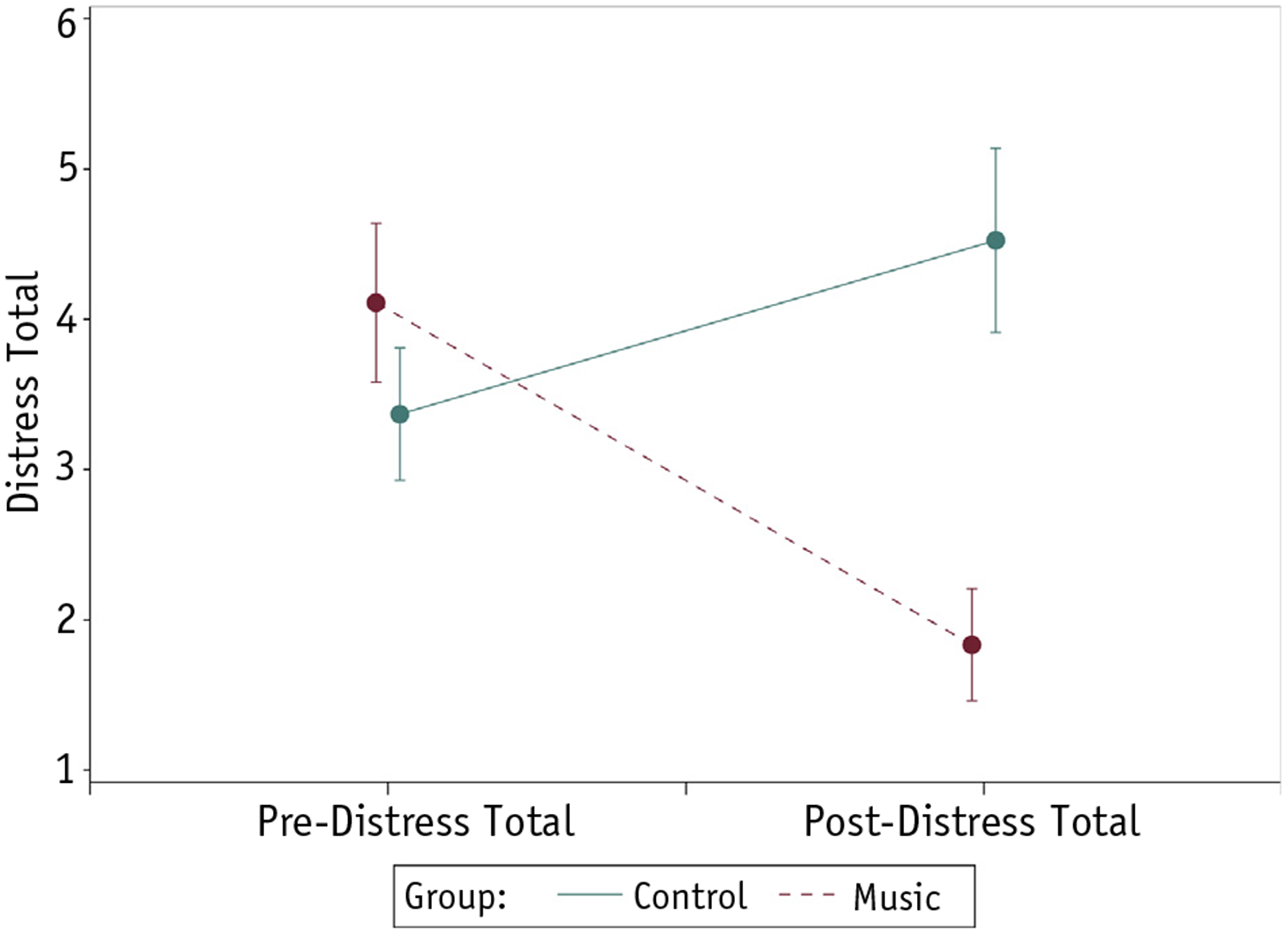
Of the 78 patients enrolled (39 in MT group and 39 in no-MT group), 38 had breast cancer and 40 had head and neck cancer. The male-female ratio was 27:51. The overall mean pre- and post-simulation STAI-S scores were 38.7 (range, 20-60) and 35.2 (range, 20-72), respectively. The overall mean pre- and post-simulation SDT scores were 3.2 (range, 0-10) and 2.5 (range, 0-10), respectively. The MT group had mean pre- and post-simulation STAI-S scores of 39.1 and 31.0, respectively (P<.0001), and the mean SDT scores before and after simulation were 3.2 and 1.7, respectively (P<.0001). The no-MT group's mean pre- and post-simulation STAI-S scores were 38.3 and 39.5, respectively (P=.46), and the mean SDT scores were 3 and 3.2, respectively (P=.51).
MT significantly lowered patient anxiety and distress during the simulation procedure on the basis of the STAI-S questionnaire and SDT. Incorporating culturally centered individualized MT may be an effective intervention to reduce stressors. Continued research defining the role of MT intervention in improving the patient experience by reducing anxiety is warranted.
放射治疗(RT)与高压力水平相关。音乐疗法(MT)对接受放疗患者的作用尚未得到充分描述。本研究评估MT对新诊断的头颈癌或乳腺癌患者模拟放疗期间焦虑和痛苦的影响。
本机构审查委员会批准的模拟放疗时MT与无MT的随机试验,包括状态-特质焦虑量表(STAI-S焦虑)问卷和症状痛苦温度计(SDT)。随机分配到MT组的患者接受音乐治疗师的咨询,在此期间选择患者在模拟放疗时播放的自选音乐。无MT组患者未接受MT咨询,在模拟放疗期间也未听到预先录制的音乐。模拟放疗后,所有患者重复填写STAI-S焦虑问卷和SDT。
78名入组患者(MT组39名,无MT组39名)中,38例为乳腺癌,40例为头颈癌。男女比例为27:51。模拟放疗前后STAI-S总分均值分别为38.7(范围20 - 60)和35.2(范围20 - 72)。模拟放疗前后SDT总分均值分别为3.2(范围0 - 10)和2.5(范围0 - 10)。MT组模拟放疗前后STAI-S得分均值分别为39.1和31.0(P <.0001),模拟放疗前后SDT得分均值分别为3.2和1.7(P <.0001)。无MT组模拟放疗前后STAI-S得分均值分别为38.3和39.5(P =.46),SDT得分均值分别为3和3.2(P =.51)。
基于STAI-S问卷和SDT,MT在模拟放疗过程中显著降低了患者的焦虑和痛苦。纳入以文化为中心的个性化MT可能是减轻压力源的有效干预措施。有必要继续开展研究,明确MT干预在通过减轻焦虑改善患者体验方面的作用。