Myers Nicholas E, Chekroud Sammi R, Stokes Mark G, Nobre Anna C
Department of Experimental Psychology, University of Oxford.
J Exp Psychol Hum Percept Perform. 2018 Mar;44(3):398-411. doi: 10.1037/xhp0000449. Epub 2017 Aug 17.
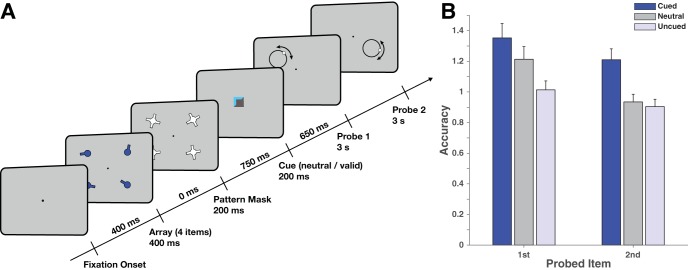
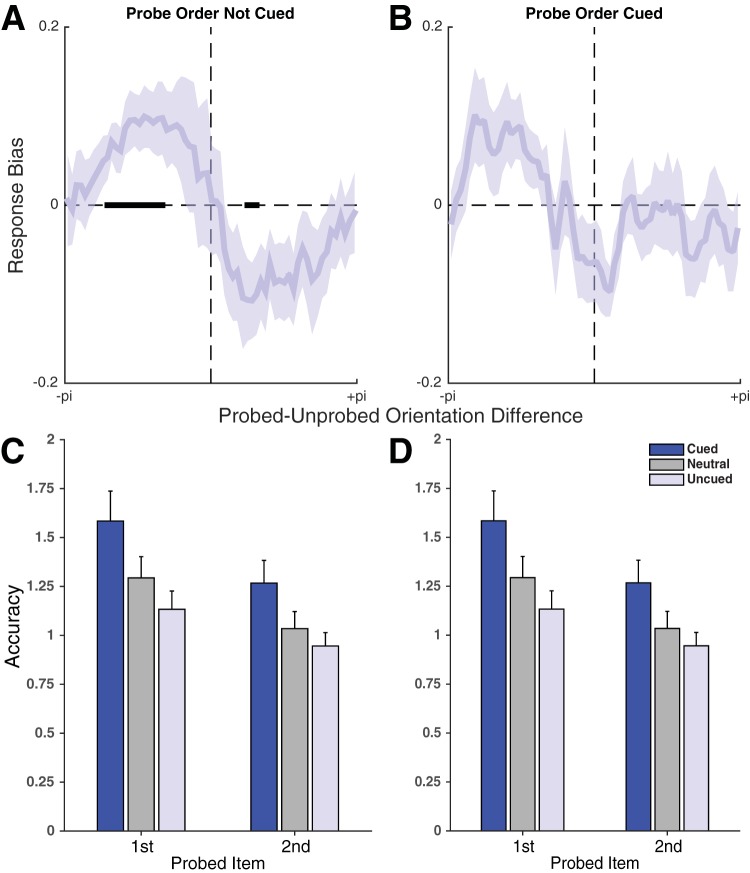
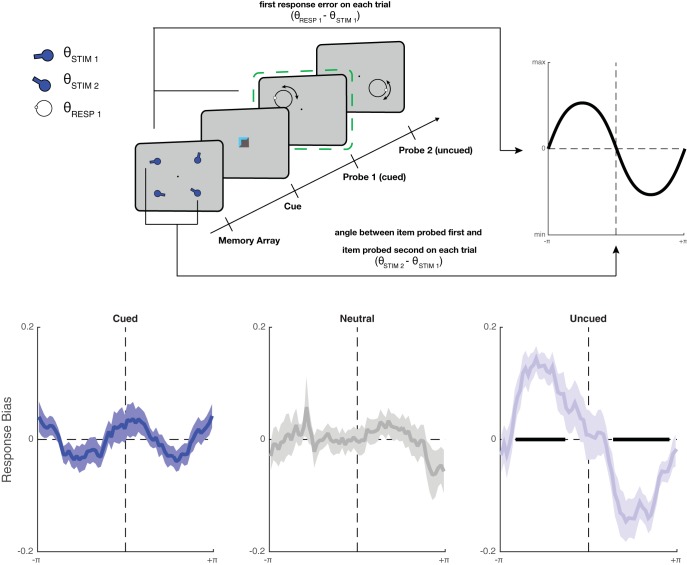
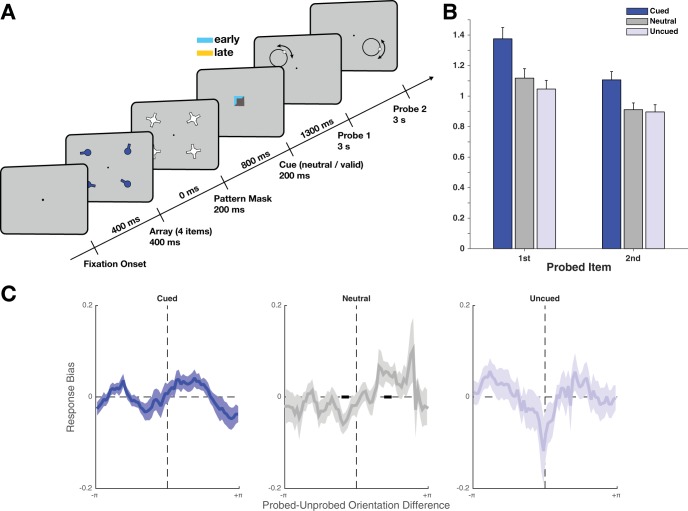
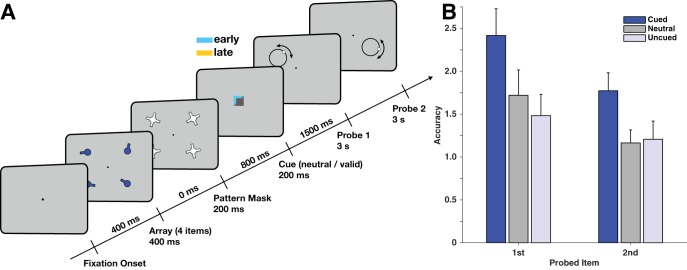
Most recent models conceptualize working memory (WM) as a continuous resource, divided up according to task demands. When an increasing number of items need to be remembered, each item receives a smaller chunk of the memory resource. These models predict that the allocation of attention to high-priority WM items during the retention interval should be a zero-sum game: improvements in remembering cued items come at the expense of uncued items because resources are dynamically transferred from uncued to cued representations. The current study provides empirical data challenging this model. Four precision retrocueing WM experiments assessed cued and uncued items on every trial. This permitted a test for trade-off of the memory resource. We found no evidence for trade-offs in memory across trials. Moreover, robust improvements in WM performance for cued items came at little or no cost to uncued items that were probed afterward, thereby increasing the net capacity of WM relative to neutral cueing conditions. An alternative mechanism of prioritization proposes that cued items are transferred into a privileged state within a response-gating bottleneck, in which an item uniquely controls upcoming behavior. We found evidence consistent with this alternative. When an uncued item was probed first, report of its orientation was biased away from the cued orientation to be subsequently reported. We interpret this bias as competition for behavioral control in the output-driving bottleneck. Other items in WM did not bias each other, making this result difficult to explain with a shared resource model. (PsycINFO Database Record
最近的大多数模型将工作记忆(WM)概念化为一种连续的资源,根据任务需求进行划分。当需要记忆的项目数量增加时,每个项目获得的记忆资源份额就会变小。这些模型预测,在保持间隔期间对高优先级WM项目的注意力分配应该是一种零和博弈:对提示项目记忆的改善是以未提示项目为代价的,因为资源会从未提示的表征动态转移到提示的表征上。当前的研究提供了挑战这一模型的实证数据。四项精确回溯提示WM实验在每次试验中都评估了提示项目和未提示项目。这使得能够对记忆资源的权衡进行测试。我们没有发现跨试验记忆权衡的证据。此外,提示项目的WM表现有显著改善,而对随后探测的未提示项目几乎没有或没有成本,从而相对于中性提示条件增加了WM的净容量。一种替代的优先级机制提出,提示项目在反应门控瓶颈内被转移到一个特权状态,在这个瓶颈中,一个项目独特地控制即将到来的行为。我们发现了与这种替代机制一致的证据。当首先探测一个未提示项目时,其方向报告偏向于远离随后要报告的提示方向。我们将这种偏差解释为在输出驱动瓶颈中对行为控制的竞争。WM中的其他项目之间没有相互偏差,这使得用共享资源模型难以解释这一结果。(PsycINFO数据库记录)