Hui Alex, Sheardown Heather, Jones Lyndon
Centre for Contact Lens Research, School of Optometry, University of Waterloo, 200 University Avenue West, Waterloo, ON N2L3G1, Canada.
Department of Chemical Engineering, McMaster University, 1280 Main Street West, Hamilton, ON L8S4L7, Canada.
Materials (Basel). 2012 Jan 2;5(1):85-107. doi: 10.3390/ma5010085.
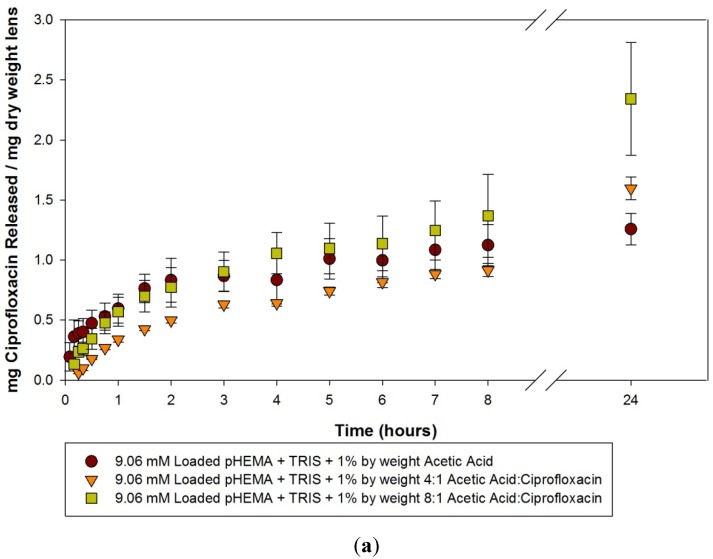
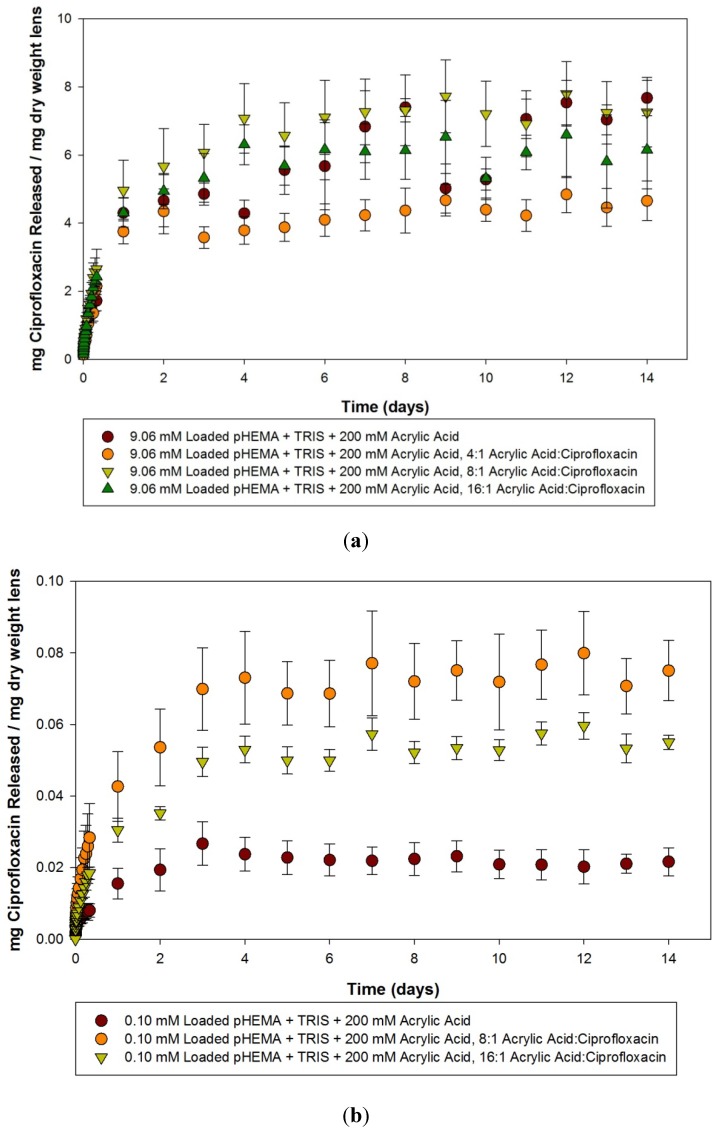
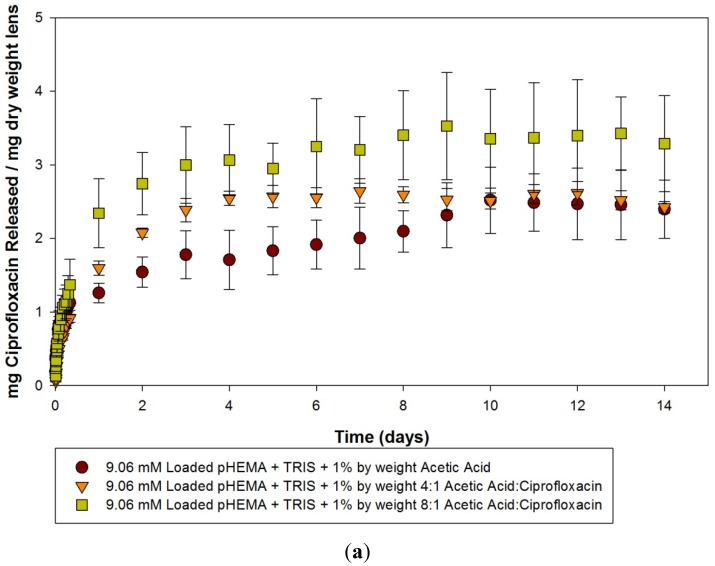
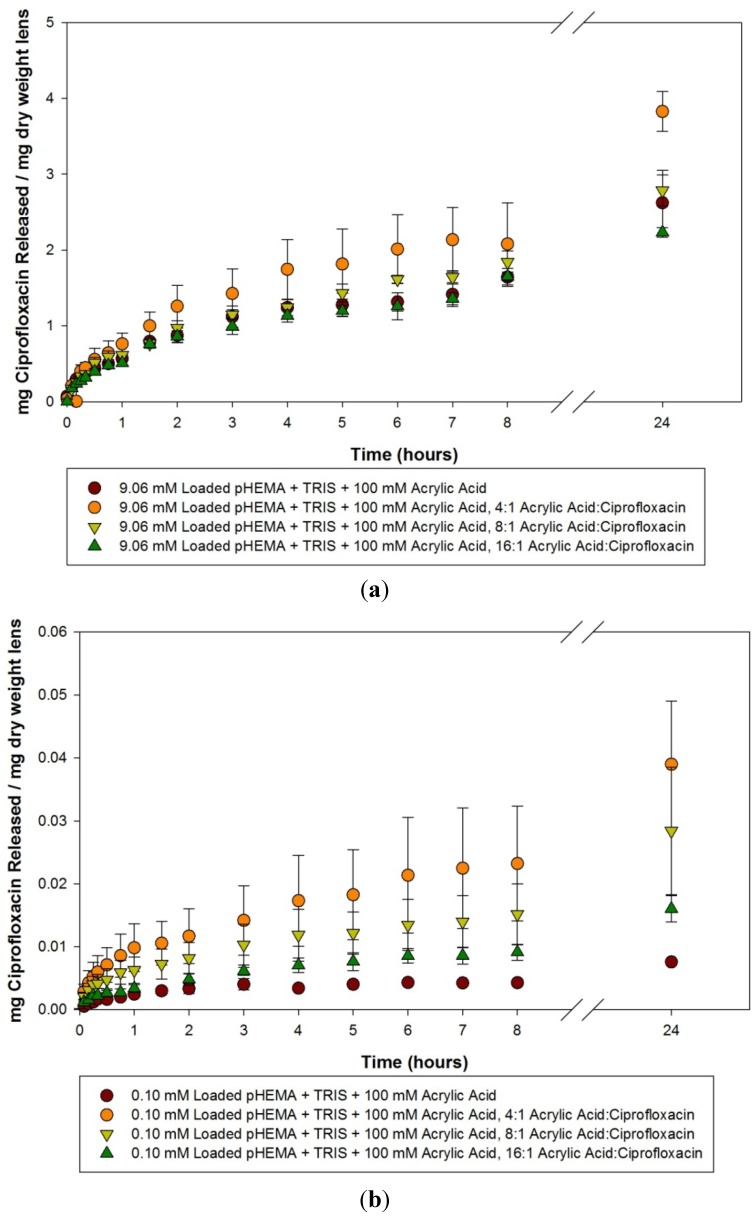
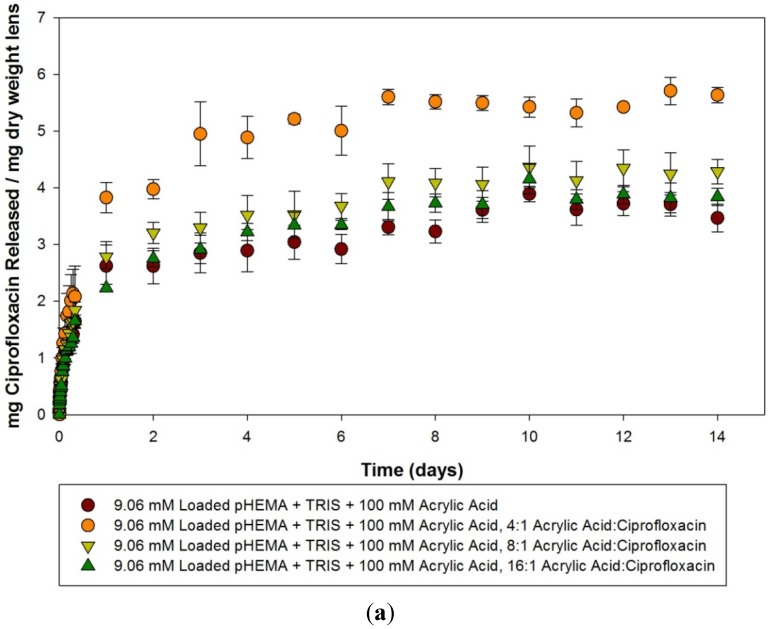
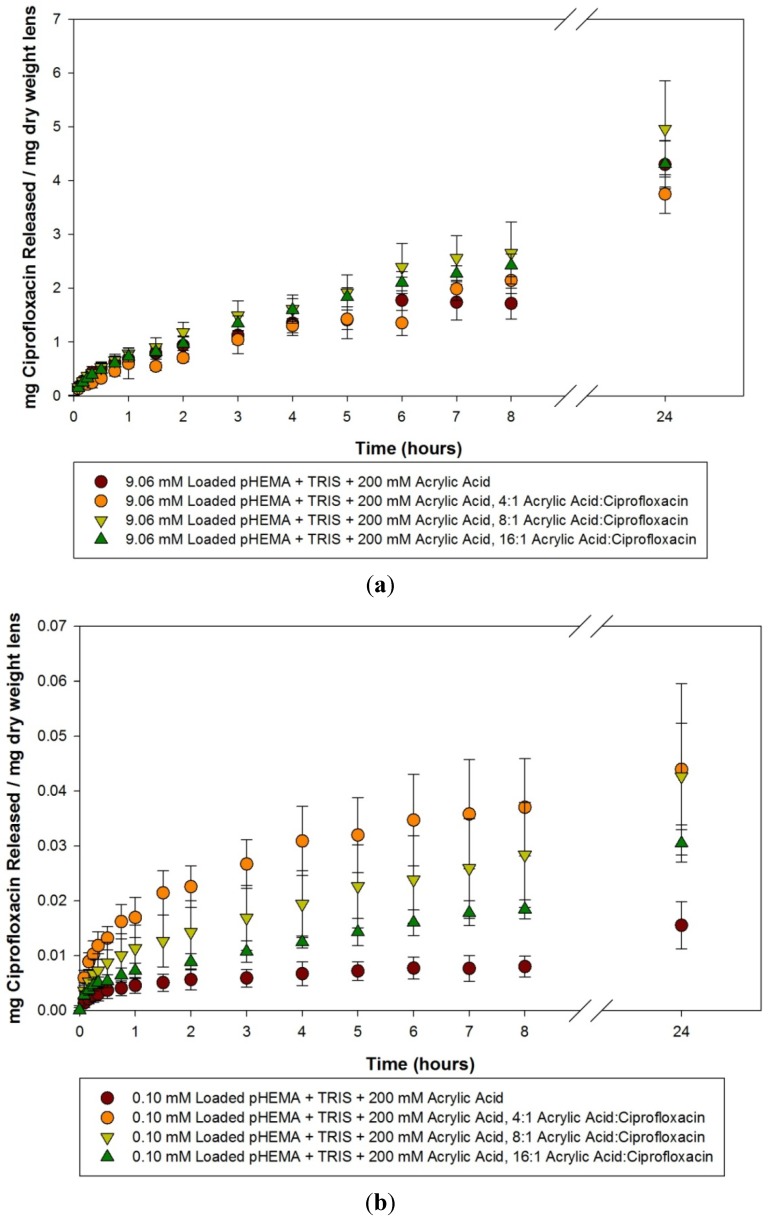
Contact lenses, as an alternative drug delivery vehicle for the eye compared to eye drops, are desirable due to potential advantages in dosing regimen, bioavailability and patient tolerance/compliance. The challenge has been to engineer and develop these materials to sustain drug delivery to the eye for a long period of time. In this study, model silicone hydrogel materials were created using a molecular imprinting strategy to deliver the antibiotic ciprofloxacin. Acetic and acrylic acid were used as the functional monomers, to interact with the ciprofloxacin template to efficiently create recognition cavities within the final polymerized material. Synthesized materials were loaded with 9.06 mM, 0.10 mM and 0.025 mM solutions of ciprofloxacin, and the release of ciprofloxacin into an artificial tear solution was monitored over time. The materials were shown to release for periods varying from 3 to 14 days, dependent on the loading solution, functional monomer concentration and functional monomer:template ratio, with materials with greater monomer:template ratio (8:1 and 16:1 imprinted) tending to release for longer periods of time. Materials with a lower monomer:template ratio (4:1 imprinted) tended to release comparatively greater amounts of ciprofloxacin into solution, but the release was somewhat shorter. The total amount of drug released from the imprinted materials was sufficient to reach levels relevant to inhibit the growth of common ocular isolates of bacteria. This work is one of the first to demonstrate the feasibility of molecular imprinting in model silicone hydrogel-type materials.
与眼药水相比,隐形眼镜作为一种用于眼部的替代药物递送载体,因其在给药方案、生物利用度和患者耐受性/依从性方面的潜在优势而备受青睐。挑战在于设计和开发这些材料,以实现药物在长时间内持续递送至眼部。在本研究中,采用分子印迹策略制备了模型硅水凝胶材料,用于递送抗生素环丙沙星。使用乙酸和丙烯酸作为功能单体,使其与环丙沙星模板相互作用,从而在最终聚合材料中有效形成识别腔。将合成材料分别装载9.06 mM、0.10 mM和0.025 mM的环丙沙星溶液,并随时间监测环丙沙星在人工泪液中的释放情况。结果表明,材料的释放时间从3天到14天不等,这取决于装载溶液、功能单体浓度以及功能单体与模板的比例,其中单体与模板比例较大(8:1和16:1印迹)的材料往往释放时间更长。单体与模板比例较低(4:1印迹)的材料倾向于向溶液中释放相对较多的环丙沙星,但其释放时间稍短。从印迹材料中释放的药物总量足以达到抑制常见眼部细菌分离株生长的相关水平。这项工作是最早证明分子印迹在模型硅水凝胶型材料中可行性的研究之一。