Shi Qianqian, Li Long, Zhang Xiaoxiao, Luo Jianrang, Li Xiang, Zhai Lijuan, He Lixia, Zhang Yanlong
College of Landscape Architecture and Art, Northwest A&F University, Yangling 712100, Shaanxi, China.
National Engineering Research Center for Oil Peony, Yangling 712100, Shaanxi, China.
Molecules. 2017 Aug 17;22(8):1364. doi: 10.3390/molecules22081364.
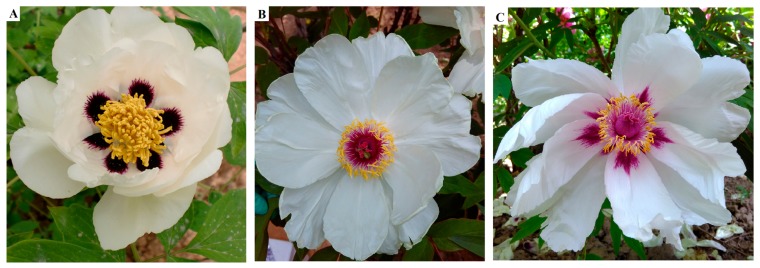
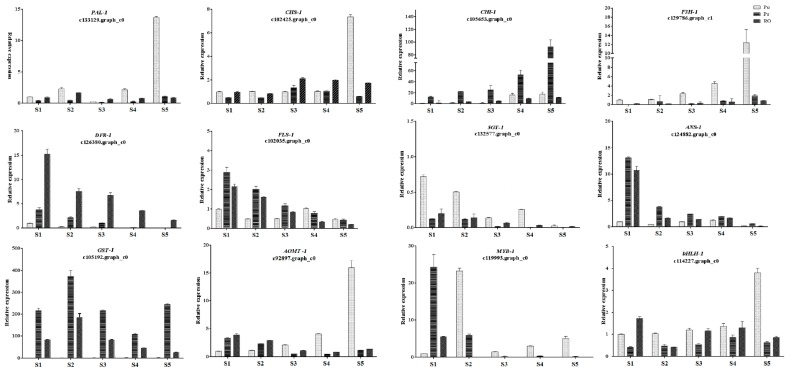
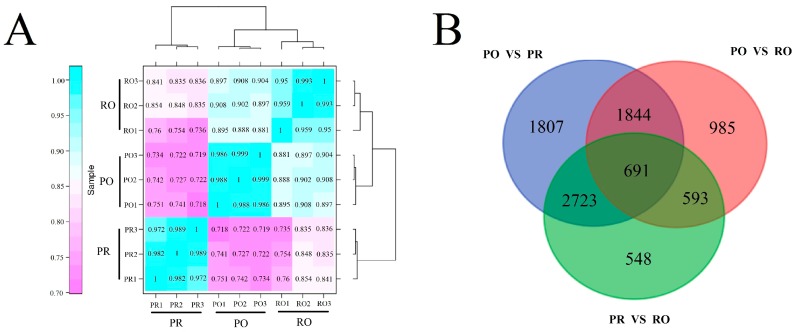
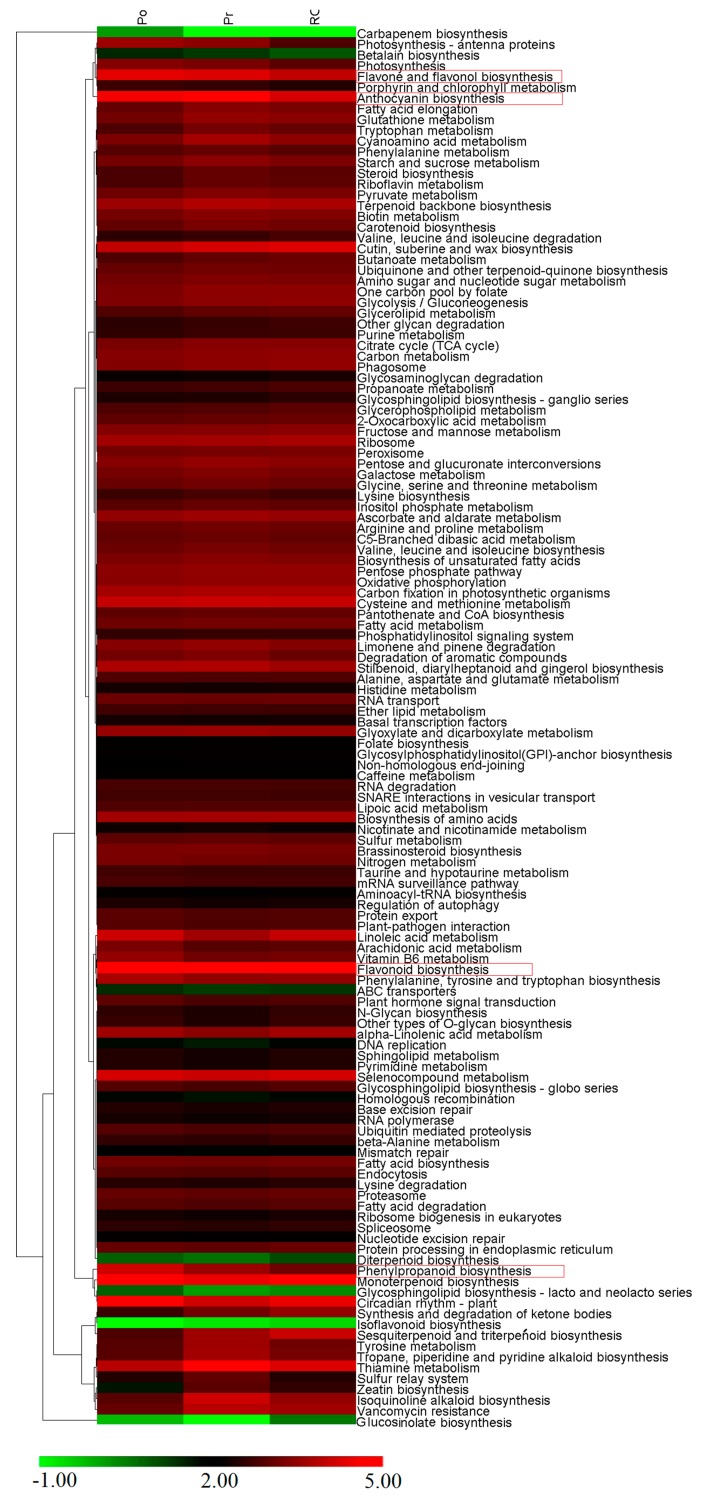
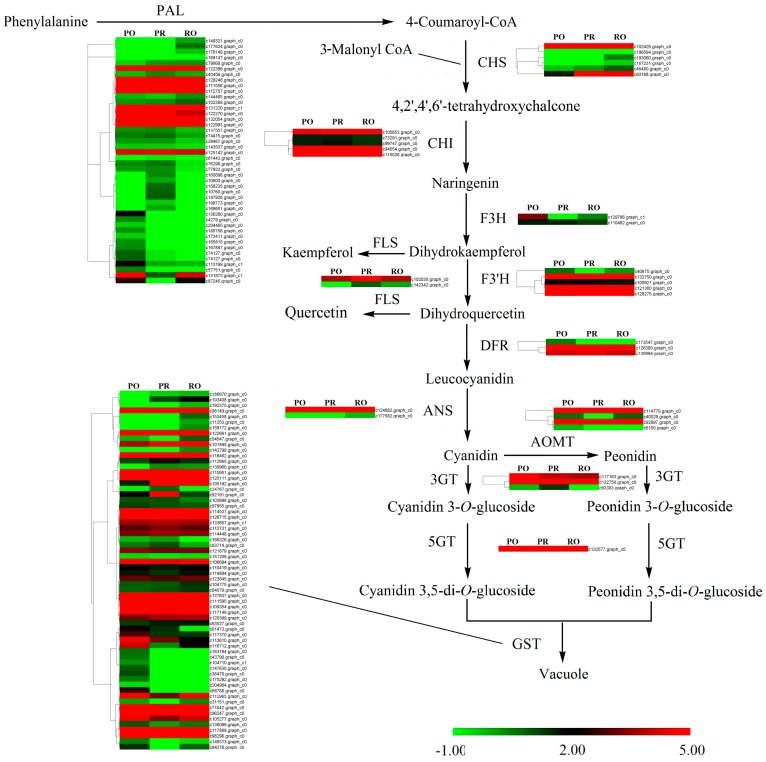
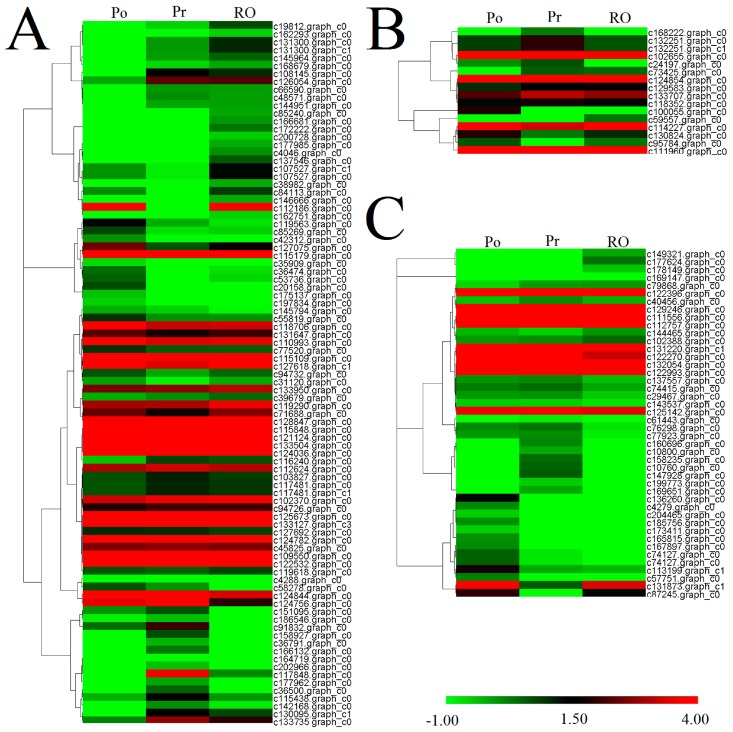
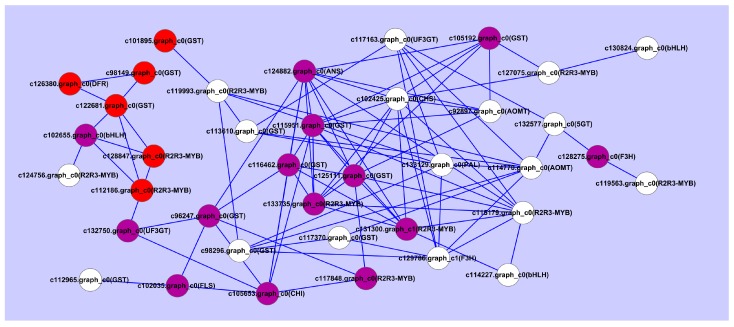
is a wild tree peony species with large and dark purple variegations at the base of its petals. It is the genetic resource for various variegation patterns in tree peony cultivars, which is in contrast to the pure white petals of . However, the molecular mechanism underlying the formation of variegation in this plant is still unknown. Here, we conducted Illumina transcriptome sequencing for , (with pure white petals) and their F1 individuals (with purple-red variegation). A total of 181,866 unigenes were generated, including a variety of unigenes involved in anthocyanin biosynthesis and sequestration and the regulation of anthocyanin biosynthesis. The dark purple or purple-red variegation patterns mainly occurred due to the proportions of cyanidin (Cy)- and peonidin (Pn)-based anthocyanins. The variegations of exhibited a "Cy > Pn" phenotype, whereas the F1 progeny showed a "Pn > Cy" phenotype. The , , , and genes might play key roles in variegation pigmentation in according to gene expression and interaction network analysis. Two R2R3-MYB transcription factors (c131300.graph_c0 and c133735.graph_c0) regulated variegation formation by controlling , and genes. Our results indicated that the various variegation patterns were caused by transcriptional regulation of anthocyanin biosynthesis genes, and the transcription profiles of the R2R3-MYBs provided clues to elucidate the mechanisms underlying this trait. The petal transcriptome data produced in this study will provide a valuable resource for future association investigations of the genetic regulation of various variegation patterns in tree peonies.
是一种野生牡丹品种,其花瓣基部有大的深紫色斑纹。它是牡丹栽培品种各种斑纹模式的遗传资源,这与[品种名称]纯白色花瓣形成对比。然而,这种植物斑纹形成的分子机制仍然未知。在这里,我们对[品种名称]、[纯白色花瓣品种名称]及其F1代个体(具有紫红色斑纹)进行了Illumina转录组测序。共产生了181,866个单基因,包括多种参与花青素生物合成、隔离以及花青素生物合成调控的单基因。深紫色或紫红色斑纹模式主要是由于矢车菊素(Cy)和芍药色素(Pn)基花青素的比例不同。[品种名称]的斑纹表现出“Cy > Pn”表型,而F1后代表现出“Pn > Cy”表型。根据基因表达和相互作用网络分析,[基因名称]、[基因名称]、[基因名称]和[基因名称]基因可能在[品种名称]斑纹色素沉着中起关键作用。两个R2R3 - MYB转录因子(c131300.graph_c0和c133735.graph_c0)通过控制[基因名称]、[基因名称]和[基因名称]基因来调节斑纹形成。我们的结果表明,各种斑纹模式是由花青素生物合成基因的转录调控引起的,R2R3 - MYBs的转录谱为阐明这一性状的潜在机制提供了线索。本研究产生的花瓣转录组数据将为未来牡丹各种斑纹模式遗传调控的关联研究提供有价值的资源。