Soong Wen-Jue, Tsao Pei-Chen, Lee Yu-Sheng, Yang Chia-Feng
Department of Pediatrics, Taipei Veterans General Hospital, Taipei, Taiwan.
Institute of Emergency and Critical Care Medicines, School of Medicine, National Yang-Ming University, Taipei, Taiwan.
PLoS One. 2017 Aug 17;12(8):e0183078. doi: 10.1371/journal.pone.0183078. eCollection 2017.
Use of therapeutic flexible airway endoscopy (TFAE) is very limited in pediatrics. We report our clinical experiences and long term outcomes of TFAE in small children from a single tertiary referral center.
This is a retrospective cohort study. Small children with their body weight no more than 5.0 kg who had received TFAE between 2005 and 2015 were enrolled. Demographic information and outcomes were reviewed and analyzed from medical charts and TFAE videos.
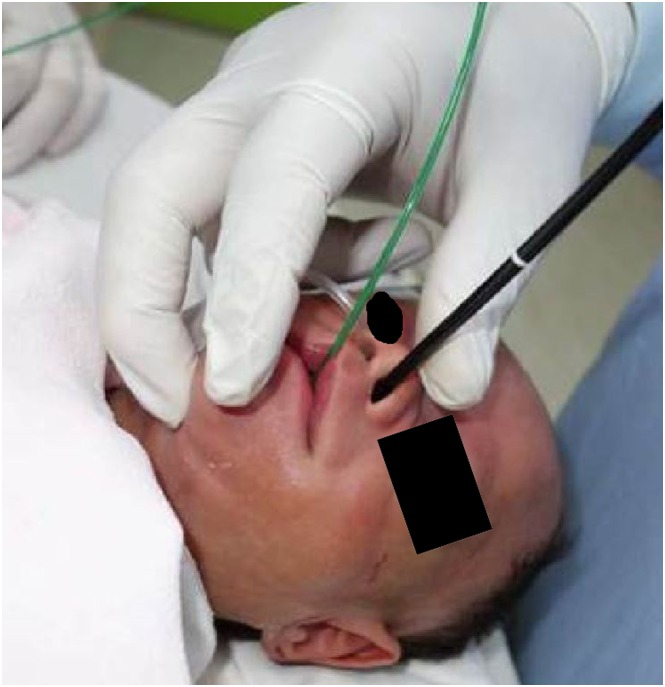
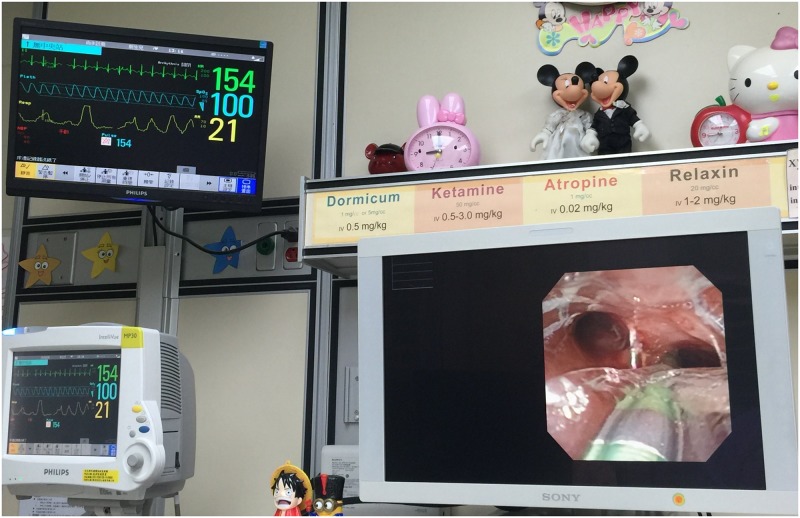
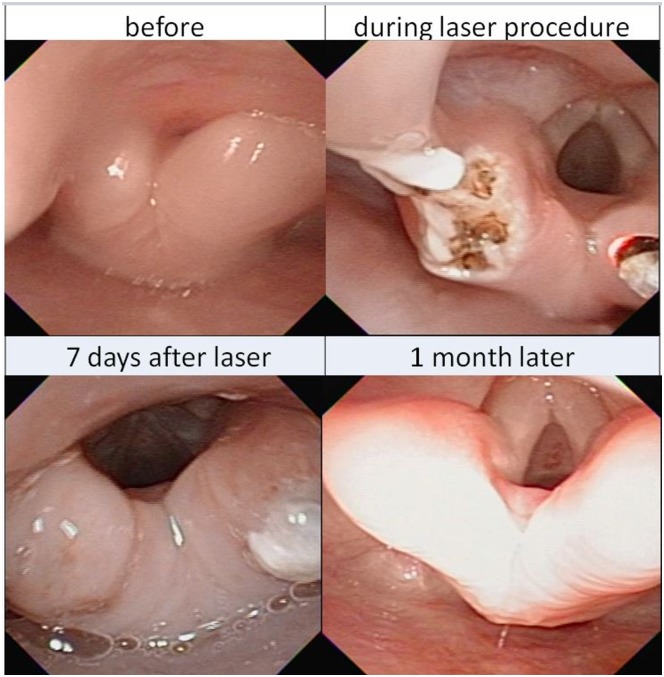
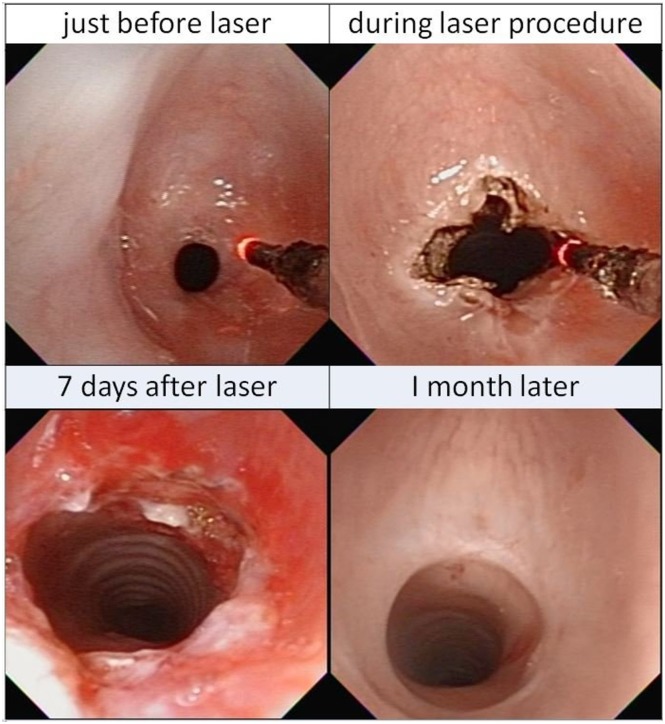
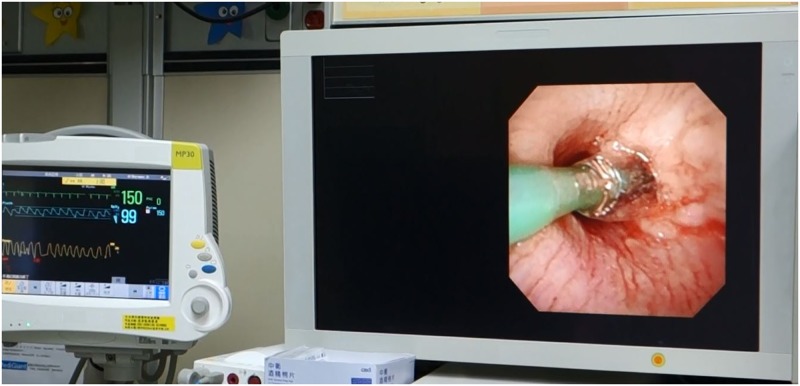
A total of 313 TFAE were performed in 225 children. The mean age was 3.50 ± 0.24 (0.01-19.2) months old; the mean body weight was 3.52 ± 0.65 (0.57-5.0) kg. A noninvasive ventilation technique, without mask or artificial airway, was applied to support all the procedures. TFAE included laser therapy (39.6%), balloon dilatation plasty (25.6%), tracheal intubation (24.3%) and metallic stent placement (6.4%). Short-length endoscopes of 30-35 cm were used in 96%. All TFAE were successfully completed without serious adverse events or mortality. Mean procedural time was 27.6 ± 16.1 minutes. TFAE resulted in successful extubation immediately in 67.2% (45/67) and 62.8% (118/188) were able to wean off their positive pressure ventilation support in 7 days after procedures. By the end of this study, these TFAE averted the originally suggested airway surgeries in 93.8% (61/65), as benefited from laser therapy, stent implantation, and balloon dilatation plasty.
The TFAE modality of using short-length endoscopes as supported with this noninvasive ventilation and ICU support is a viable, instant and effective management in small children. It has resulted in rapid weaning of respiratory supports and averted more invasive rigid endoscopy or airway surgeries.
治疗性可弯曲气道内镜检查(TFAE)在儿科中的应用非常有限。我们报告了来自单一三级转诊中心的小儿TFAE的临床经验和长期结果。
这是一项回顾性队列研究。纳入2005年至2015年间接受TFAE且体重不超过5.0 kg的小儿。从病历和TFAE视频中回顾并分析人口统计学信息和结果。
共对225名儿童进行了313次TFAE。平均年龄为3.50±0.24(0.01 - 19.2)个月;平均体重为3.52±0.65(0.57 - 5.0)kg。采用无创通气技术,无需面罩或人工气道,以支持所有操作。TFAE包括激光治疗(39.6%)、球囊扩张成形术(25.6%)、气管插管(24.3%)和金属支架置入(6.4%)。96%使用的是30 - 35 cm的短内镜。所有TFAE均成功完成,无严重不良事件或死亡。平均操作时间为27.6±16.1分钟。TFAE导致67.2%(45/67)的患儿立即成功拔管,62.8%(118/188)的患儿在操作后7天内能够停用正压通气支持。在本研究结束时,这些TFAE避免了93.8%(61/65)原本建议的气道手术,这得益于激光治疗、支架植入和球囊扩张成形术。
在无创通气和重症监护病房支持下使用短内镜的TFAE模式,对于小儿是一种可行、即时且有效的治疗方法。它实现了呼吸支持的快速撤机,并避免了更具侵入性的硬质内镜检查或气道手术。