Department of Anatomy and Structural Biology, Albert Einstein College of Medicine, 1300 Morris Park Ave, Gruss MRRC 306, Bronx, NY, 10461, USA.
Gruss-Lipper Biophotonics Center, Albert Einstein College of Medicine, Bronx, NY, USA.
Sci Rep. 2017 Aug 17;7(1):8547. doi: 10.1038/s41598-017-08950-7.
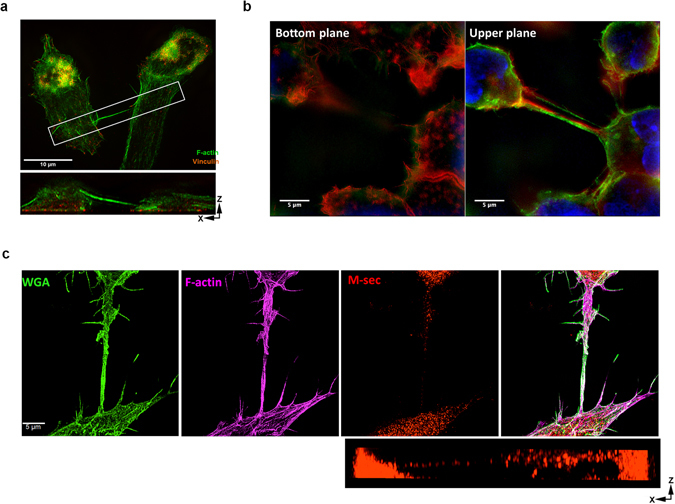
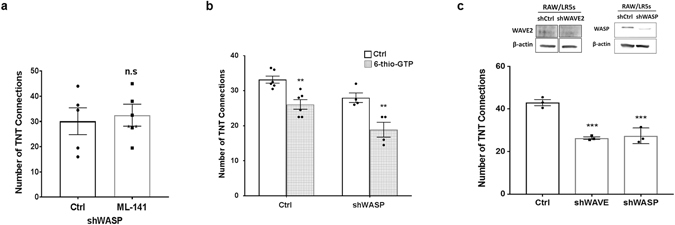
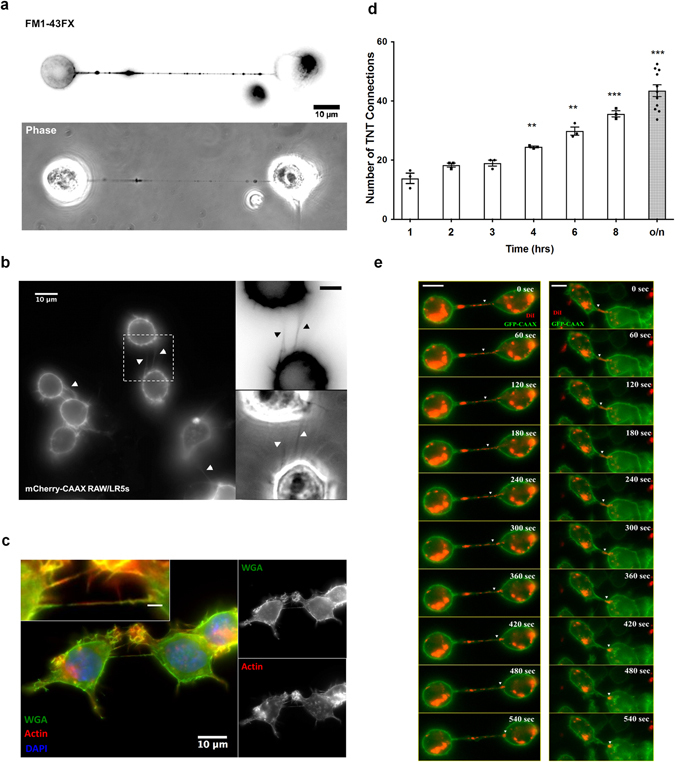
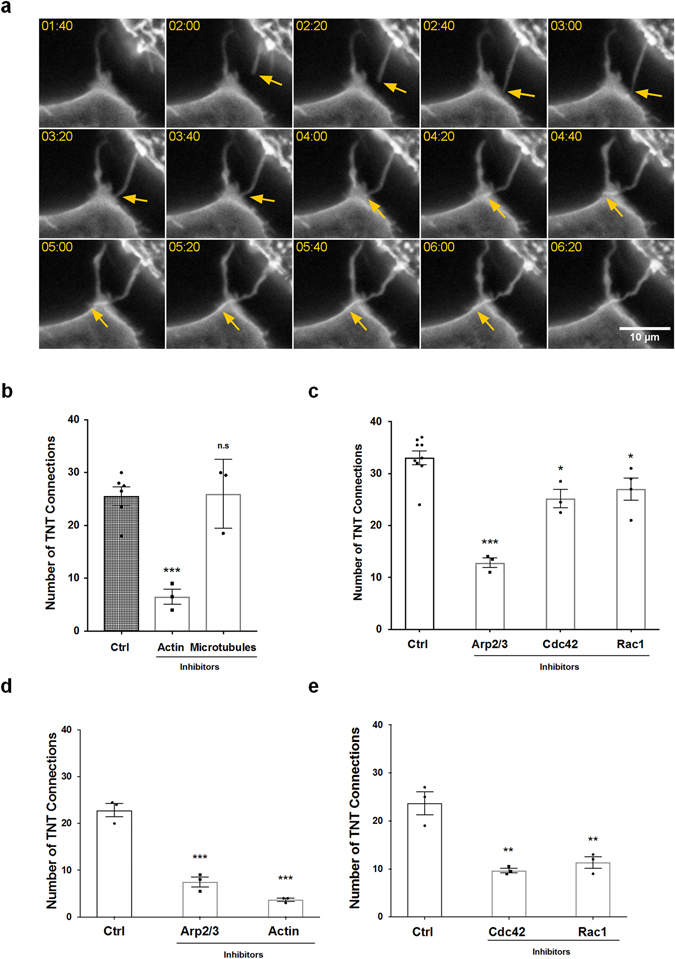
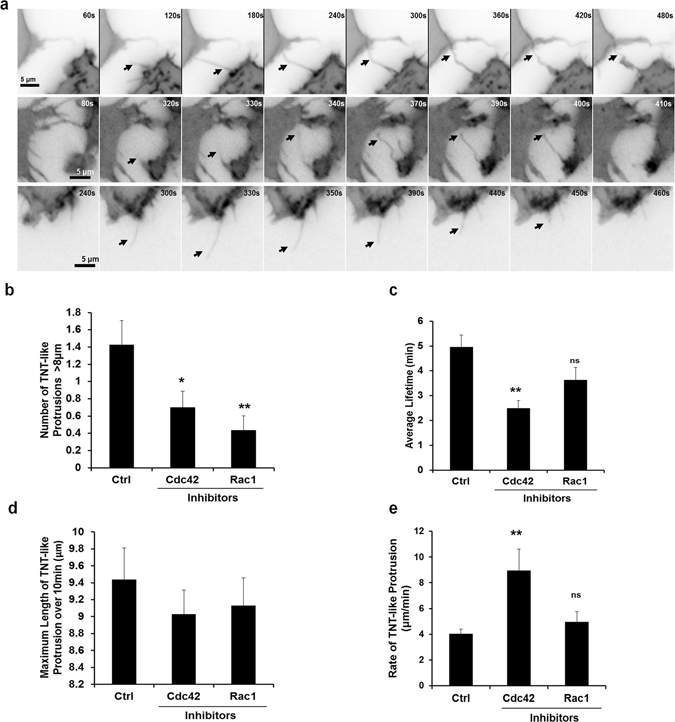
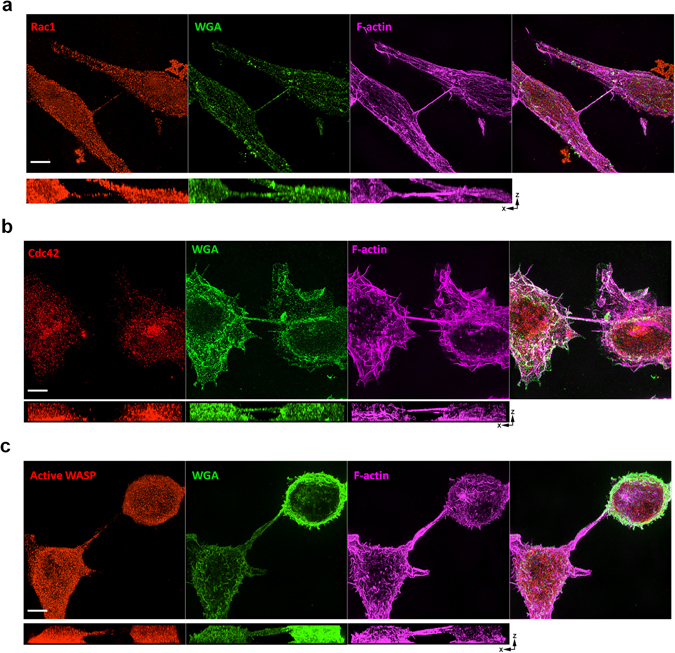
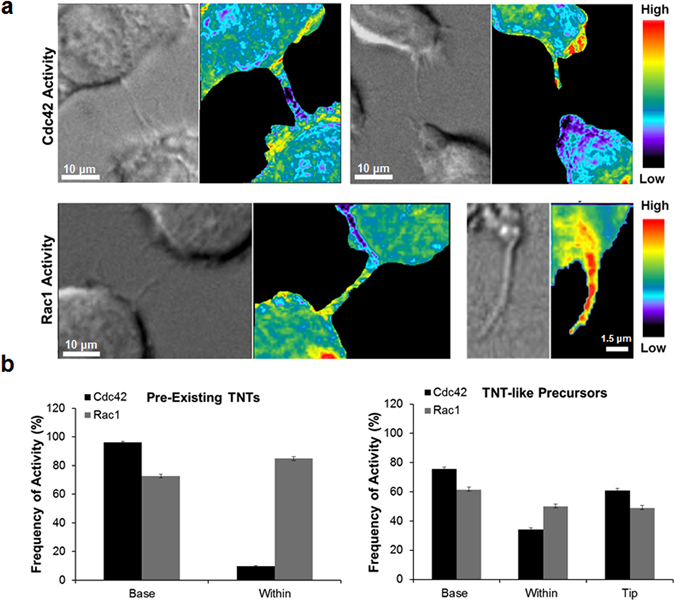
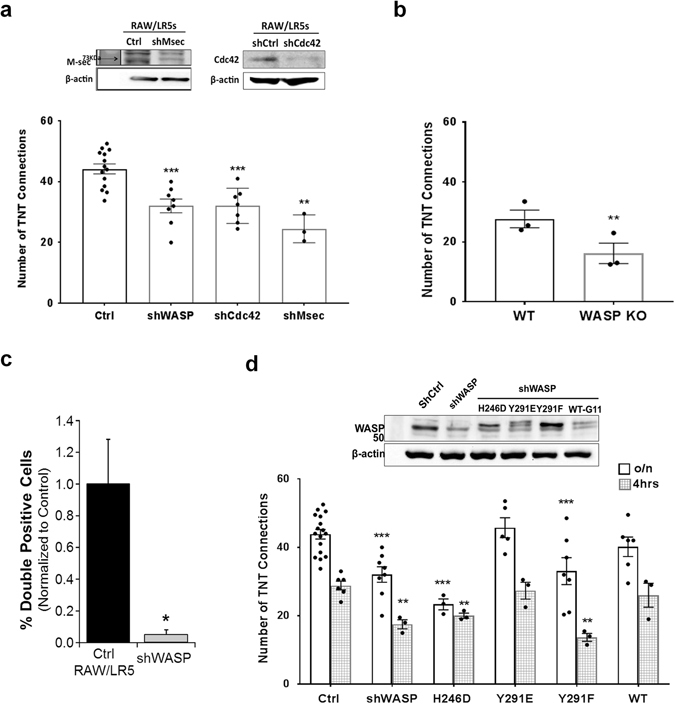
Macrophage interactions with other cells, either locally or at distances, are imperative in both normal and pathological conditions. While soluble means of communication can transmit signals between different cells, it does not account for all long distance macrophage interactions. Recently described tunneling nanotubes (TNTs) are membranous channels that connect cells together and allow for transfer of signals, vesicles, and organelles. However, very little is known about the mechanism by which these structures are formed. Here we investigated the signaling pathways involved in TNT formation by macrophages using multiple imaging techniques including super-resolution microscopy (3D-SIM) and live-cell imaging including the use of FRET-based Rho GTPase biosensors. We found that formation of TNTs required the activity and differential localization of Cdc42 and Rac1. The downstream Rho GTPase effectors mediating actin polymerization through Arp2/3 nucleation, Wiskott-Aldrich syndrome protein (WASP) and WASP family verprolin-homologous 2 (WAVE2) proteins are also important, and both pathways act together during TNT biogenesis. Finally, TNT function as measured by transfer of cellular material between cells was reduced following depletion of a single factor demonstrating the importance of these factors in TNTs. Given that the characterization of TNT formation is still unclear in the field; this study provides new insights and would enhance the understanding of TNT formation towards investigating new markers.
巨噬细胞与其他细胞的相互作用,无论是局部的还是远距离的,在正常和病理条件下都是至关重要的。虽然可溶性通讯手段可以在不同细胞之间传递信号,但它不能解释所有远距离巨噬细胞的相互作用。最近描述的隧道纳米管(TNTs)是连接细胞的膜通道,允许信号、囊泡和细胞器的转移。然而,对于这些结构是如何形成的机制,我们知之甚少。在这里,我们使用多种成像技术,包括超分辨率显微镜(3D-SIM)和活细胞成像,包括使用基于 FRET 的 Rho GTPase 生物传感器,研究了巨噬细胞中 TNT 形成涉及的信号通路。我们发现 TNTs 的形成需要 Cdc42 和 Rac1 的活性和差异定位。通过 Arp2/3 成核、Wiskott-Aldrich 综合征蛋白 (WASP) 和 WASP 家族 verprolin 同源物 2 (WAVE2) 蛋白介导肌动蛋白聚合的下游 Rho GTPase 效应物也很重要,并且这两条途径在 TNT 生物发生过程中共同作用。最后,通过细胞间细胞物质的转移来衡量 TNT 的功能,在耗尽单个因子后减少,这表明这些因子在 TNTs 中很重要。鉴于 TNT 形成的特征在该领域仍不清楚;本研究提供了新的见解,并将增强对 TNT 形成的理解,以研究新的标记物。