Lei Qian, Liu Teng, Gao Fei, Xie Hui, Sun Li, Zhao Aiqi, Ren Wenxiang, Guo Hao, Zhang Liming, Wang Hongxiang, Chen Zhichao, Guo An-Yuan, Li Qiubai
Institute of Hematology, Union Hospital, Tongji Medical College, Huazhong University of Science and Technology, Wuhan 430022, China.
Department of Bioinformatics and Systems Biology, Key Laboratory of Molecular Biophysics of the Ministry of Education, College of Life Science and Technology, Huazhong University of Science and Technology, Wuhan, China.
Theranostics. 2017 Jul 6;7(10):2673-2689. doi: 10.7150/thno.18915. eCollection 2017.
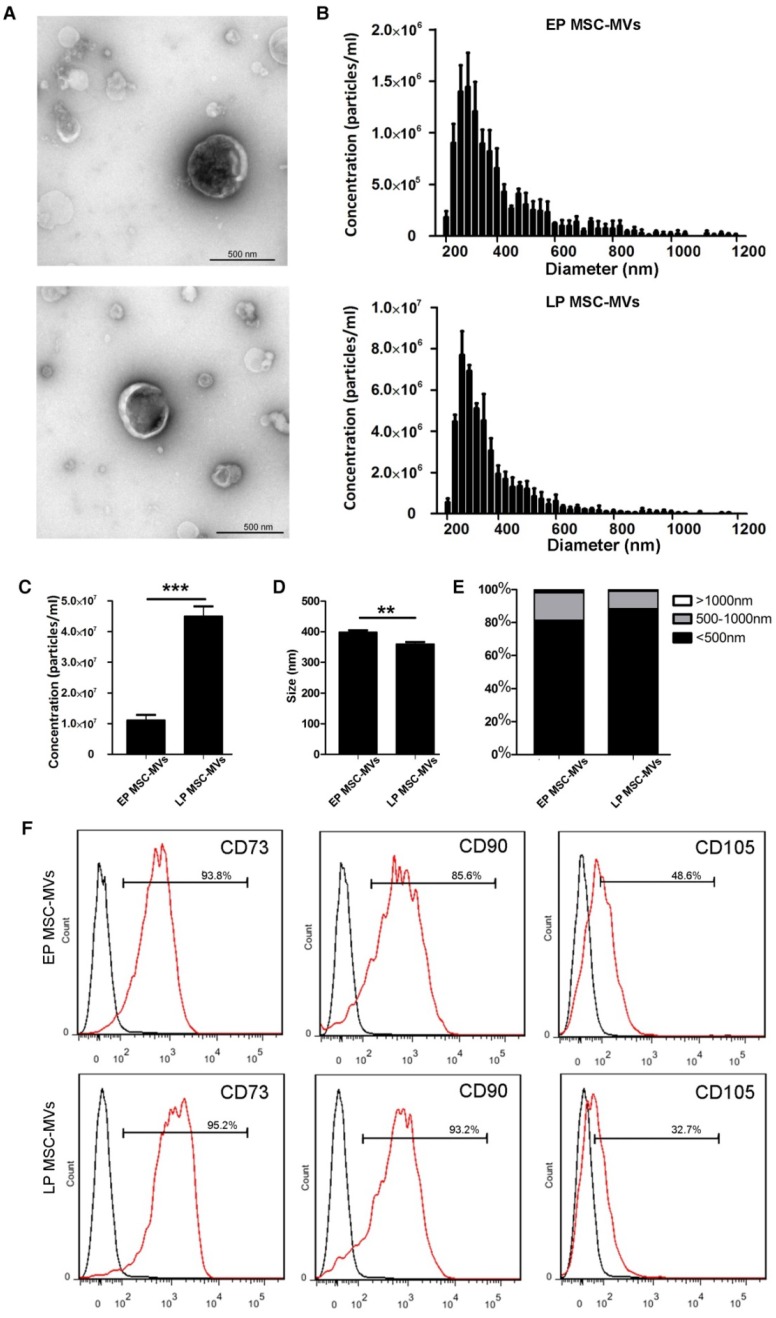
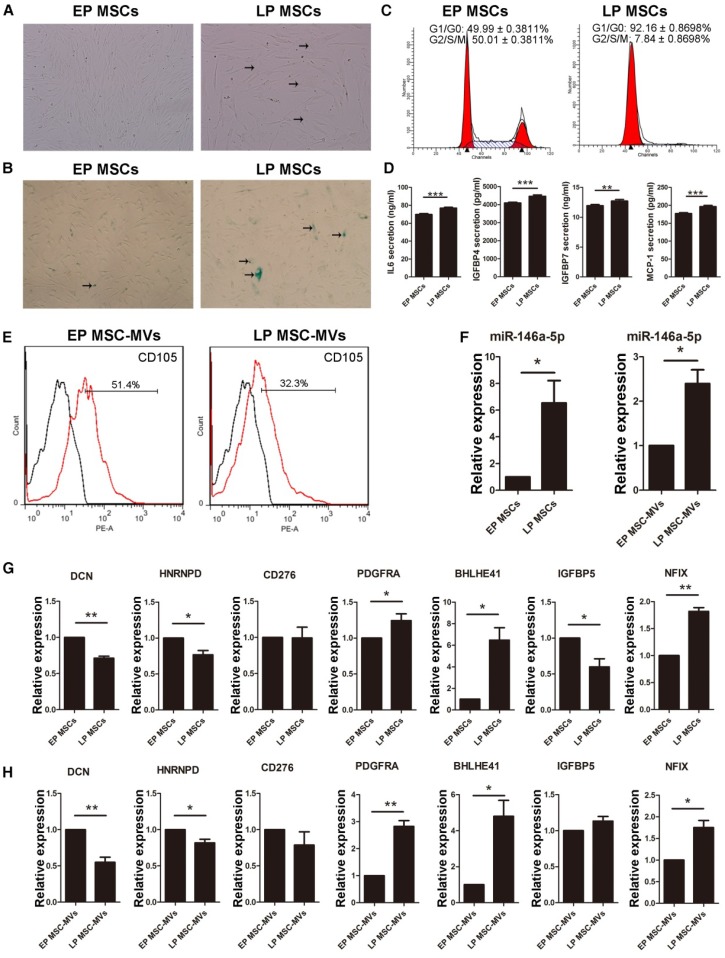
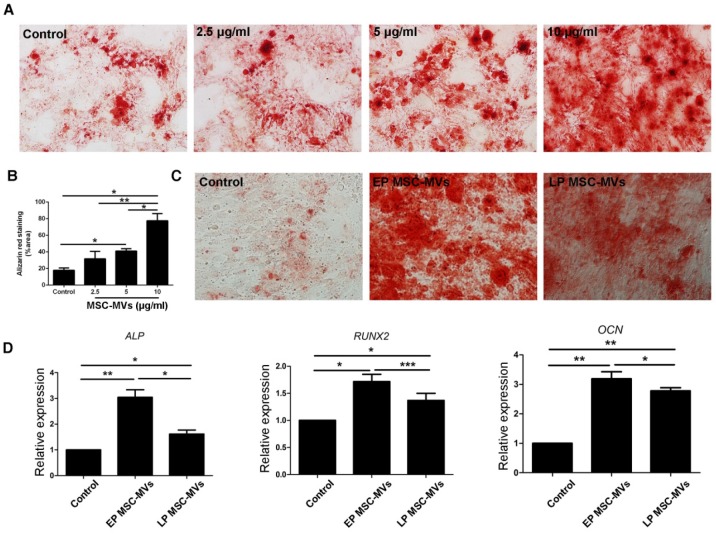
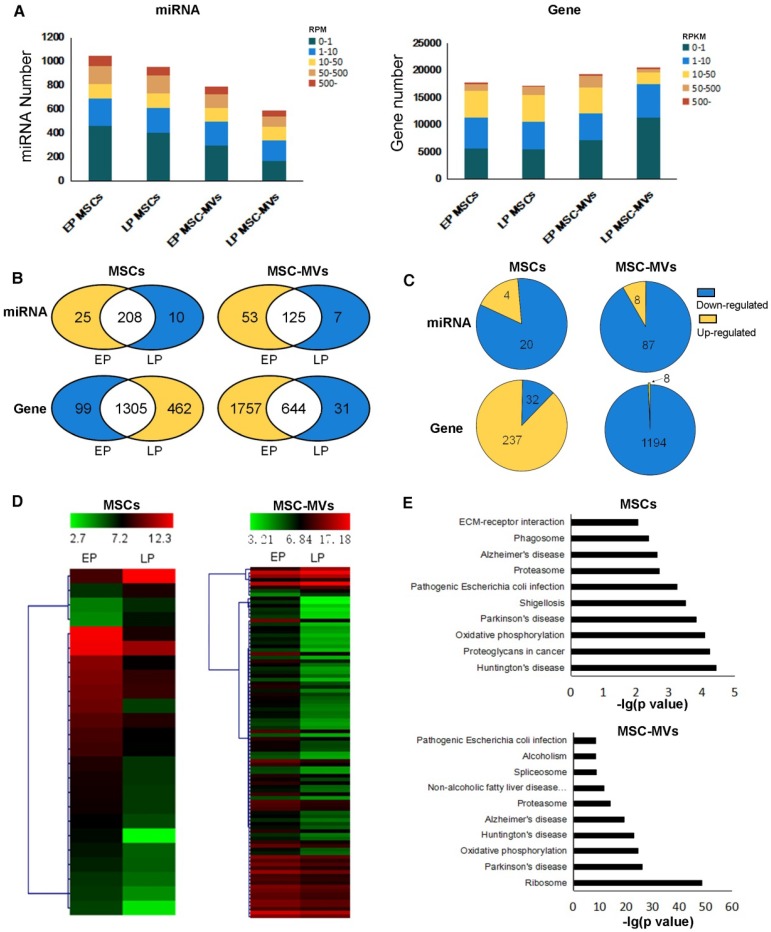
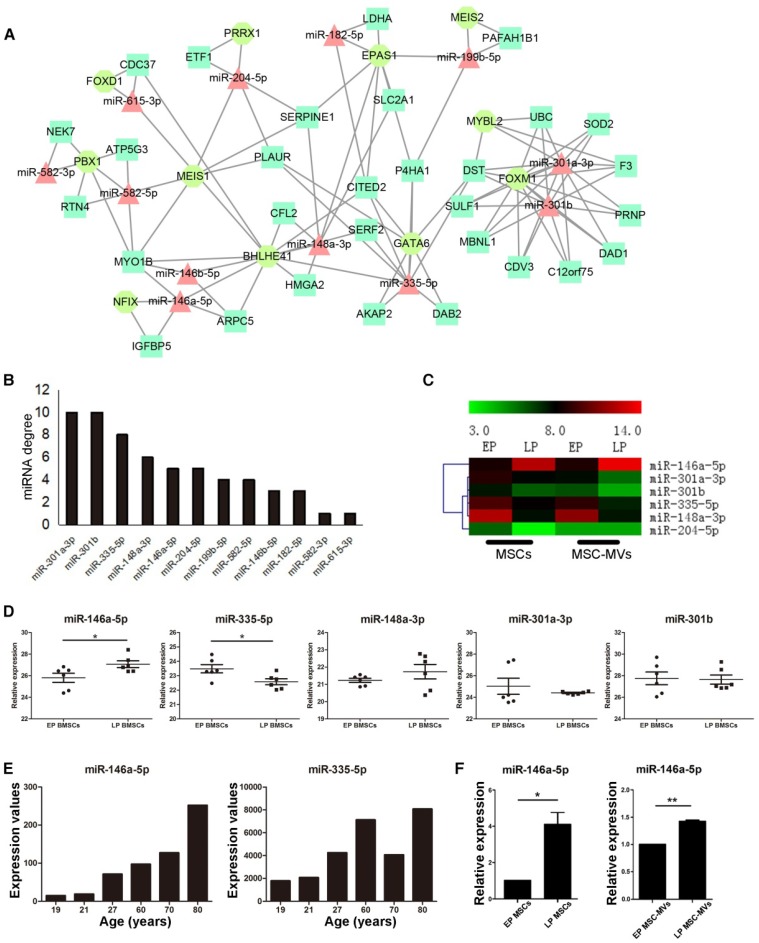
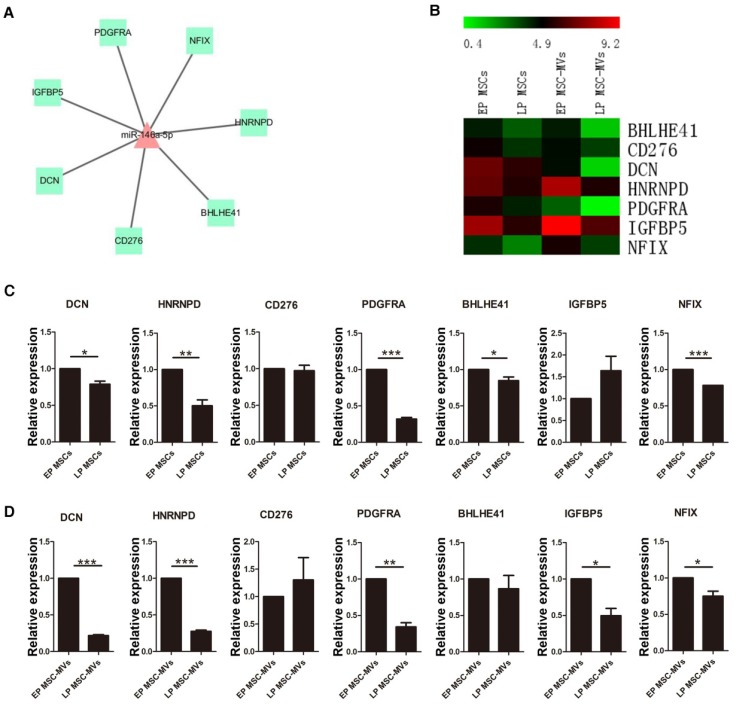
Senescence in human mesenchymal stem cells (MSCs) not only contributes to organism aging and the development of a variety of diseases but also severely impairs their therapeutic properties as a promising cell therapy. Studies searching for efficient biomarkers that represent cellular senescence have attracted much attention; however, no single marker currently provides an accurate cell-free representation of cellular senescence. Here, we studied characteristics of MSC-derived microvesicles (MSC-MVs) that may reflect the senescence in their parental MSCs. We found that senescent late passage (LP) MSCs secreted higher levels of MSC-MVs with smaller size than did early passage (EP) MSCs, and the level of CD105+ MSC-MVs decreased with senescence in the parental MSCs. Also, a substantially weaker ability to promote osteogenesis in MSCs was observed in LP than EP MSC-MVs. Comparative analysis of RNA sequencing showed the same trend of decreasing number of highly-expressed miRNAs with increasing number of passages in both MSCs and MSC-MVs. Most of the highly-expressed genes in LP MSCs and the corresponding MSC-MVs were involved in the regulation of senescence-related diseases, such as Alzheimer's disease. Furthermore, based on the miRNA profiling, transcription factors (TF) and genes regulatory networks of MSC senescence, and the datasets from GEO database, we confirmed that expression of miR-146a-5p in MSC-MVs resembled the senescent state of their parental MSCs. Our findings provide evidence that MSC-MVs are a key factor in the senescence-associated secretory phenotype of MSCs and demonstrate that their integrated characteristics can dynamically reflect the senescence state of MSCs representing a potential biomarker for monitoring MSC senescence.
人间充质干细胞(MSC)的衰老不仅会导致机体衰老和多种疾病的发生,还会严重损害其作为一种有前景的细胞疗法的治疗特性。寻找能够代表细胞衰老的有效生物标志物的研究备受关注;然而,目前尚无单一标志物能够准确地无细胞表征细胞衰老。在此,我们研究了MSC来源的微泡(MSC-MV)的特征,这些特征可能反映其亲代MSC的衰老情况。我们发现,与早期传代(EP)的MSC相比,衰老的晚期传代(LP)MSC分泌的MSC-MV水平更高,且尺寸更小,并且亲代MSC衰老时CD105+ MSC-MV的水平会降低。此外,与EP MSC-MV相比,LP MSC-MV促进MSC成骨的能力明显较弱。RNA测序的比较分析表明,MSC和MSC-MV中高表达miRNA的数量均随着传代次数的增加而呈现相同的减少趋势。LP MSC及其相应的MSC-MV中大多数高表达基因都参与了衰老相关疾病的调控,如阿尔茨海默病。此外,基于miRNA谱、MSC衰老的转录因子(TF)和基因调控网络以及来自GEO数据库的数据集,我们证实了MSC-MV中miR-146a-5p的表达与其亲代MSC的衰老状态相似。我们的研究结果提供了证据,表明MSC-MV是MSC衰老相关分泌表型的关键因素,并证明其综合特征可以动态反映MSC的衰老状态,代表了一种监测MSC衰老的潜在生物标志物。