Tournebize Rémi, Manel Stéphanie, Vigouroux Yves, Munoz François, de Kochko Alexandre, Poncet Valérie
UMR DIADE, Institut de Recherche pour le développement, University of Montpellier, Montpellier, France.
UMR CEFE, Ecole Pratique des Hautes Etudes, PSL Research University, CNRS, University of Montpellier, Montpellier SupAgro, IRD, INRA, Montpellier, France.
PLoS One. 2017 Aug 18;12(8):e0183412. doi: 10.1371/journal.pone.0183412. eCollection 2017.
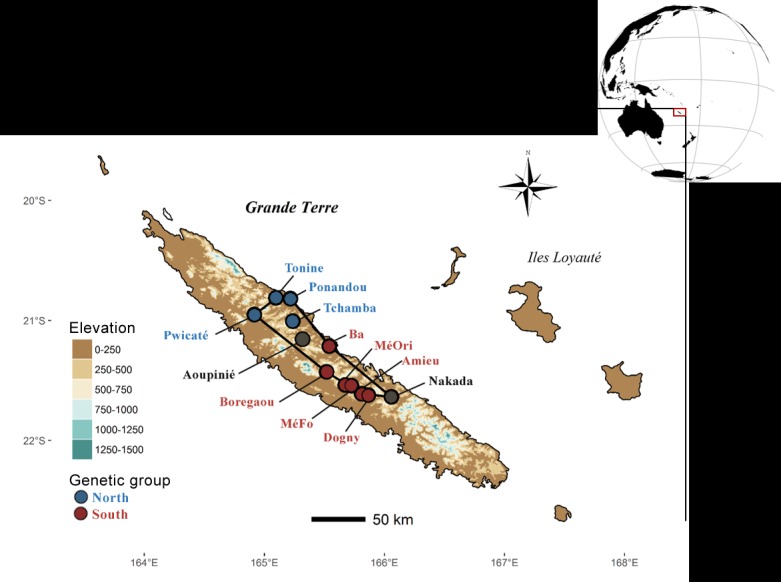
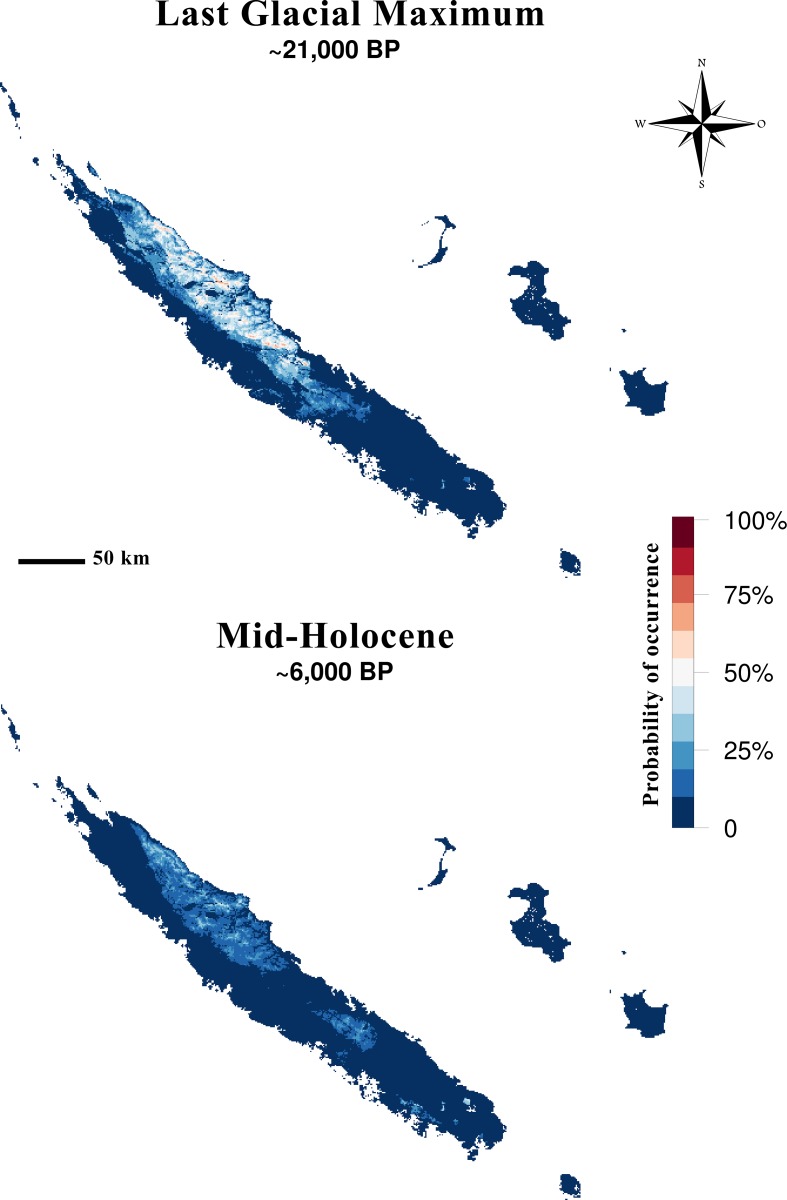
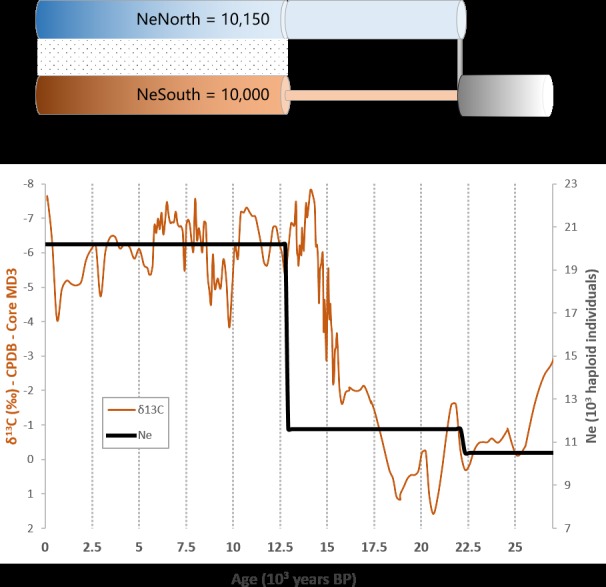
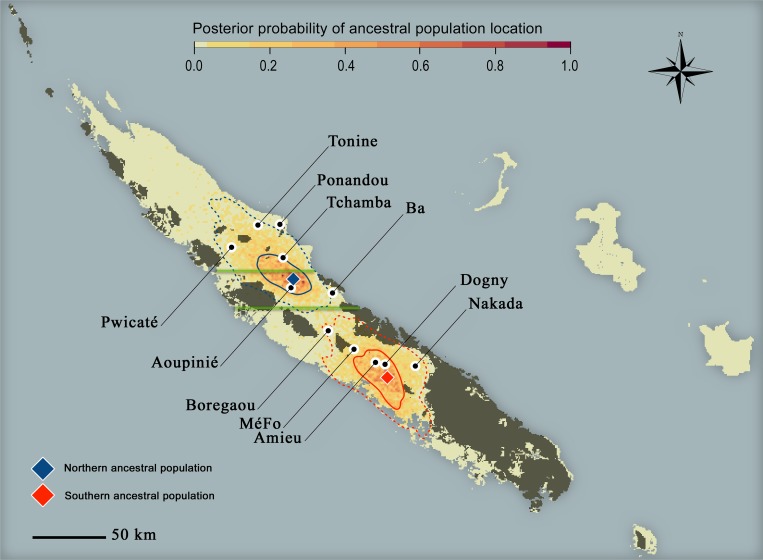
Past climate fluctuations shaped the population dynamics of organisms in space and time, and have impacted their present intra-specific genetic structure. Demo-genetic modelling allows inferring the way past demographic and migration dynamics have determined this structure. Amborella trichopoda is an emblematic relict plant endemic to New Caledonia, widely distributed in the understory of non-ultramafic rainforests. We assessed the influence of the last glacial climates on the demographic history and the paleo-distribution of 12 Amborella populations covering the whole current distribution. We performed coalescent genetic modelling of these dynamics, based on both whole-genome resequencing and microsatellite genotyping data. We found that the two main genetic groups of Amborella were shaped by the divergence of two ancestral populations during the last glacial maximum. From 12,800 years BP, the South ancestral population has expanded 6.3-fold while the size of the North population has remained stable. Recent asymmetric gene flow between the groups further contributed to the phylogeographical pattern. Spatially explicit coalescent modelling allowed us to estimate the location of ancestral populations with good accuracy (< 22 km) and provided indications regarding the mid-elevation pathways that facilitated post-glacial expansion.
过去的气候波动在时空上塑造了生物的种群动态,并影响了它们目前的种内遗传结构。种群遗传建模能够推断过去的种群统计和迁移动态决定这种结构的方式。无油樟是新喀里多尼亚特有的一种标志性残遗植物,广泛分布于非超基性雨林的林下。我们评估了末次冰期气候对涵盖当前整个分布范围的12个无油樟种群的种群历史和古分布的影响。我们基于全基因组重测序和微卫星基因分型数据,对这些动态进行了溯祖遗传建模。我们发现,无油樟的两个主要遗传群体是由末次盛冰期两个祖先种群的分化形成的。从距今12800年前开始,南部祖先种群扩大了6.3倍,而北部种群的规模保持稳定。群体之间最近的不对称基因流进一步促成了系统地理学模式。空间明确的溯祖建模使我们能够较为准确地估计祖先种群的位置(误差<22公里),并提供了有关促进冰期后扩张的中海拔路径的线索。