Hichri Imène, Muhovski Yordan, Žižková Eva, Dobrev Petre I, Gharbi Emna, Franco-Zorrilla Jose M, Lopez-Vidriero Irene, Solano Roberto, Clippe André, Errachid Abdelmounaim, Motyka Vaclav, Lutts Stanley
Groupe de Recherche en Physiologie Végétale, Earth and Life Institute - Agronomy, Université Catholique de LouvainLouvain-la-Neuve, Belgium.
Département Sciences du Vivant, Centre Wallon de Recherches AgronomiquesGembloux, Belgium.
Front Plant Sci. 2017 Jul 31;8:1343. doi: 10.3389/fpls.2017.01343. eCollection 2017.
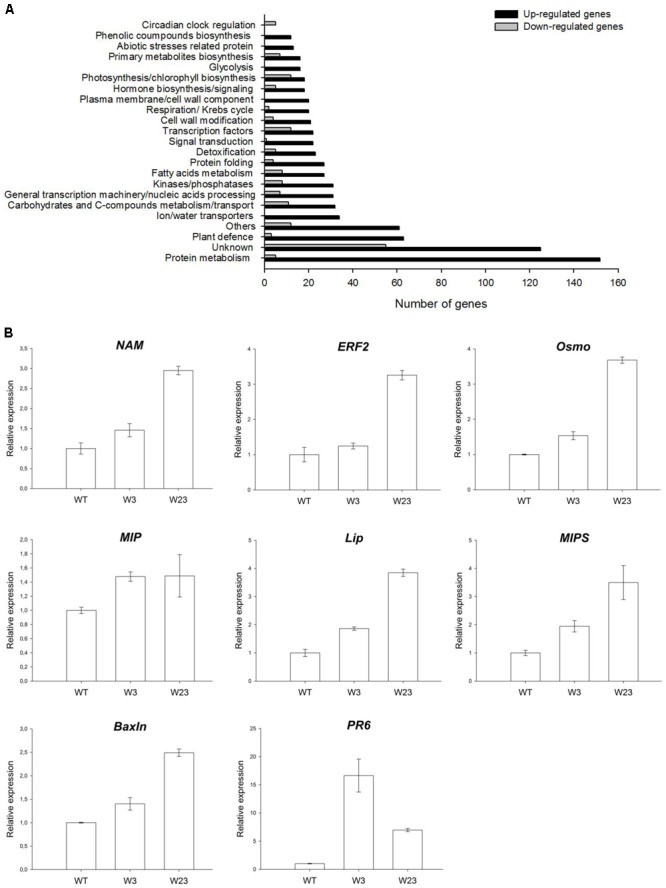
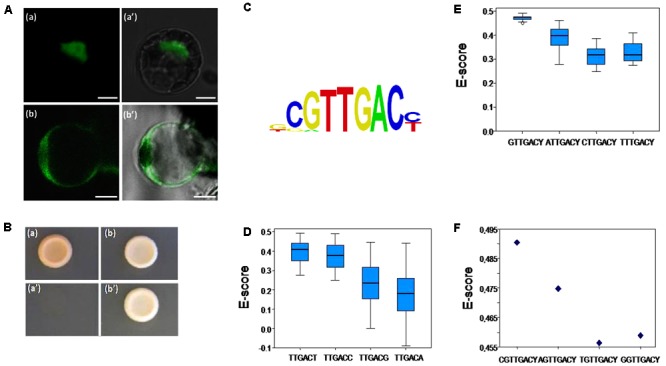
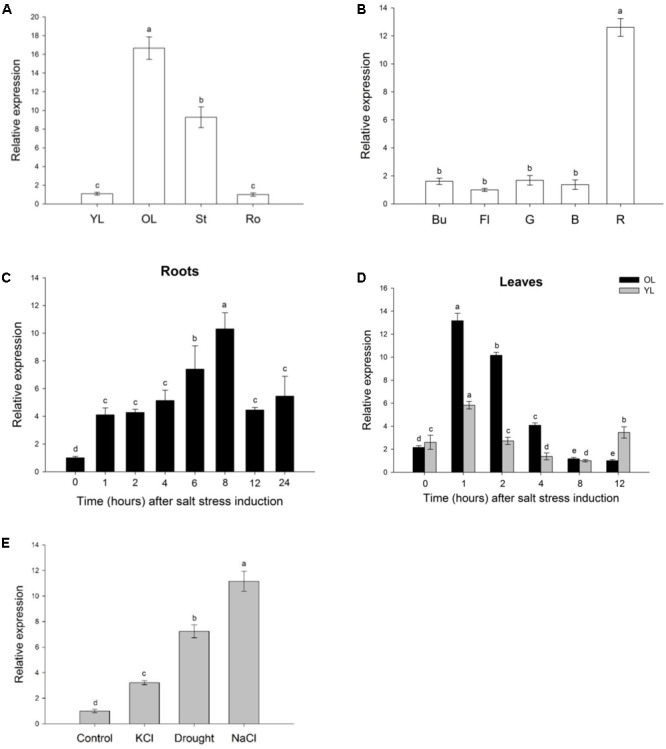
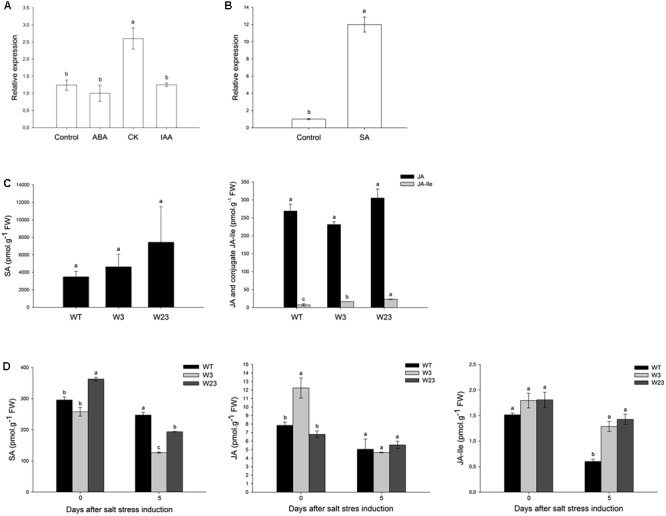
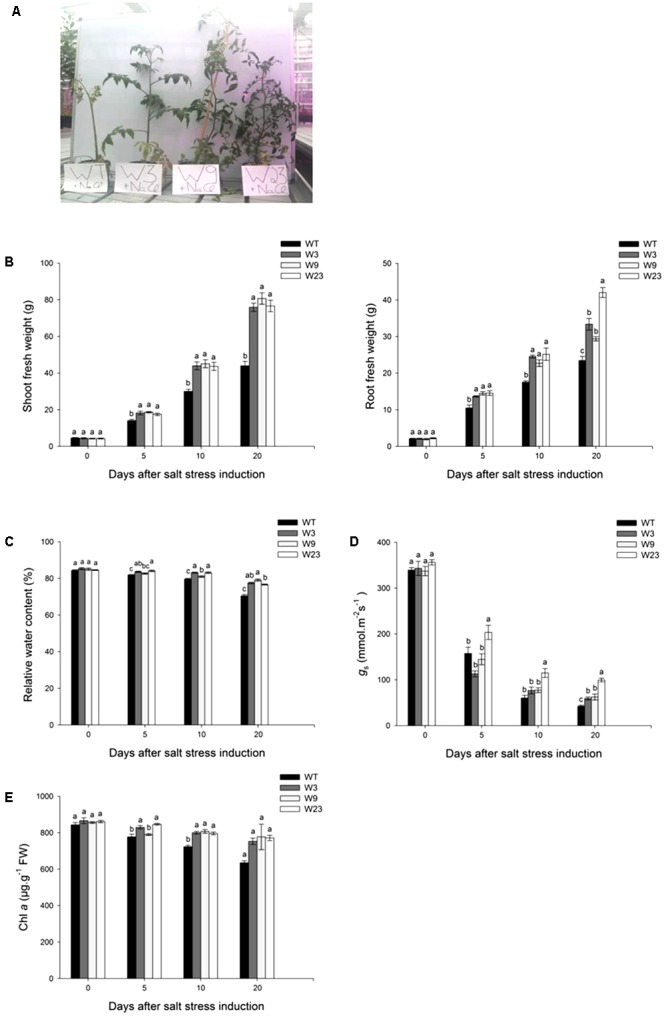
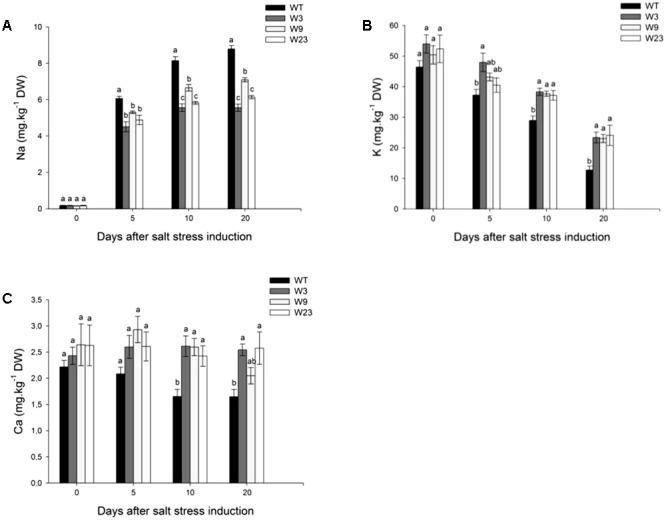
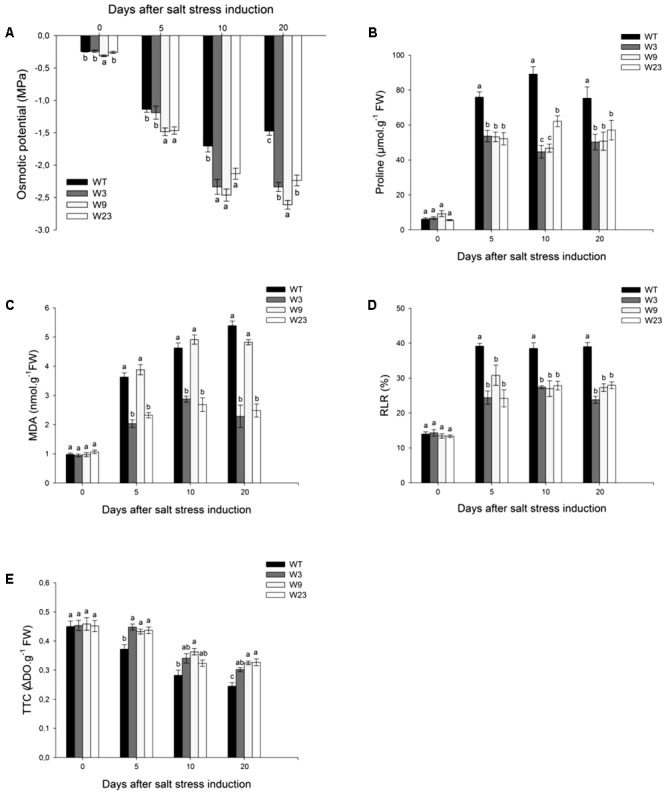
Salinity threatens productivity of economically important crops such as tomato ( L.). WRKY transcription factors appear, from a growing body of knowledge, as important regulators of abiotic stresses tolerance. Tomato SlWRKY3 is a nuclear protein binding to the consensus CGTTGACC/T W box. is preferentially expressed in aged organs, and is rapidly induced by NaCl, KCl, and drought. In addition, responds to salicylic acid, and :: tomatoes showed under salt treatment reduced contents of salicylic acid. In tomato, overexpression of impacted multiple aspects of salinity tolerance. Indeed, salinized (125 mM NaCl, 20 days) tomato plants displayed reduced oxidative stress and proline contents compared to WT. Physiological parameters related to plant growth (shoot and root biomass) and photosynthesis (stomatal conductance and chlorophyll content) were retained in transgenic plants, together with lower Na contents in leaves, and higher accumulation of K and Ca. Microarray analysis confirmed that many stress-related genes were already up-regulated in transgenic tomatoes under optimal conditions of growth, including genes coding for antioxidant enzymes, ion and water transporters, or plant defense proteins. Together, these results indicate that SlWRKY3 is an important regulator of salinity tolerance in tomato.
盐度威胁着番茄(L.)等经济作物的生产力。从越来越多的知识来看,WRKY转录因子似乎是耐非生物胁迫的重要调节因子。番茄SlWRKY3是一种与共有序列CGTTGACC/T W盒结合的核蛋白。它在衰老器官中优先表达,并被NaCl、KCl和干旱迅速诱导。此外,它对水杨酸有反应,并且SlWRKY3过表达的番茄在盐处理下显示出水杨酸含量降低。在番茄中,SlWRKY3的过表达影响了耐盐性的多个方面。事实上,与野生型相比,盐化(125 mM NaCl,20天)的SlWRKY3过表达番茄植株表现出氧化应激和脯氨酸含量降低。与植物生长(地上部和根部生物量)和光合作用(气孔导度和叶绿素含量)相关的生理参数在转基因植株中得以保持,同时叶片中的钠含量较低,钾和钙的积累较高。微阵列分析证实,在最佳生长条件下,许多与胁迫相关的基因在转基因番茄中已经上调,包括编码抗氧化酶、离子和水转运蛋白或植物防御蛋白的基因。总之,这些结果表明SlWRKY3是番茄耐盐性的重要调节因子。