Gao Wei, Long Lu, Tian Xinquan, Xu Fuchun, Liu Ji, Singh Prashant K, Botella Jose R, Song Chunpeng
State Key Laboratory of Cotton Biology, Henan Key Laboratory of Plant Stress Biology, School of Life Sciences, Henan UniversityKaifeng, China.
State Key Laboratory of Cotton Biology, Institute of Cotton Research of Chinese Academy of Agricultural SciencesAnyang, China.
Front Plant Sci. 2017 Aug 3;8:1364. doi: 10.3389/fpls.2017.01364. eCollection 2017.
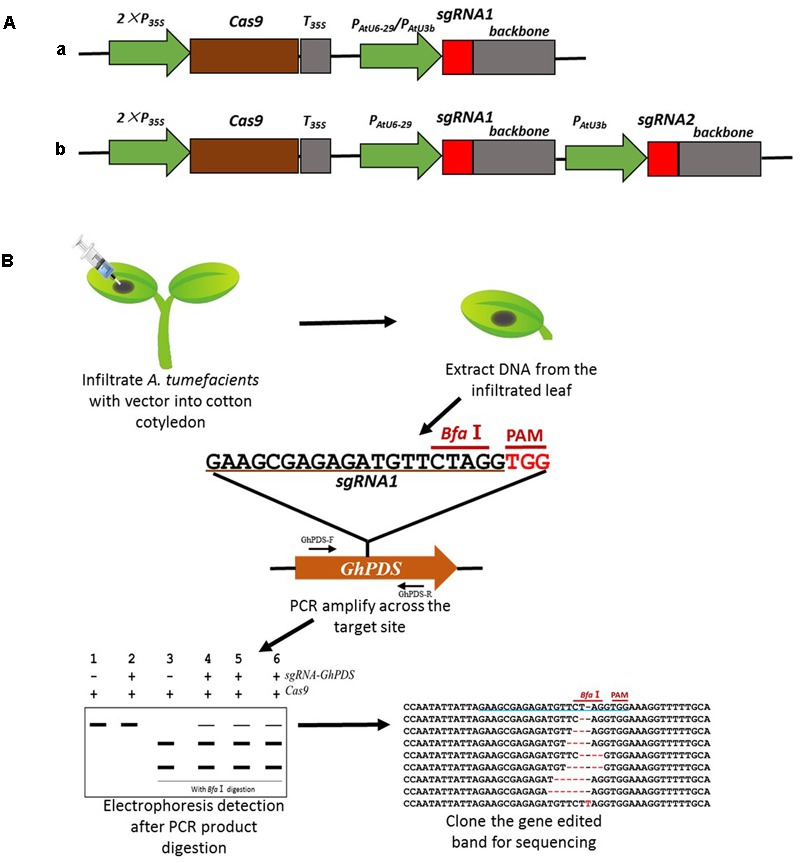
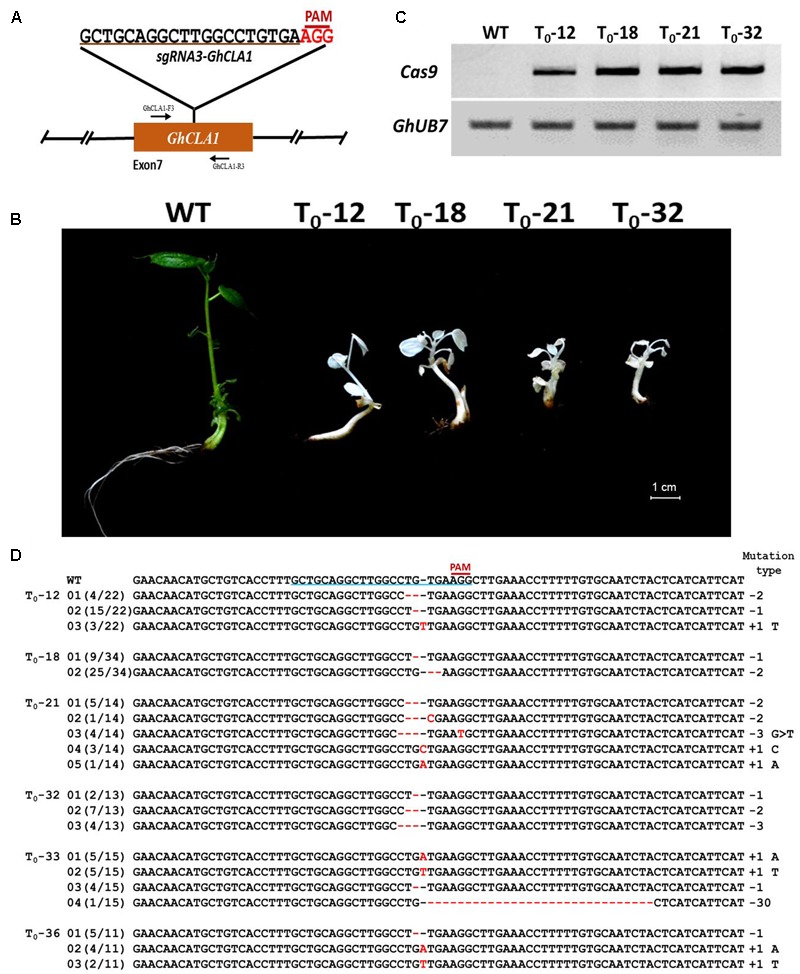
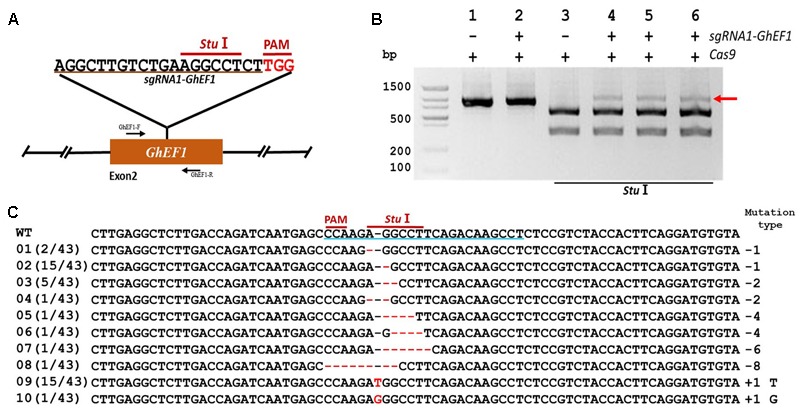
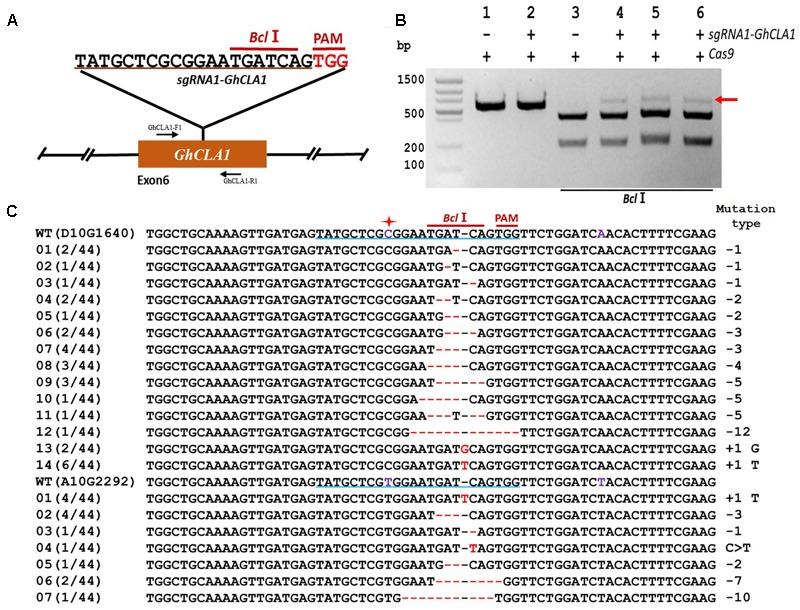
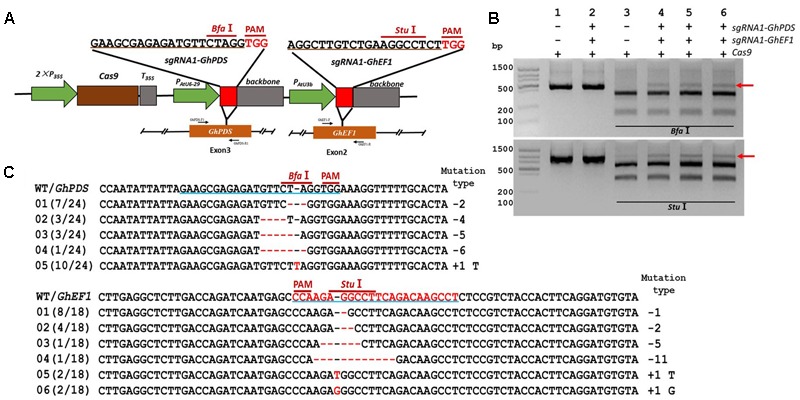
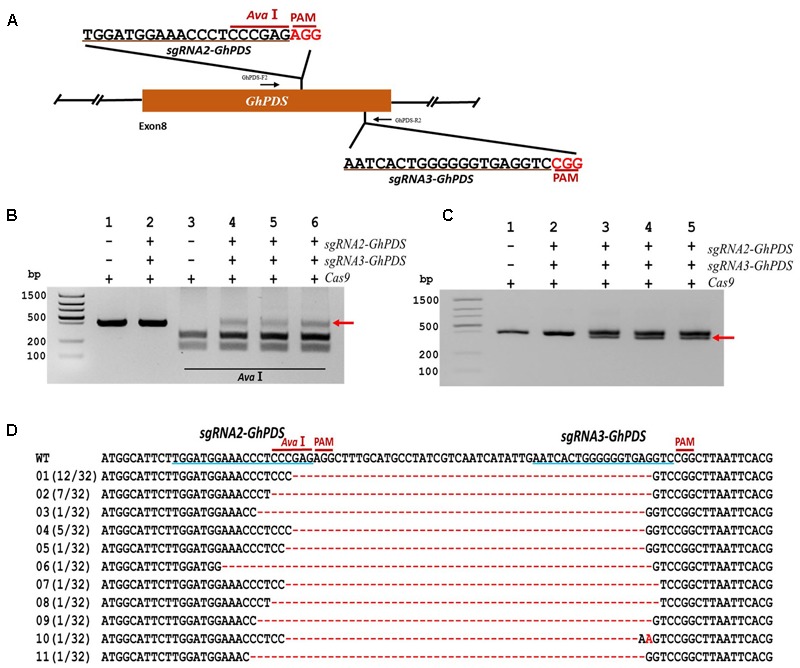
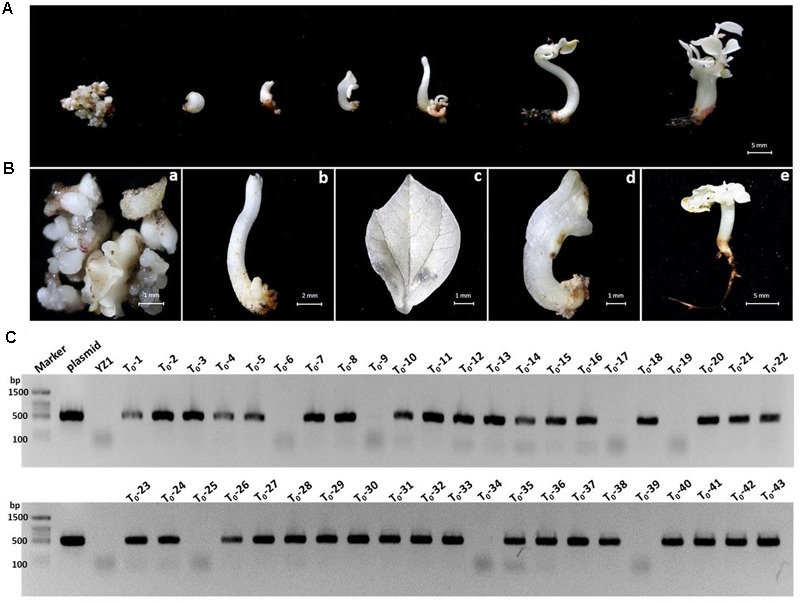
Genome editing is an important tool for gene functional studies as well as crop improvement. The recent development of the CRISPR/Cas9 system using single guide RNA molecules (sgRNAs) to direct precise double strand breaks in the genome has the potential to revolutionize agriculture. Unfortunately, not all sgRNAs are equally efficient and it is difficult to predict their efficiency by bioinformatics. In crops such as cotton ( L.), with labor-intensive and lengthy transformation procedures, it is essential to minimize the risk of using an ineffective sgRNA that could result in the production of transgenic plants without the desired CRISPR-induced mutations. In this study, we have developed a fast and efficient method to validate the functionality of in cotton using a transient expression system. We have used this method to validate target sites for three different genes , and and analyzed the nature of the CRISPR/Cas9-induced mutations. In our experiments, the most frequent type of mutations observed in cotton cotyledons were deletions (∼64%). We prove that the CRISPR/Cas9 system can effectively produce mutations in homeologous cotton genes, an important requisite in this allotetraploid crop. We also show that multiple gene targeting can be achieved in cotton with the simultaneous expression of several sgRNAs and have generated mutations in and at two target sites. Additionally, we have used the CRISPR/Cas9 system to produce targeted gene fragment deletions in the locus. Finally, we obtained transgenic cotton plants containing CRISPR/Cas9-induced gene editing mutations in the gene. The mutation efficiency was very high, with 80.6% of the transgenic lines containing mutations in the target site resulting in an intense albino phenotype due to interference with chloroplast biogenesis.
基因组编辑是基因功能研究以及作物改良的重要工具。最近利用单导向RNA分子(sgRNAs)引导基因组中精确双链断裂的CRISPR/Cas9系统的发展,有可能给农业带来变革。不幸的是,并非所有sgRNAs都具有同等效率,而且通过生物信息学很难预测它们的效率。在棉花等作物中,转化程序劳动强度大且耗时漫长,因此将使用无效sgRNA的风险降至最低至关重要,因为这可能导致产生没有所需CRISPR诱导突变的转基因植物。在本研究中,我们开发了一种快速有效的方法,利用瞬时表达系统验证棉花中sgRNAs的功能。我们已使用此方法验证了三个不同基因、和的靶位点,并分析了CRISPR/Cas9诱导突变的性质。在我们的实验中,在棉花子叶中观察到的最常见突变类型是缺失(约64%)。我们证明CRISPR/Cas9系统可以有效地在同源棉花基因中产生突变,这是这种异源四倍体作物的一个重要条件。我们还表明,通过同时表达几种sgRNAs,可以在棉花中实现多基因靶向,并在和的两个靶位点产生了突变。此外,我们已使用CRISPR/Cas9系统在基因座中产生靶向基因片段缺失。最后,我们获得了在基因中含有CRISPR/Cas9诱导的基因编辑突变的转基因棉花植株。突变效率非常高,80.6%在靶位点含有突变的转基因株系由于叶绿体生物发生受到干扰而导致强烈的白化表型。