Kevin Richard C, Lefever Timothy W, Snyder Rodney W, Patel Purvi R, Fennell Timothy R, Wiley Jenny L, McGregor Iain S, Thomas Brian F
School of Psychology, The University of Sydney, A18, Sydney, NSW 2006 Australia.
The Lambert Initiative for Cannabinoid Therapeutics, The University of Sydney, Sydney, NSW 2050 Australia.
Forensic Toxicol. 2017;35(2):333-347. doi: 10.1007/s11419-017-0361-1. Epub 2017 Mar 10.
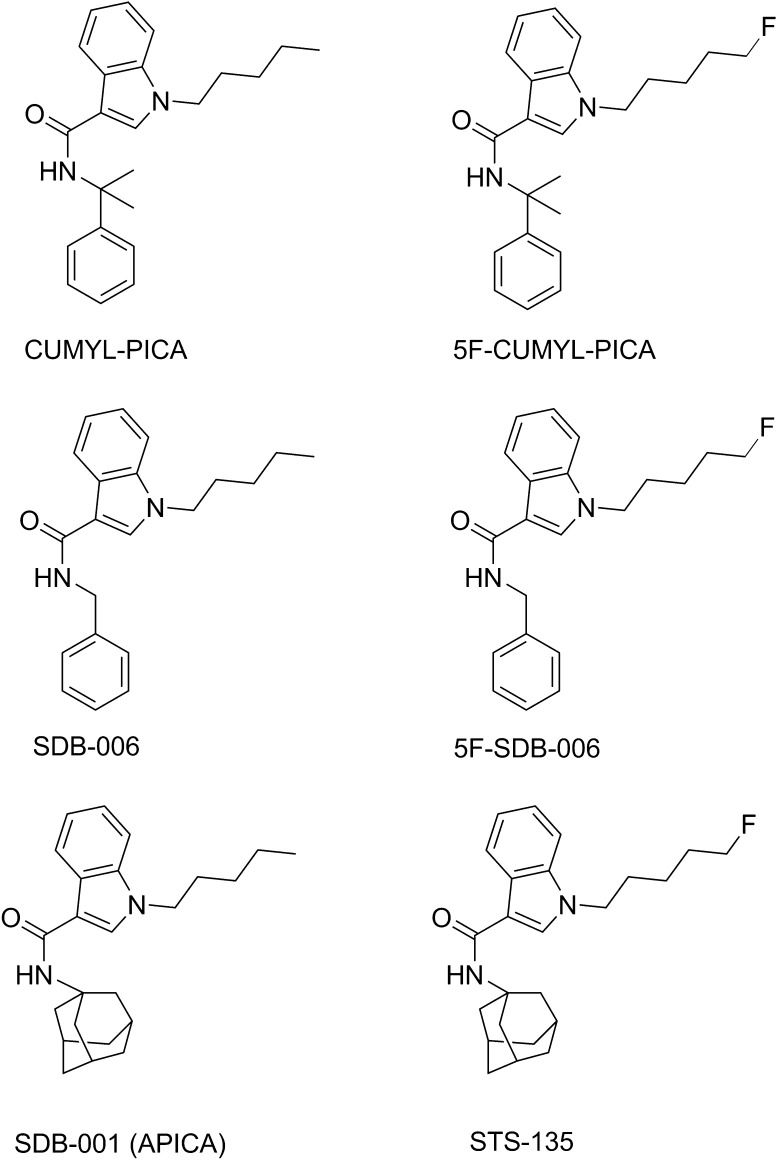
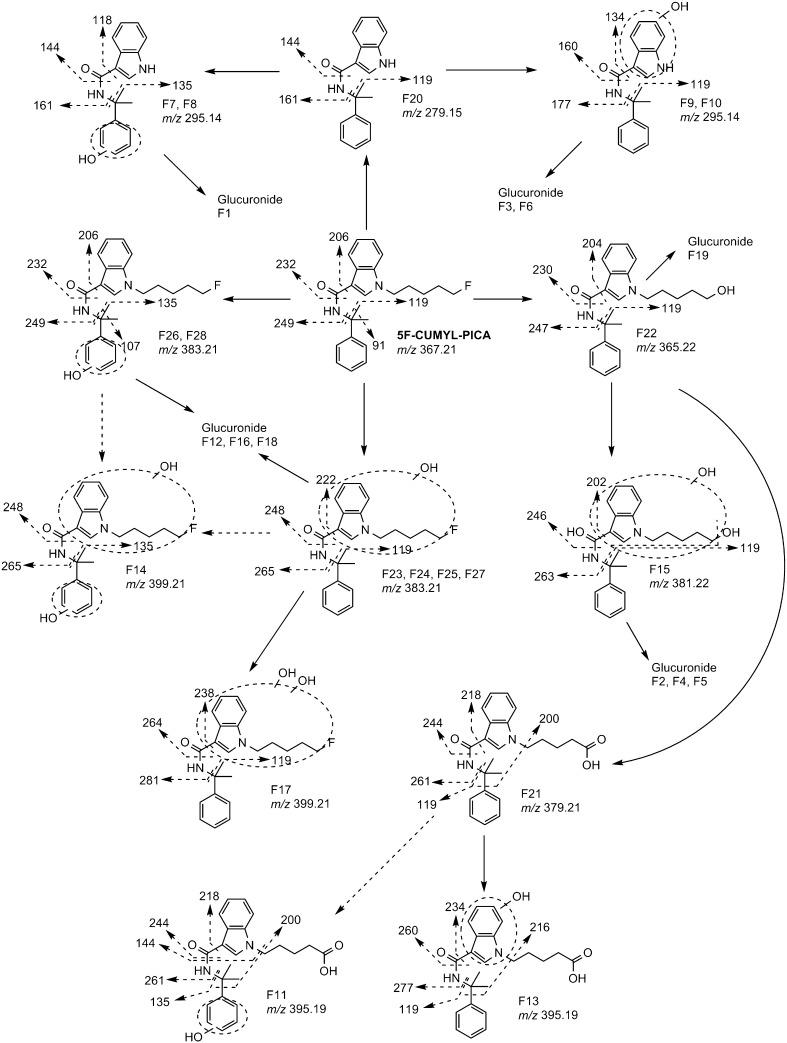
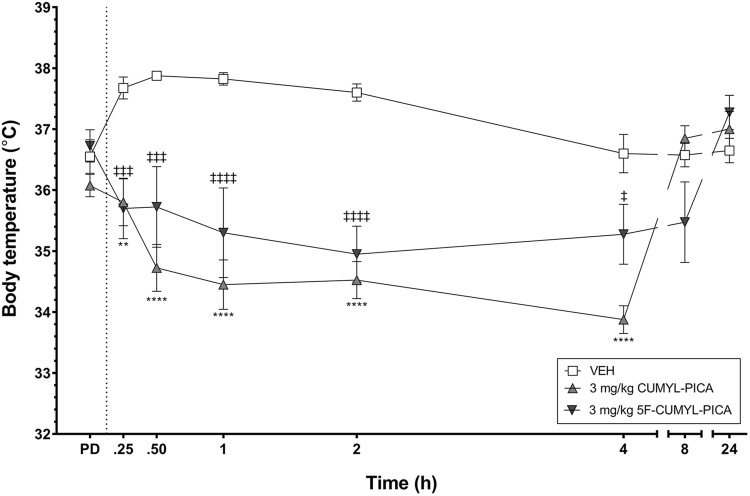
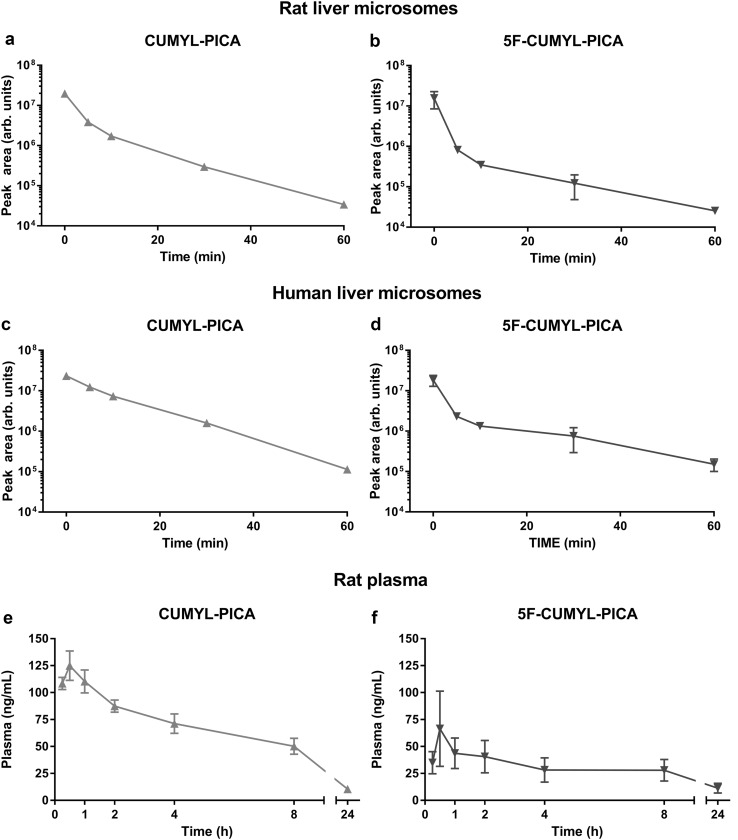
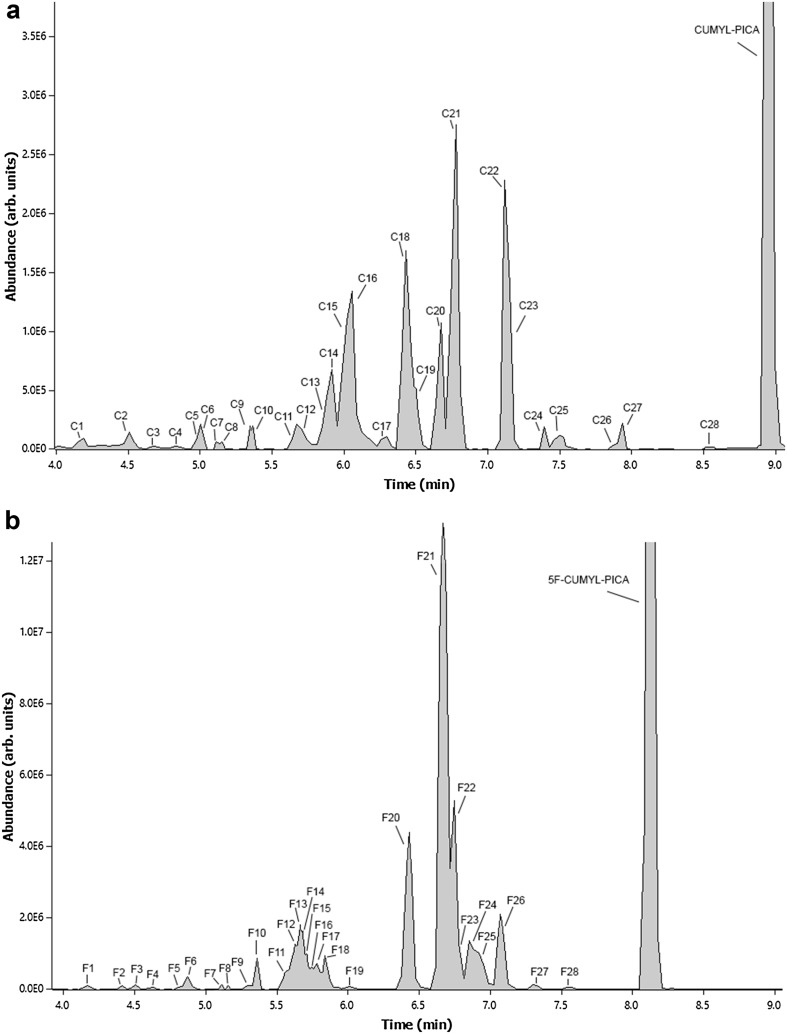
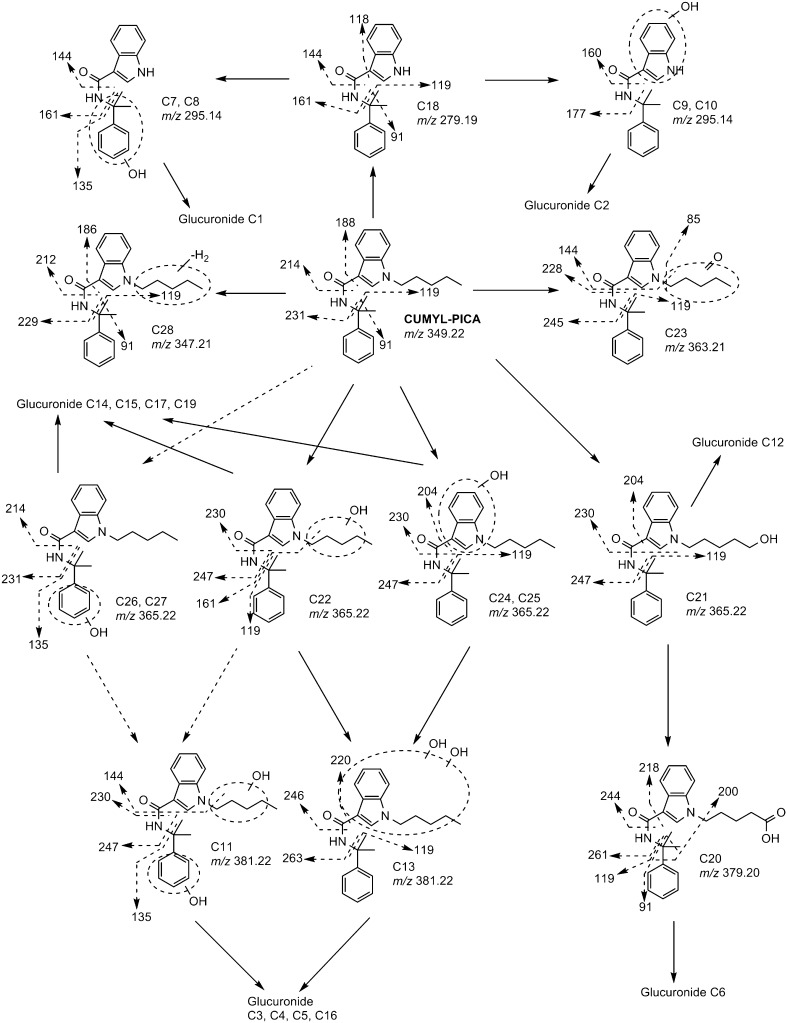
CUMYL-PICA [1-pentyl--(2-phenylpropan-2-yl)-1-indole-3-carboxamide] and 5F-CUMYL-PICA [1-(5-fluoropentyl)--(2-phenylpropan-2-yl)-1-indole-3-carboxamide] are recently identified recreationally used/abused synthetic cannabinoids, but have uncharacterized pharmacokinetic profiles and metabolic processes. This study characterized clearance and metabolism of these compounds by human and rat liver microsomes and hepatocytes, and then compared these parameters with in vivo rat plasma and urine sampling. It also evaluated hypothermia, a characteristic cannabimimetic effect. Incubation of CUMYL-PICA and 5F-CUMYL-PICA with rat and human liver microsomes suggested rapid metabolic clearance, but in vivo metabolism was prolonged, such that parent compounds remained detectable in rat plasma 24 h post-dosing. At 3 mg/kg (intraperitoneally), both compounds produced moderate hypothermic effects. Twenty-eight metabolites were tentatively identified for CUMYL-PICA and, coincidentally, 28 metabolites for 5F-CUMYL-PICA, primarily consisting of phase I oxidative transformations and phase II glucuronidation. The primary metabolic pathways for both compounds resulted in the formation of identical metabolites following terminal hydroxylation or dealkylation of the -pentyl chain for CUMYL-PICA or of the 5-fluoropentyl chain for 5F-CUMYL-PICA. These data provide evidence that in vivo elimination of CUMYL-PICA, 5F-CUMYL-PICA and other synthetic cannabinoids is delayed compared to in vitro modeling, possibly due to sequestration into adipose tissue. Additionally, the present data underscore the need for careful selection of metabolites as analytical targets to distinguish between closely related synthetic cannabinoids in forensic settings.
CUMYL-PICA [1-戊基-3-(2-苯基丙-2-基)-1-吲哚-3-甲酰胺] 和 5F-CUMYL-PICA [1-(5-氟戊基)-3-(2-苯基丙-2-基)-1-吲哚-3-甲酰胺] 是最近发现的被用于娱乐/滥用的合成大麻素,但它们的药代动力学特征和代谢过程尚未明确。本研究通过人和大鼠肝微粒体及肝细胞对这些化合物的清除和代谢进行了表征,然后将这些参数与大鼠体内血浆和尿液采样结果进行了比较。研究还评估了体温过低这一典型的大麻模拟效应。CUMYL-PICA 和 5F-CUMYL-PICA 与大鼠和人肝微粒体的孵育表明代谢清除迅速,但体内代谢时间延长,以至于给药后 24 小时大鼠血浆中仍可检测到母体化合物。在 3 毫克/千克(腹腔注射)时,两种化合物均产生中度体温过低效应。初步鉴定出 CUMYL-PICA 有 28 种代谢产物,巧合的是,5F-CUMYL-PICA 也有 28 种代谢产物,主要包括 I 相氧化转化和 II 相葡萄糖醛酸化。两种化合物的主要代谢途径是,CUMYL-PICA 的戊基链或 5F-CUMYL-PICA 的 5-氟戊基链末端羟基化或脱烷基化后形成相同的代谢产物。这些数据表明,与体外模型相比,CUMYL-PICA、5F-CUMYL-PICA 和其他合成大麻素在体内的消除延迟,这可能是由于它们被隔离在脂肪组织中。此外,目前的数据强调在法医环境中区分密切相关的合成大麻素时,需要谨慎选择代谢产物作为分析靶点。