Flores Cindy J, Sethna Farah, Stephens Ben, Saxon Ben, Hong Frank S, Roberts Trish, Spigiel Tracey, Burgess Maria, Connors Belinda, Crispin Philip
Australian Red Cross Blood Service, West Melbourne VIC, Australia.
Obstetrics & Maternal/Fetal Medicine, Canberra Hospital and Health Service, Garran ACT, Australia.
BMJ Qual Improv Rep. 2017 Jun 23;6(1):e000009. doi: 10.1136/bmjquality-2017-000009. eCollection 2017.
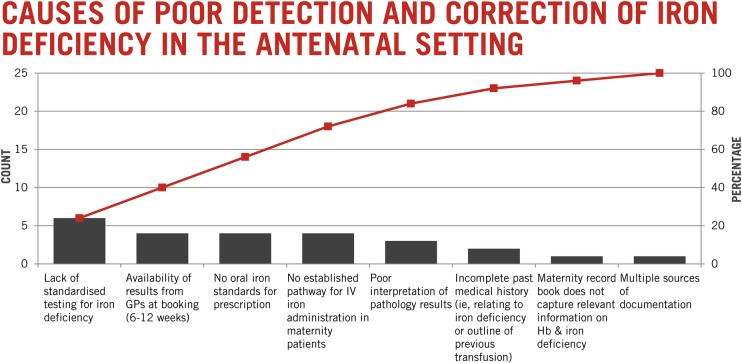
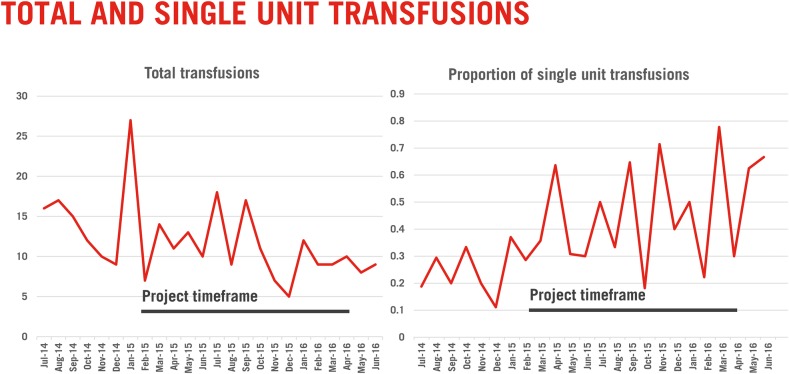
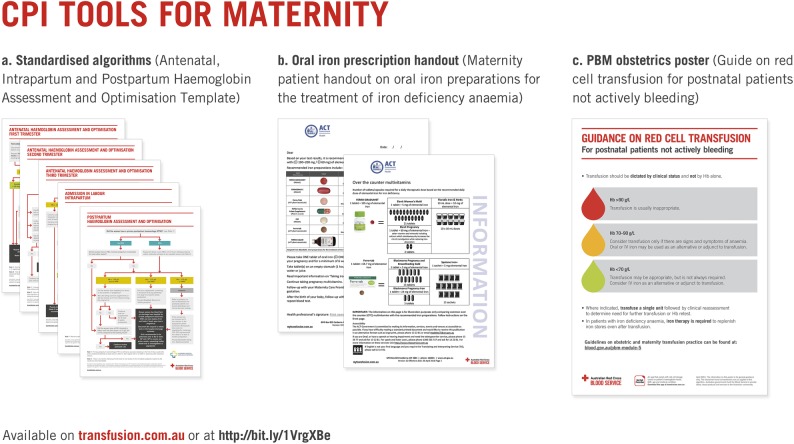
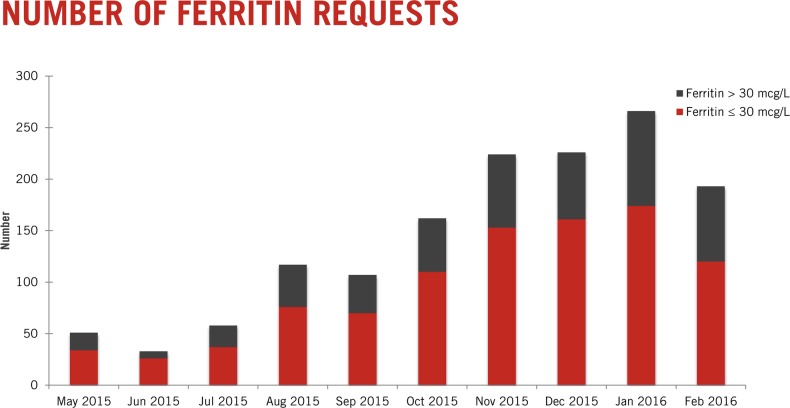
Iron deficiency and anaemia are common in pregnancy. Audit data from our tertiary obstetrics unit demonstrated 22% of maternity patients experiencing a postpartum haemorrhage received a transfusion; a third of whom were anaemic on admission intrapartum. Australian Patient Blood Management (PBM) Module 5 Obstetrics guidelines focuses on maximising red cell mass at the time of delivery and reducing the reliance on transfusion as a salvage therapy to treat blood loss. A clinical practice improvement partnership began in February 2015 and completed in April 2016; which aimed to implement systems to improve antenatal identification and management of iron deficiency, and improve postpartum anaemia management. In order to develop change strategies, reasons for poor detection and correction of iron deficiency in the antenatal period were identified following a quality improvement methodology. Education was delivered to maternity healthcare providers. Standardised algorithms and an oral iron prescription handout were developed and piloted. Follow-up audit, staff and patient feedback, and other hospital data were collected to measure outcomes. The rate of anaemia on admission intrapartum fell from 12.2% in 2013 to 3.6% in 2016 following the introduction of unselective ferritin screening and other antenatal interventions. Sixty to 70% of maternity patients screened each month had iron deficiency. The algorithms aided staff to become confident in blood test interpretation and management of iron deficiency and anaemia. Patients found the oral iron prescription handout helpful. Additionally, single unit transfusions significantly increased from 35.4% to 50% (p=0.037) over the project timeframe. This project demonstrated the potential to improve patient blood management in obstetrics, reduce anaemia and transfusions by active antenatal interventions.
缺铁和贫血在孕期很常见。我们三级产科病房的审计数据显示,22%经历产后出血的产妇接受了输血;其中三分之一在分娩期入院时就已贫血。澳大利亚患者血液管理(PBM)模块5产科指南侧重于在分娩时最大化红细胞量,并减少对输血作为治疗失血挽救疗法的依赖。一项临床实践改进合作项目于2015年2月启动并于2016年4月完成;其旨在实施相关系统以改善缺铁的产前识别和管理,并改善产后贫血管理。为了制定变革策略,按照质量改进方法确定了产前缺铁检测和纠正不佳的原因。对产科医疗服务提供者进行了培训。制定并试点了标准化算法和口服铁剂处方手册。收集了随访审计、工作人员和患者反馈以及其他医院数据以衡量结果。在引入非选择性铁蛋白筛查和其他产前干预措施后,分娩期入院时的贫血率从2013年的12.2%降至2016年的3.6%。每月接受筛查的产妇中有60%至70%缺铁。这些算法帮助工作人员在血液检测解读以及缺铁和贫血管理方面变得更有信心。患者认为口服铁剂处方手册很有帮助。此外,在项目期间,单单位输血显著从35.4%增加到50%(p = 0.037)。该项目证明了通过积极的产前干预措施来改善产科患者血液管理、减少贫血和输血的潜力。