Shah Fenil, Logsdon Derek, Messmann Richard A, Fehrenbacher Jill C, Fishel Melissa L, Kelley Mark R
Department of Pediatrics, Herman B Wells Center for Pediatric Research, Indiana University School of Medicine, 1044 W. Walnut St., Indianapolis, IN 46202, USA.
Department of Pharmacology & Toxicology, Indiana University School of Medicine, 1044 W. Walnut St., Indianapolis, IN 46202, USA.
NPJ Precis Oncol. 2017;1. doi: 10.1038/s41698-017-0023-0. Epub 2017 Jun 8.
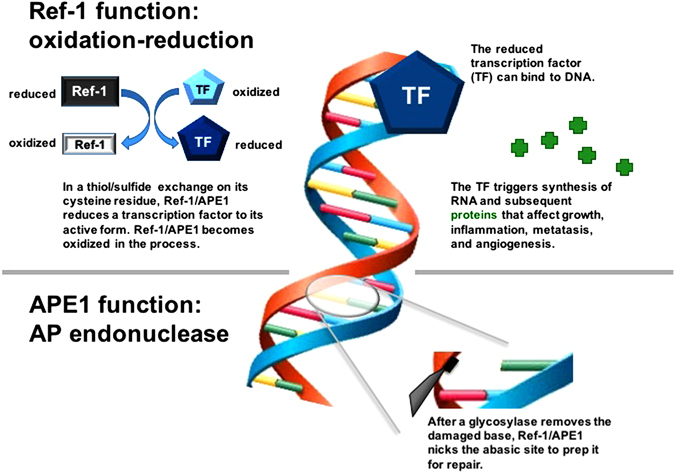
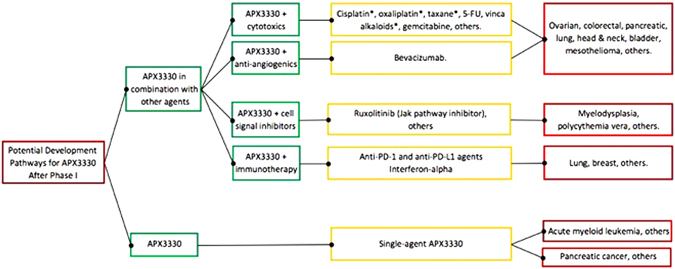
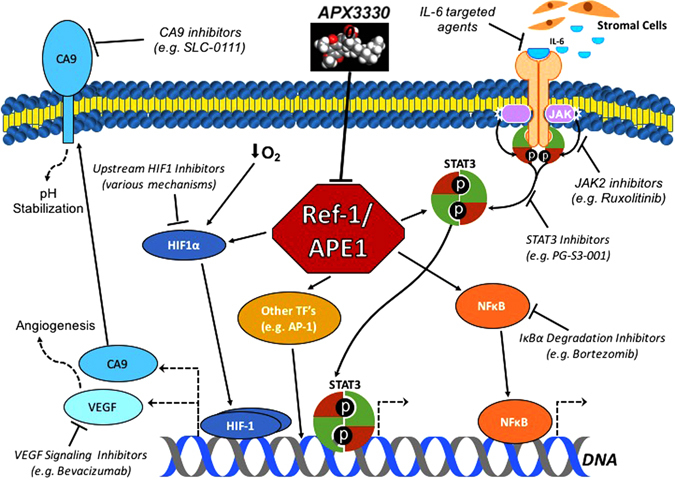
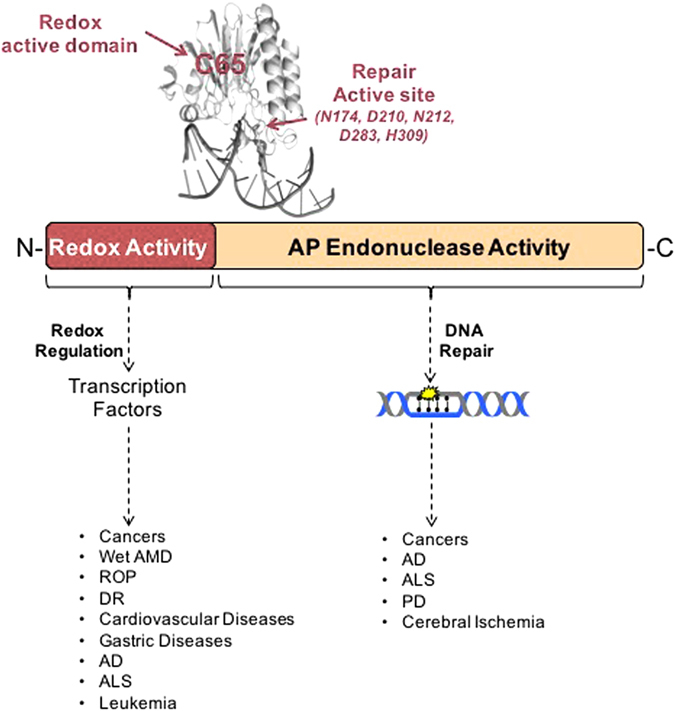
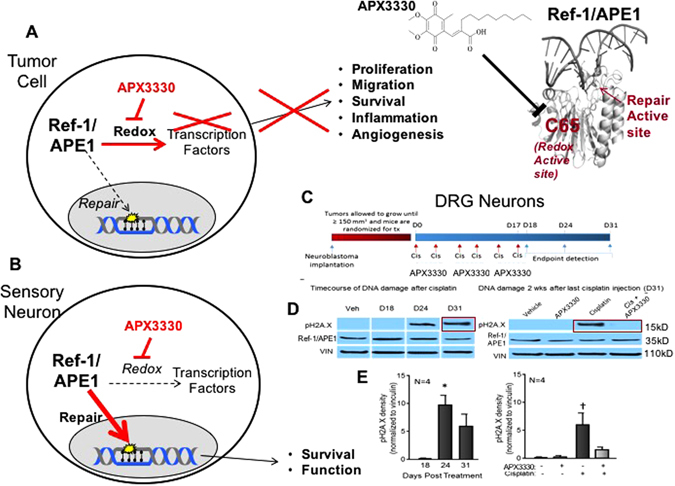
Reduction-oxidation factor 1-apurinic/apyrimidinic endonuclease (Ref-1/APE1) is a critical node in tumor cells, both as a redox regulator of transcription factor activation and as part of the DNA damage response. As a redox signaling protein, Ref-1/APE1 enhances the transcriptional activity of STAT3, HIF-1α, nuclear factor kappa B, and other transcription factors to promote growth, migration, and survival in tumor cells as well as inflammation and angiogenesis in the tumor microenvironment. Ref-1/APE1 is activated in a variety of cancers, including prostate, colon, pancreatic, ovarian, lung and leukemias, leading to increased aggressiveness. Transcription factors downstream of Ref-1/APE1 are key contributors to many cancers, and Ref-1/APE1 redox signaling inhibition slows growth and progression in a number of tumor types. Ref-1/APE1 inhibition is also highly effective when paired with other drugs, including standard-of-care therapies and therapies targeting pathways affected by Ref-1/APE1 redox signaling. Additionally, Ref-1/APE1 plays a role in a variety of other indications, such as retinopathy, inflammation, and neuropathy. In this review, we discuss the functional consequences of activation of the Ref-1/APE1 node in cancer and other diseases, as well as potential therapies targeting Ref-1/APE1 and related pathways in relevant diseases. APX3330, a novel oral anticancer agent and the first drug to target Ref-1/APE1 for cancer is entering clinical trials and will be explored in various cancers and other diseases bringing bench discoveries to the clinic.
还原氧化因子1-脱嘌呤/脱嘧啶内切核酸酶(Ref-1/APE1)是肿瘤细胞中的一个关键节点,既是转录因子激活的氧化还原调节因子,也是DNA损伤反应的一部分。作为一种氧化还原信号蛋白,Ref-1/APE1增强信号转导和转录激活因子3(STAT3)、缺氧诱导因子1α(HIF-1α)、核因子κB等转录因子的转录活性,以促进肿瘤细胞的生长、迁移和存活,以及肿瘤微环境中的炎症和血管生成。Ref-1/APE1在包括前列腺癌、结肠癌、胰腺癌、卵巢癌、肺癌和白血病在内的多种癌症中被激活,导致侵袭性增加。Ref-1/APE1下游的转录因子是许多癌症的关键促成因素,Ref-1/APE1氧化还原信号抑制减缓了多种肿瘤类型的生长和进展。当与其他药物(包括标准治疗疗法和靶向受Ref-1/APE1氧化还原信号影响的通路的疗法)联合使用时,Ref-1/APE1抑制也非常有效。此外,Ref-1/APE1在多种其他病症中发挥作用,如视网膜病变、炎症和神经病变。在本综述中,我们讨论了Ref-1/APE1节点在癌症和其他疾病中激活的功能后果,以及针对Ref-1/APE1和相关疾病通路的潜在疗法。APX3330是一种新型口服抗癌药物,也是第一种针对癌症靶向Ref-1/APE1的药物,正在进入临床试验,并将在各种癌症和其他疾病中进行探索,将实验室发现应用于临床。