Bekaii-Saab Tanios, El-Rayes Bassel
Gastrointestinal Cancer Program, Mayo Clinic Cancer Center, Phoenix, Arizona.
Division of Hematology and Oncology, Mayo Clinic, Phoenix, Arizona.
Cancer. 2017 Apr 15;123(8):1303-1312. doi: 10.1002/cncr.30538. Epub 2017 Jan 24.
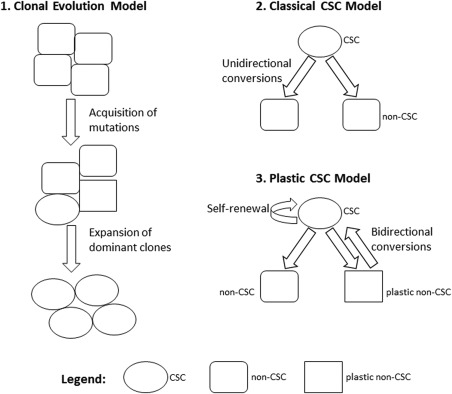
Current treatment regimens for gastric cancer are not adequate. Cancer stem cells (CSCs) may be a key driving factor for growth and metastasis of this tumor type. In contrast to the conventional clonal evolution hypothesis, CSCs can initiate tumor formation, self-renew, and differentiate into tumor-propagating cells. Because gastric cancer can originate from CSCs, it is necessary to review current targets of signaling pathways for CSCs in gastric cancer that are being studied in clinical trials. These pathways are known to regulate the self-renewal and differentiation process in gastric CSCs. A better understanding of the clinical results of trials that target gastric CSCs will lead to better outcomes for patients with gastric cancer. Cancer 2017;123:1303-1312. © 2017 The Authors. Cancer published by Wiley Periodicals, Inc. on behalf of American Cancer Society. This is an open access article under the terms of the Creative Commons Attribution NonCommercial License, which permits use, distribution and reproduction in any medium, provided the original work is properly cited and is not used for commercial purposes.
目前胃癌的治疗方案并不完善。癌症干细胞(CSCs)可能是这种肿瘤类型生长和转移的关键驱动因素。与传统的克隆进化假说不同,癌症干细胞能够启动肿瘤形成、自我更新,并分化为肿瘤增殖细胞。由于胃癌可能起源于癌症干细胞,因此有必要回顾一下目前正在临床试验中研究的胃癌癌症干细胞信号通路靶点。已知这些信号通路可调节胃癌癌症干细胞的自我更新和分化过程。更好地了解针对胃癌癌症干细胞的试验临床结果将为胃癌患者带来更好的治疗效果。《癌症》2017年;123:1303 - 1312。© 2017作者。《癌症》由威利期刊公司代表美国癌症协会出版。这是一篇根据知识共享署名非商业性许可协议发布的开放获取文章,允许在任何媒介中使用、传播和复制,前提是原始作品得到恰当引用且不用于商业目的。