Yamaguchi Seiji, Nath Shekhar, Sugawara Yoko, Divakarla Kamini, Das Theerthankar, Manos Jim, Chrzanowski Wojciech, Matsushita Tomiharu, Kokubo Tadashi
Department of Biomedical Sciences, College of Life and Health Sciences, Chubu University; Aichi Prefecture 487-8501, Japan.
Australian Institute for Nanoscale Science and Technology, Charles Perkins Centre, Faculty of Pharmacy, University of Sydney, Pharmacy and Bank Building A15, Sydney, NSW 2006, Australia.
Nanomaterials (Basel). 2017 Aug 20;7(8):229. doi: 10.3390/nano7080229.
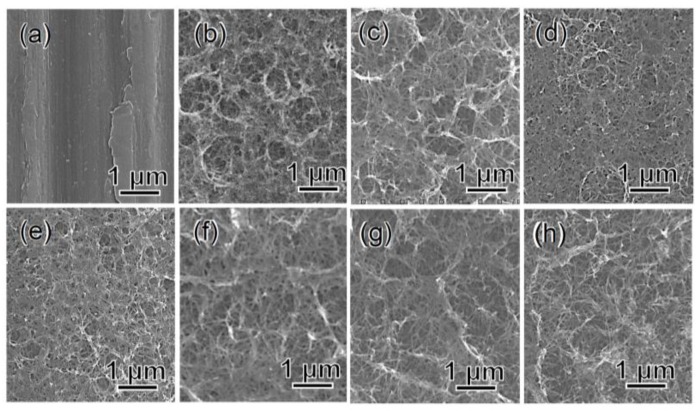
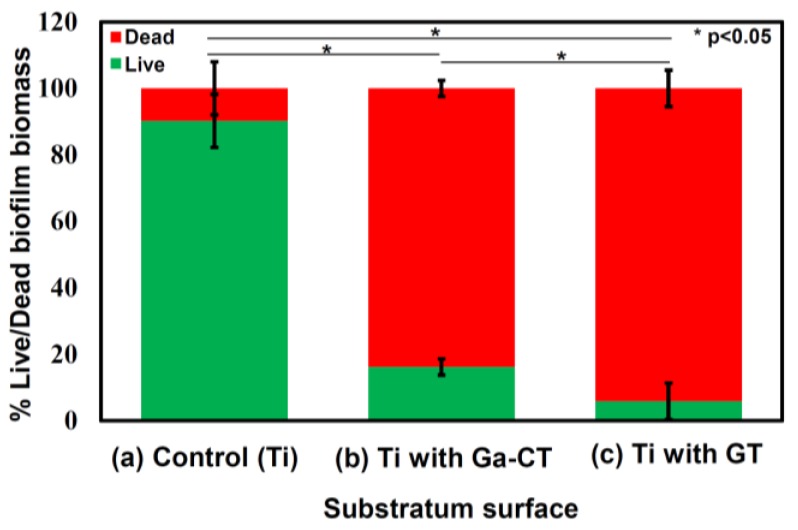
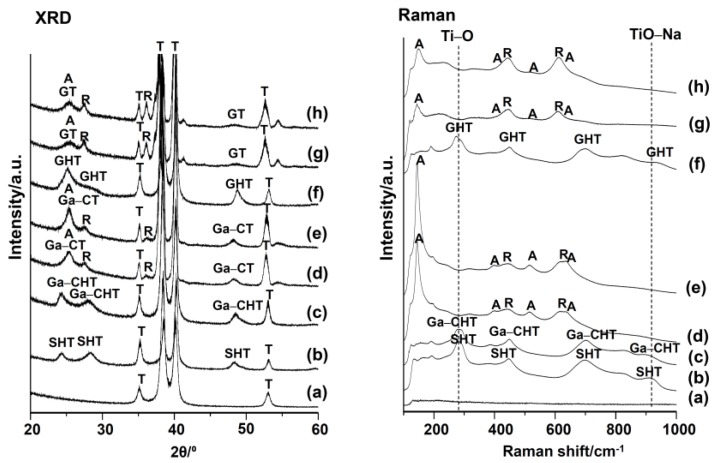
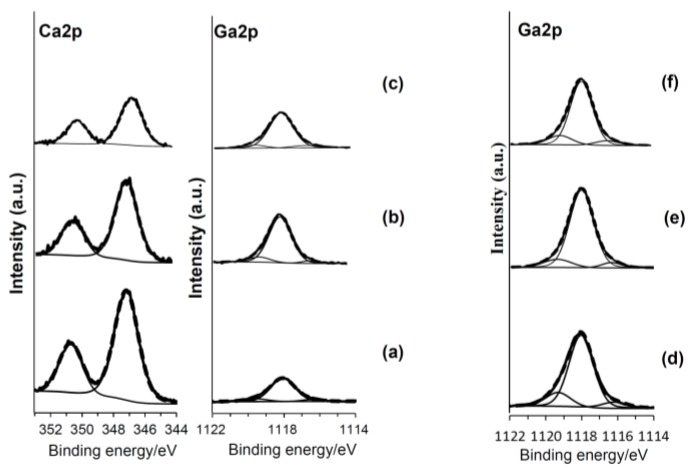
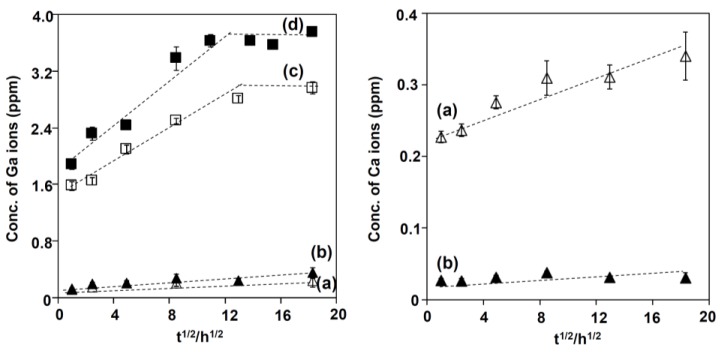
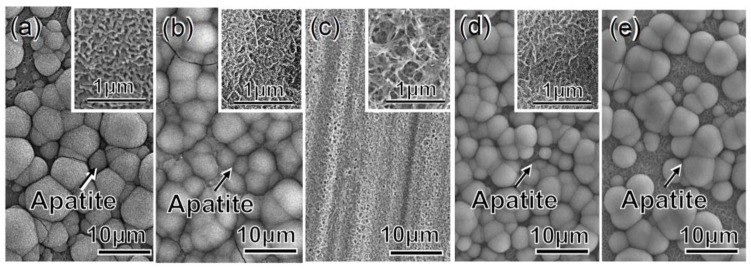
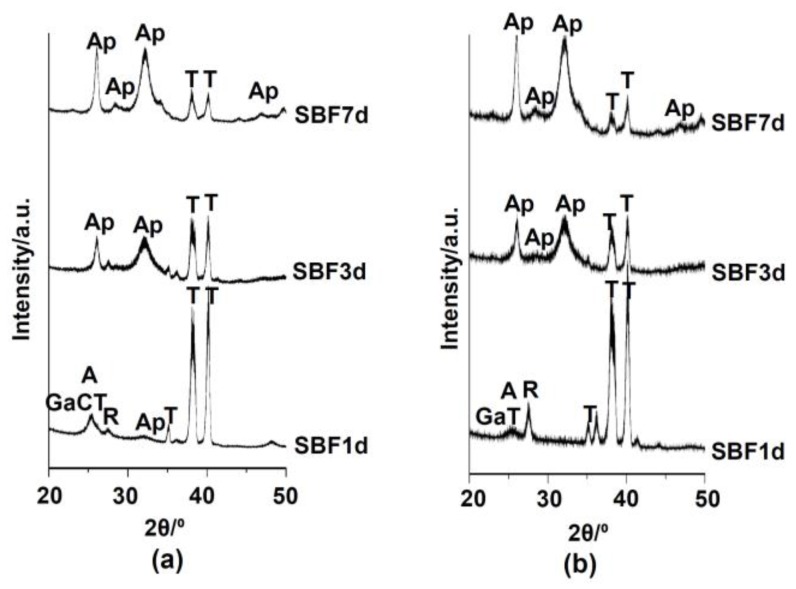
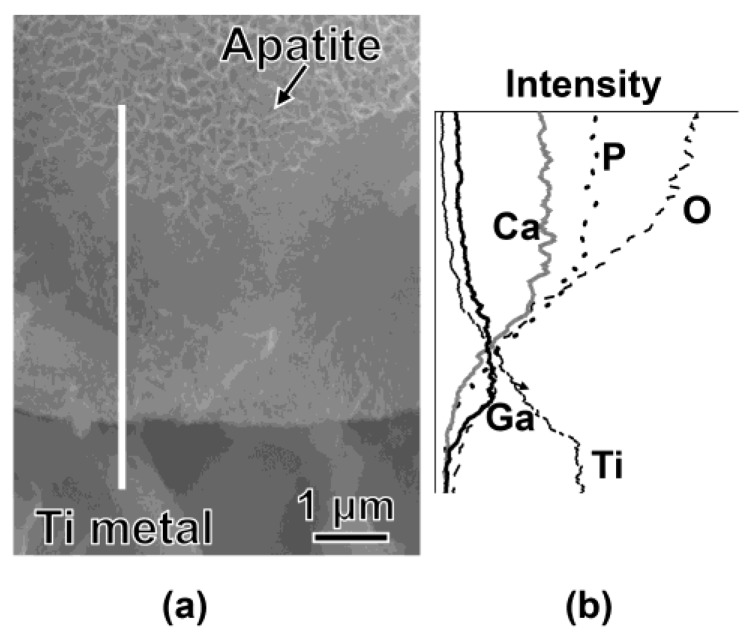
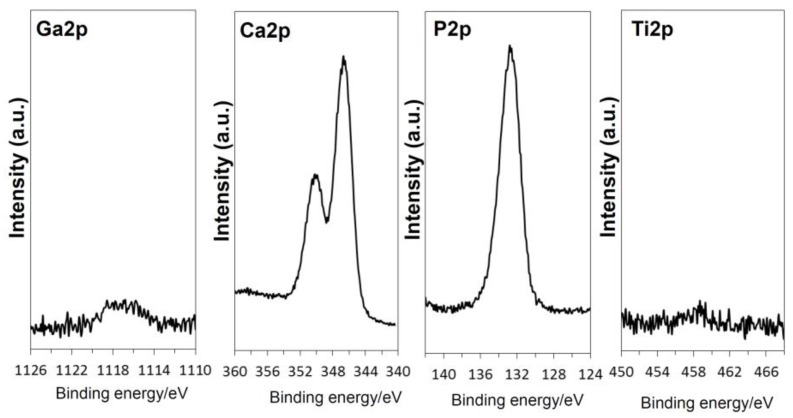
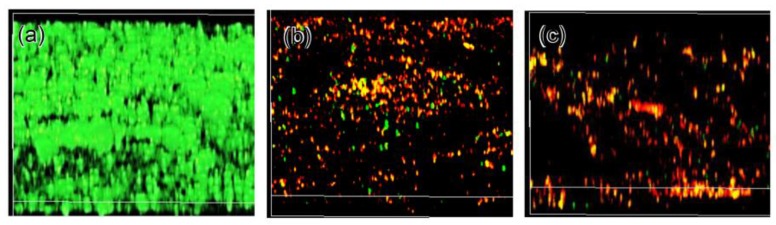
The inhibitory effect of gallium (Ga) ions on bone resorption and their superior microbial activity are attractive and sought-after features for the vast majority of implantable devices, in particular for implants used for hard tissue. In our work, for the first time, Ga ions were successfully incorporated into the surface of titanium metal (Ti) by simple and cost-effective chemical and heat treatments. Ti samples were initially treated in NaOH solution to produce a nanostructured sodium hydrogen titanate layer approximately 1 μm thick. When the metal was subsequently soaked in a mixed solution of CaCl₂ and GaCl₃, its Na ions were replaced with Ca and Ga ions in a Ga/Ca ratio range of 0.09 to 2.33. 8.0% of the Ga ions were incorporated into the metal surface when the metal was soaked in a single solution of GaCl₃ after the NaOH treatment. The metal was then heat-treated at 600 °C to form Ga-containing calcium titanate (Ga-CT) or gallium titanate (GT), anatase and rutile on its surface. The metal with Ga-CT formed bone-like apatite in a simulated body fluid (SBF) within 3 days, but released only 0.23 ppm of the Ga ions in a phosphate-buffered saline (PBS) over a period of 14 days. In contrast, Ti with GT did not form apatite in SBF, but released 2.96 ppm of Ga ions in PBS. Subsequent soaking in hot water at 80 °C dramatically enhanced apatite formation of the metal by increasing the release of Ga ions up to 3.75 ppm. The treated metal exhibited very high antibacterial activity against multidrug resistant (MRAB12). Unlike other antimicrobial coating on titanium implants, Ga-CT and GT interfaces were shown to have a unique combination of antimicrobial and bioactive properties. Such dual activity is essential for the next generation of orthopaedic and dental implants. The goal of combining both functions without inducing cytotoxicity is a major advance and has far reaching translational perspectives. This unique dual-function biointerfaces will inhibit bone resorption and show antimicrobial activity through the release of Ga ions, while tight bonding to the bone will be achieved through the apatite formed on the surface.
镓(Ga)离子对骨吸收的抑制作用及其卓越的微生物活性,是绝大多数可植入装置,尤其是用于硬组织的植入物所具有的吸引人且备受追捧的特性。在我们的工作中,首次通过简单且经济高效的化学和热处理方法,成功地将Ga离子掺入钛金属(Ti)表面。Ti样品首先在NaOH溶液中处理,以生成约1μm厚的纳米结构钛酸钠氢层。随后,当金属浸泡在CaCl₂和GaCl₃的混合溶液中时,其Na离子被Ca和Ga离子取代,Ga/Ca比范围为0.09至2.33。在NaOH处理后,当金属浸泡在GaCl₃单一溶液中时,8.0%的Ga离子被掺入金属表面。然后将金属在600°C下进行热处理,以在其表面形成含Ga的钛酸钙(Ga-CT)或钛酸镓(GT)、锐钛矿和金红石。具有Ga-CT的金属在模拟体液(SBF)中3天内形成类骨磷灰石,但在14天的时间里,在磷酸盐缓冲盐水(PBS)中仅释放0.23 ppm的Ga离子。相比之下,具有GT的Ti在SBF中未形成磷灰石,但在PBS中释放2.96 ppm的Ga离子。随后在80°C的热水中浸泡,通过将Ga离子的释放量提高到3.75 ppm,显著增强了金属的磷灰石形成。经处理的金属对多重耐药菌(MRAB12)表现出非常高的抗菌活性。与钛植入物上的其他抗菌涂层不同,Ga-CT和GT界面显示出抗菌和生物活性特性的独特组合。这种双重活性对于下一代骨科和牙科植入物至关重要。在不诱导细胞毒性的情况下结合这两种功能的目标是一项重大进展,并且具有深远的转化前景。这种独特的双功能生物界面将通过Ga离子的释放抑制骨吸收并显示抗菌活性,同时通过表面形成的磷灰石实现与骨的紧密结合。