Lin Ya-Tin, Yu Yu-Lian, Hong Wei-Chen, Yeh Ting-Shiuan, Chen Ting-Chun, Chen Jin-Chung
Graduate Institute of Biomedical Sciences, Department of Physiology and Pharmacology, Chang Gung University, No. 259 Wenhwa 1st Road, Guishan, Taoyuan 333, Taiwan.
Department of Biomedical Sciences, Chang Gung University, Taoyuan 333, Taiwan.
Int J Mol Sci. 2017 Aug 21;18(8):1810. doi: 10.3390/ijms18081810.
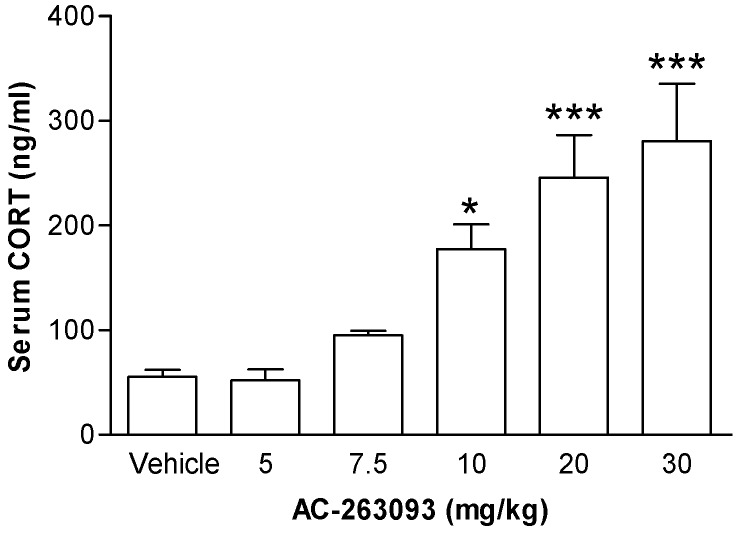
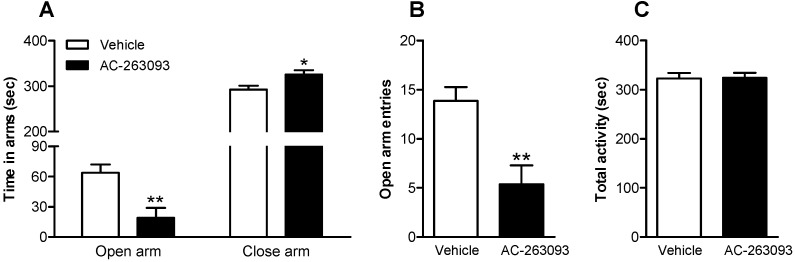
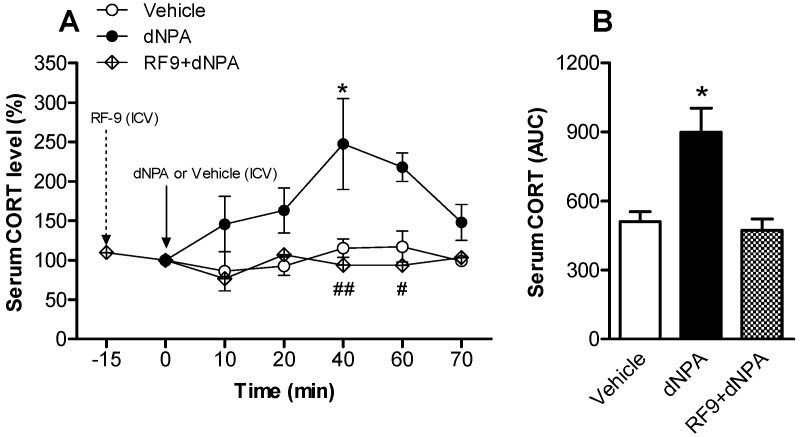
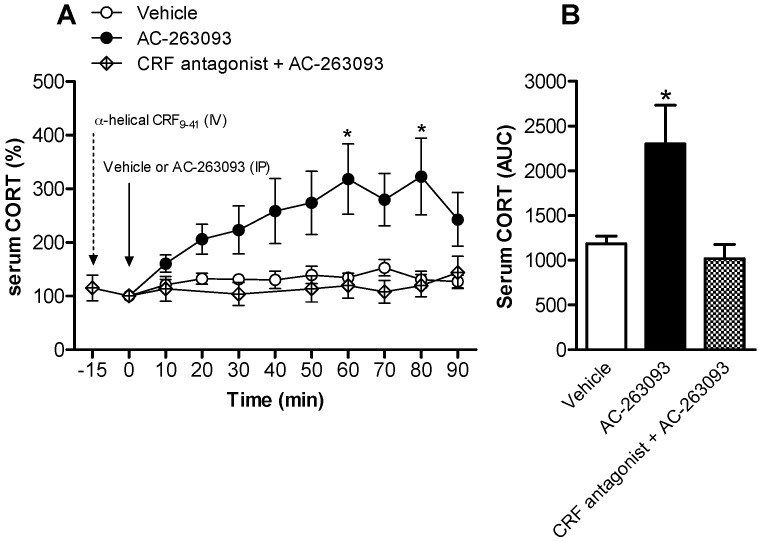
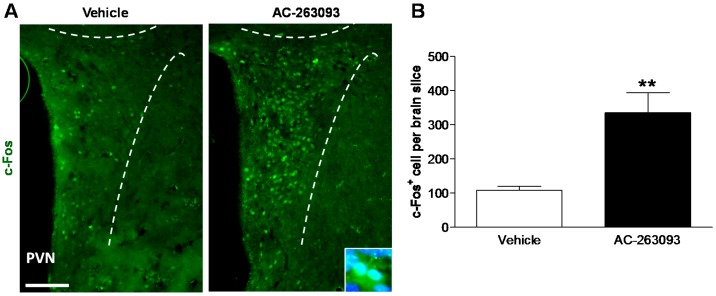
Neuropeptide FF (NPFF) belongs to the RFamide family and is known as a morphine-modulating peptide. NPFF regulates various hypothalamic functions through two receptors, NPFFR1 and NPFFR2. The hypothalamic-pituitary-adrenal (HPA) axis participates in physiological stress response by increasing circulating glucocorticoid levels and modulating emotional responses. Other RFamide peptides, including neuropeptide AF, neuropeptide SF and RFamide related peptide also target NPFFR1 or NPFFR2, and have been reported to activate the HPA axis and induce anxiety- or depression-like behaviors. However, little is known about the action of NPFF on HPA axis activity and anxiety-like behaviors, and the role of the individual receptors remains unclear. In this study, NPFFR2 agonists were used to examine the role of NPFFR2 in activating the HPA axis in rodents. Administration of NPFFR2 agonists, dNPA (intracerebroventricular, ICV) and AC-263093 (intraperitoneal, IP), time-dependently (in rats) and dose-dependently (in mice) increased serum corticosteroid levels and the effects were counteracted by the NPFF receptor antagonist, RF9 (ICV), as well as corticotropin-releasing factor (CRF) antagonist, α-helical CRF(9-41) (intravenous, IV). Treatment with NPFFR2 agonist (AC-263093, IP) increased c-Fos protein expression in the hypothalamic paraventricular nucleus and induced an anxiogenic effect, which was evaluated in mice using an elevated plus maze. These findings reveal, for the first time, that the direct action of hypothalamic NPFFR2 stimulates the HPA axis and triggers anxiety-like behaviors.
神经肽FF(NPFF)属于RFamide家族,是一种已知的吗啡调节肽。NPFF通过两种受体NPFFR1和NPFFR2调节多种下丘脑功能。下丘脑-垂体-肾上腺(HPA)轴通过增加循环糖皮质激素水平和调节情绪反应参与生理应激反应。其他RFamide肽,包括神经肽AF、神经肽SF和RFamide相关肽也作用于NPFFR1或NPFFR2,并且据报道可激活HPA轴并诱发焦虑或抑郁样行为。然而,关于NPFF对HPA轴活性和焦虑样行为的作用以及单个受体的作用仍不清楚。在本研究中,使用NPFFR2激动剂来研究NPFFR2在激活啮齿动物HPA轴中的作用。给予NPFFR2激动剂dNPA(脑室内,ICV)和AC-263093(腹腔内,IP),(在大鼠中)呈时间依赖性且(在小鼠中)呈剂量依赖性地增加血清皮质类固醇水平,并且NPFF受体拮抗剂RF9(ICV)以及促肾上腺皮质激素释放因子(CRF)拮抗剂α-螺旋CRF(9-41)(静脉内,IV)可抵消这些作用。用NPFFR2激动剂(AC-263093,IP)处理可增加下丘脑室旁核中的c-Fos蛋白表达并诱发焦虑效应,这在小鼠中使用高架十字迷宫进行评估。这些发现首次揭示,下丘脑NPFFR2的直接作用刺激HPA轴并引发焦虑样行为。