Department of Biochemistry and Molecular Biology, Wise Faculty of Life Science, Tel Aviv University, Tel Aviv, Israel.
Department of Biosciences, Rice University, Houston, United States.
Elife. 2017 Aug 18;6:e24820. doi: 10.7554/eLife.24820.
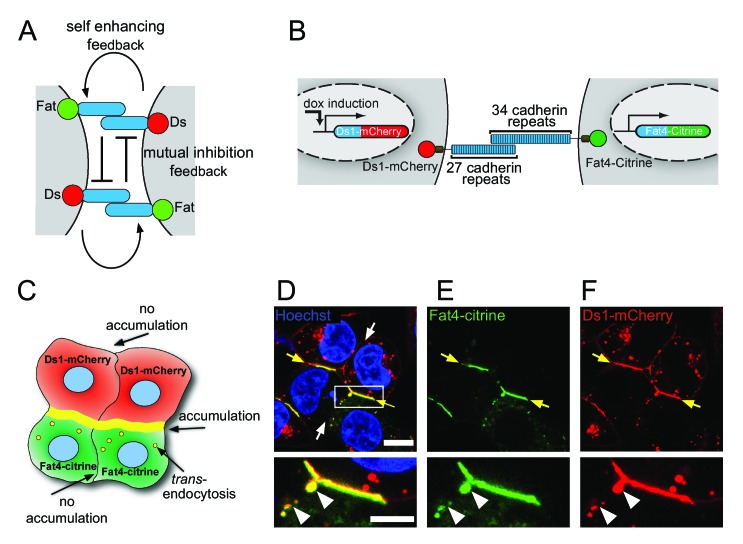
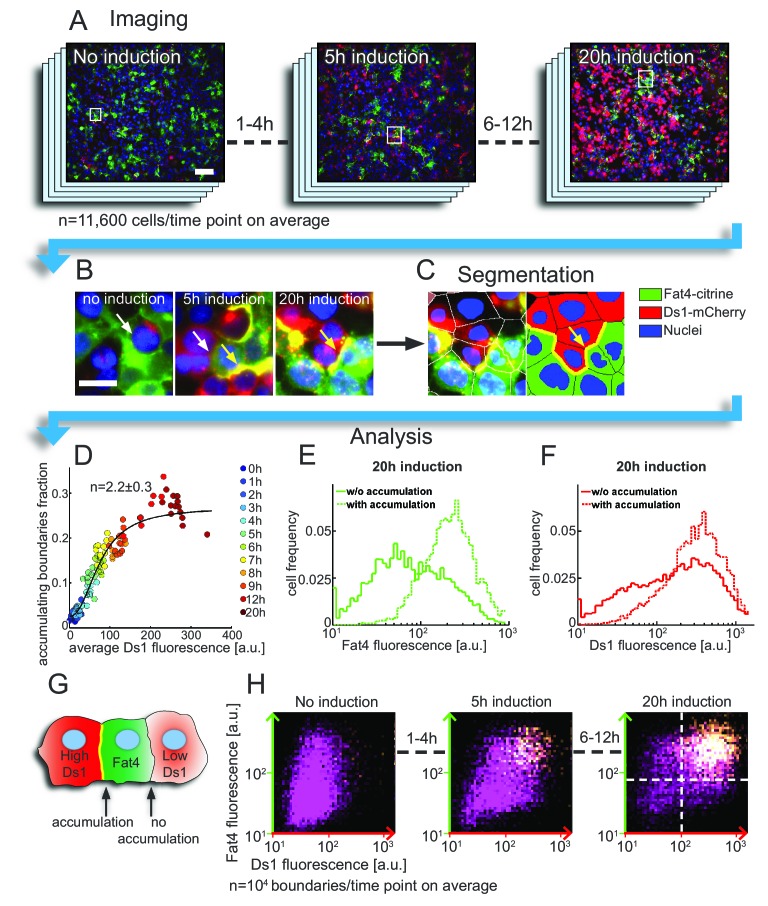
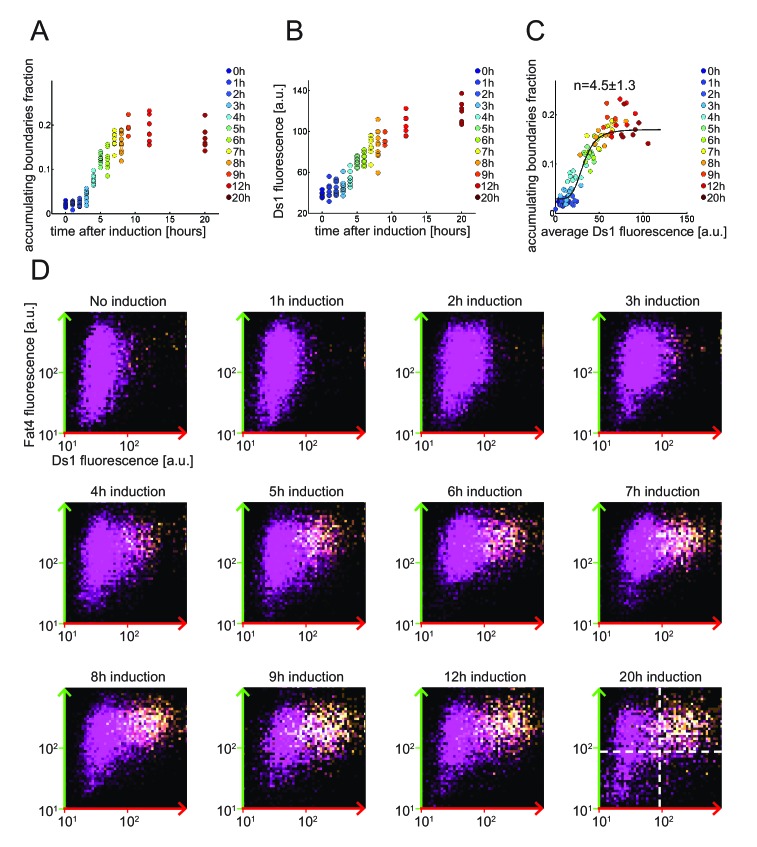
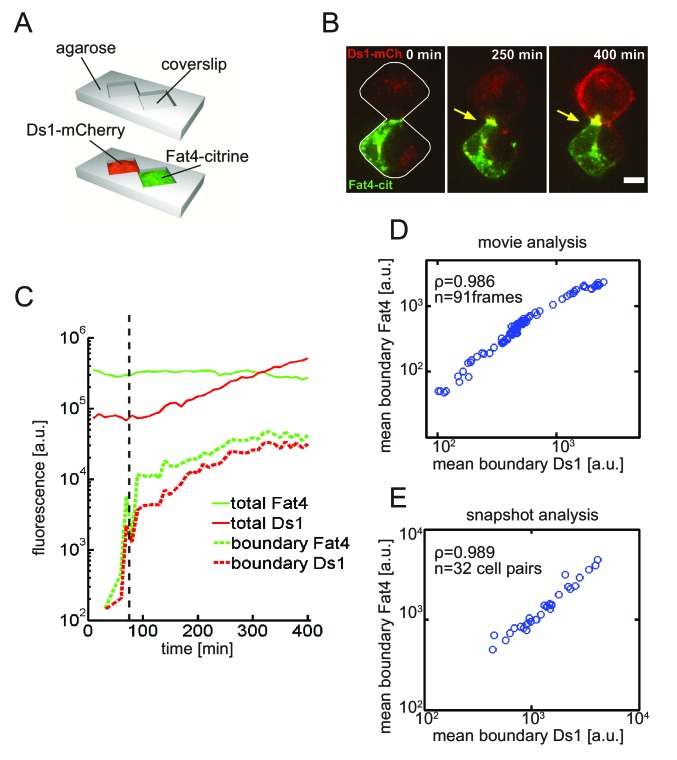
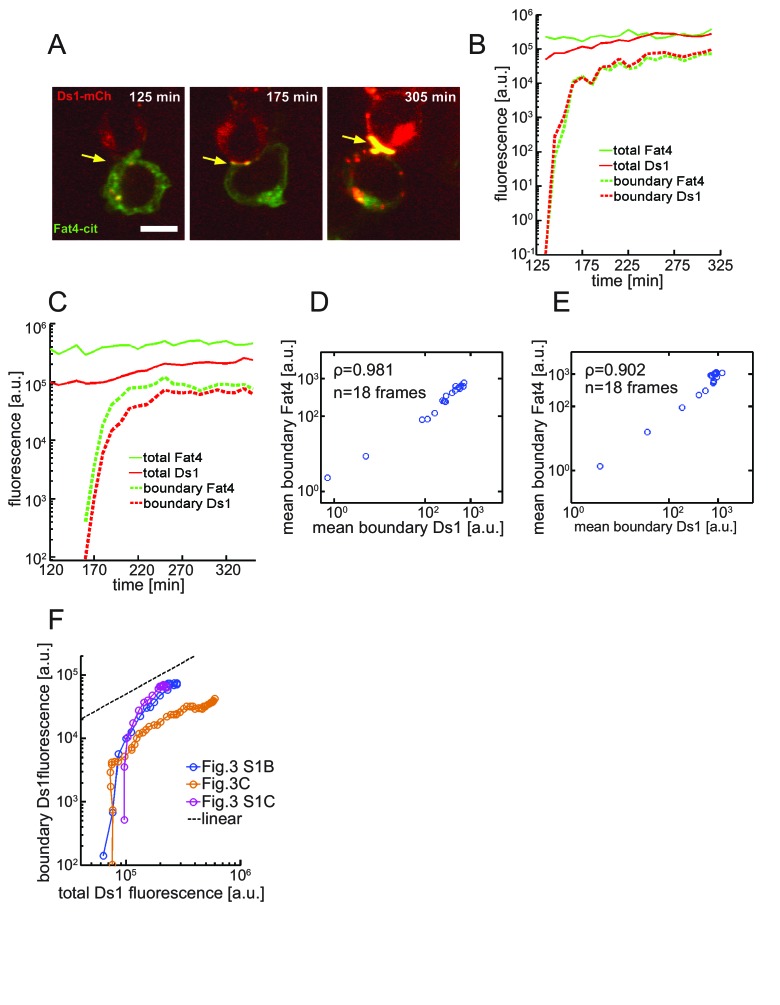
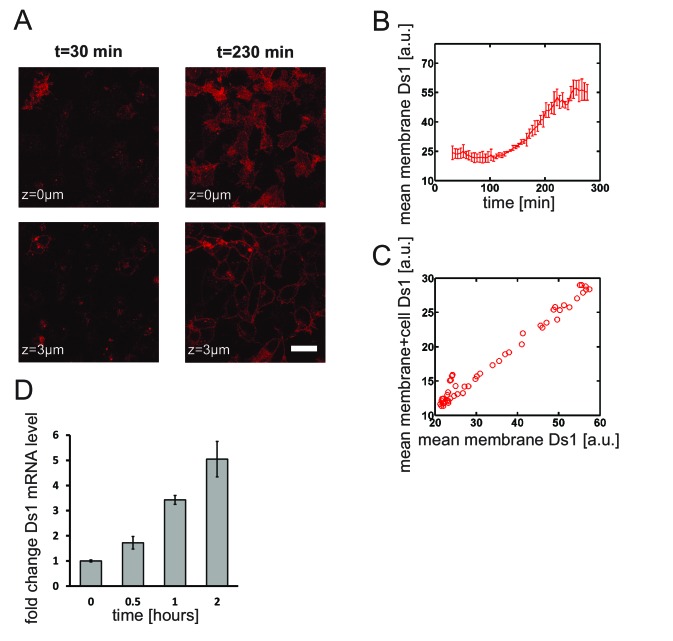
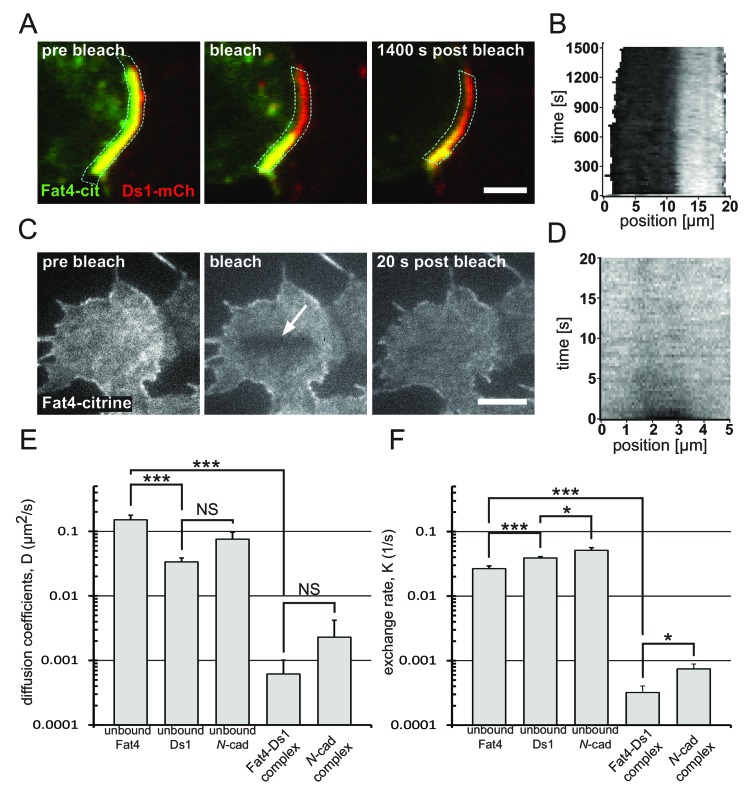
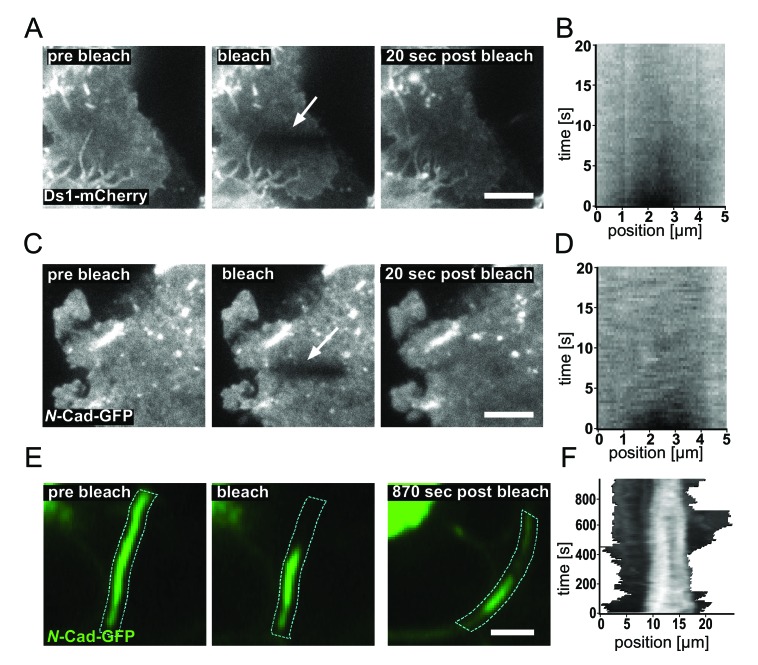
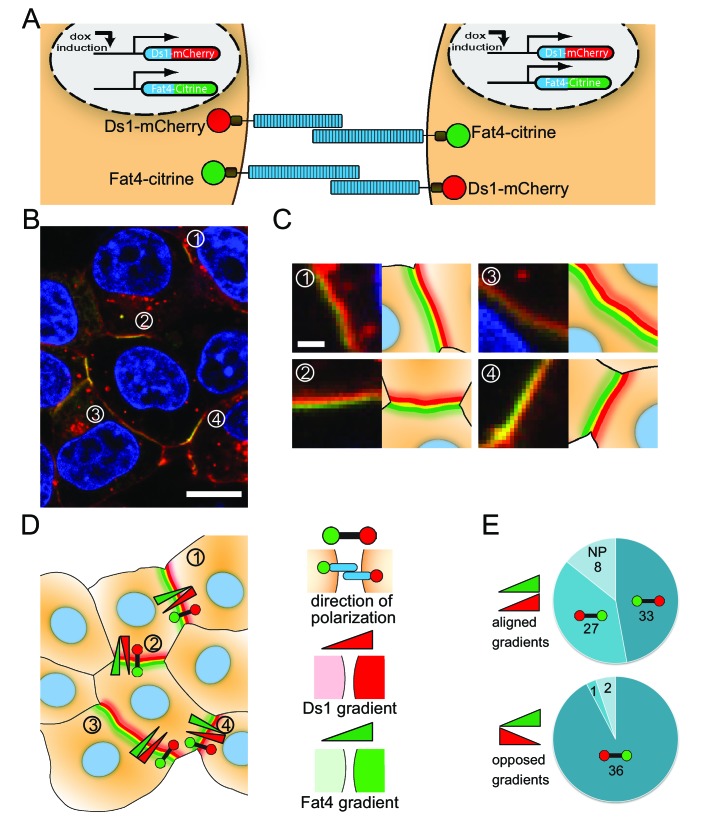
The atypical cadherins Fat and Dachsous (Ds) have been found to underlie planar cell polarity (PCP) in many tissues. Theoretical models suggest that polarity can arise from localized feedbacks on Fat-Ds complexes at the cell boundary. However, there is currently no direct evidence for the existence or mechanism of such feedbacks. To directly test the localized feedback model, we developed a synthetic biology platform based on mammalian cells expressing the human Fat4 and Ds1. We show that Fat4-Ds1 complexes accumulate on cell boundaries in a threshold-like manner and exhibit dramatically slower dynamics than unbound Fat4 and Ds1. This suggests a localized feedback mechanism based on enhanced stability of Fat4-Ds1 complexes. We also show that co-expression of Fat4 and Ds1 in the same cells is sufficient to induce polarization of Fat4-Ds1 complexes. Together, these results provide direct evidence that localized feedbacks on Fat4-Ds1 complexes can give rise to PCP.
非典型钙黏蛋白 Fat 和 Dachsous (Ds) 已被发现是许多组织中平面细胞极性 (PCP) 的基础。理论模型表明,极性可以源于细胞边界处 Fat-Ds 复合物的局部反馈。然而,目前还没有关于这种反馈存在或机制的直接证据。为了直接测试局部反馈模型,我们开发了一个基于表达人 Fat4 和 Ds1 的哺乳动物细胞的合成生物学平台。我们表明,Fat4-Ds1 复合物以类似于阈值的方式在细胞边界处积累,并表现出比未结合的 Fat4 和 Ds1 慢得多的动力学。这表明基于 Fat4-Ds1 复合物稳定性增强的局部反馈机制。我们还表明,在相同的细胞中共表达 Fat4 和 Ds1 足以诱导 Fat4-Ds1 复合物的极化。总之,这些结果提供了直接的证据,表明 Fat4-Ds1 复合物上的局部反馈可以产生 PCP。