Chen Xue, Zhao Wei, Yuan Ye, Bai Yan, Sun Yong, Zhu Wenliang, Du Zhimin
Department of Pharmacy, The Second Affiliated Hospital of Harbin Medical University (Institute of Clinical Pharmacy, The Heilongjiang Key Laboratory of Drug Research, Harbin Medical University), Harbin, China.
PeerJ. 2017 Aug 14;5:e3682. doi: 10.7717/peerj.3682. eCollection 2017.
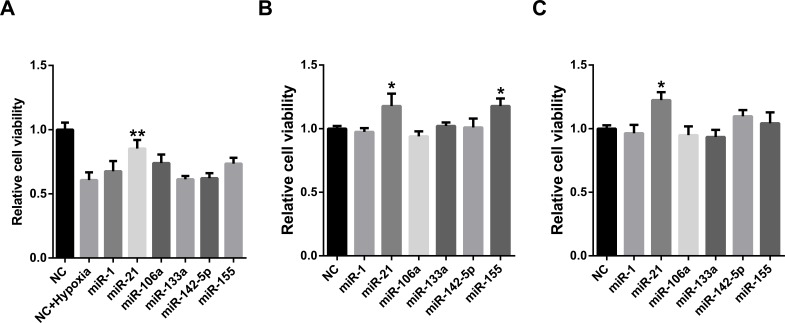
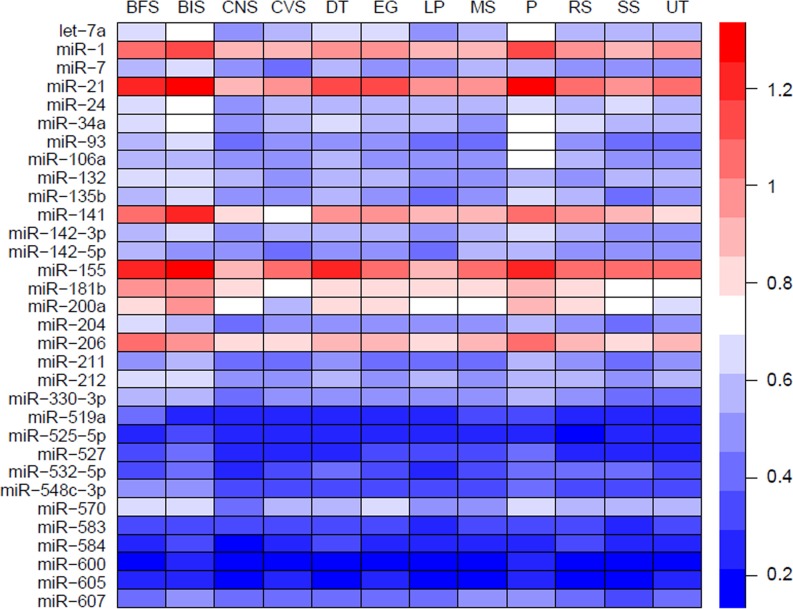
Considering complicated microRNA (miRNA) biogenesis and action mechanisms, it was thought so high energy-consuming for a cell to afford simultaneous over-expression of many miRNAs. Thus it prompts that an alternative miRNA regulation pattern on protein-encoding genes must exist, which has characteristics of energy-saving and precise protein output. In this study, expression tendency of proteins encoded by miRNAs' target genes was evaluated in human organ scale, followed by quantitative assessment of miRNA synergism. Expression tendency analysis suggests that universally expressed proteins (UEPs) tend to physically interact in clusters and participate in fundamental biological activities whereas disorderly expressed proteins (DEPs) are inclined to relatively independently execute organ-specific functions. Consistent with this, miRNAs that mainly target UEP-encoding mRNAs, such as miR-21, tend to collaboratively or even synergistically act with other miRNAs in fine-tuning protein output. Synergistic gene regulation may maximize miRNAs' efficiency with less dependence on miRNAs' abundance and overcome the deficiency that targeting plenty of genes by single miRNA makes miRNA-mediated regulation high-throughput but insufficient due to target gene dilution effect. Furthermore, our experiment verified that merely 25 nM transfection of miR-21 be sufficient to influence the overall state of various human cells. Thus miR-21 was identified as a hub in synergistic miRNA-miRNA interaction network. Our findings suggest that synergistic miRNA-miRNA interaction is an important endogenous miRNA regulation mode, which ensures adequate potency of miRNAs at low abundance, especially those implicated in fundamental biological regulation.
考虑到复杂的微小RNA(miRNA)生物发生和作用机制,人们认为细胞要同时过度表达许多miRNA会消耗大量能量。因此,这促使人们认为必然存在一种对蛋白质编码基因的替代性miRNA调控模式,其具有节能和精确蛋白质输出的特点。在本研究中,在人体器官尺度上评估了miRNA靶基因编码蛋白质的表达趋势,随后对miRNA协同作用进行了定量评估。表达趋势分析表明,普遍表达的蛋白质(UEP)倾向于在簇中发生物理相互作用并参与基本生物学活动,而无序表达的蛋白质(DEP)则倾向于相对独立地执行器官特异性功能。与此一致的是,主要靶向UEP编码mRNA的miRNA,如miR-21,倾向于与其他miRNA协同甚至协同作用来微调蛋白质输出。协同基因调控可以在较少依赖miRNA丰度的情况下最大化miRNA的效率,并克服单个miRNA靶向大量基因导致miRNA介导的调控虽高通量但因靶基因稀释效应而不足的缺陷。此外,我们的实验证实,仅转染25 nM的miR-21就足以影响各种人类细胞的整体状态。因此,miR-21被确定为协同miRNA-miRNA相互作用网络中的一个枢纽。我们的研究结果表明,协同miRNA-miRNA相互作用是一种重要的内源性miRNA调控模式,它确保了低丰度miRNA的足够效力,尤其是那些参与基本生物学调控的miRNA。