Elshahaby Fatma E A, Jha Abhinav K, Ghaly Michael, Frey Eric C
Department of Electrical and Computer Engineering, Whiting School of Engineering, Johns Hopkins University, Baltimore, MD 21218, United States of America. The Russell H Morgan Department of Radiology and Radiological Science, School of Medicine, Johns Hopkins University, Baltimore, MD 21287, United States of America. Department of Computers and Systems, Electronics Research Institute, Cairo, Egypt.
Phys Med Biol. 2017 Aug 22;62(18):7300-7320. doi: 10.1088/1361-6560/aa807a.
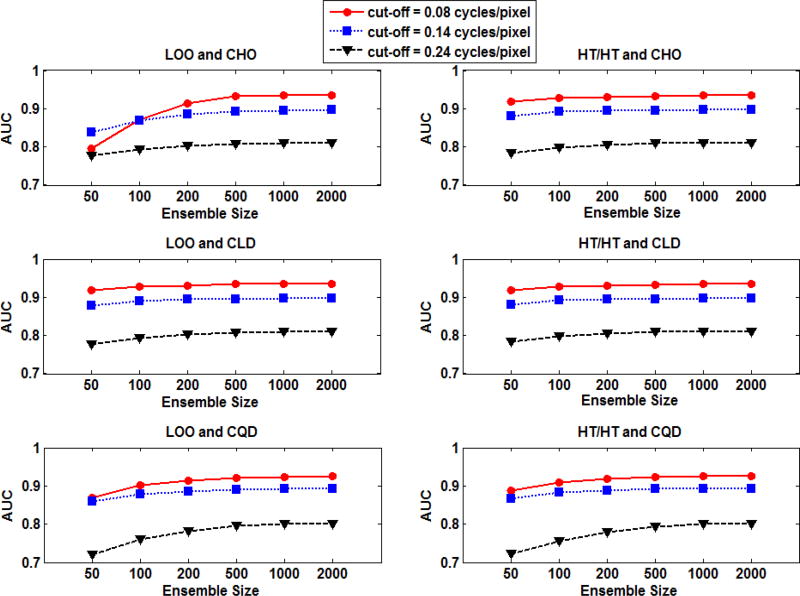
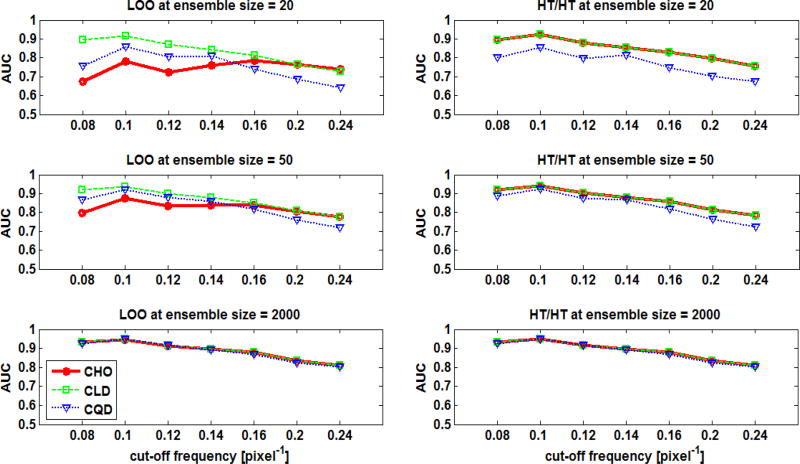
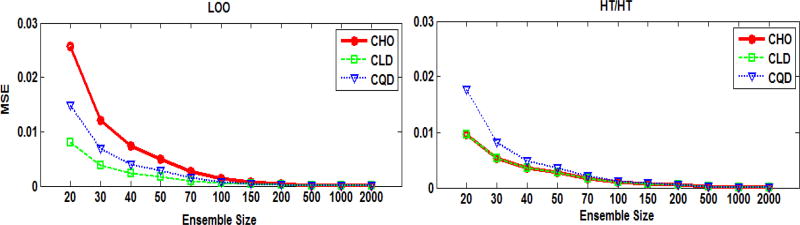
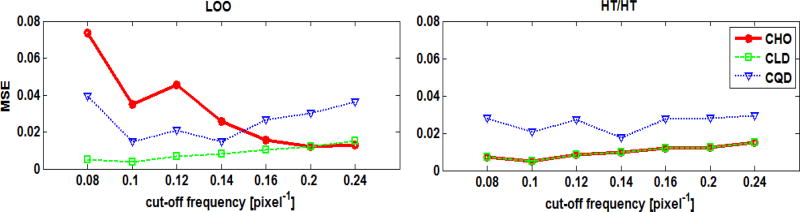
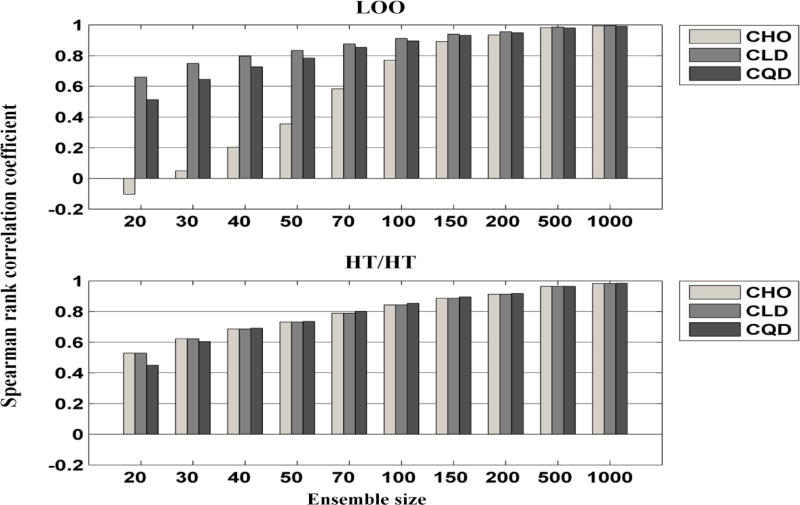
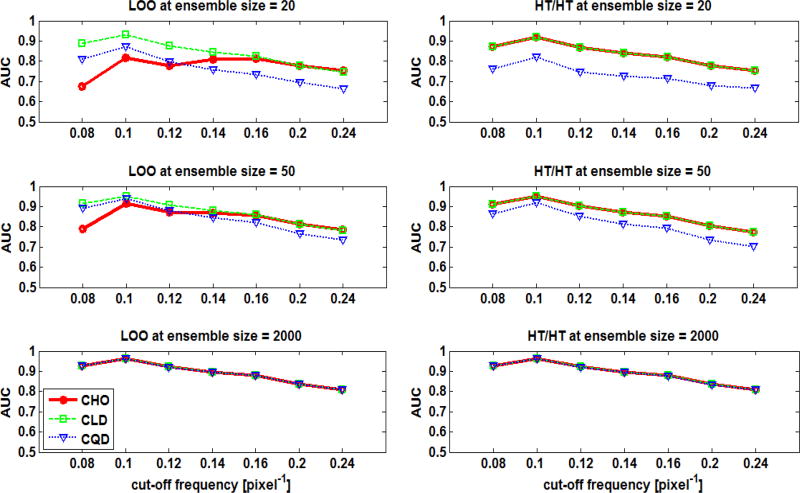
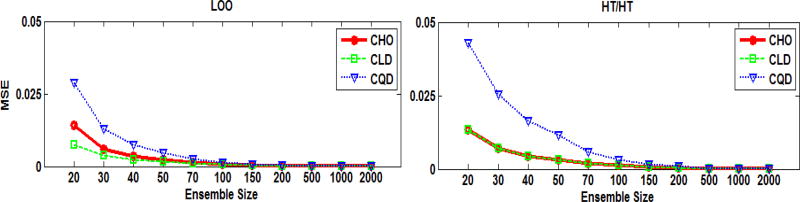
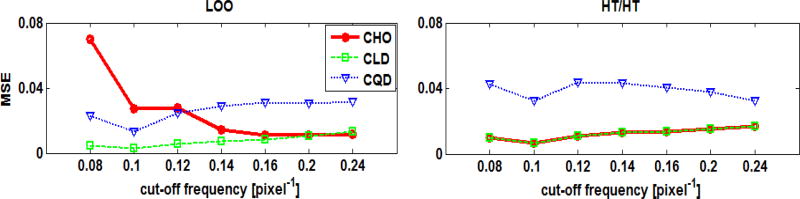
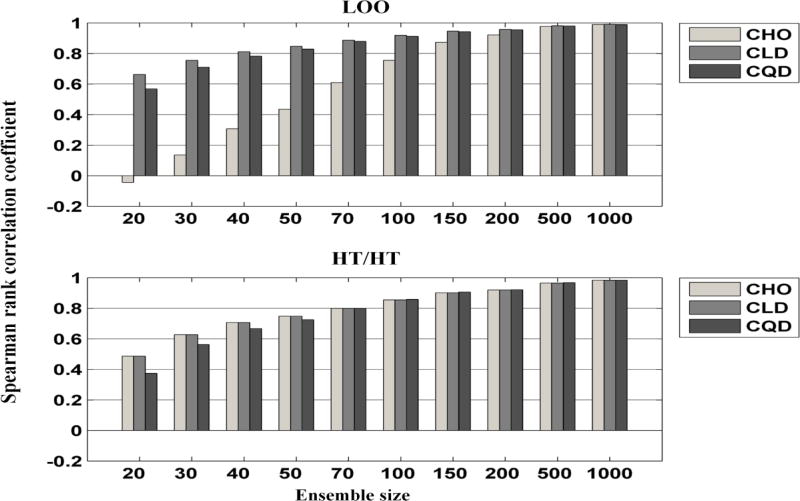
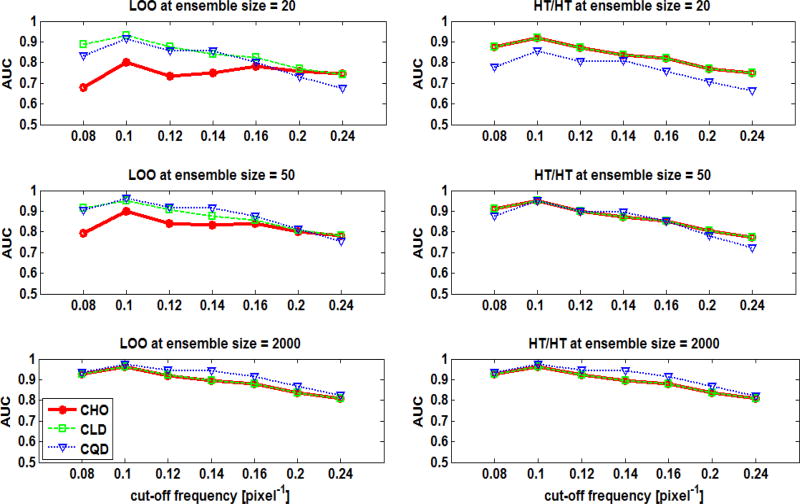
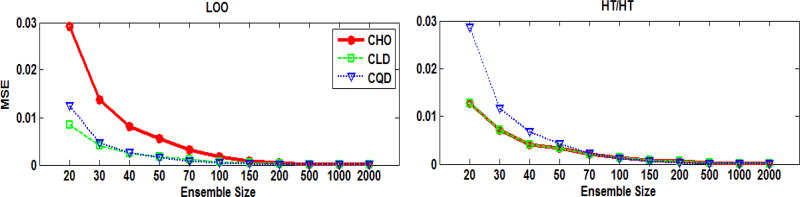
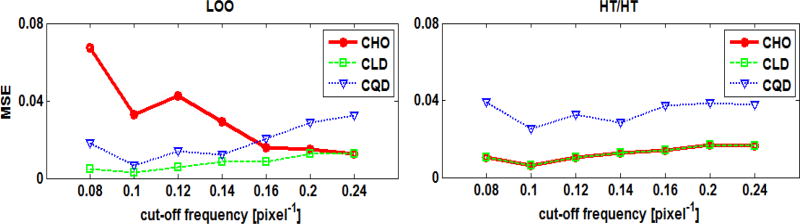
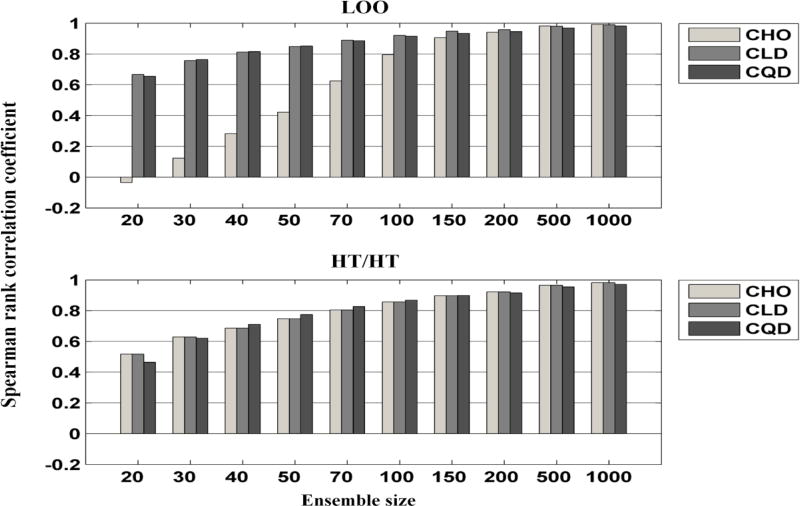
In objective assessment of image quality, an ensemble of images is used to compute the 1st and 2nd order statistics of the data. Often, only a finite number of images is available, leading to the issue of statistical variability in numerical observer performance. Resampling-based strategies can help overcome this issue. In this paper, we compared different combinations of resampling schemes (the leave-one-out (LOO) and the half-train/half-test (HT/HT)) and model observers (the conventional channelized Hotelling observer (CHO), channelized linear discriminant (CLD) and channelized quadratic discriminant). Observer performance was quantified by the area under the ROC curve (AUC). For a binary classification task and for each observer, the AUC value for an ensemble size of 2000 samples per class served as a gold standard for that observer. Results indicated that each observer yielded a different performance depending on the ensemble size and the resampling scheme. For a small ensemble size, the combination [CHO, HT/HT] had more accurate rankings than the combination [CHO, LOO]. Using the LOO scheme, the CLD and CHO had similar performance for large ensembles. However, the CLD outperformed the CHO and gave more accurate rankings for smaller ensembles. As the ensemble size decreased, the performance of the [CHO, LOO] combination seriously deteriorated as opposed to the [CLD, LOO] combination. Thus, it might be desirable to use the CLD with the LOO scheme when smaller ensemble size is available.
在图像质量的客观评估中,使用一组图像来计算数据的一阶和二阶统计量。通常,只能获得有限数量的图像,这就导致了数值观测者性能方面的统计变异性问题。基于重采样的策略有助于克服这一问题。在本文中,我们比较了重采样方案(留一法(LOO)和半训练/半测试(HT/HT))与模型观测者(传统的通道化霍特林观测者(CHO)、通道化线性判别(CLD)和通道化二次判别)的不同组合。观测者性能通过ROC曲线下面积(AUC)进行量化。对于二分类任务以及每个观测者,每类样本数量为2000的样本集的AUC值作为该观测者的金标准。结果表明,每个观测者的性能取决于样本集大小和重采样方案。对于较小的样本集大小,[CHO, HT/HT]组合的排名比[CHO, LOO]组合更准确。使用留一法方案时,对于大样本集,CLD和CHO的性能相似。然而,CLD的性能优于CHO,并且对于较小样本集给出了更准确的排名。随着样本集大小的减小,[CHO, LOO]组合的性能严重恶化,而[CLD, LOO]组合则不然。因此,当样本集大小较小时,可能希望将CLD与留一法方案一起使用。