Beaufils Florent, Cmiljanovic Natasa, Cmiljanovic Vladimir, Bohnacker Thomas, Melone Anna, Marone Romina, Jackson Eileen, Zhang Xuxiao, Sele Alexander, Borsari Chiara, Mestan Jürgen, Hebeisen Paul, Hillmann Petra, Giese Bernd, Zvelebil Marketa, Fabbro Doriano, Williams Roger L, Rageot Denise, Wymann Matthias P
Department of Biomedicine, University of Basel , Mattenstrasse 28, 4058 Basel, Switzerland.
MRC Laboratory of Molecular Biology , Francis Crick Avenue, Cambridge CB2 0QH, U.K.
J Med Chem. 2017 Sep 14;60(17):7524-7538. doi: 10.1021/acs.jmedchem.7b00930. Epub 2017 Sep 1.
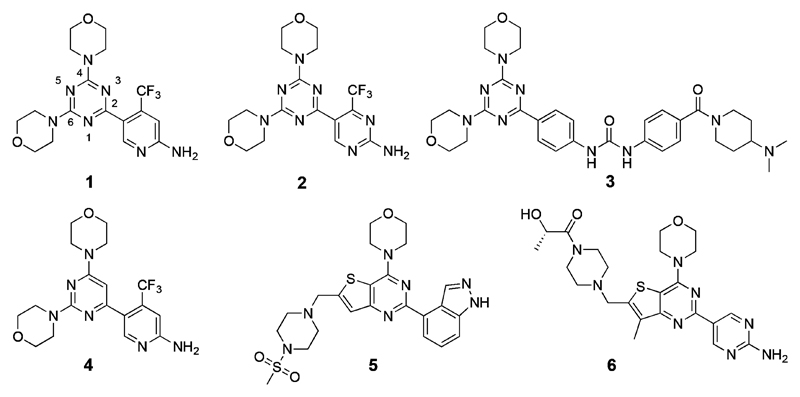
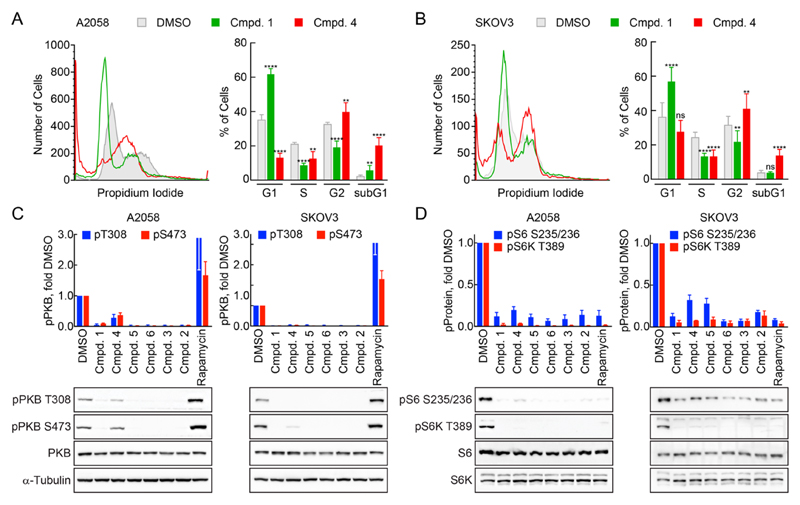
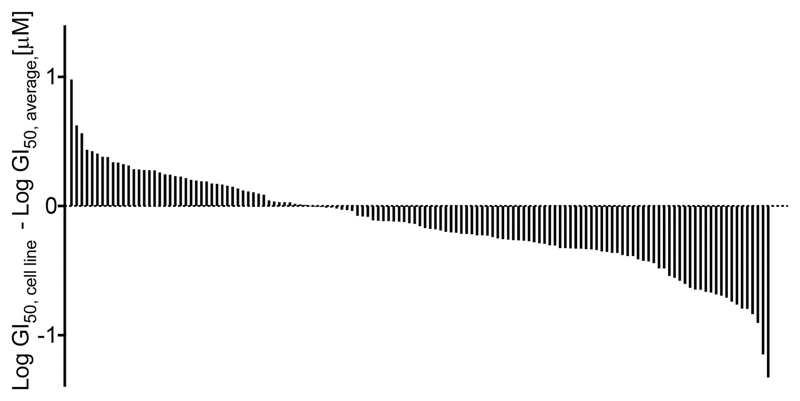
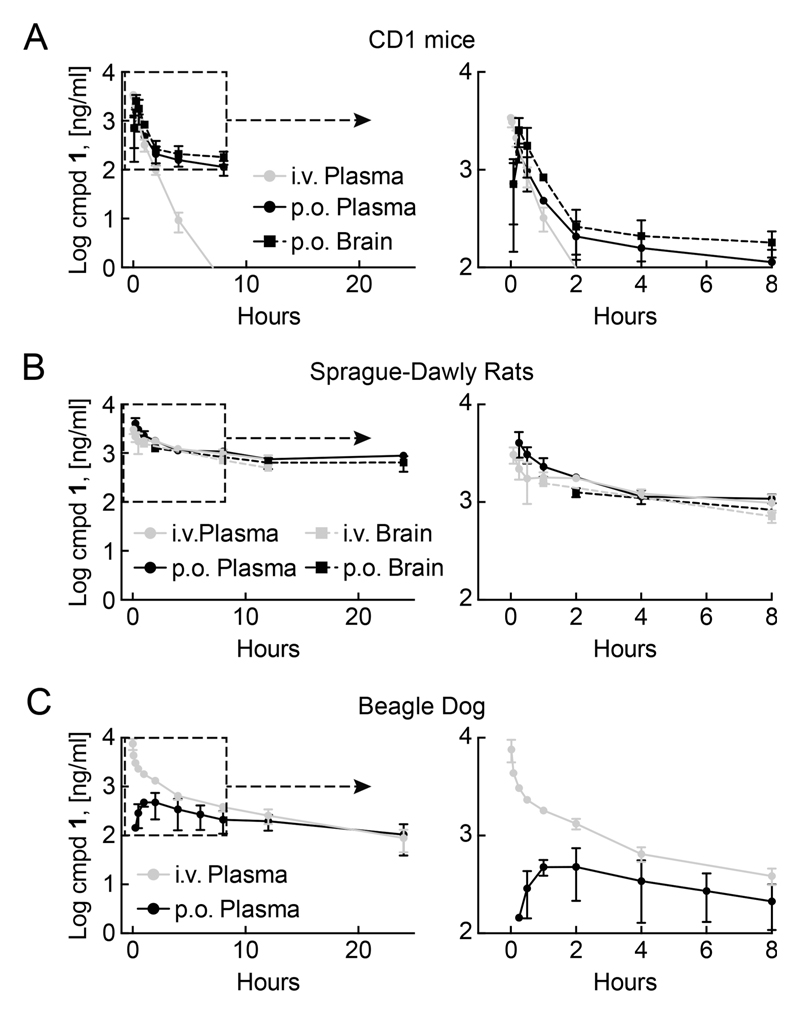
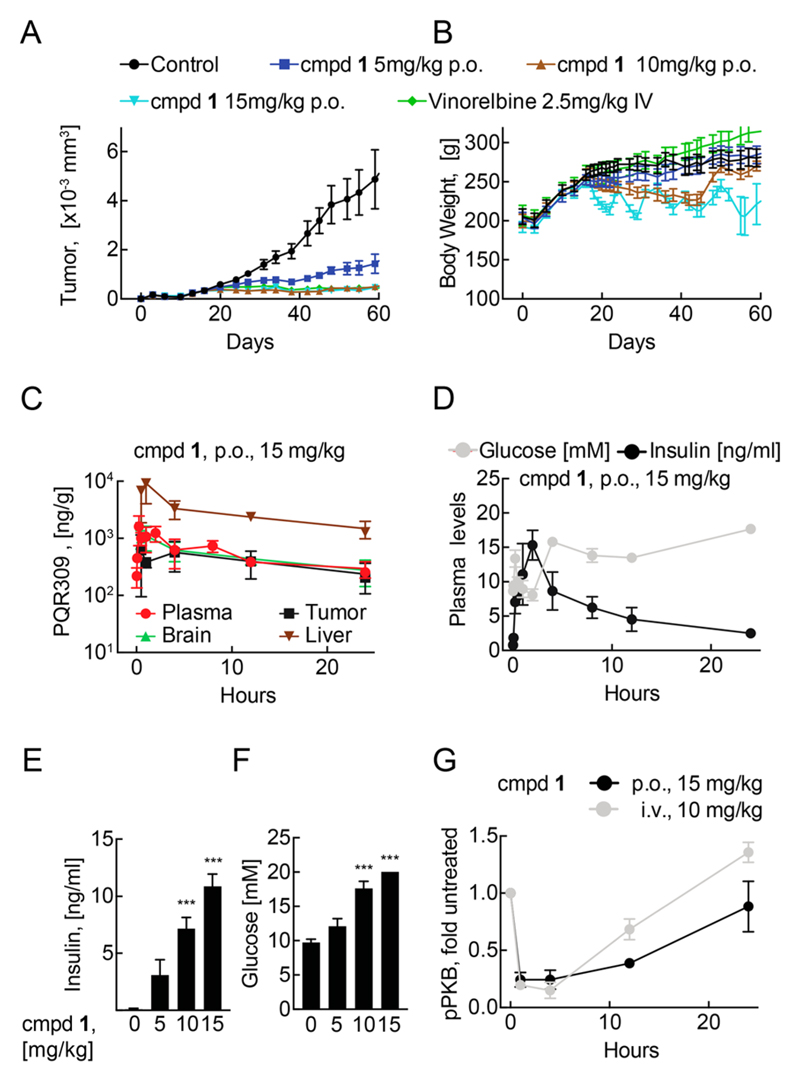
Phosphoinositide 3-kinase (PI3K) is deregulated in a wide variety of human tumors and triggers activation of protein kinase B (PKB/Akt) and mammalian target of rapamycin (mTOR). Here we describe the preclinical characterization of compound 1 (PQR309, bimiralisib), a potent 4,6-dimorpholino-1,3,5-triazine-based pan-class I PI3K inhibitor, which targets mTOR kinase in a balanced fashion at higher concentrations. No off-target interactions were detected for 1 in a wide panel of protein kinase, enzyme, and receptor ligand assays. Moreover, 1 did not bind tubulin, which was observed for the structurally related 4 (BKM120, buparlisib). Compound 1 is orally available, crosses the blood-brain barrier, and displayed favorable pharmacokinetic parameters in mice, rats, and dogs. Compound 1 demonstrated efficiency in inhibiting proliferation in tumor cell lines and a rat xenograft model. This, together with the compound's safety profile, identifies 1 as a clinical candidate with a broad application range in oncology, including treatment of brain tumors or CNS metastasis. Compound 1 is currently in phase II clinical trials for advanced solid tumors and refractory lymphoma.
磷脂酰肌醇3激酶(PI3K)在多种人类肿瘤中失调,并触发蛋白激酶B(PKB/Akt)和雷帕霉素哺乳动物靶蛋白(mTOR)的激活。在此,我们描述了化合物1(PQR309,比米拉西布)的临床前特征,它是一种基于4,6-二吗啉代-1,3,5-三嗪的强效泛I类PI3K抑制剂,在较高浓度下以平衡方式靶向mTOR激酶。在广泛的蛋白激酶、酶和受体配体检测中未检测到化合物1的脱靶相互作用。此外,化合物1不结合微管蛋白,而结构相关的化合物4(BKM120,布帕利西布)则会结合微管蛋白。化合物1口服可用,能穿过血脑屏障,在小鼠、大鼠和犬中显示出良好的药代动力学参数。化合物1在肿瘤细胞系和大鼠异种移植模型中显示出抑制增殖的效果。这一点,连同该化合物的安全性,确定化合物1为一种在肿瘤学中具有广泛应用范围的临床候选药物,包括治疗脑肿瘤或中枢神经系统转移瘤。化合物1目前正在进行晚期实体瘤和难治性淋巴瘤的II期临床试验。