Gayarre Javier, Martín-Gimeno Paloma, Osorio Ana, Paumard Beatriz, Barroso Alicia, Fernández Victoria, de la Hoya Miguel, Rojo Alejandro, Caldés Trinidad, Palacios José, Urioste Miguel, Benítez Javier, García María J
Human Genetics Group, Spanish National Cancer Research Center, C/Melchor Fernández Almagro 3, Madrid 28029, Spain.
Biomedical Network Research Centre on Rare Diseases (CIBERER), Madrid 28029, Spain.
Br J Cancer. 2017 Sep 26;117(7):1048-1062. doi: 10.1038/bjc.2017.286. Epub 2017 Aug 22.
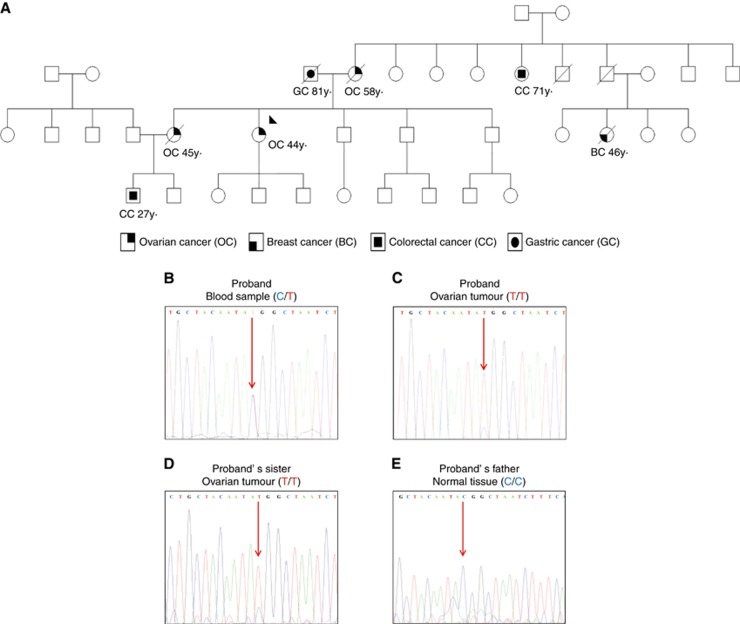
Despite a high prevalence of deleterious missense variants, most studies of RAD51C ovarian cancer susceptibility gene only provide in silico pathogenicity predictions of missense changes. We identified a novel deleterious RAD51C missense variant (p.Arg312Trp) in a high-risk family, and propose a criteria to prioritise RAD51C missense changes qualifying for functional analysis.
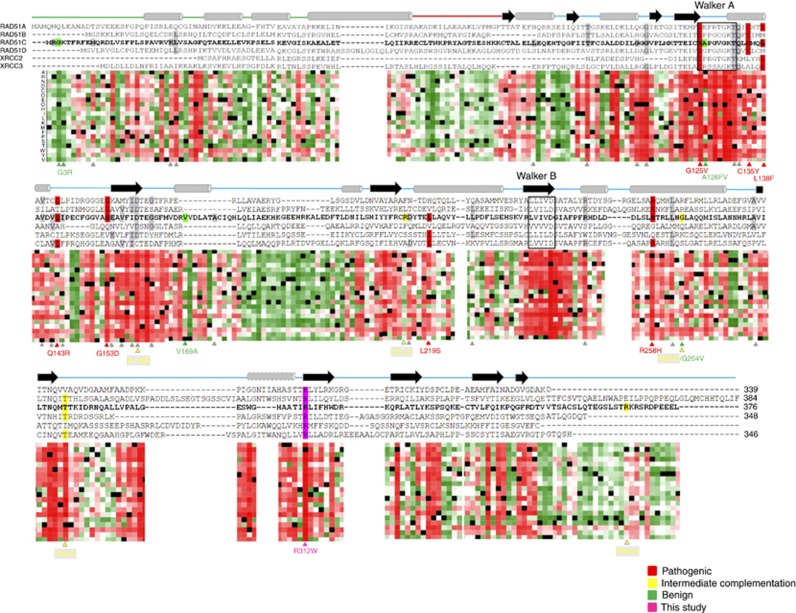
To evaluate pathogenicity of p.Arg312Trp variant we used sequence homology, loss of heterozygosity (LOH) and segregation analysis, and a comprehensive functional characterisation. To define a functional-analysis prioritisation criteria, we used outputs for the known functionally confirmed deleterious and benign RAD51C missense changes from nine pathogenicity prediction algorithms.
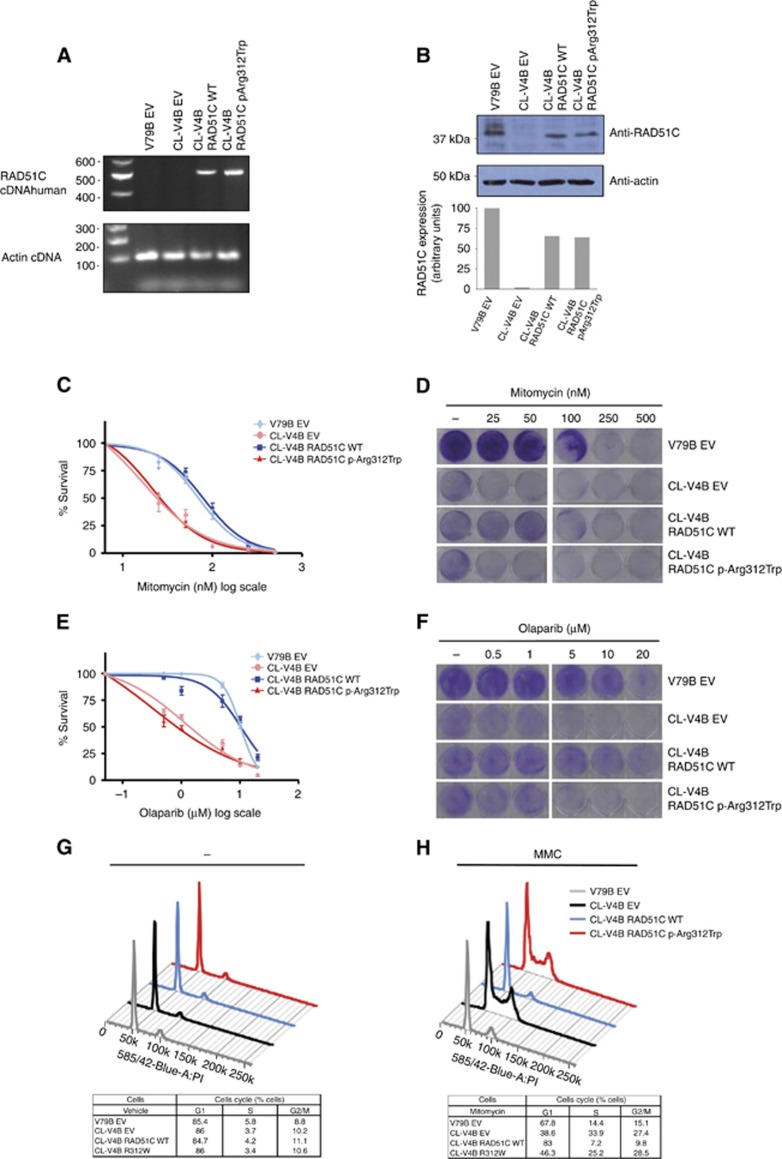
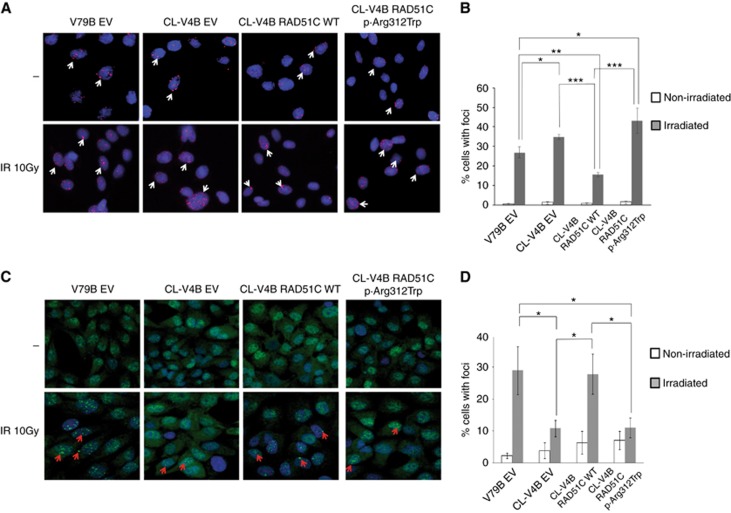
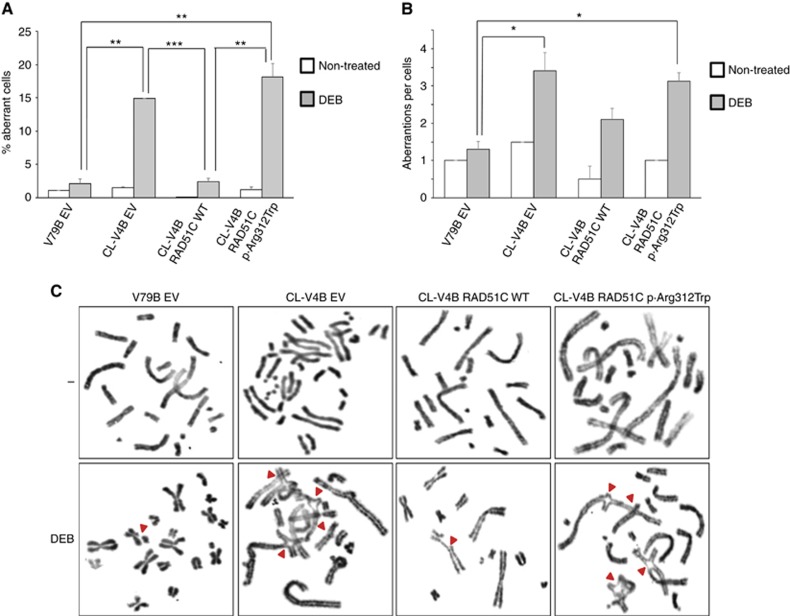
The p.Arg312Trp variant failed to correct mitomycin and olaparib hypersensitivity and to complement abnormal RAD51C foci formation according to functional assays, which altogether with LOH and segregation data demonstrated deleteriousness. Prioritisation criteria were based on the number of predictors providing a deleterious output, with a minimum of 5 to qualify for testing and a PredictProtein score greater than 33 to assign high-priority indication.
Our study points to a non-negligible number of RAD51C missense variants likely to impair protein function, provides a guideline to prioritise and encourage their selection for functional analysis and anticipates that reference laboratories should have available resources to conduct such assays.
尽管有害错义变异的发生率很高,但大多数关于RAD51C卵巢癌易感基因的研究仅提供错义变化的计算机致病性预测。我们在一个高危家族中鉴定出一种新的有害RAD51C错义变异(p.Arg312Trp),并提出了一种标准,以优先选择有资格进行功能分析的RAD51C错义变化。
为了评估p.Arg312Trp变异的致病性,我们使用了序列同源性、杂合性缺失(LOH)和分离分析,以及全面的功能表征。为了定义功能分析的优先标准,我们使用了来自9种致病性预测算法的已知功能确认的有害和良性RAD51C错义变化的输出结果。
根据功能分析,p.Arg312Trp变异未能纠正丝裂霉素和奥拉帕尼超敏反应,也未能补充异常的RAD51C病灶形成,这与LOH和分离数据一起证明了其有害性。优先标准基于提供有害输出的预测器数量,至少5个才有资格进行测试,并且PredictProtein分数大于33才能指定为高优先级指示。
我们的研究指出,相当数量的RAD51C错义变异可能会损害蛋白质功能,提供了一个优先排序的指南,并鼓励选择它们进行功能分析,同时预计参考实验室应具备进行此类检测的资源。