Fernández-Cárdenas L P, Villanueva-Chimal E, Salinas L S, José-Nuñez C, Tuena de Gómez Puyou M, Navarro R E
Departamento de Biología Celular y Desarrollo, Instituto de Fisiología Celular, Universidad Nacional Autónoma de México, Ciudad de México, México.
Departamento de Bioquímica y Biología Estructural, Instituto de Fisiología Celular, Universidad Nacional Autónoma de México, Ciudad de México, México.
PLoS One. 2017 Aug 22;12(8):e0181984. doi: 10.1371/journal.pone.0181984. eCollection 2017.
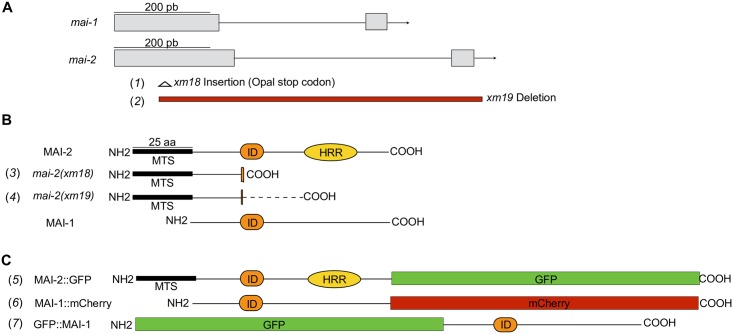
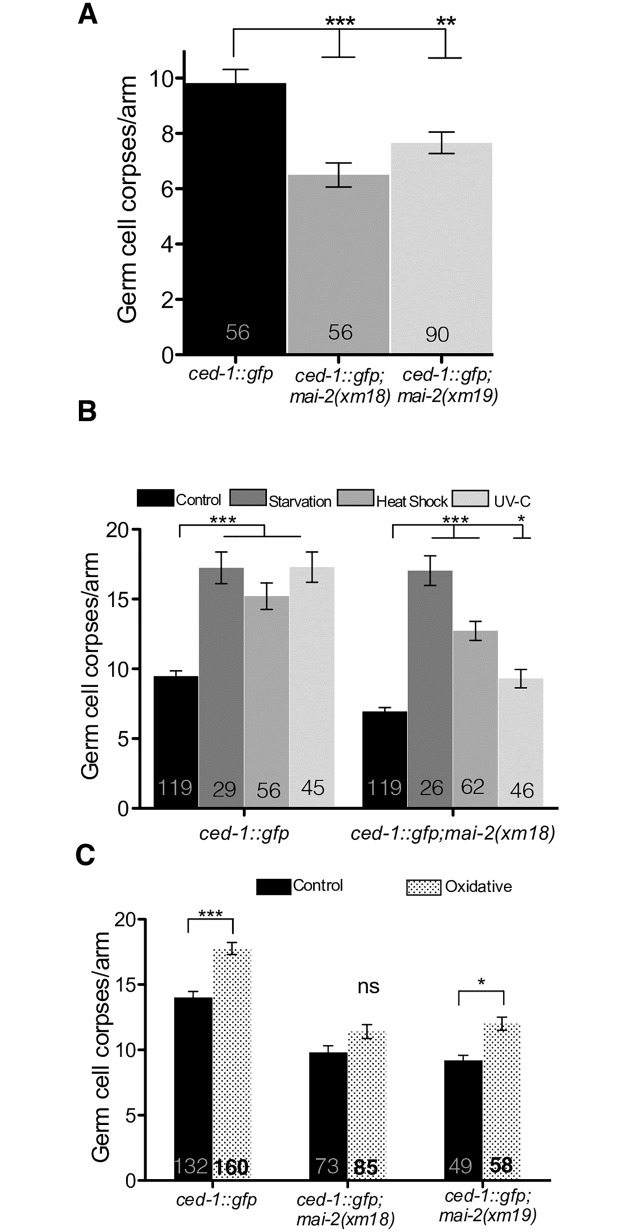
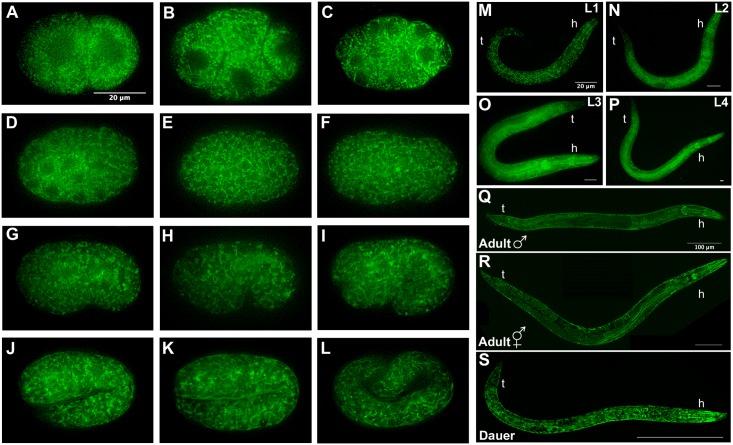
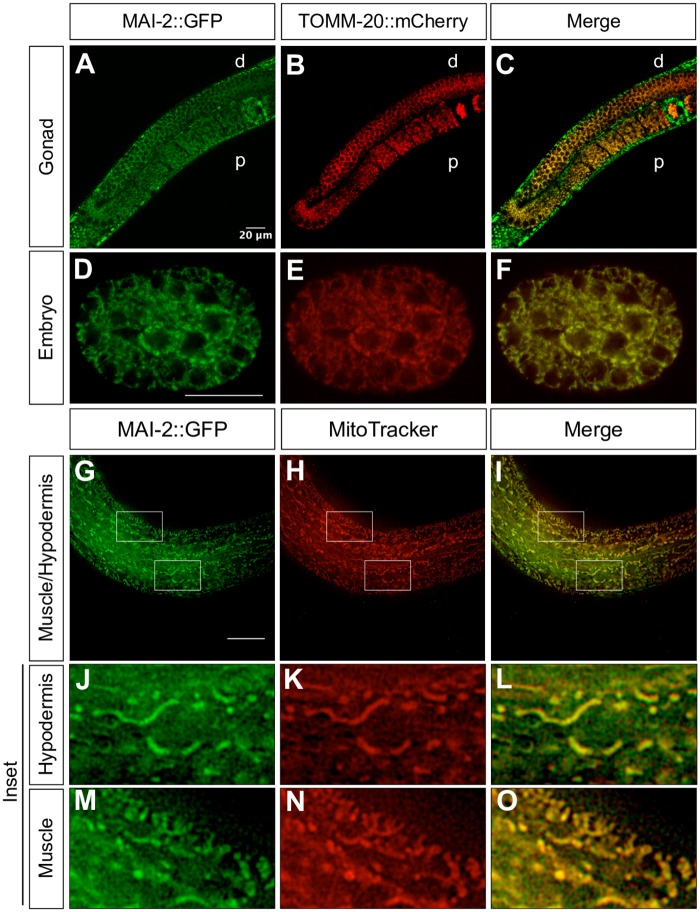
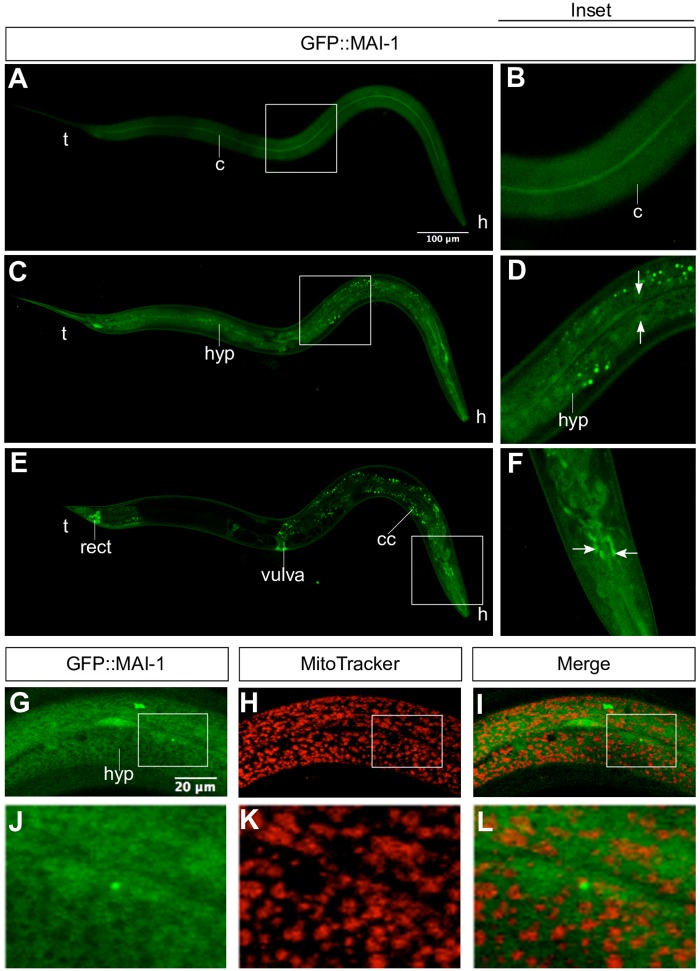
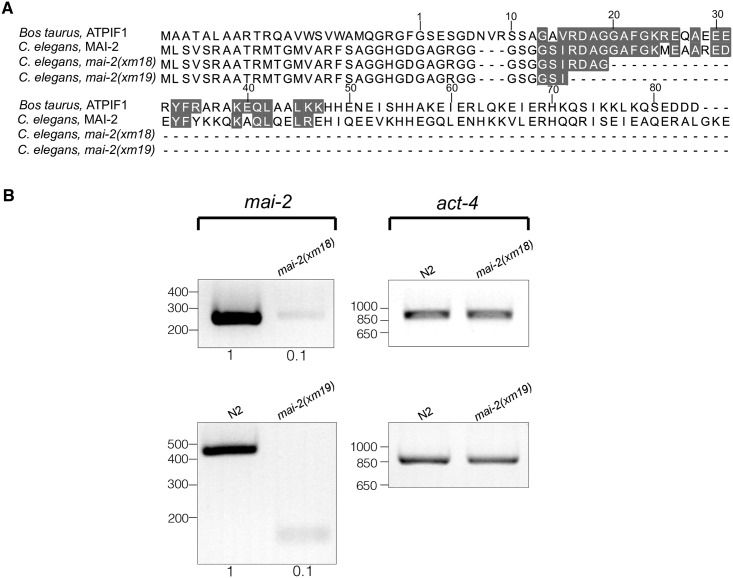
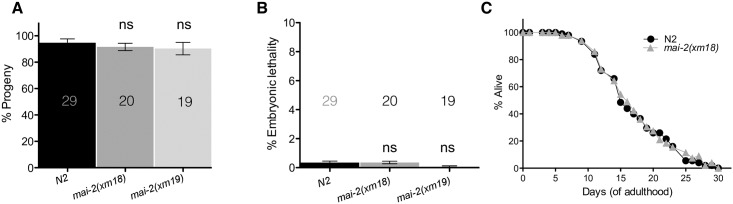
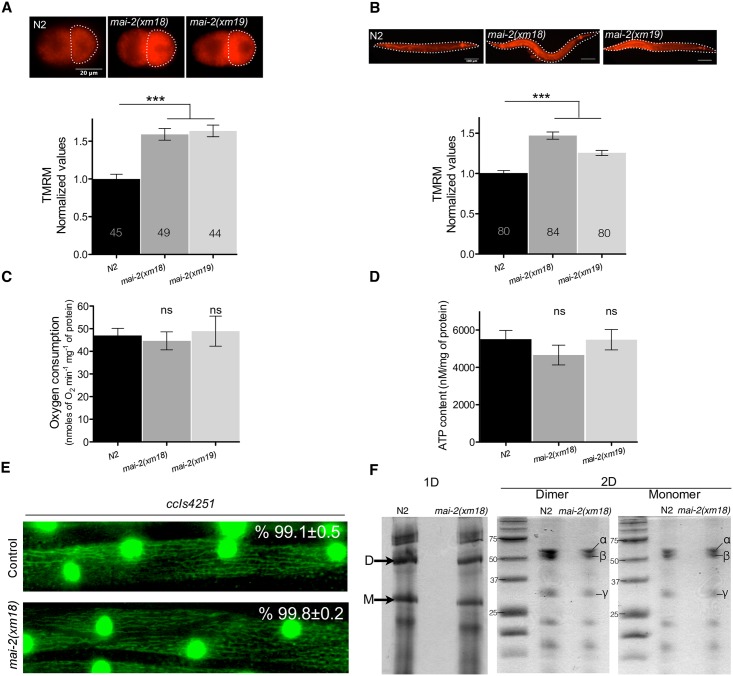
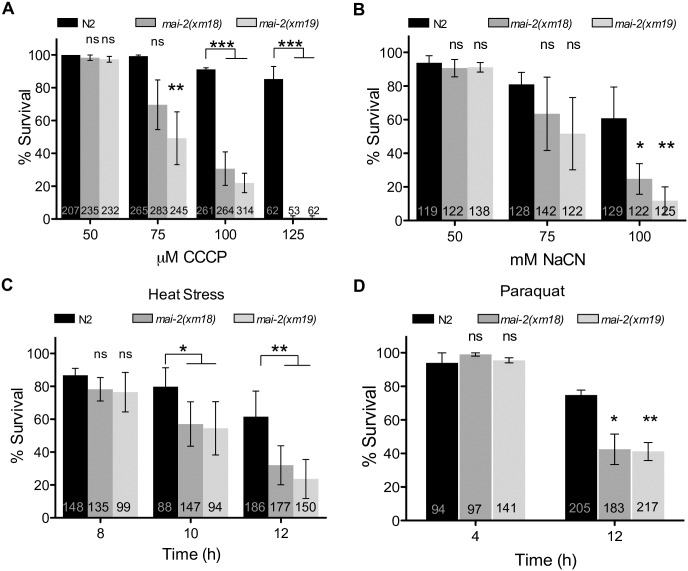
When the electrochemical proton gradient is disrupted in the mitochondria, IF1 (Inhibitor Factor-1) inhibits the reverse hydrolytic activity of the F1Fo-ATP synthase, thereby allowing cells to conserve ATP at the expense of losing the mitochondrial membrane potential (Δψm). The function of IF1 has been studied mainly in different cell lines, but these studies have generated contrasting results, which have not been helpful to understand the real role of this protein in a whole organism. In this work, we studied IF1 function in Caenorhabditis elegans to understand IF1´s role in vivo. C. elegans has two inhibitor proteins of the F1Fo-ATPase, MAI-1 and MAI-2. To determine their protein localization in C. elegans, we generated translational reporters and found that MAI-2 is expressed ubiquitously in the mitochondria; conversely, MAI-1 was found in the cytoplasm and nuclei of certain tissues. By CRISPR/Cas9 genome editing, we generated mai-2 mutant alleles. Here, we showed that mai-2 mutant animals have normal progeny, embryonic development and lifespan. Contrasting with the results previously obtained in cell lines, we found no evident defects in the mitochondrial network, dimer/monomer ATP synthase ratio, ATP concentration or respiration. Our results suggest that some of the roles previously attributed to IF1 in cell lines could not reflect the function of this protein in a whole organism and could be attributed to specific cell lines or methods used to silence, knockout or overexpress this protein. However, we did observe that animals lacking IF1 had an enhanced Δψm and lower physiological germ cell apoptosis. Importantly, we found that mai-2 mutant animals must be under stress to observe the role of IF1. Accordingly, we observed that mai-2 mutant animals were more sensitive to heat shock, oxidative stress and electron transport chain blockade. Furthermore, we observed that IF1 is important to induce germ cell apoptosis under certain types of stress. Here, we propose that MAI-2 might play a role in apoptosis by regulating Δψm. Additionally, we suggest that IF1 function is mainly observed under stress and that, under physiological conditions, this protein does not play an essential role.
当线粒体内的电化学质子梯度被破坏时,IF1(抑制因子-1)会抑制F1Fo-ATP合酶的逆向水解活性,从而使细胞能够以牺牲线粒体膜电位(Δψm)为代价来保存ATP。IF1的功能主要在不同细胞系中进行了研究,但这些研究产生了相互矛盾的结果,这无助于理解该蛋白在整个生物体中的真正作用。在这项工作中,我们研究了秀丽隐杆线虫中IF1的功能,以了解IF1在体内的作用。秀丽隐杆线虫有两种F1Fo-ATP酶的抑制蛋白,MAI-1和MAI-2。为了确定它们在秀丽隐杆线虫中的蛋白质定位,我们构建了翻译报告基因,发现MAI-2在线粒体中普遍表达;相反,MAI-1存在于某些组织的细胞质和细胞核中。通过CRISPR/Cas9基因组编辑,我们产生了mai-2突变等位基因。在这里,我们表明mai-2突变动物具有正常的后代、胚胎发育和寿命。与之前在细胞系中获得的结果相反,我们在 mitochondrial network、二聚体/单体ATP合酶比率、ATP浓度或呼吸方面没有发现明显缺陷。我们的结果表明,之前在细胞系中归因于IF1的一些作用可能无法反映该蛋白在整个生物体中的功能,可能归因于用于沉默、敲除或过表达该蛋白的特定细胞系或方法。然而,我们确实观察到缺乏IF1的动物具有增强的Δψm和较低的生理性生殖细胞凋亡。重要的是,我们发现mai-2突变动物必须处于应激状态才能观察到IF1的作用。因此,我们观察到mai-2突变动物对热休克、氧化应激和电子传递链阻断更敏感。此外,我们观察到IF1在某些类型的应激下诱导生殖细胞凋亡中很重要。在这里,我们提出MAI-2可能通过调节Δψm在凋亡中发挥作用。此外,我们认为IF1的功能主要在应激下观察到,并且在生理条件下,该蛋白不发挥重要作用。