Department of Pathology, Northwestern University, Chicago, Illinois, USA.
Department of Microbiology-Immunology, Northwestern University, Chicago, Illinois, USA.
Sci Rep. 2017 Aug 22;7(1):9105. doi: 10.1038/s41598-017-08770-9.
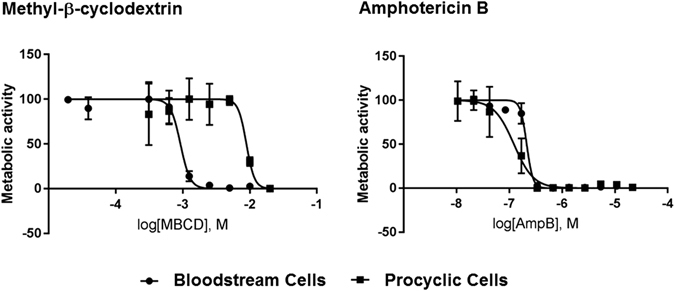
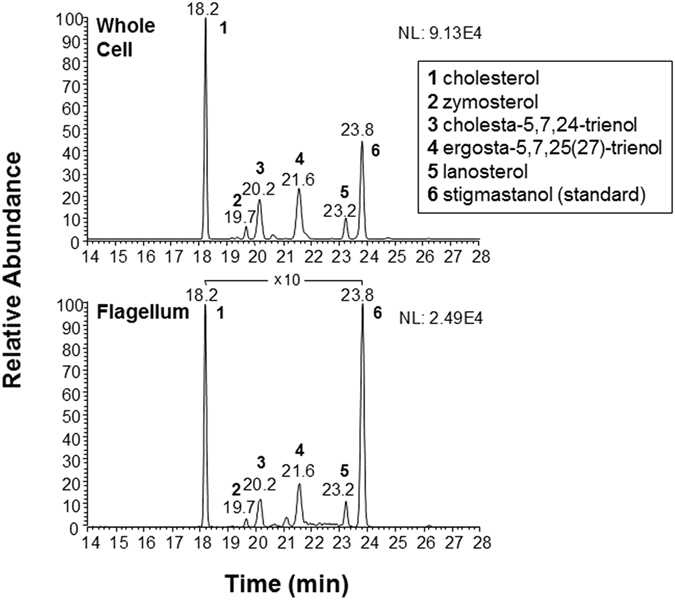
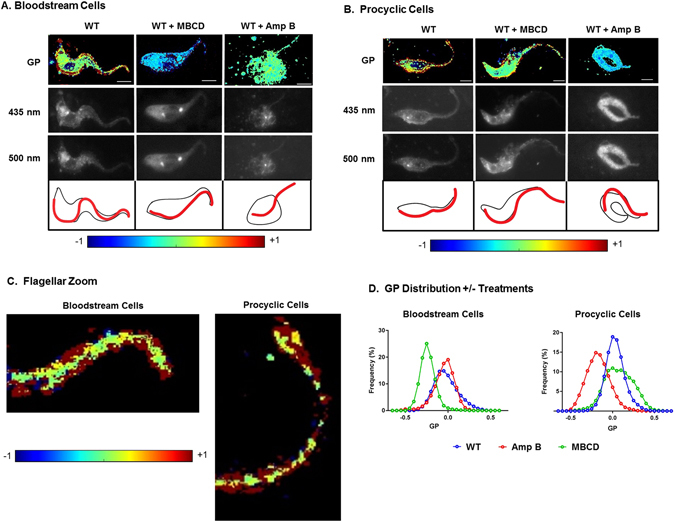
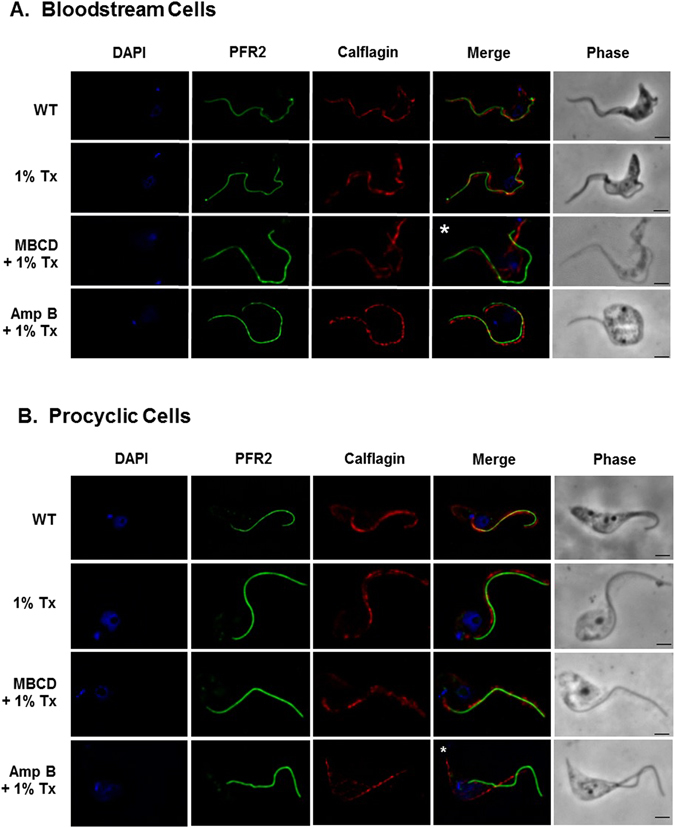
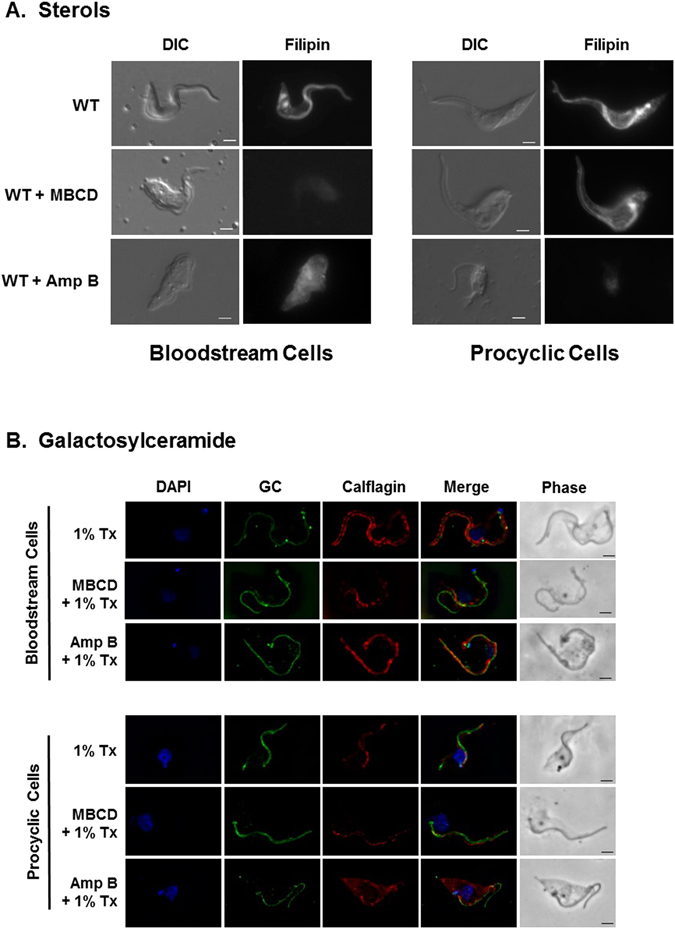
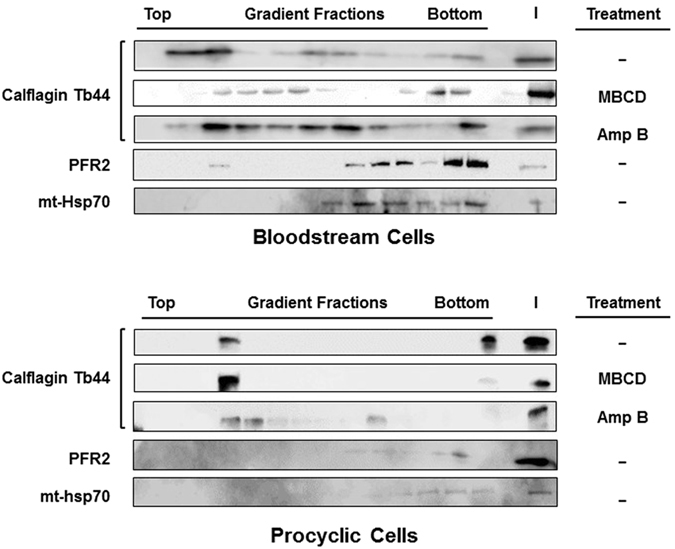
Cilia play important roles in cell signaling, facilitated by the unique lipid environment of a ciliary membrane containing high concentrations of sterol-rich lipid rafts. The African trypanosome Trypanosoma brucei is a single-celled eukaryote with a single cilium/flagellum. We tested whether flagellar sterol enrichment results from selective flagellar partitioning of specific sterol species or from general enrichment of all sterols. While all sterols are enriched in the flagellum, cholesterol is especially enriched. T. brucei cycles between its mammalian host (bloodstream cell), in which it scavenges cholesterol, and its tsetse fly host (procyclic cell), in which it both scavenges cholesterol and synthesizes ergosterol. We wondered whether the insect and mammalian life cycle stages possess chemically different lipid rafts due to different sterol utilization. Treatment of bloodstream parasites with cholesterol-specific methyl-β-cyclodextrin disrupts both membrane liquid order and localization of a raft-associated ciliary membrane calcium sensor. Treatment with ergosterol-specific amphotericin B does not. The opposite results were observed with ergosterol-rich procyclic cells. Further, these agents have opposite effects on flagellar sterol enrichment and cell metabolism in the two life cycle stages. These findings illuminate differences in the lipid rafts of an organism employing life cycle-specific sterols and have implications for treatment.
纤毛在细胞信号转导中发挥重要作用,这得益于纤毛膜独特的脂质环境,其中含有高浓度富含固醇的脂筏。非洲锥虫 Trypanosoma brucei 是一种单细胞真核生物,具有一个纤毛/鞭毛。我们测试了鞭毛固醇的富集是否是由于特定固醇物种的选择性鞭毛分配,还是由于所有固醇的普遍富集。虽然所有的固醇都在鞭毛中富集,但胆固醇特别富集。T. brucei 在其哺乳动物宿主(血液细胞)和其采采蝇宿主(前鞭毛体)之间循环,在哺乳动物宿主中,它会掠夺胆固醇,而在采采蝇宿主中,它既掠夺胆固醇又合成麦角固醇。我们想知道昆虫和哺乳动物生命周期阶段是否由于不同的固醇利用而具有化学上不同的脂筏。用胆固醇特异性甲基-β-环糊精处理血液寄生虫会破坏膜的液体有序性和筏相关纤毛膜钙传感器的定位。用麦角固醇特异性两性霉素 B 处理则不会。富含麦角固醇的前鞭毛体则观察到相反的结果。此外,这些药物在两个生命周期阶段对鞭毛固醇的富集和细胞代谢有相反的影响。这些发现阐明了在使用生命周期特异性固醇的生物体中脂筏的差异,并对治疗有影响。