Ooi Cher-Pheng, Rotureau Brice, Gribaldo Simonetta, Georgikou Christina, Julkowska Daria, Blisnick Thierry, Perrot Sylvie, Subota Ines, Bastin Philippe
Trypanosome Cell Biology Unit, INSERM U1201, Institut Pasteur, 25 Rue du Docteur Roux, 75015, Paris, France.
Molecular Biology of Gene in Extremophiles Unit, Department of Microbiology, Institut Pasteur, 25 rue du Docteur Roux, 75015, Paris, France.
PLoS One. 2015 Jul 28;10(7):e0133676. doi: 10.1371/journal.pone.0133676. eCollection 2015.
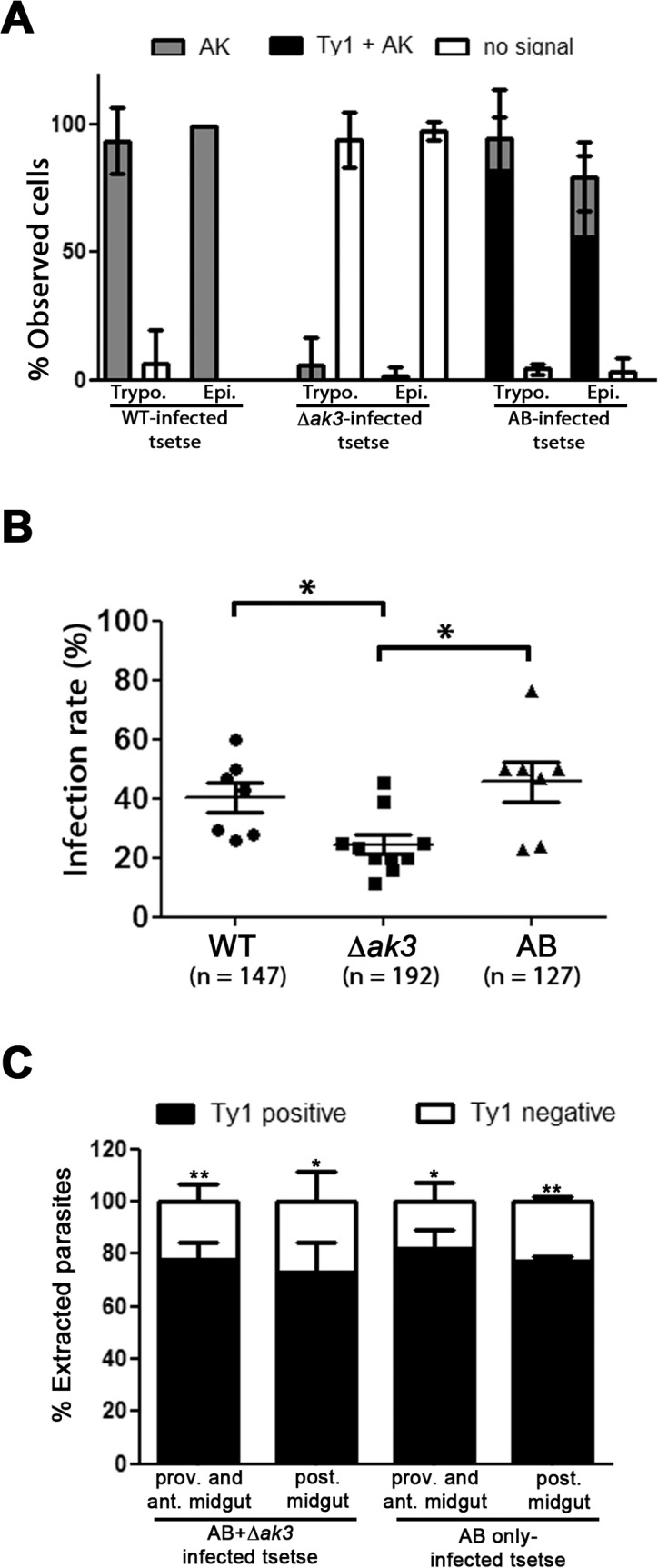
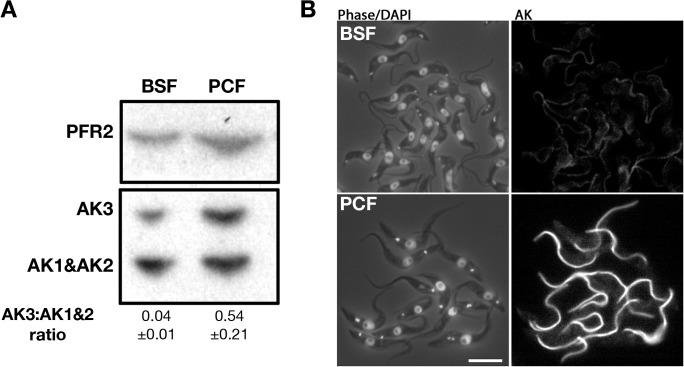
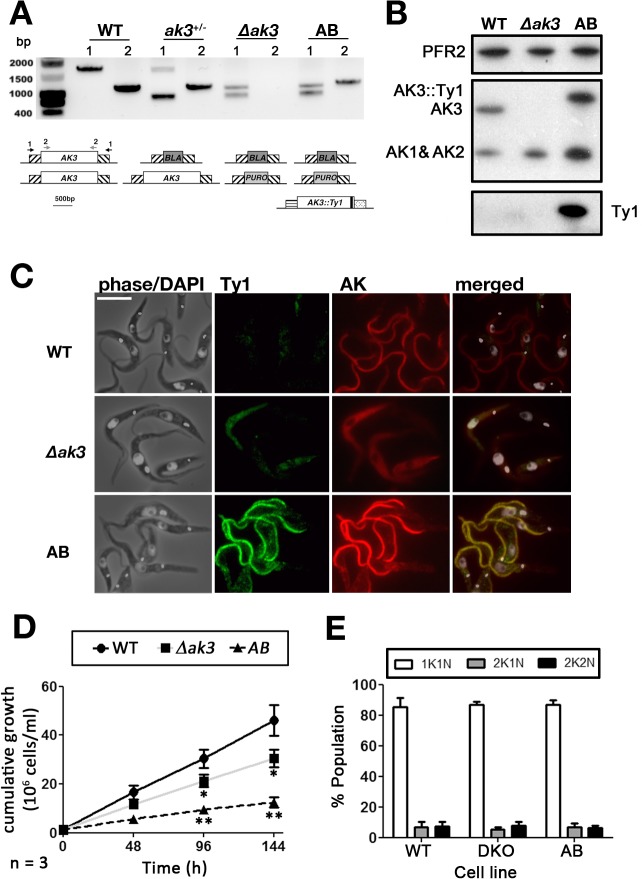
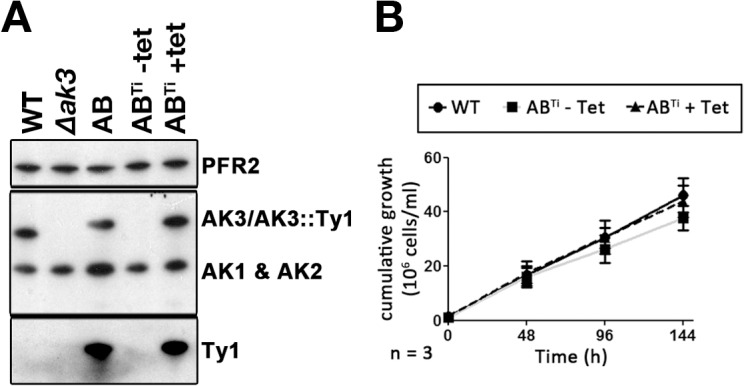
African trypanosomes are flagellated parasites that cause sleeping sickness. Parasites are transmitted from one mammalian host to another by the bite of a tsetse fly. Trypanosoma brucei possesses three different genes for arginine kinase (AK) including one (AK3) that encodes a protein localised to the flagellum. AK3 is characterised by the presence of a unique amino-terminal insertion that specifies flagellar targeting. We show here a phylogenetic analysis revealing that flagellar AK arose in two independent duplication events in T. brucei and T. congolense, the two species of African trypanosomes that infect the tsetse midgut. In T. brucei, AK3 is detected in all stages of parasite development in the fly (in the midgut and in the salivary glands) as well as in bloodstream cells, but with predominance at insect stages. Genetic knockout leads to a slight reduction in motility and impairs parasite infectivity towards tsetse flies in single and competition experiments, both phenotypes being reverted upon expression of an epitope-tagged version of AK3. We speculate that this flagellar arginine kinase is important for T. brucei infection of tsetse, especially in the context of mixed infections and that its flagellar targeting relies on a system equivalent to that discovered for calflagins, a family of trypanosome flagellum calcium binding proteins.
非洲锥虫是一种有鞭毛的寄生虫,可引发昏睡病。寄生虫通过采采蝇的叮咬在哺乳动物宿主之间传播。布氏锥虫拥有三种不同的精氨酸激酶(AK)基因,其中一种(AK3)编码一种定位于鞭毛的蛋白质。AK3的特征是存在一个独特的氨基末端插入序列,该序列决定了鞭毛靶向性。我们在此展示的系统发育分析表明,鞭毛AK在布氏锥虫和刚果锥虫这两种感染采采蝇中肠的非洲锥虫的两个独立复制事件中出现。在布氏锥虫中,在采采蝇体内寄生虫发育的所有阶段(中肠和唾液腺)以及血液细胞中都能检测到AK3,但在昆虫阶段占主导。基因敲除导致运动能力略有下降,并在单感染和竞争实验中损害寄生虫对采采蝇的感染性,这两种表型在表达带有表位标签的AK3版本后都能恢复。我们推测这种鞭毛精氨酸激酶对布氏锥虫感染采采蝇很重要,特别是在混合感染的情况下,并且其鞭毛靶向依赖于一种与钙结合蛋白(一类锥虫鞭毛钙结合蛋白)所发现的系统等效的系统。