Ahmed Marawan, Jalily Hasani Horia, Ganesan Aravindhan, Houghton Michael, Barakat Khaled
Faculty of Pharmacy and Pharmaceutical Sciences.
Li Ka Shing Institute of Virology.
Drug Des Devel Ther. 2017 Aug 4;11:2301-2324. doi: 10.2147/DDDT.S133944. eCollection 2017.
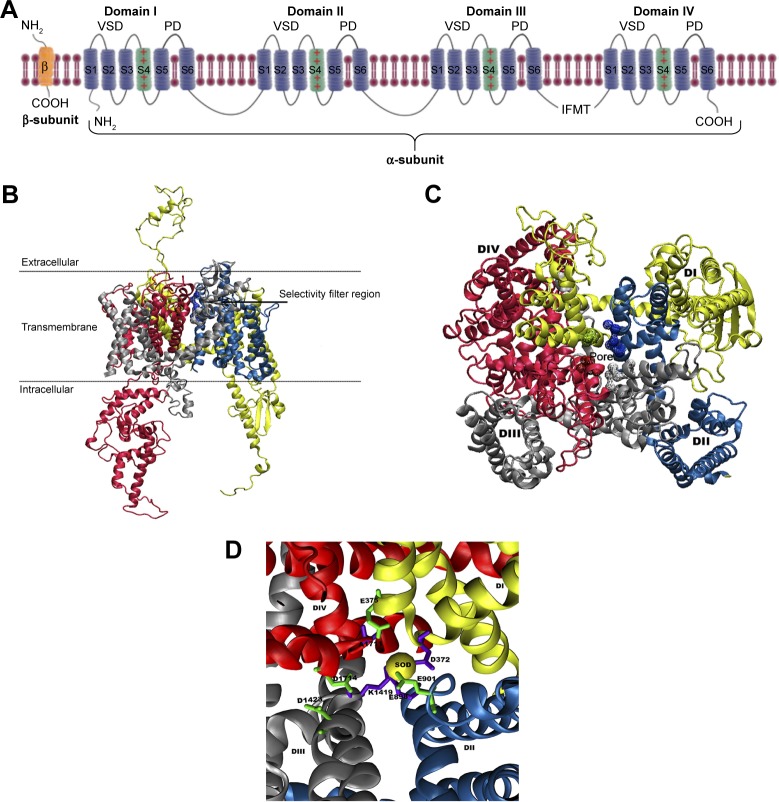
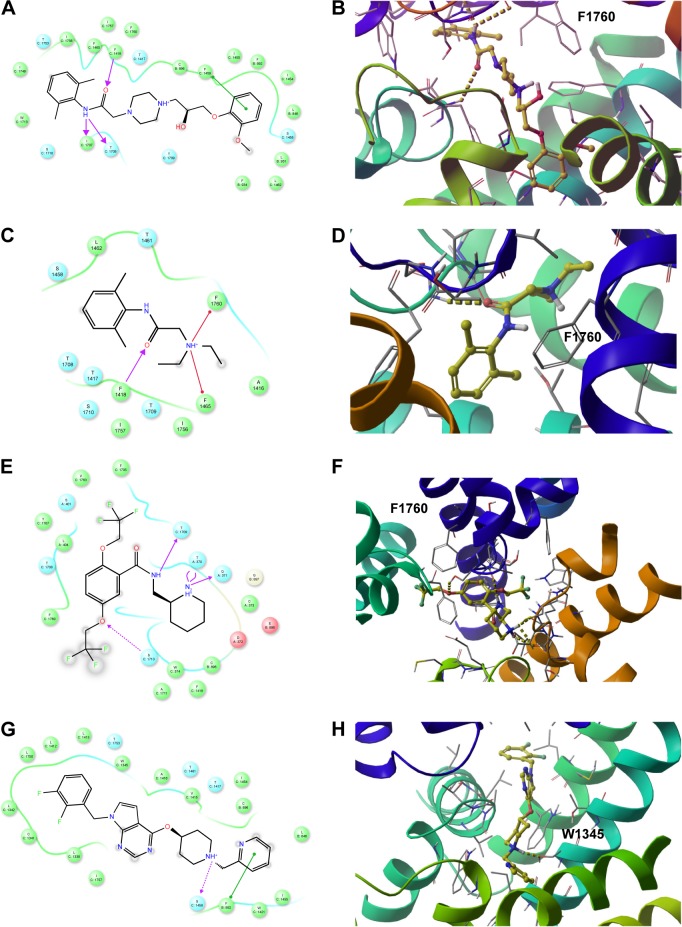
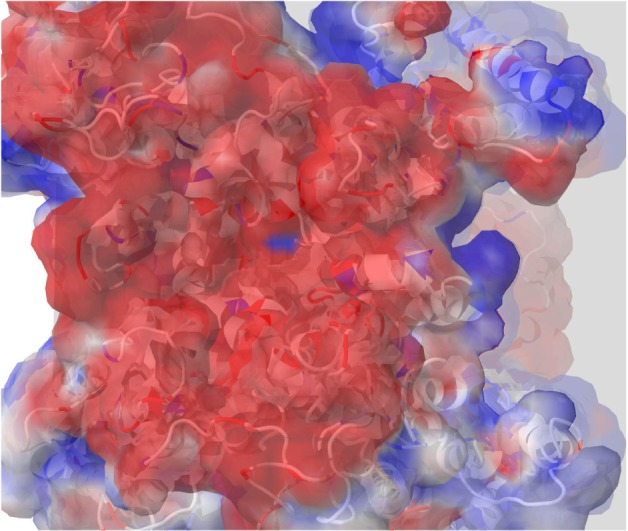
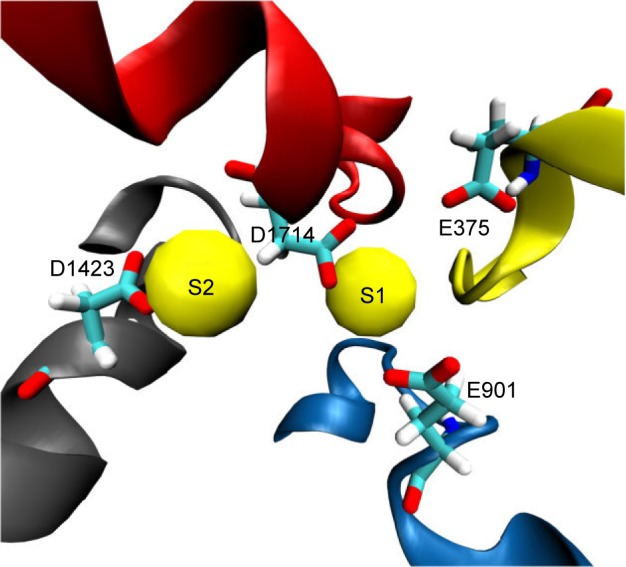
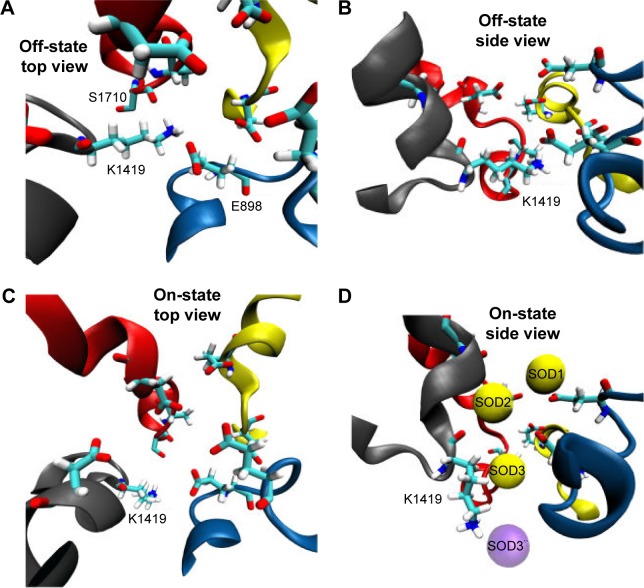
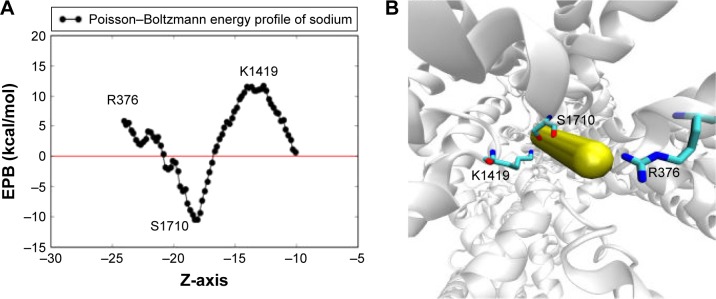
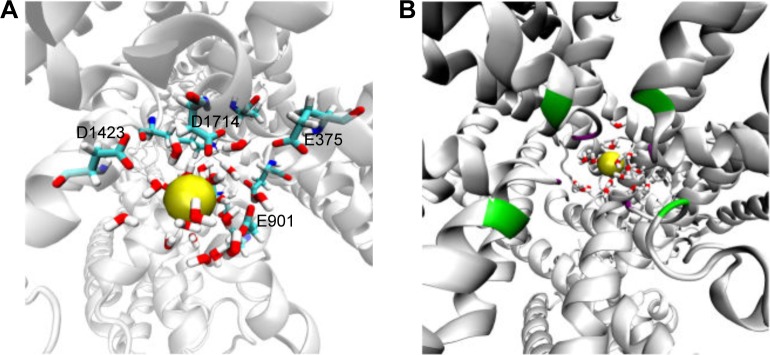
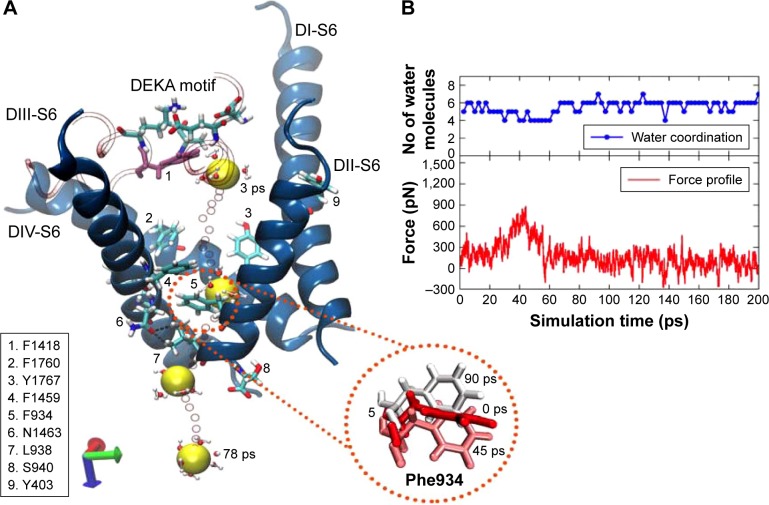
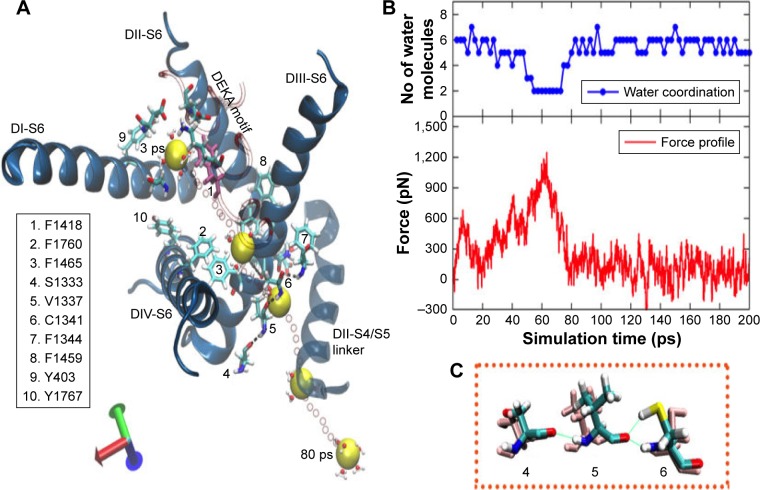
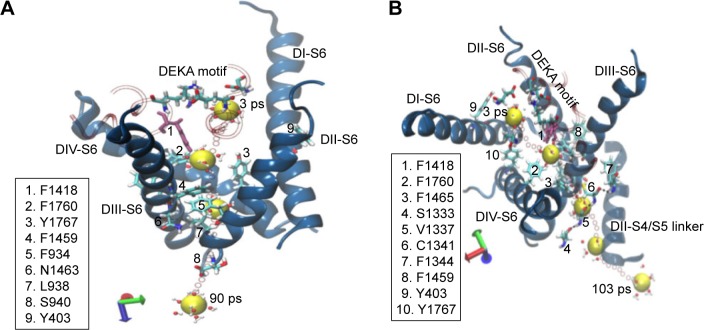
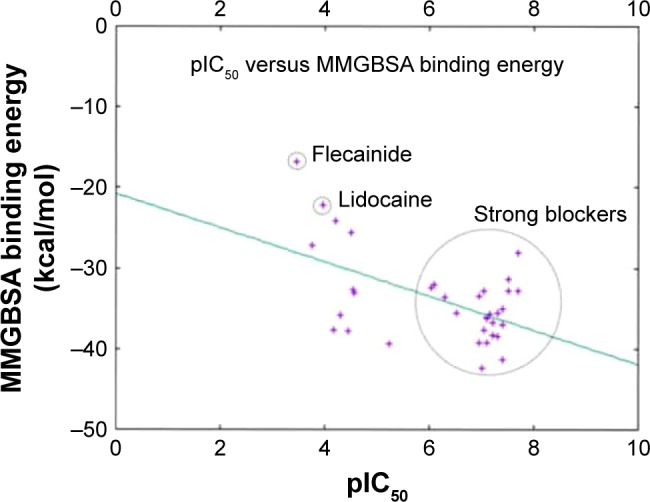
Abnormalities in the human Na1.5 (hNa1.5) voltage-gated sodium ion channel (VGSC) are associated with a wide range of cardiac problems and diseases in humans. Current structural models of hNa1.5 are still far from complete and, consequently, their ability to study atomistic interactions of this channel is very limited. Here, we report a comprehensive atomistic model of the hNa1.5 ion channel, constructed using homology modeling technique and refined through long molecular dynamics simulations (680 ns) in the lipid membrane bilayer. Our model was comprehensively validated by using reported mutagenesis data, comparisons with previous models, and binding to a panel of known hNa1.5 blockers. The relatively long classical MD simulation was sufficient to observe a natural sodium permeation event across the channel's selectivity filters to reach the channel's central cavity, together with the identification of a unique role of the lysine residue. Electrostatic potential calculations revealed the existence of two potential binding sites for the sodium ion at the outer selectivity filters. To obtain further mechanistic insight into the permeation event from the central cavity to the intracellular region of the channel, we further employed "state-of-the-art" steered molecular dynamics (SMD) simulations. Our SMD simulations revealed two different pathways through which a sodium ion can be expelled from the channel. Further, the SMD simulations identified the key residues that are likely to control these processes. Finally, we discuss the potential binding modes of a panel of known hNa1.5 blockers to our structural model of hNa1.5. We believe that the data presented here will enhance our understanding of the structure-property relationships of the hNa1.5 ion channel and the underlying molecular mechanisms in sodium ion permeation and drug interactions. The results presented here could be useful for designing safer drugs that do not block the hNa1.5 channel.
人类Na1.5(hNa1.5)电压门控钠离子通道(VGSC)的异常与人类多种心脏问题和疾病相关。目前hNa1.5的结构模型仍远未完善,因此,其研究该通道原子间相互作用的能力非常有限。在此,我们报告了一个hNa1.5离子通道的全面原子模型,该模型采用同源建模技术构建,并通过在脂质膜双分子层中进行长时间分子动力学模拟(680纳秒)进行优化。我们的模型通过使用已报道的诱变数据、与先前模型的比较以及与一组已知hNa1.5阻滞剂的结合进行了全面验证。相对较长的经典分子动力学模拟足以观察到钠离子穿过通道选择性过滤器到达通道中心腔的自然渗透事件,并确定了赖氨酸残基的独特作用。静电势计算揭示了在外部选择性过滤器处存在两个钠离子潜在结合位点。为了进一步深入了解从通道中心腔到细胞内区域的渗透事件机制,我们进一步采用了“最先进的”引导分子动力学(SMD)模拟。我们的SMD模拟揭示了钠离子从通道排出的两种不同途径。此外,SMD模拟确定了可能控制这些过程的关键残基。最后,我们讨论了一组已知hNa1.5阻滞剂与我们的hNa1.5结构模型的潜在结合模式。我们相信,此处呈现的数据将增进我们对hNa1.5离子通道结构 - 属性关系以及钠离子渗透和药物相互作用潜在分子机制的理解。此处呈现的结果可能有助于设计不阻断hNa1.5通道的更安全药物。