Cheng Fei-Ying, Jeng Mei-Jy, Lin Yin-Chou, Wang Shih-Hao, Wu Shih-Hao, Li Wen-Cheng, Huang Kuo-Feng, Chiu Te-Fa
Institute of Emergency and Critical Care Medicine, School of Medicine, National Yang-Ming University, Taipei, Taiwan.
Department of Emergency Medicine, MacKay Memorial Hospital, Taipei, Taiwan.
PLoS One. 2017 Aug 23;12(8):e0183207. doi: 10.1371/journal.pone.0183207. eCollection 2017.
Acute mountain sickness (AMS) occurs in non-acclimatized people after an acute ascent to an altitude of 2,500 m or higher. The aim of this study was to examine the incidence and severity of AMS and associated symptoms in children.
The prospective observational study included 197 healthy, non-acclimatized 11 and 12-year-old children trekking the round-trip from the trailhead to the summit of Xue Mountain, Taiwan (2,179 m to 3,886 m) over 3 days. AMS was evaluated at Qika Hut (2,460 m) on Day 1, at Sanliujiu Hut on Day 2 (3,100 m), and at the same altitude (3,100 m) after reaching the summit on Day 3. We used the Lake Louise Score (LLS) to diagnose AMS and record daily AMS-associated symptoms. We gave acetazolamide to children with mild to moderate AMS. Dexamethasone was reserved for individuals suffering from severe AMS. Acetaminophen was administrated to children with headache, and metoclopramide for those with nausea or vomiting.
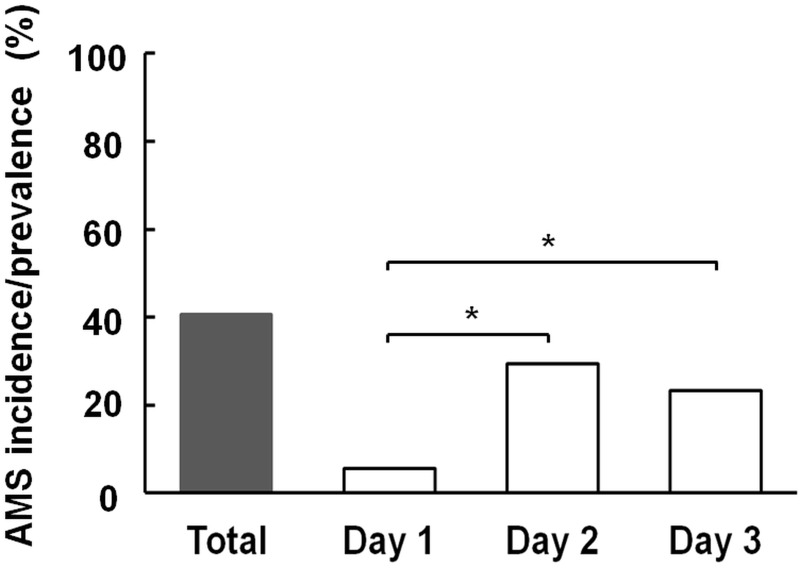
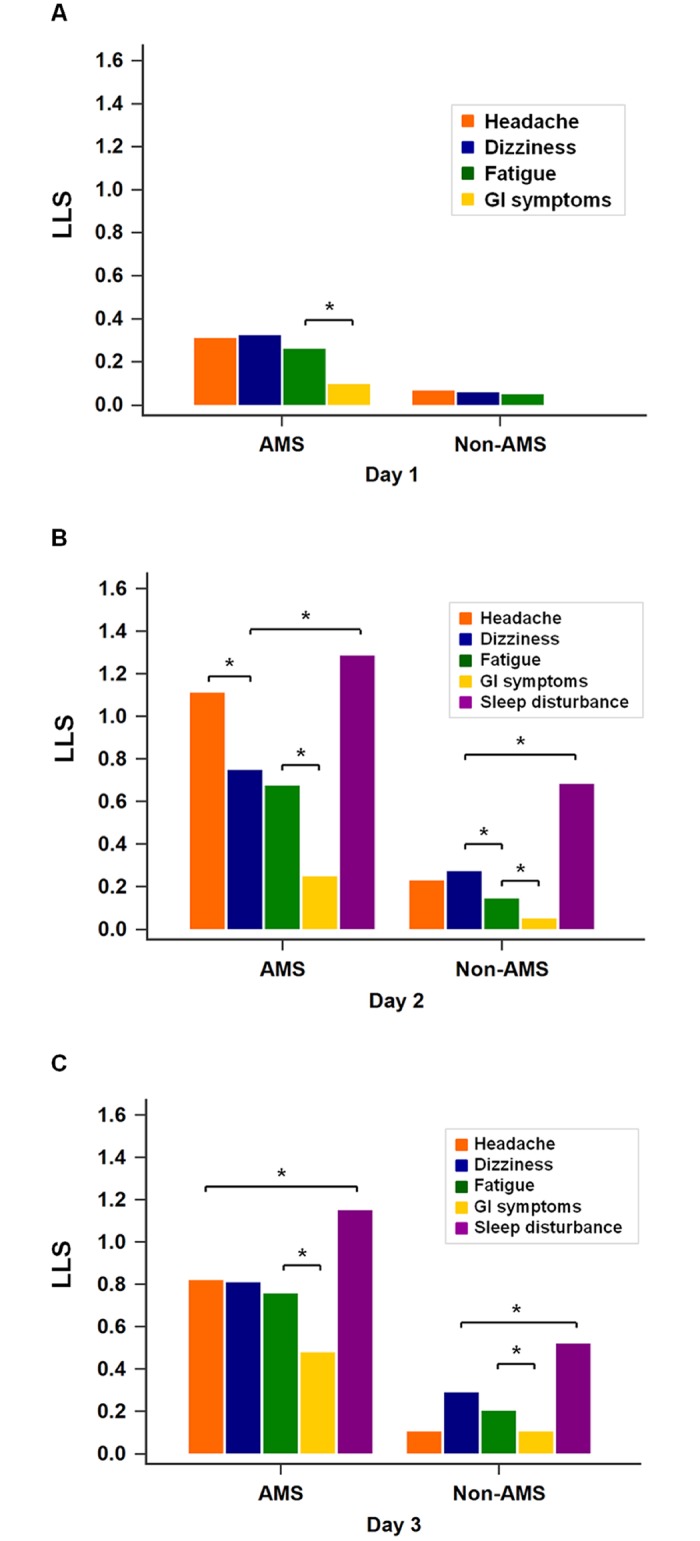
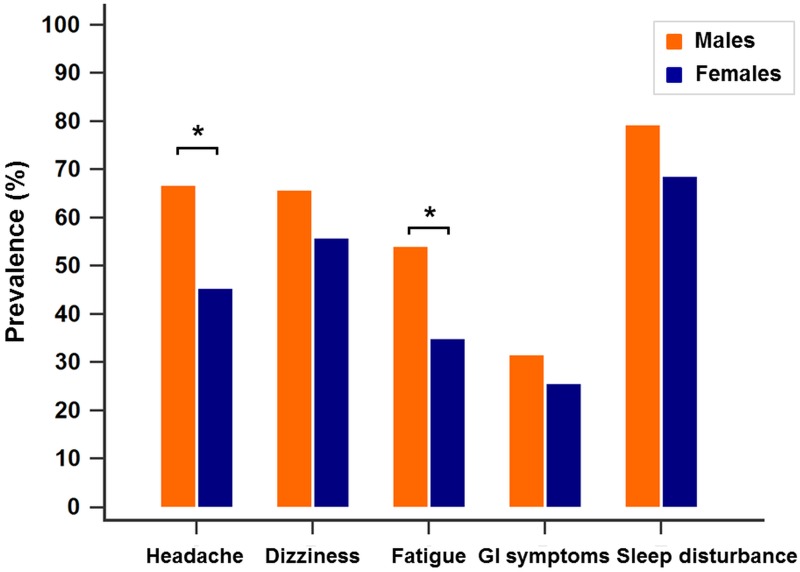
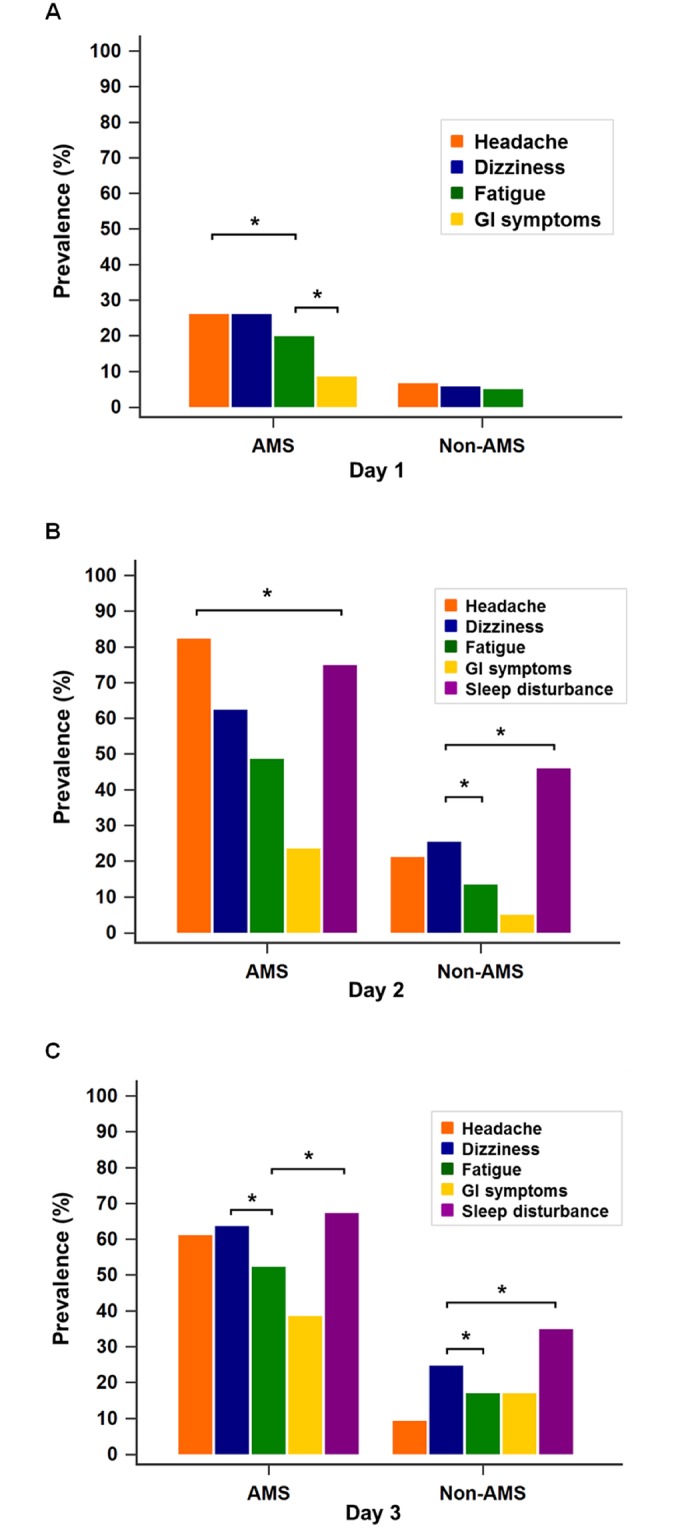
There were 197 subjects eligible for analysis. The overall incidence of AMS was 40.6%, which was higher in males and in subjects with a higher body mass index (BMI) (p < 0.05). The prevalence of AMS on Day 1 was 5.6%, which was significantly lower than that on Day 2 (29.4%) and Day 3 (23.4%). The mean LLS of all subjects was 1.77 ± 2.08. The overall incidence of severe AMS (LLS ≥ 5) was 12.5%. The mean LLS of the AMS group (3.02 ± 2.46) was significantly higher than that of the non-AMS group (0.92 ± 1.16, p < 0.001). Among the AMS group, the mean LLS was 1.00 ± 1.55 on Day 1, 4.09 ± 1.97 on Day 2, and 3.98 ± 2.42 on Day 3. The most common symptom was sleep disturbance followed by dizziness, and headache. The prevalence of headache was 46.2% on Day 2 at 3,100 m, and 31.3% on Day 3 at the same altitude after climbing the summit (3,886 m). Males experienced significantly more headache and fatigue than females (p < 0.05). The LLS and prevalence of all AMS symptoms were significantly higher in the AMS than the non-AMS group (p < 0.05).
The AMS incidence among children trekking to Xue Mountain was 40.6%. AMS is common and mostly manifests as mild symptoms. Gender (male) and a higher BMI could be considered two independent risk factors of higher AMS incidence. Sleep disturbance is the most common symptom, and the lower prevalence of headache on Day 3 may be due to the effects of medication and/or acclimatization.
急性高原病(AMS)发生于未适应高原环境的人群在急性上升至海拔2500米及以上高度之后。本研究旨在调查儿童急性高原病的发病率、严重程度及相关症状。
这项前瞻性观察性研究纳入了197名健康的、未适应高原环境的11岁和12岁儿童,他们在3天内从台湾雪山山脚往返攀登至山顶(海拔从2179米至3886米)。在第1天于奇卡山屋(海拔2460米)、第2天于三六九山屋(海拔3100米)以及第3天登顶后在相同海拔高度(3100米)评估急性高原病情况。我们使用路易斯湖评分(LLS)来诊断急性高原病,并记录每日与急性高原病相关的症状。我们给轻度至中度急性高原病患儿服用乙酰唑胺。地塞米松留作重度急性高原病患者使用。给头痛患儿服用对乙酰氨基酚,给恶心或呕吐患儿服用甲氧氯普胺。
有197名受试者符合分析条件。急性高原病的总体发病率为40.6%,男性以及体重指数(BMI)较高的受试者发病率更高(p<0.05)。第1天急性高原病的患病率为5.6%,显著低于第2天(29.4%)和第3天(23.4%)。所有受试者的平均路易斯湖评分为1.77±2.08。重度急性高原病(路易斯湖评分≥5)的总体发病率为12.5%。急性高原病组的平均路易斯湖评分(3.02±2.46)显著高于非急性高原病组(0.92±1.16,p<0.001)。在急性高原病组中,第1天的平均路易斯湖评分为1.00±1.55,第2天为4.09±1.97,第3天为3.98±2.42。最常见的症状是睡眠障碍,其次是头晕和头痛。在海拔3100米的第2天,头痛患病率为46.2%,在攀登至山顶(海拔3886米)后相同海拔高度的第3天为31.3%。男性经历头痛和疲劳的情况显著多于女性(p<0.05)。急性高原病组中所有急性高原病症状的路易斯湖评分和患病率均显著高于非急性高原病组(p<0.05)结论:攀登雪山的儿童中急性高原病发病率为40.6%。急性高原病很常见,且大多表现为轻度症状。性别(男性)和较高的体重指数可被视为急性高原病发病率较高的两个独立危险因素。睡眠障碍是最常见的症状,第3天头痛患病率较低可能是由于药物作用和/或适应过程的影响。