Lemarié Jérémie, Boufenzer Amir, Popovic Batric, Tran Nguyen, Groubatch Frederique, Derive Marc, Labroca Pierre, Barraud Damien, Gibot Sébastien
Inserm UMR_S1116, Faculté de Médecine de Nancy, Université de Lorraine, Nancy, France.
Medical Intensive Care Unit, Hôpital Central, CHU Nancy, Nancy, France.
ESC Heart Fail. 2015 Jun;2(2):90-99. doi: 10.1002/ehf2.12029.
Limitation of ischemia/reperfusion injury is a major therapeutic target after acute myocardial infarction (AMI). Toll-like receptors are implicated in the inflammatory response that occurs during reperfusion. The triggering receptor expressed on myeloid cells (TREM)-1 acts as an amplifier of the immune response triggered by toll-like receptor engagement. We hypothesized that administration of a TREM-1 inhibitory peptide (LR12) could limit reperfusion injury in a porcine model of AMI.
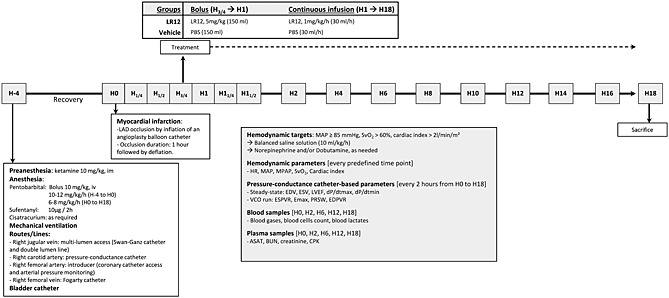
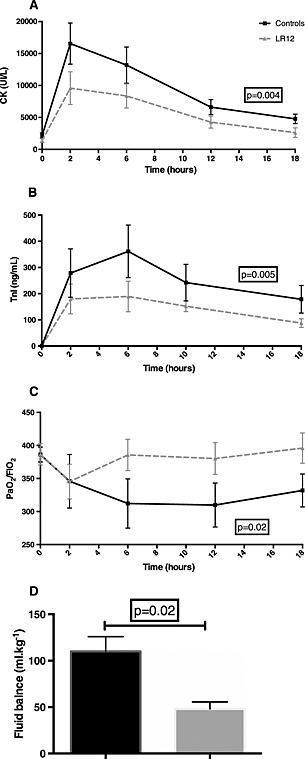
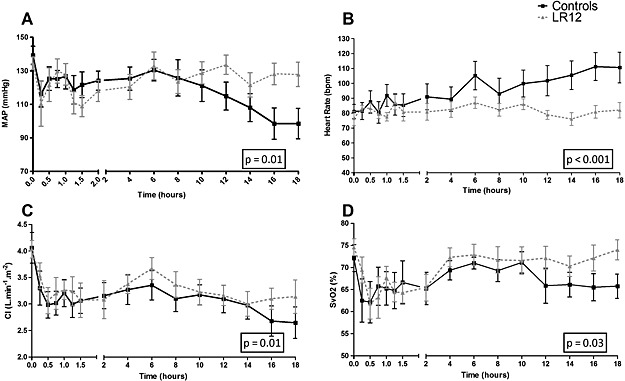
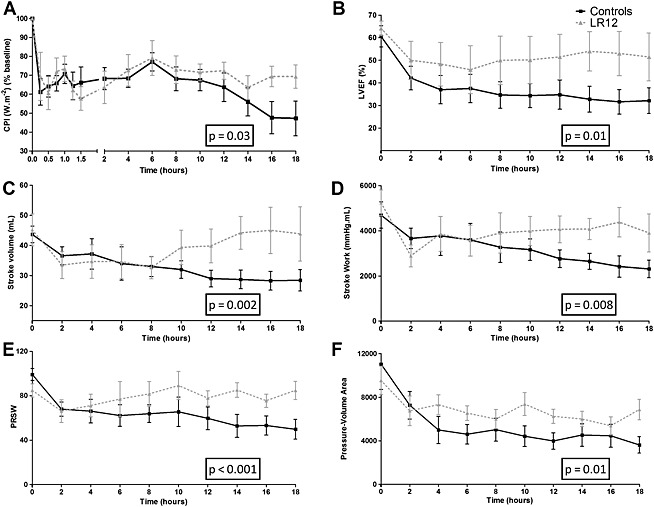
AMI was induced in 15 adult minipigs by a closed-chest coronary artery occlusion-reperfusion technique. Animals were randomized to receive LR12 or vehicle before reperfusion (LR12 n = 7, vehicle n = 8), and were monitored during 18 h. AMI altered hemodynamics and cardiac function, as illustrated by a drop of mean arterial pressure, cardiac index, cardiac power index, ejection fraction, and real-time pressure-volume loop-derived parameters. TREM-1 inhibition by LR12 significantly improved these dysfunctions (P < 0.03) and limited infarct size, as assessed by lower creatine phosphokinase and troponin I concentrations (P < 0.005). Pulmonary, renal, and hepatic impairments occurred after AMI and were attenuated by LR12 administration as assessed by a better PaO to FiO ratio, a less positive fluid balance, and lower liver enzymes levels (P < 0.05).
Inhibition of the TREM-1 pathway by a synthetic peptide limited myocardial reperfusion injury in a clinically relevant porcine model of AMI.
限制缺血/再灌注损伤是急性心肌梗死(AMI)后主要的治疗靶点。Toll样受体参与再灌注期间发生的炎症反应。髓系细胞触发受体(TREM)-1作为Toll样受体激活引发的免疫反应的放大器。我们假设给予TREM-1抑制肽(LR12)可限制猪AMI模型中的再灌注损伤。
采用闭胸冠状动脉闭塞-再灌注技术诱导15只成年小型猪发生AMI。动物在再灌注前随机接受LR12或赋形剂(LR12组n = 7,赋形剂组n = 8),并在18小时内进行监测。AMI改变了血流动力学和心脏功能,表现为平均动脉压、心脏指数、心脏功率指数、射血分数以及实时压力-容积环衍生参数下降。LR12抑制TREM-1可显著改善这些功能障碍(P < 0.03)并限制梗死面积,通过较低的肌酸磷酸激酶和肌钙蛋白I浓度评估(P < 0.005)。AMI后出现肺、肾和肝功能损害,LR12给药可减轻这些损害,通过更好的动脉血氧分压与吸入氧浓度比值、较少的正液体平衡和较低的肝酶水平评估(P < 0.05)。
在临床相关的猪AMI模型中,合成肽抑制TREM-1途径可限制心肌再灌注损伤。