Kouassi Kouassi T, Gunasekar Palanikumar, Agrawal Devendra K, Jadhav Gopal P
Department of Clinical and Translational Sciences, School of Medicine, Creighton University, Omaha, NE 68178, USA.
J Cardiovasc Dev Dis. 2018 Sep 7;5(3):45. doi: 10.3390/jcdd5030045.
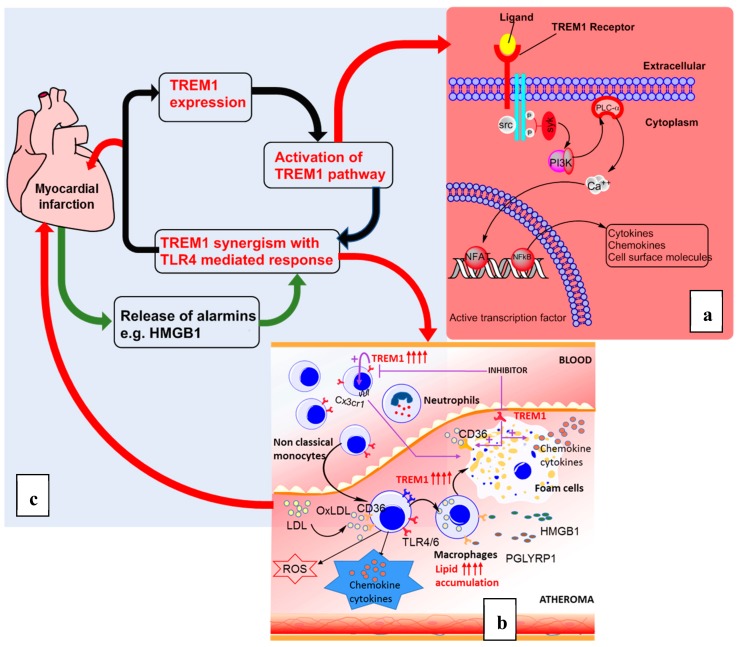
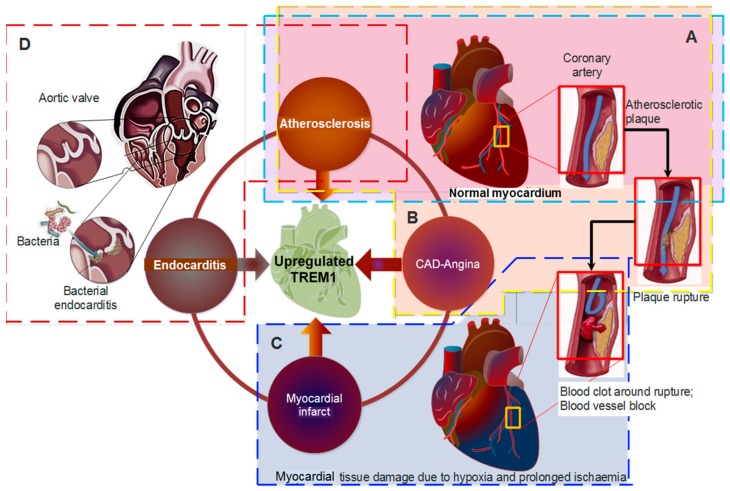
Cardiovascular diseases (CVDs) are as menacing as ever and still continue to kill adults worldwide, notwithstanding tremendous efforts to decrease their consequent mortality and morbidity. Lately, a growing body of research indicated that inflammation plays a pivotal role in the pathogenesis and complications of CVDs. A receptor of the immunoglobulin superfamily, triggering receptors expressed on myeloid cells-1 (TREM-1) was shown to induce and amplify the inflammation in both acute and chronic disease' pathogenesis and progression, which hence makes it one of the most important complication factors of CVDs. Thus, studies endeavored to investigate the role played by TREM-1 in CVDs with respect to their etiologies, complications, and possible therapeutics. We examined here, for the first time, the most relevant studies regarding TREM-1 involvement in CVDs. We critically analyzed and summarized our findings and made some suggestions for furtherance of the investigations with the aim to utilize TREM-1 and its pathways for diagnostic, management, and prognosis of CVDs. Overall, TREM-1 was found to be involved in the pathogenesis of acute and chronic cardiovascular conditions, such as acute myocardial infarction (AMI) and atherosclerosis. Although most therapeutic approaches are yet to be elucidated, our present research outcome displays a promising future to utilizing the TREM-1 pathway as a potential target for understanding and managing CVDs.
心血管疾病(CVDs)一如既往地具有威胁性,尽管人们为降低其导致的死亡率和发病率付出了巨大努力,但在全球范围内仍持续导致成年人死亡。最近,越来越多的研究表明,炎症在心血管疾病的发病机制和并发症中起着关键作用。免疫球蛋白超家族的一种受体,髓系细胞触发受体-1(TREM-1),在急性和慢性疾病的发病机制和进展中均被证明可诱导并放大炎症,因此它成为心血管疾病最重要的并发症因素之一。于是,研究致力于探究TREM-1在心血管疾病的病因、并发症及可能的治疗方法方面所起的作用。我们在此首次审视了有关TREM-1参与心血管疾病的最相关研究。我们对研究结果进行了批判性分析和总结,并为进一步推进研究提出了一些建议,旨在利用TREM-1及其信号通路用于心血管疾病的诊断、管理和预后评估。总体而言,发现TREM-1参与急性和慢性心血管疾病的发病机制,如急性心肌梗死(AMI)和动脉粥样硬化。尽管大多数治疗方法尚待阐明,但我们目前的研究结果显示,将TREM-1信号通路作为理解和管理心血管疾病的潜在靶点具有广阔前景。