Division of Cardiology, Saiseikai Yokohamashi Nanbu Hospital, Yokohama, Japan
Division of Cardiology, Saiseikai Yokohamashi Nanbu Hospital, Yokohama, Japan.
J Am Heart Assoc. 2017 Aug 23;6(8):e006380. doi: 10.1161/JAHA.117.006380.
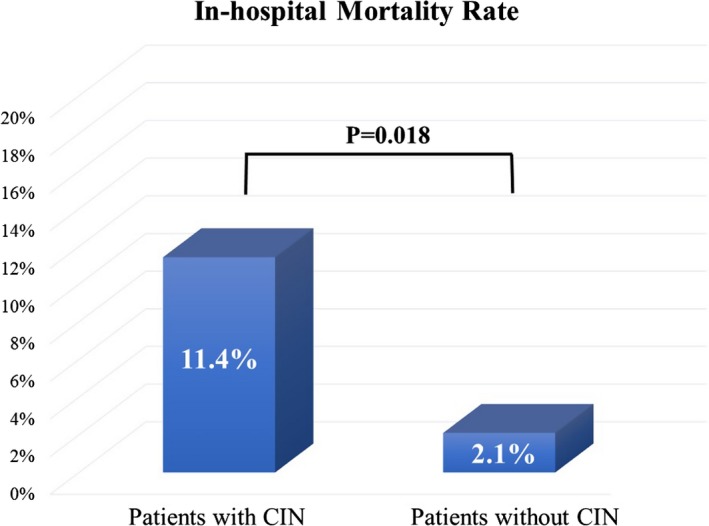
Contrast-induced nephropathy (CIN) is associated with poor outcomes in patients with acute myocardial infarction. However, the predictors of CIN have yet to be fully elucidated.
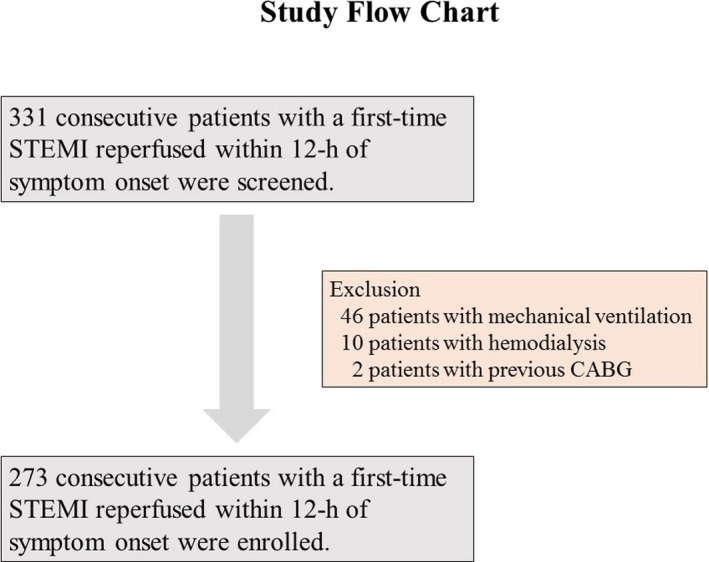
The study included 273 consecutive patients with a first-time ST-segment elevation myocardial infarction who underwent reperfusion within 12 hours of symptom onset. The exclusion criteria were hemodialysis, mechanical ventilation, or previous coronary artery bypass grafting. All patients underwent arterial blood gas analysis soon after reperfusion. CIN was defined as an increase of 0.5 mg/dL in serum creatinine or a 25% increase from baseline between 48 and 72 hours after contrast medium exposure. Acidosis was defined as an arterial blood pH <7.35. CIN was observed in 35 patients (12.8%). Multivariable logistic regression analysis with forward stepwise algorithm revealed a significant association between CIN and the following: reperfusion time, the prevalence of hypertension, peak creatine kinase-MB, high-sensitivity C-reactive protein on admission, and the incidence of acidosis (<0.05). Multivariable logistic regression analysis revealed that the incidence of acidosis was associated with CIN when adjusted for age, male sex, body mass index, amount of contrast medium used, estimated glomerular filtration rate on admission, glucose level on admission, high-sensitivity C-reactive protein on admission, and left ventricular ejection fraction (<0.05). Moreover, the incidence of acidosis was associated with CIN when adjusted for the Mehran CIN risk score (odds ratio: 2.229, =0.049).
The incidence of acidosis soon after reperfusion was associated with CIN in patients with a first-time ST-segment elevation myocardial infarction.
对比剂肾病(CIN)与急性心肌梗死患者的不良预后相关。然而,CIN 的预测因素尚未完全阐明。
该研究纳入了 273 例首次发生 ST 段抬高型心肌梗死且在症状发作后 12 小时内行再灌注治疗的连续患者。排除标准为血液透析、机械通气或既往冠状动脉旁路移植术。所有患者在再灌注后不久均行动脉血气分析。CIN 定义为造影剂暴露后 48-72 小时内血清肌酐升高 0.5mg/dL 或较基线升高 25%。酸中毒定义为动脉血 pH<7.35。35 例患者(12.8%)发生 CIN。采用逐步向前算法的多变量逻辑回归分析显示,CIN 与以下因素显著相关:再灌注时间、高血压患病率、肌酸激酶同工酶-MB 峰值、入院时高敏 C 反应蛋白、酸中毒发生率(<0.05)。多变量逻辑回归分析显示,在校正年龄、男性、体重指数、使用造影剂量、入院时估算肾小球滤过率、入院时血糖水平、入院时高敏 C 反应蛋白和左心室射血分数后,酸中毒发生率与 CIN 相关(<0.05)。此外,在校正 Mehran CIN 风险评分后,酸中毒发生率与 CIN 相关(比值比:2.229,=0.049)。
首次发生 ST 段抬高型心肌梗死患者再灌注后不久酸中毒的发生率与 CIN 相关。