Lin Jaung-Geng, Chen Chao-Jung, Yang Han-Bin, Chen Yi-Hung, Hung Shih-Ya
School of Chinese Medicine, China Medical University, Taichung 40402, Taiwan.
Graduate Institute of Integrated Medicine, College of Chinese Medicine, China Medical University, Taichung 40402, Taiwan.
Int J Mol Sci. 2017 Aug 24;18(9):1846. doi: 10.3390/ijms18091846.
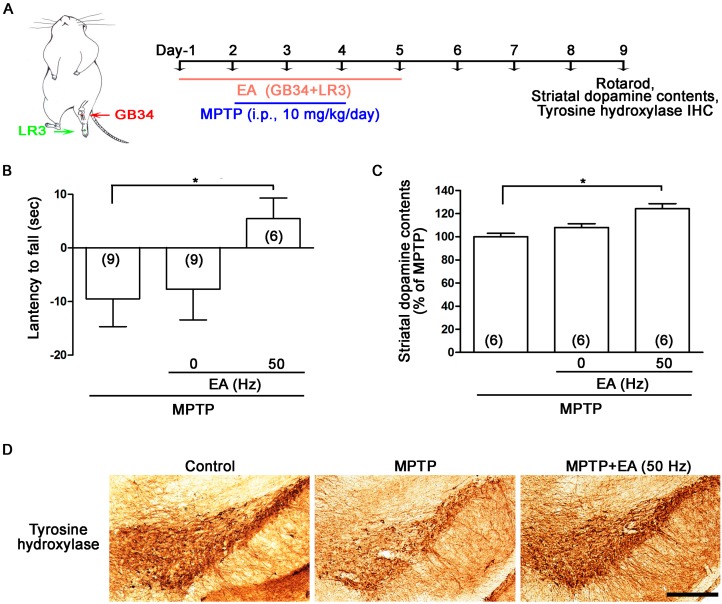
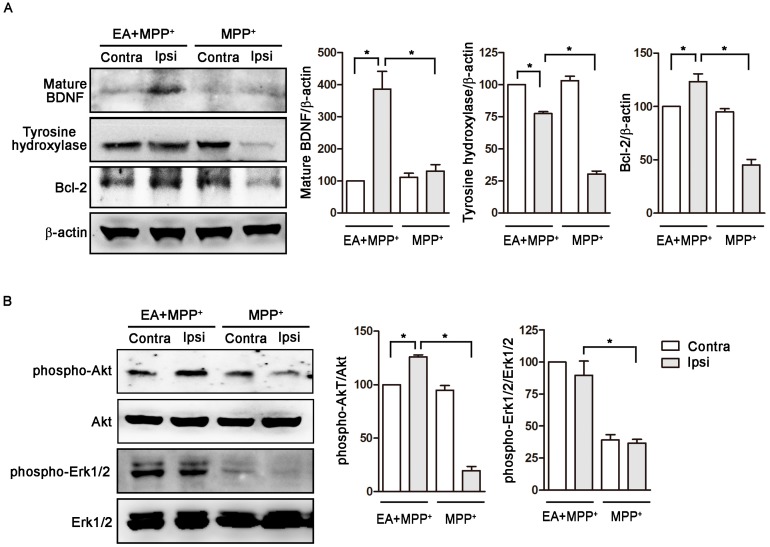
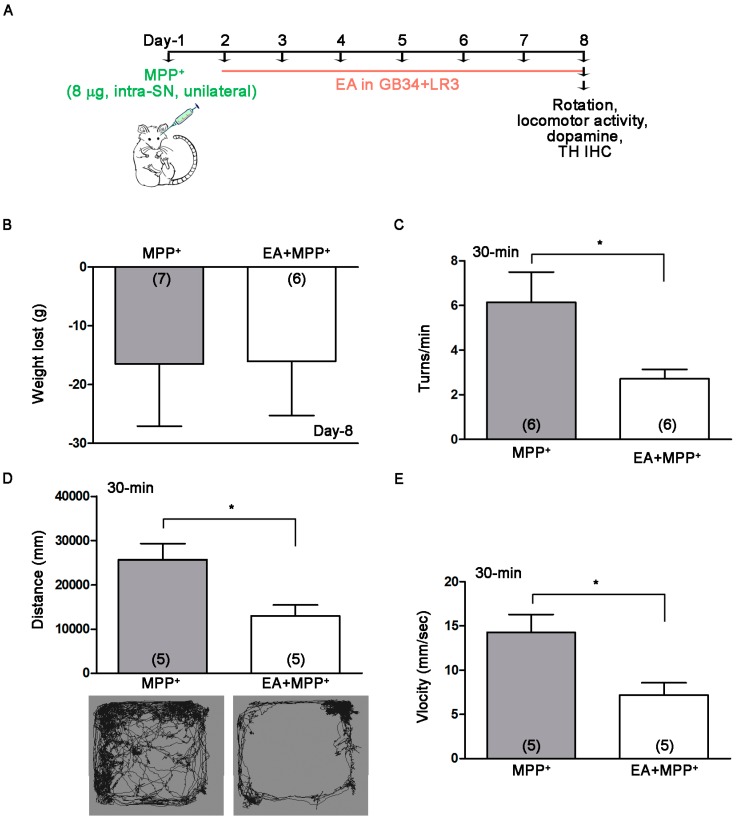
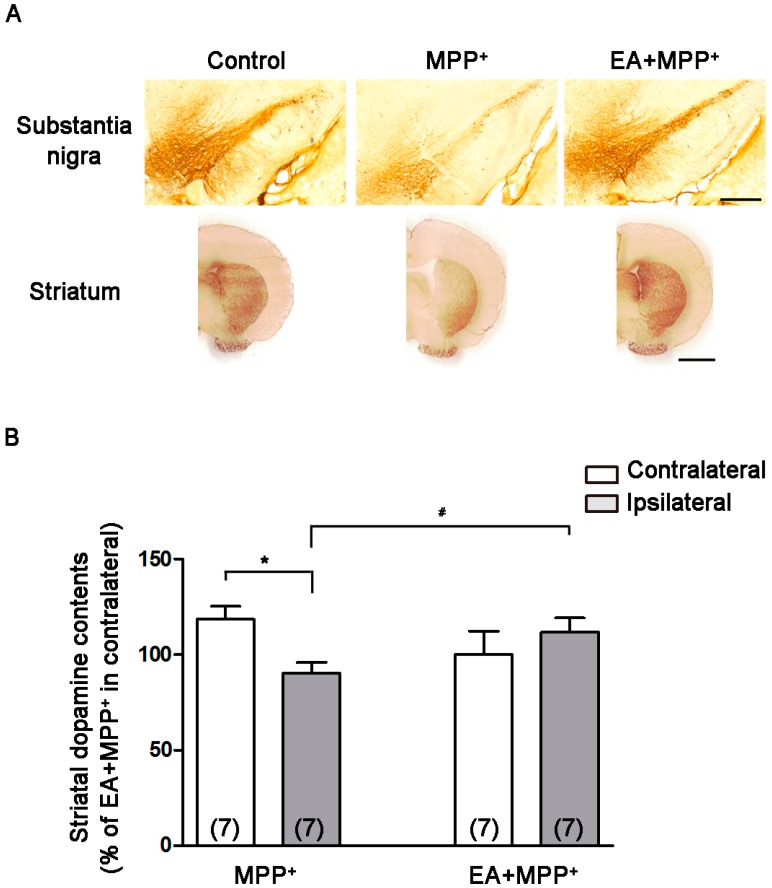
Parkinson's disease (PD) is a common neurodegenerative disease. The pathological hallmark of PD is a progressive loss of dopaminergic neurons in the substantia nigra (SN) pars compacta in the brain, ultimately resulting in severe striatal dopamine deficiency and the development of primary motor symptoms (e.g., resting tremor, bradykinesia) in PD. Acupuncture has long been used in traditional Chinese medicine to treat PD for the control of tremor and pain. Accumulating evidence has shown that using electroacupuncture (EA) as a complementary therapy ameliorates motor symptoms of PD. However, the most appropriate timing for EA intervention and its effect on dopamine neuronal protection remain unclear. Thus, this study used the 1-methyl-4-phenyl-1,2,3,6-tetrahydropyridine (MPTP)-lesioned mouse model (systemic-lesioned by intraperitoneal injection) and the 1-methyl-4-phenylpyridinium (MPP⁺)-lesioned rat model (unilateral-lesioned by intra-SN infusion) of PD, to explore the therapeutic effects and mechanisms of EA at the GB34 (Yanglingquan) and LR3 (Taichong) acupoints. We found that EA increased the latency to fall from the accelerating rotarod and improved striatal dopamine levels in the MPTP studies. In the MPP⁺ studies, EA inhibited apomorphine induced rotational behavior and locomotor activity, and demonstrated neuroprotective effects via the activation of survival pathways of Akt and brain-derived neurotrophic factor (BDNF) in the SN region. In conclusion, we observed that EA treatment reduces motor symptoms of PD and dopaminergic neurodegeneration in rodent models, whether EA is given as a pretreatment or after the initiation of disease symptoms. The results indicate that EA treatment may be an effective therapy for patients with PD.
帕金森病(PD)是一种常见的神经退行性疾病。PD的病理标志是大脑黑质致密部多巴胺能神经元的进行性丧失,最终导致严重的纹状体多巴胺缺乏,并出现PD的原发性运动症状(如静止性震颤、运动迟缓)。针灸长期以来一直被用于中医治疗PD以控制震颤和疼痛。越来越多的证据表明,使用电针(EA)作为辅助疗法可改善PD的运动症状。然而,EA干预的最佳时机及其对多巴胺神经元保护的作用仍不清楚。因此,本研究使用1-甲基-4-苯基-1,2,3,6-四氢吡啶(MPTP)损伤的小鼠模型(通过腹腔注射进行全身损伤)和1-甲基-4-苯基吡啶离子(MPP⁺)损伤的大鼠模型(通过黑质内注射进行单侧损伤)来探索电针在阳陵泉(GB34)和太冲(LR3)穴位的治疗效果和机制。我们发现在MPTP研究中,电针增加了小鼠在加速转棒上掉落的潜伏期,并提高了纹状体多巴胺水平。在MPP⁺研究中,电针抑制了阿扑吗啡诱导的旋转行为和运动活动,并通过激活黑质区域Akt和脑源性神经营养因子(BDNF)的生存途径表现出神经保护作用。总之,我们观察到,无论电针是作为预处理还是在疾病症状出现后给予,电针治疗都能减轻啮齿动物模型中PD的运动症状和多巴胺能神经变性。结果表明,电针治疗可能是PD患者的一种有效疗法。