Bourguignon Lilly Y W, Earle Christine, Shiina Marisa
San Francisco Veterans Affairs Medical Center and Department of Medicine, University of California at San Francisco & Endocrine Unit (111N2), 4150 Clement Street, San Francisco, CA 94121, USA.
Int J Mol Sci. 2017 Aug 24;18(9):1849. doi: 10.3390/ijms18091849.
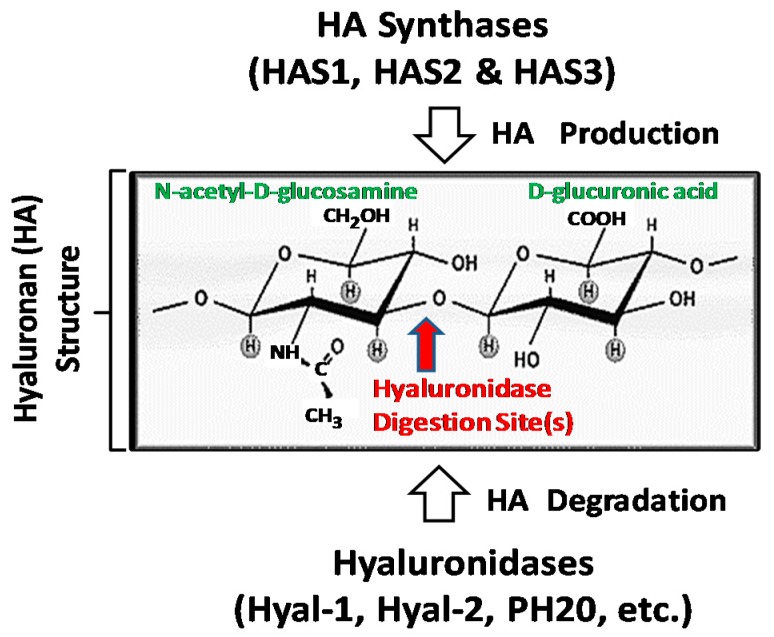
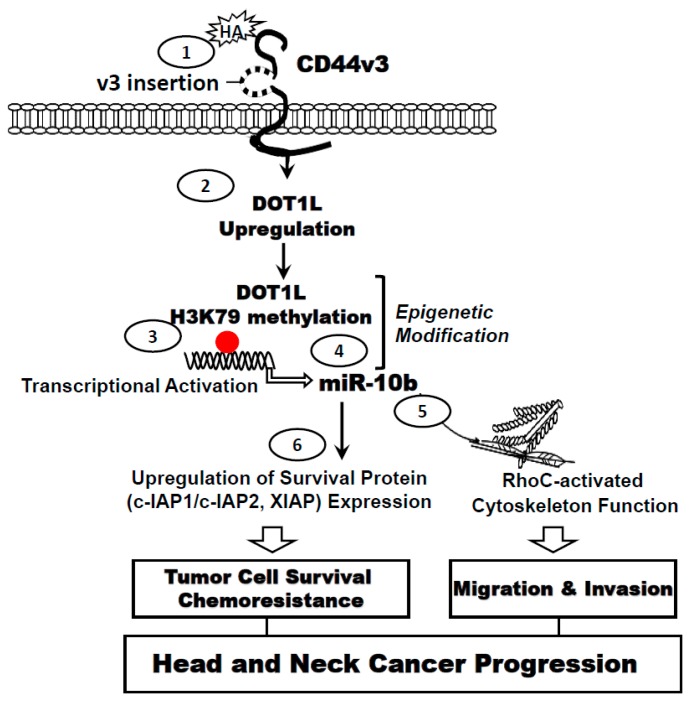
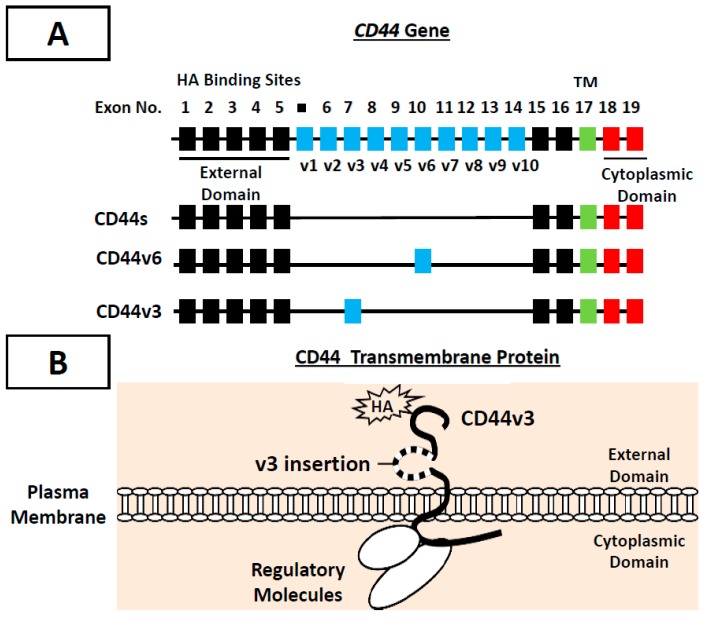
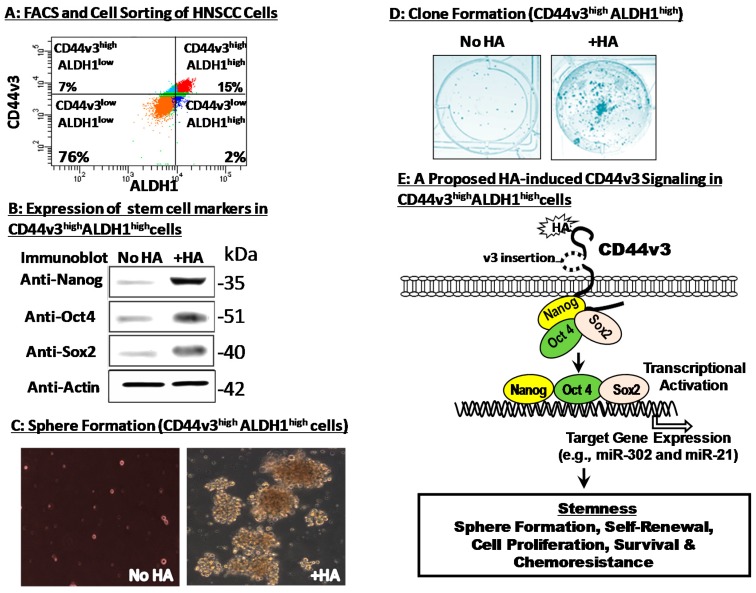
Head and neck squamous cell carcinoma (HNSCC) is a solid tumor composed by a genotypically and phenotypically heterogeneous population of neoplastic cells types. High recurrence rate and regional metastases lead to major morbidity and mortality. Recently, many studies have focused on cellular and molecular mechanisms of tumor progression that can help to predict prognosis and to choose the best therapeutic approach for HNSCC patients. Hyaluronan (HA), an important glycosaminoglycan component of the extracellular matrix (ECM), and its major cell surface receptor, CD44, have been suggested to be important cellular mediators influencing tumor progression and treatment resistance in head and neck cancer. HNSCC contains a small subpopulation of cells that exhibit a hallmark of CD44-expressing cancer stem cell (CSC) properties with self-renewal, multipotency, and a unique potential for tumor initiation. HA has been shown to stimulate a variety of CSC functions including self-renewal, clone formation and differentiation. This review article will present current evidence for the existence of a unique small population of CD44v3ALDH-expressing CSCs in HNSCC. A special focus will be placed on the role of HA/CD44-induced oncogenic signaling and histone methyltransferase, DOT1L activities in regulating histone modifications (via epigenetic changes) and miRNA activation. Many of these events are essential for the CSC properties such as Nanog/Oct4/Sox2 expression, spheroid/clone formation, self-renewal, tumor cell migration/invasion, survival and chemotherapeutic drug resistance in HA-activated head and neck cancer. These newly-discovered HA/CD44-mediated oncogenic signaling pathways delineate unique tumor dynamics with implications for defining the drivers of HNSCC progression processes. Most importantly, the important knowledge obtained from HA/CD44-regulated CSC signaling and functional activation could provide new information regarding the design of novel drug targets to overcome current therapeutic drug resistance which will have significant treatment implications for head and neck cancer patients.
头颈部鳞状细胞癌(HNSCC)是一种实体瘤,由基因和表型异质的肿瘤细胞群体组成。高复发率和区域转移导致了较高的发病率和死亡率。最近,许多研究聚焦于肿瘤进展的细胞和分子机制,这有助于预测预后并为HNSCC患者选择最佳治疗方法。透明质酸(HA)是细胞外基质(ECM)的一种重要糖胺聚糖成分,其主要细胞表面受体CD44,被认为是影响头颈部肿瘤进展和治疗耐药性的重要细胞介质。HNSCC包含一小部分细胞,这些细胞表现出表达CD44的癌症干细胞(CSC)特性,具有自我更新、多能性以及独特的肿瘤起始潜能。HA已被证明能刺激多种CSC功能,包括自我更新、克隆形成和分化。这篇综述文章将展示目前关于HNSCC中存在独特的一小群表达CD44v3ALDH的CSC的证据。将特别关注HA/CD44诱导的致癌信号和组蛋白甲基转移酶DOT1L活性在调节组蛋白修饰(通过表观遗传变化)和miRNA激活中的作用。许多这些事件对于CSC特性至关重要,例如在HA激活的头颈部癌症中Nanog/Oct4/Sox2表达、球体/克隆形成自我更新、肿瘤细胞迁移/侵袭、存活和化疗耐药性。这些新发现的HA/CD44介导的致癌信号通路描绘了独特的肿瘤动态,对定义HNSCC进展过程的驱动因素具有重要意义。最重要的是,从HA/CD44调节的CSC信号和功能激活中获得的重要知识可以为设计新的药物靶点提供新信息,以克服当前的治疗耐药性,这将对头颈部癌症患者具有重大的治疗意义。