Li Jin
National Earth and Marine Observations, Environmental Geoscience Division, Geoscience Australia, Canberra, Australian Capital Territory, Australia.
PLoS One. 2017 Aug 24;12(8):e0183250. doi: 10.1371/journal.pone.0183250. eCollection 2017.
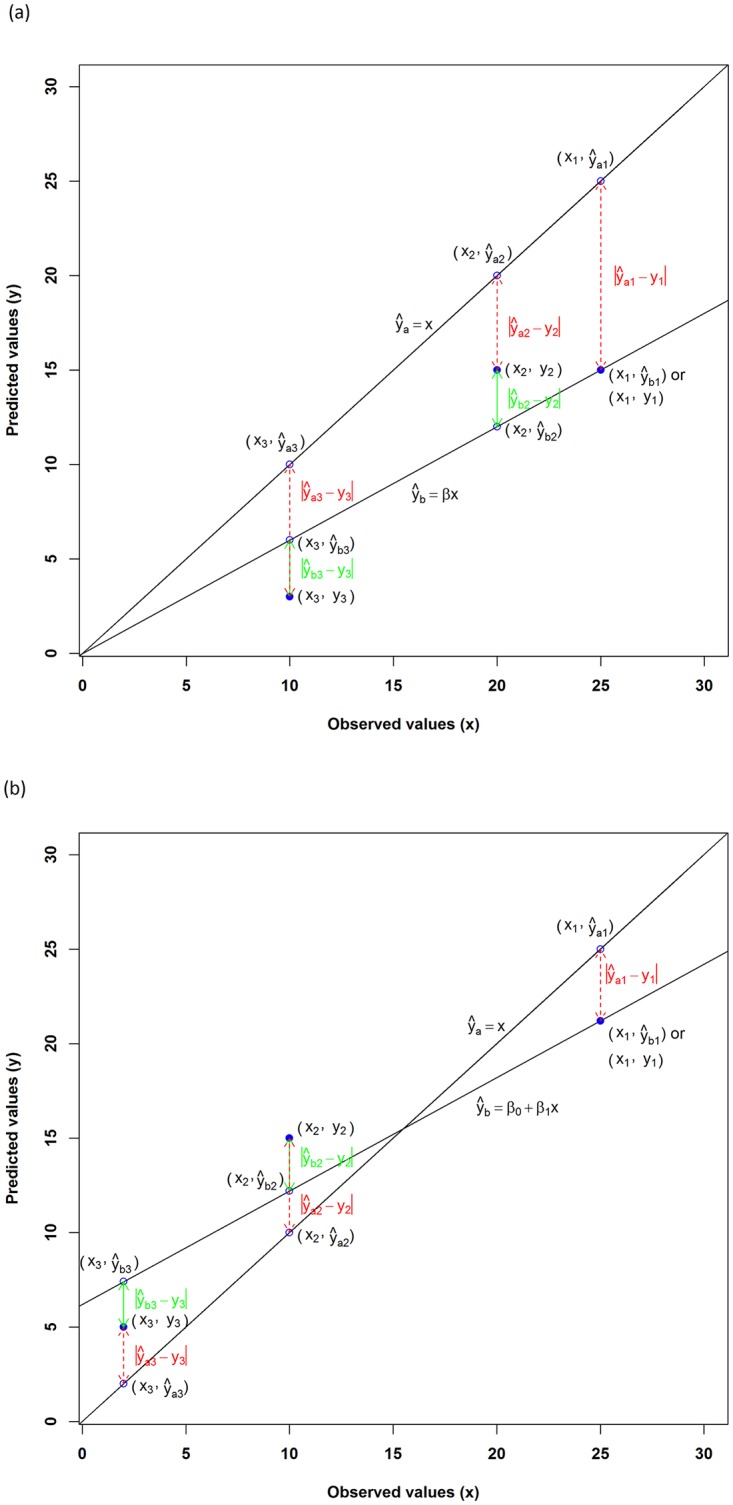
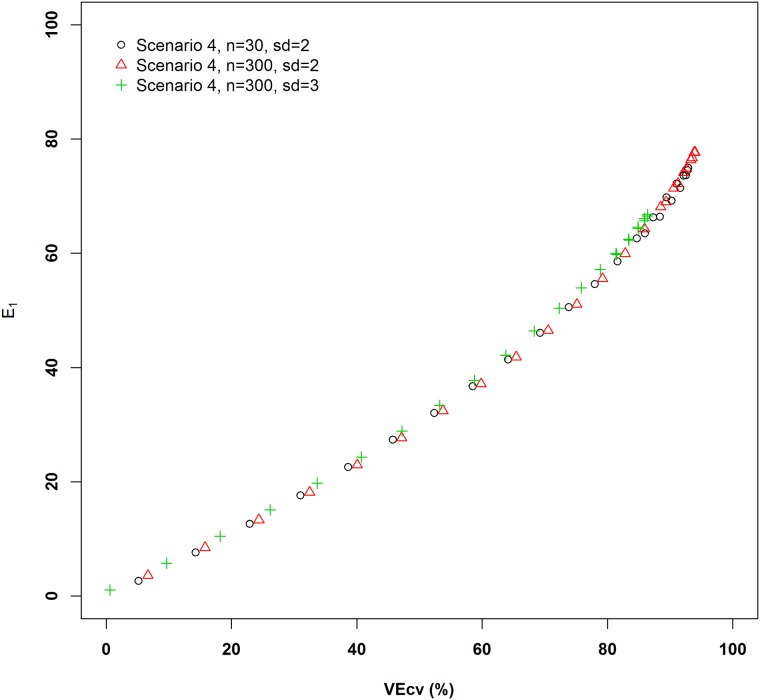
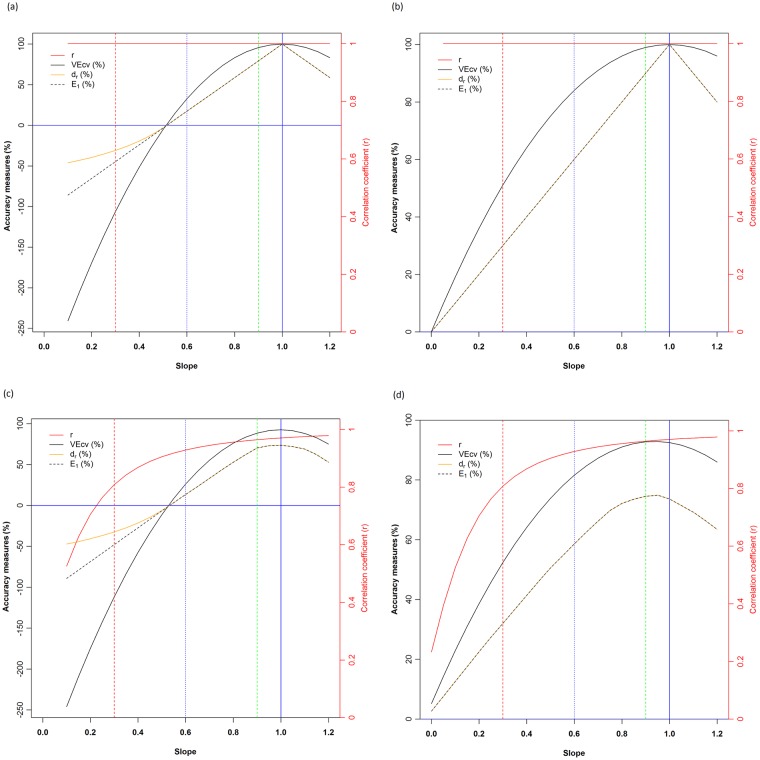
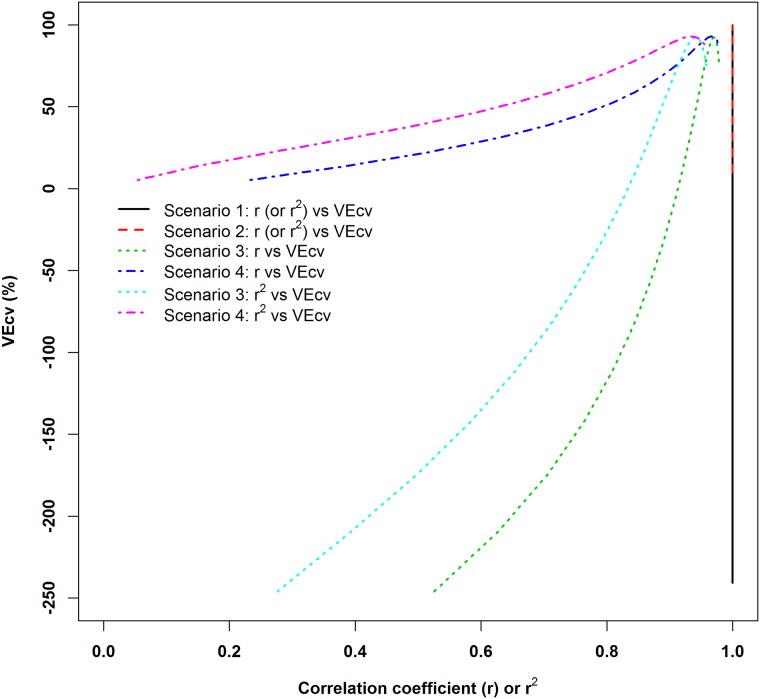
Assessing the accuracy of predictive models is critical because predictive models have been increasingly used across various disciplines and predictive accuracy determines the quality of resultant predictions. Pearson product-moment correlation coefficient (r) and the coefficient of determination (r2) are among the most widely used measures for assessing predictive models for numerical data, although they are argued to be biased, insufficient and misleading. In this study, geometrical graphs were used to illustrate what were used in the calculation of r and r2 and simulations were used to demonstrate the behaviour of r and r2 and to compare three accuracy measures under various scenarios. Relevant confusions about r and r2, has been clarified. The calculation of r and r2 is not based on the differences between the predicted and observed values. The existing error measures suffer various limitations and are unable to tell the accuracy. Variance explained by predictive models based on cross-validation (VEcv) is free of these limitations and is a reliable accuracy measure. Legates and McCabe's efficiency (E1) is also an alternative accuracy measure. The r and r2 do not measure the accuracy and are incorrect accuracy measures. The existing error measures suffer limitations. VEcv and E1 are recommended for assessing the accuracy. The applications of these accuracy measures would encourage accuracy-improved predictive models to be developed to generate predictions for evidence-informed decision-making.
评估预测模型的准确性至关重要,因为预测模型已在各个学科中越来越多地使用,且预测准确性决定了所得预测结果的质量。皮尔逊积矩相关系数(r)和决定系数(r2)是评估数值数据预测模型最广泛使用的指标之一,尽管有人认为它们存在偏差、不够充分且具有误导性。在本研究中,使用几何图形来说明r和r2计算中所使用的内容,并通过模拟来展示r和r2的特性,并在各种情况下比较三种准确性指标。关于r和r2的相关困惑已得到澄清。r和r2的计算并非基于预测值与观测值之间的差异。现有的误差指标存在各种局限性,无法说明准确性。基于交叉验证的预测模型解释方差(VEcv)没有这些局限性,是一种可靠的准确性指标。莱盖茨和麦凯布效率(E1)也是一种替代的准确性指标。r和r2并不能衡量准确性,是不正确的准确性指标。现有的误差指标存在局限性。建议使用VEcv和E1来评估准确性。这些准确性指标的应用将鼓励开发提高准确性的预测模型,以生成用于循证决策的预测。