Liddle Jennifer, Bartlam Roisin, Mallen Christian D, Mackie Sarah L, Prior James A, Helliwell Toby, Richardson Jane C
Research Institute for Primary Care and Health Sciences, Keele University, Keele, UK.
Institute of Health and Society, Newcastle University, Newcastle upon Tyne, UK.
BMJ Open. 2017 Aug 23;7(8):e017073. doi: 10.1136/bmjopen-2017-017073.
Clinical management of giant cell arteritis (GCA) involves balancing the risks and burdens arising from the disease with those arising from treatment, but there is little research on the nature of those burdens. We aimed to explore the impact of giant cell arteritis (GCA) and its treatment on patients' lives.
UK patients with GCA participated in semi-structured telephone interviews. Inductive thematic analysis was employed.
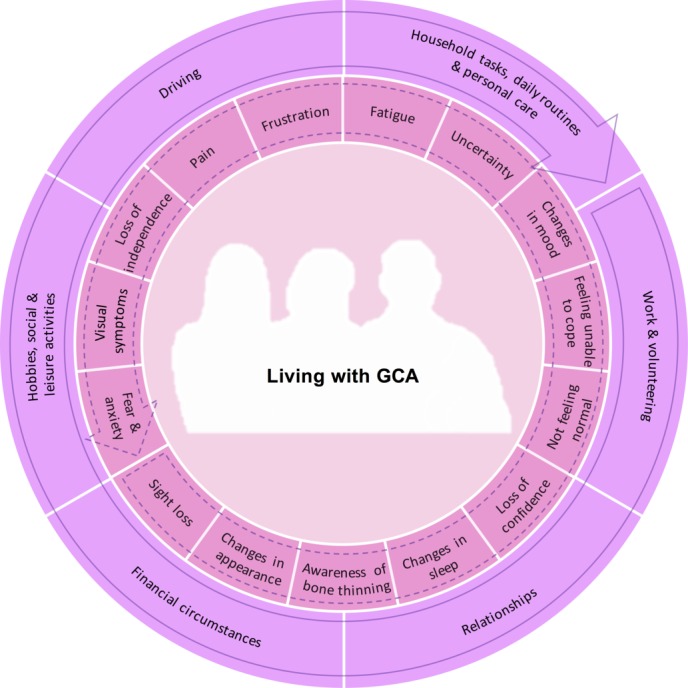
24 participants were recruited (age: 65-92 years, time since diagnosis: 2 months to >6 years). The overarching themes from analysis were: ongoing symptoms of the disease and its treatment; and 'life-changing' impacts. The overall impact of GCA on patients' lives arose from a changing combination of symptoms, side effects, adaptations to everyday life and impacts on sense of normality. Important factors contributing to loss of normality were glucocorticoid-related treatment burdens and fear about possible future loss of vision.
The impact of GCA in patients' everyday lives can be substantial, multifaceted and ongoing despite apparent control of disease activity. The findings of this study will help doctors better understand patient priorities, legitimise patients' experiences of GCA and work with patients to set realistic treatment goals and plan adaptations to their everyday lives.
巨细胞动脉炎(GCA)的临床管理涉及平衡疾病产生的风险和负担与治疗产生的风险和负担,但对于这些负担的性质研究甚少。我们旨在探讨巨细胞动脉炎(GCA)及其治疗对患者生活的影响。
英国的GCA患者参与了半结构化电话访谈。采用归纳主题分析法。
招募了24名参与者(年龄:65 - 92岁,诊断后时间:2个月至6年以上)。分析得出的总体主题为:疾病及其治疗的持续症状;以及“改变生活”的影响。GCA对患者生活的总体影响源于症状、副作用、对日常生活的适应以及对正常感的影响等多种因素的不断变化组合。导致失去正常感的重要因素是糖皮质激素相关的治疗负担以及对未来可能失明的恐惧。
尽管疾病活动看似得到控制,但GCA对患者日常生活的影响可能很大、多方面且持续存在。本研究结果将有助于医生更好地理解患者的优先事项,使患者对GCA的经历合理化,并与患者共同设定现实的治疗目标以及规划对其日常生活的调整。