Department of Cardiovascular Medicine, Osaka University Graduate School of Medicine, Suita, Osaka, 565-0871, Japan.
Department of Health and Medical Care, International University of Health and Welfare, Okawa, Fukuoka, 831-8501, Japan.
Sci Rep. 2017 Aug 24;7(1):9363. doi: 10.1038/s41598-017-09716-x.
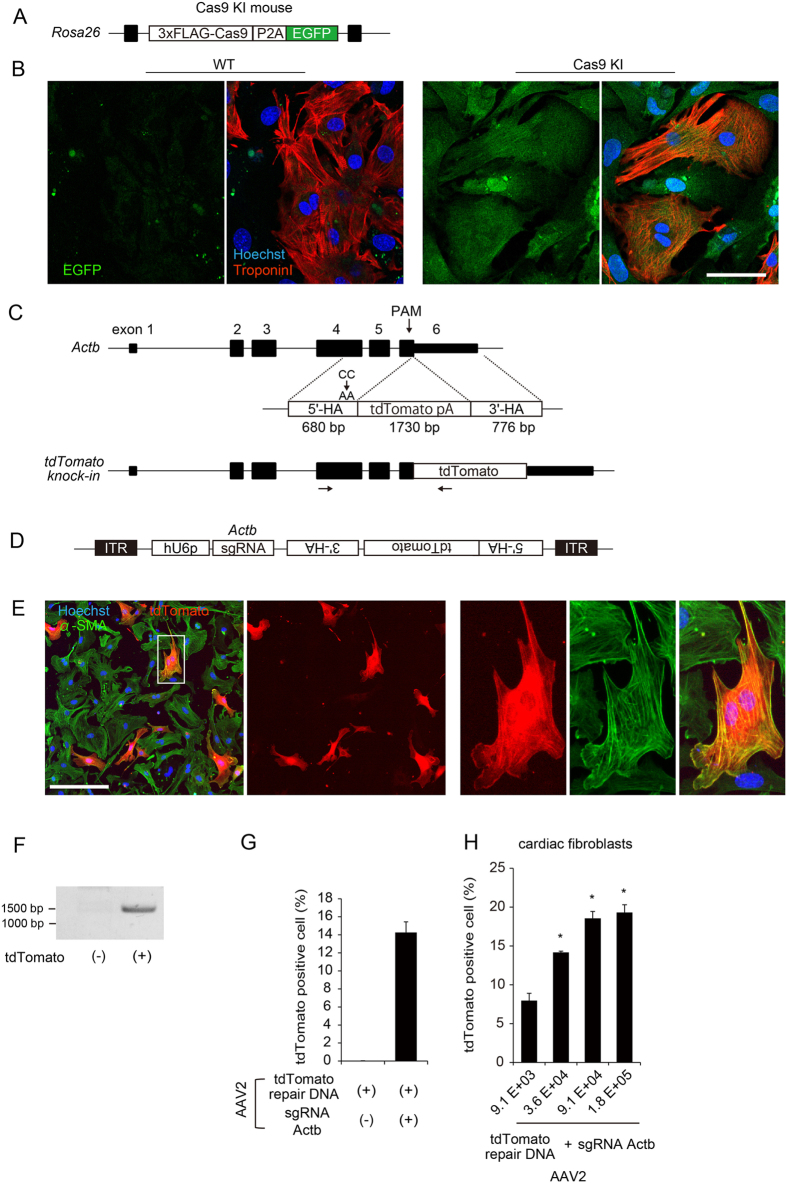
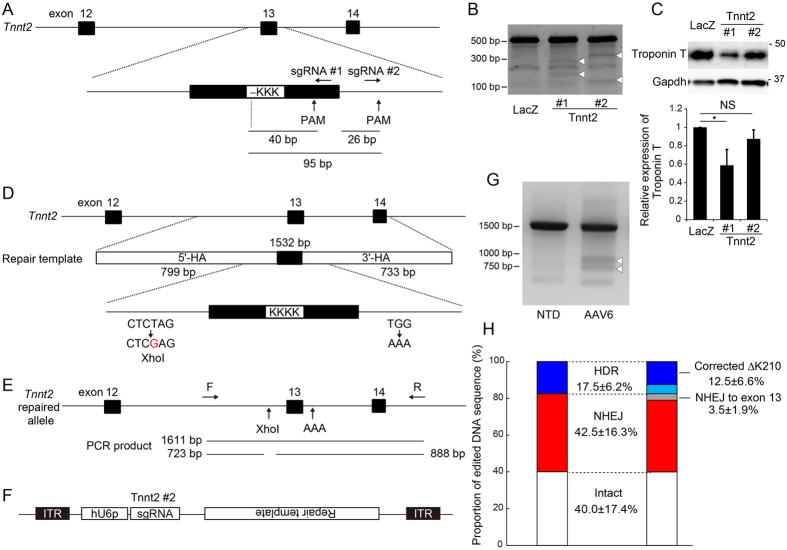
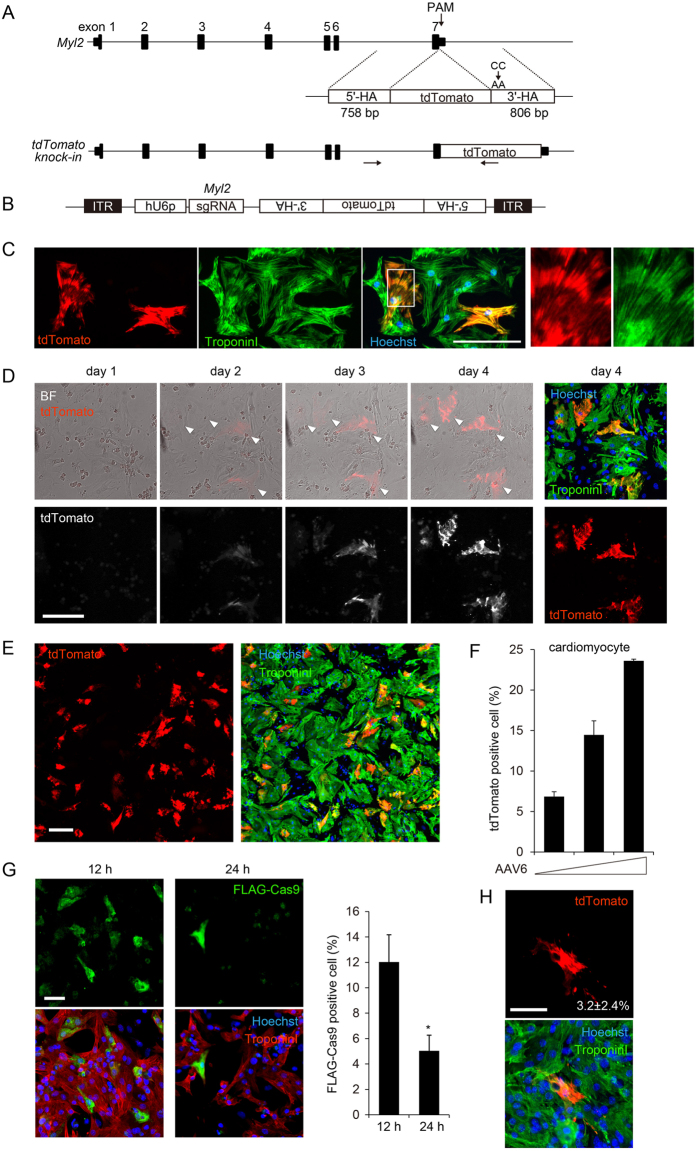
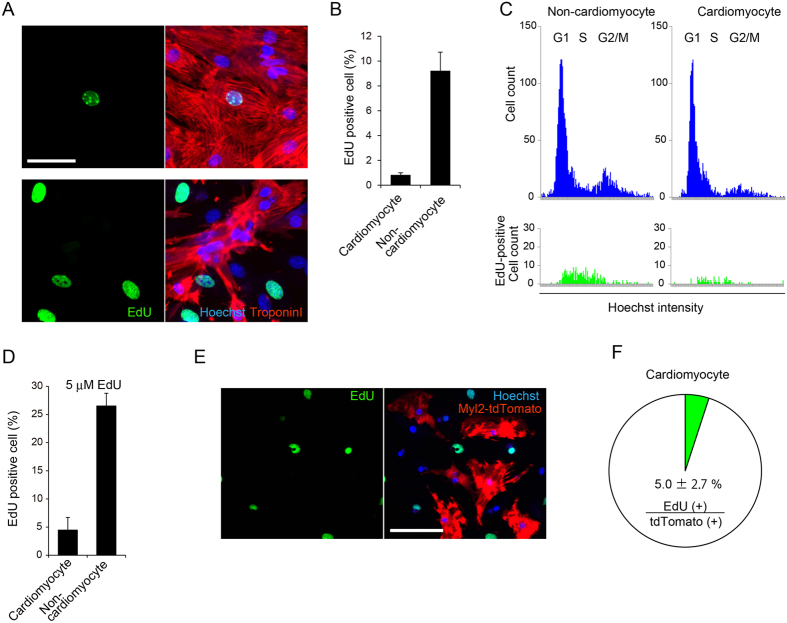
Although high-throughput sequencing can elucidate the genetic basis of hereditary cardiomyopathy, direct interventions targeting pathological mutations have not been established. Furthermore, it remains uncertain whether homology-directed repair (HDR) is effective in non-dividing cardiomyocytes. Here, we demonstrate that HDR-mediated genome editing using CRISPR/Cas9 is effective in non-dividing cardiomyocytes. Transduction of adeno-associated virus (AAV) containing sgRNA and repair template into cardiomyocytes constitutively expressing Cas9 efficiently introduced a fluorescent protein to the C-terminus of Myl2. Imaging-based sequential evaluation of endogenously tagged protein revealed that HDR occurs in cardiomyocytes, independently of DNA synthesis. We sought to repair a pathological mutation in Tnnt2 in cardiomyocytes of cardiomyopathy model mice. An sgRNA that avoided the mutated exon minimized deleterious effects on Tnnt2 expression, and AAV-mediated HDR achieved precise genome correction at a frequency of ~12.5%. Thus, targeted genome replacement via HDR is effective in non-dividing cardiomyocytes, and represents a potential therapeutic tool for targeting intractable cardiomyopathy.
虽然高通量测序可以阐明遗传性心肌病的遗传基础,但针对病理性突变的直接干预措施尚未建立。此外,同源定向修复 (HDR) 是否在非分裂心肌细胞中有效仍不确定。在这里,我们证明了使用 CRISPR/Cas9 的 HDR 介导的基因组编辑在非分裂心肌细胞中是有效的。将含有 sgRNA 和修复模板的腺相关病毒 (AAV) 转导到组成型表达 Cas9 的心肌细胞中,可有效地将荧光蛋白引入 Myl2 的 C 末端。基于成像的内源性标记蛋白的序贯评估表明,HDR 发生在心肌细胞中,与 DNA 合成无关。我们试图在心肌病模型小鼠的心肌细胞中修复 Tnnt2 的病理性突变。避免突变外显子的 sgRNA 将对 Tnnt2 表达的有害影响降至最低,并且 AAV 介导的 HDR 以约 12.5%的频率实现了精确的基因组校正。因此,通过 HDR 进行靶向基因组替换在非分裂心肌细胞中是有效的,并且代表了针对难治性心肌病的潜在治疗工具。