El-Faham Marwa H, Eissa Maha M, Igetei Joseph E, Amer Eglal I, Liddell Susan, El-Azzouni Mervat Z, Doenhoff Michael J
Department of Medical Parasitology, Faculty of Medicine, Alexandria University, Alexandria, Egypt.
School of Life Sciences, University Park, University of Nottingham, Nottinghamshire, Nottingham, United Kingdom.
PLoS Negl Trop Dis. 2017 Aug 25;11(8):e0005853. doi: 10.1371/journal.pntd.0005853. eCollection 2017 Aug.
Miltefosine, an anti-cancer drug that has been successfully repositioned for treatment of Leishmania infections, has recently also shown promising effects against Schistosoma spp targeting all life cycle stages of the parasite. The current study examined the effect of treating Schistosoma mansoni adult worms with miltefosine on exposure of worm surface antigens in vitro.
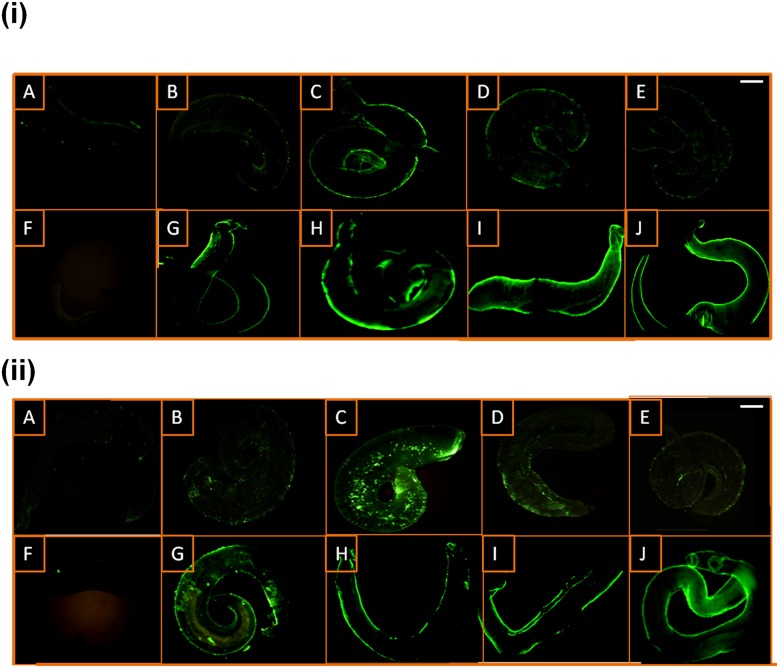
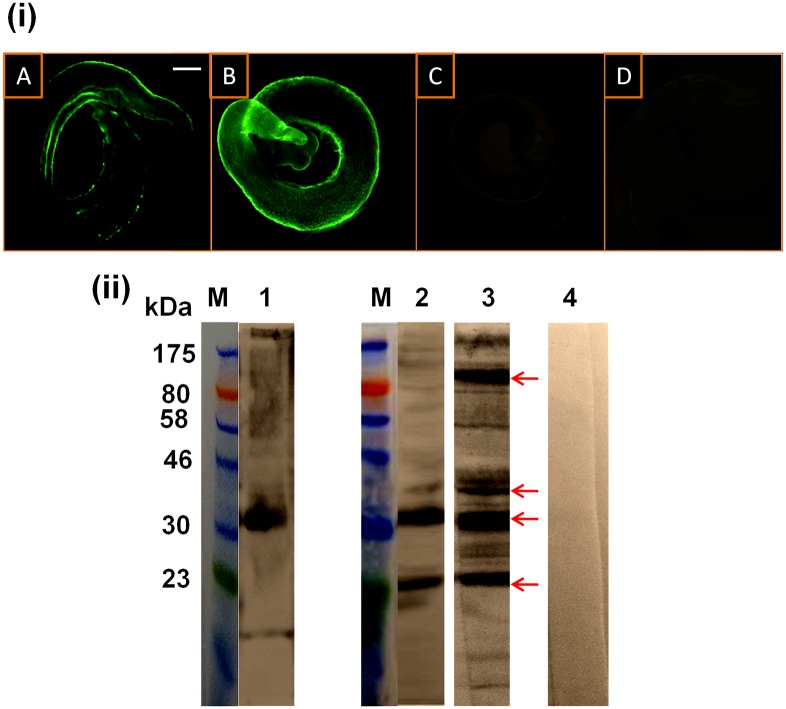
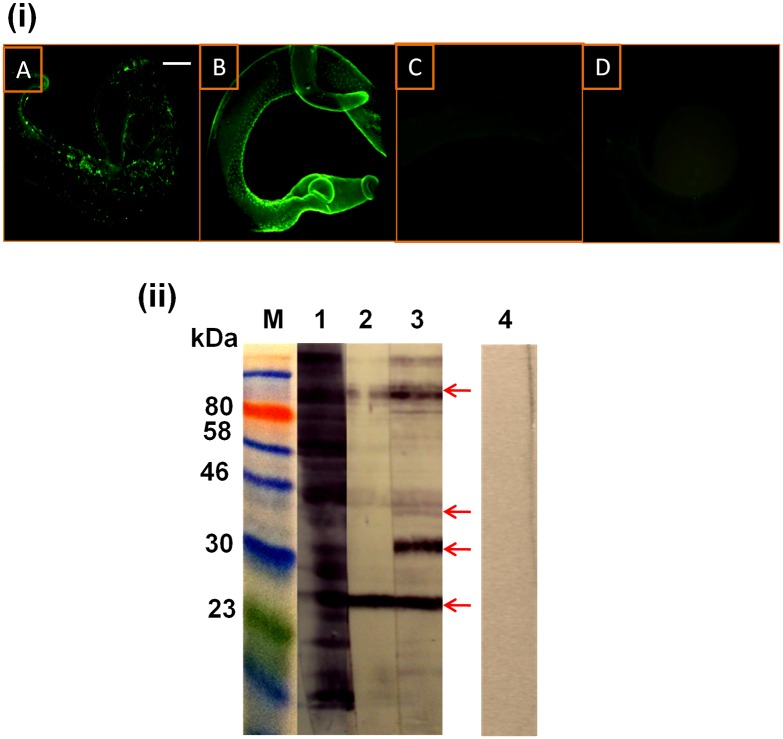
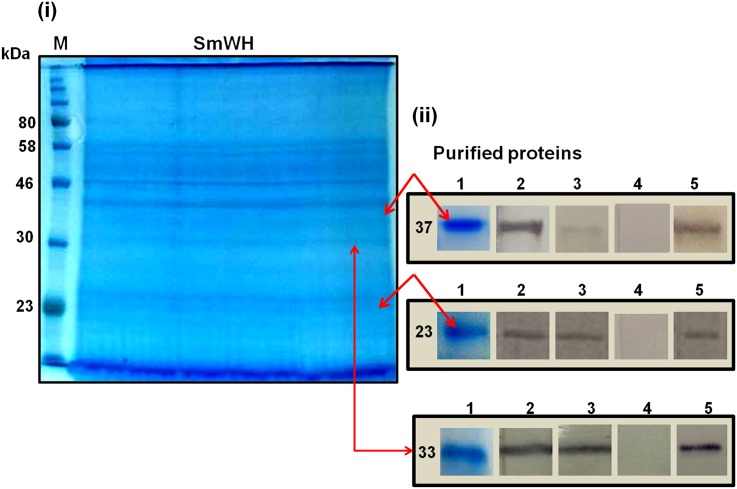
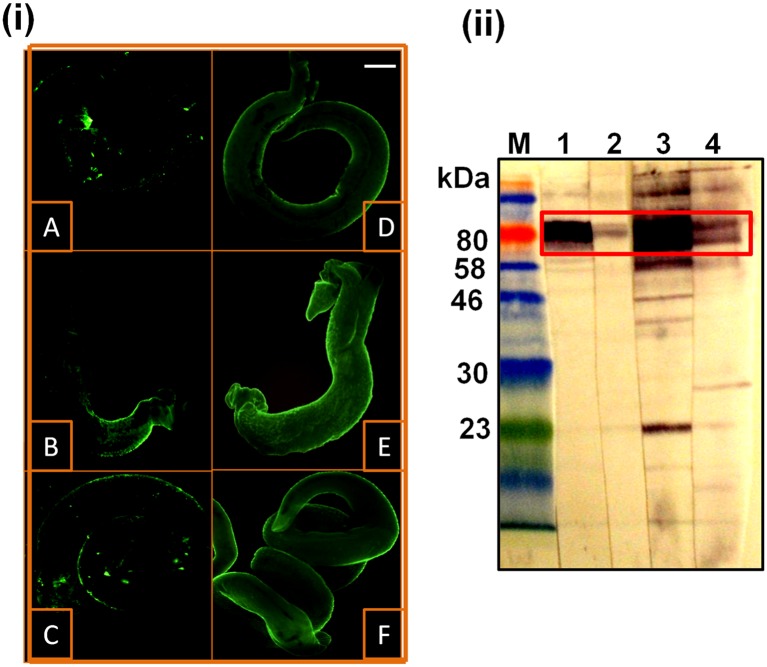
METHODOLOGY/PRINCIPAL FINDINGS: In an indirect immunofluorescence assay, rabbit anti-S.mansoni adult worm homogenate and anti-S. mansoni infection antisera gave strong immunofluorescence of the S. mansoni adult worm surface after treatment with miltefosine, the latter antiserum having previously been shown to synergistically enhance the schistosomicidal activity of praziquantel. Rabbit antibodies that recognised surface antigens exposed on miltefosine-treated worms were recovered by elution off the worm surface in low pH buffer and were used in a western immunoblotting assay to identify antigenic targets in a homogenate extract of adult worms (SmWH). Four proteins reacting with the antibodies in immunoblots were purified and proteomic analysis (MS/MS) combined with specific immunoblotting indicated they were the S. mansoni proteins: fructose-1,6 bisphosphate aldolase (SmFBPA), Sm22.6, alkaline phosphatase and malate dehydrogenase. These antibodies were also found to bind to the surface of 3-hour schistosomula and induce immune agglutination of the parasites, suggesting they may have a role in immune protection.
CONCLUSION/SIGNIFICANCE: This study reveals a novel mode of action of miltefosine as an anti-schistosome agent. The immune-dependent hypothesis we investigated has previously been lent credence with praziquantel (PZQ), whereby treatment unmasks parasite surface antigens not normally exposed to the host during infection. Antigens involved in this molecular mechanism could have potential as intervention targets and antibodies against these antigens may act to increase the drug's anti-parasite efficacy and be involved in the development of resistance to re-infection.
米替福新是一种已成功重新定位用于治疗利什曼原虫感染的抗癌药物,最近还显示出对血吸虫各生命周期阶段均有显著效果。本研究检测了米替福新体外处理曼氏血吸虫成虫对虫体表面抗原暴露的影响。
方法/主要发现:在间接免疫荧光试验中,兔抗曼氏血吸虫成虫匀浆和抗曼氏血吸虫感染抗血清在米替福新处理后,对曼氏血吸虫成虫表面产生强免疫荧光,后者抗血清先前已显示可协同增强吡喹酮的杀血吸虫活性。通过在低pH缓冲液中从虫体表面洗脱,回收识别米替福新处理虫体表面暴露抗原的兔抗体,并用于蛋白质免疫印迹试验,以鉴定成虫匀浆提取物(SmWH)中的抗原靶点。纯化了免疫印迹中与抗体反应的四种蛋白质,蛋白质组分析(MS/MS)结合特异性免疫印迹表明它们是曼氏血吸虫蛋白:果糖-1,6-二磷酸醛缩酶(SmFBPA)、Sm22.6、碱性磷酸酶和苹果酸脱氢酶。还发现这些抗体与3小时龄童虫表面结合并诱导寄生虫免疫凝集,表明它们可能在免疫保护中起作用。
结论/意义:本研究揭示了米替福新作为抗血吸虫药物的一种新作用模式。我们研究的免疫依赖性假说先前已通过吡喹酮(PZQ)得到证实,即治疗可使感染期间通常不暴露于宿主的寄生虫表面抗原暴露。参与这一分子机制的抗原可能具有作为干预靶点的潜力,针对这些抗原的抗体可能会提高药物的抗寄生虫疗效,并参与对再感染的抗性发展。