Teixeira-Coelho Francisco, Fonseca Cletiana Gonçalves, Barbosa Nicolas Henrique Santos, Vaz Filipe Ferreira, Cordeiro Letícia Maria de Souza, Coimbra Cândido Celso, Pires Washington, Soares Danusa Dias, Wanner Samuel Penna
Exercise Physiology Laboratory, School of Physical Education, Physiotherapy and Occupational Therapy, Universidade Federal de Minas Gerais, Belo Horizonte (MG), Brazil.
Teacher Formation Center; Universidade Federal do Recôncavo da Bahia, Amargosa (BA), Brazil.
PLoS One. 2017 Aug 25;12(8):e0183763. doi: 10.1371/journal.pone.0183763. eCollection 2017.
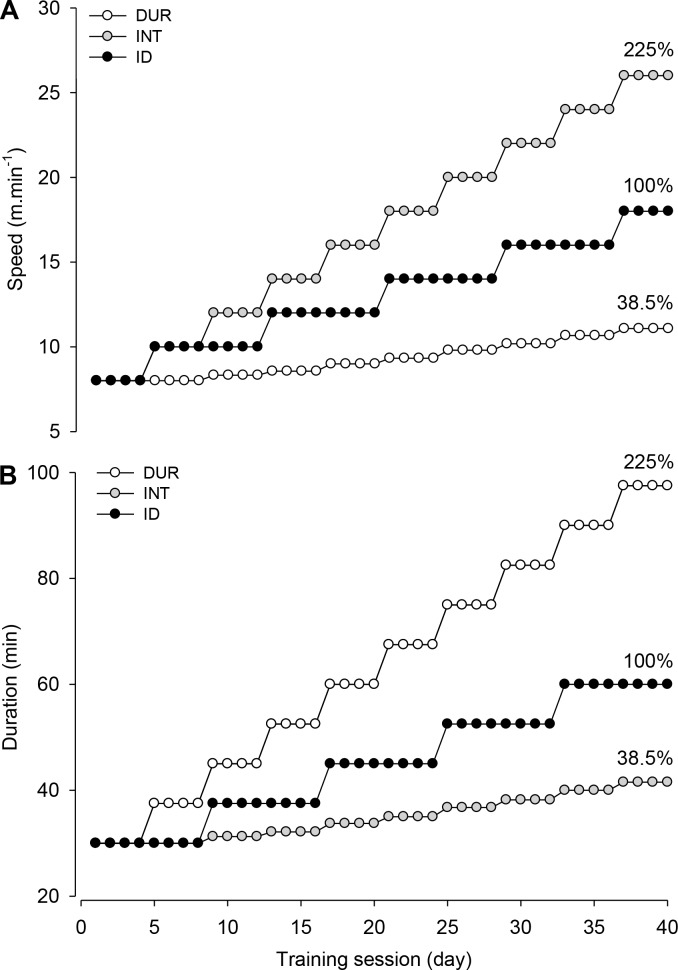
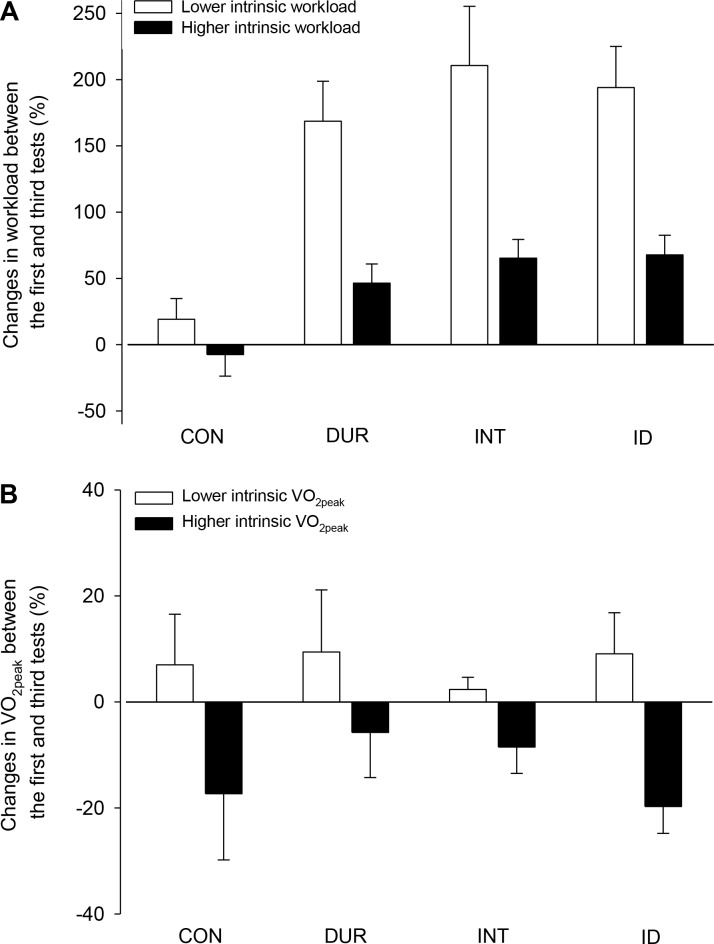
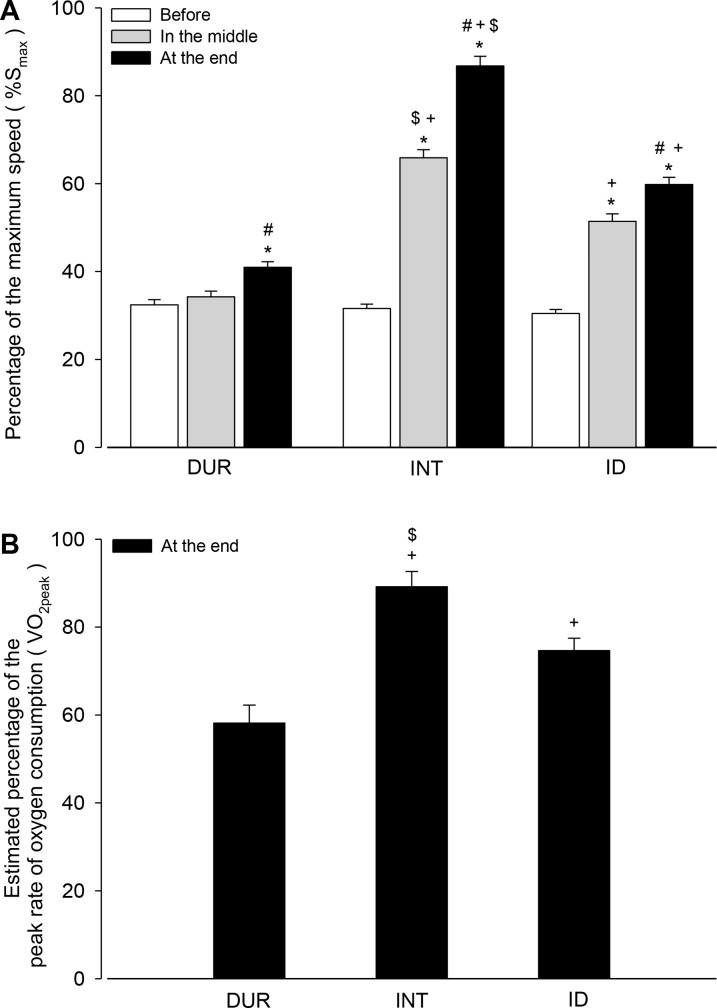
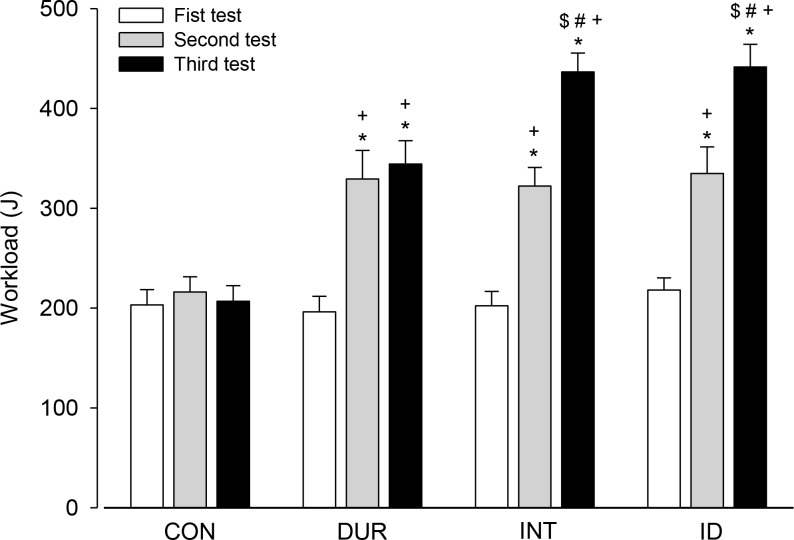
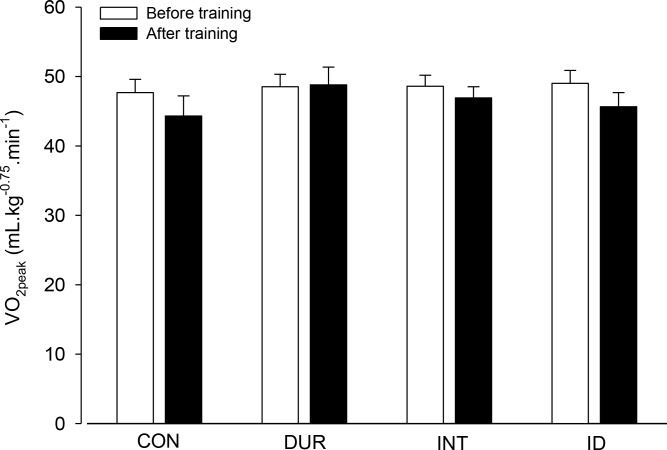
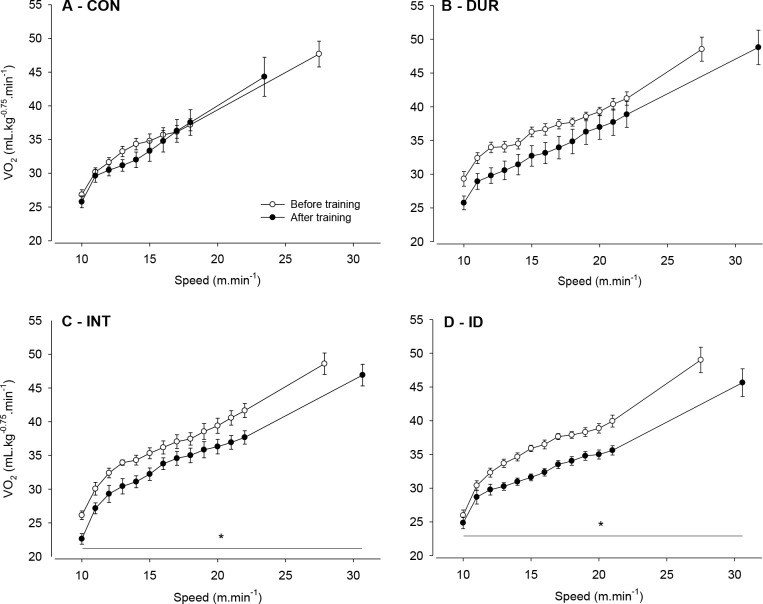
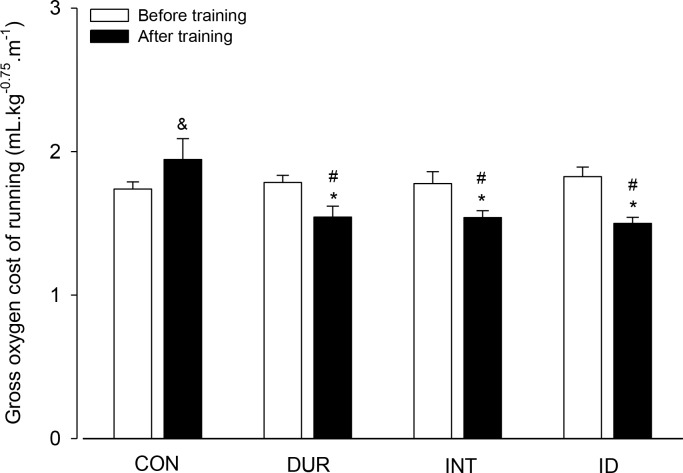
This study investigated the effects of manipulating the load components of aerobic training sessions on the physical performance of rats. To achieve this purpose, adult male Wistar rats were divided into four groups: an untrained control (CON) group and training groups with a predominant overload in intensity (INT) or duration (DUR) or alternating and similar overloads in intensity and duration (ID). Prior to, during, and after 8 weeks of the control or training protocols, the performance of the rats (evaluated by their workload) was determined during fatiguing, incremental-speed treadmill running. Two additional incremental running tests were performed prior to and at the end of the protocols to measure the peak rate of oxygen consumption (VO2peak). As expected, the rats in the trained groups exhibited increased performance, whereas the untrained rats showed stable performance throughout the 8 weeks. Notably, the performance gain exhibited by the DUR rats reached a plateau after the 4th week. This plateau was not present in the INT or ID rats, which exhibited increased performance at the end of training protocol compared with the DUR rats. None of the training protocols changed the VO2peak values; however, these values were attained at faster speeds, which indicated increased running economy. In conclusion, our findings demonstrate that the training protocols improved the physical performance of rats, likely resulting from enhanced running economy. Furthermore, compared with overload in duration, overload in the intensity of training sessions was more effective at inducing performance improvements across the 8 weeks of the study.
本研究调查了操纵有氧训练课程的负荷组成部分对大鼠体能的影响。为实现这一目的,将成年雄性Wistar大鼠分为四组:未训练的对照组(CON)以及强度(INT)或持续时间(DUR)占主导的超负荷训练组,或强度和持续时间交替且相似的超负荷训练组(ID)。在对照或训练方案的8周之前、期间和之后,在疲劳性递增速度跑步机跑步过程中测定大鼠的表现(通过其工作量评估)。在方案之前和结束时进行另外两项递增跑步测试,以测量耗氧峰值速率(VO2peak)。正如预期的那样,训练组的大鼠表现有所提高,而未训练的大鼠在整个8周内表现稳定。值得注意的是,DUR组大鼠的表现增益在第4周后达到平台期。INT组或ID组大鼠不存在这种平台期,与DUR组大鼠相比,它们在训练方案结束时表现有所提高。所有训练方案均未改变VO2peak值;然而,这些值是在更快的速度下达到的,这表明跑步经济性提高。总之,我们的研究结果表明,训练方案改善了大鼠的体能,这可能是由于跑步经济性提高所致。此外,与持续时间超负荷相比,训练课程强度超负荷在研究的8周内更有效地诱导了表现的改善。