Physical Effort Laboratory, Graduate Program in Physical Education, Universidade Federal de Santa Catarina, Florianópolis, Santa Catarina, Brazil.
Exercise Physiology Laboratory, Graduate Program in Sport Sciences, Universidade Federal de Minas Gerais, Belo Horizonte, Minas Gerais, Brazil.
PLoS One. 2020 Feb 21;15(2):e0229335. doi: 10.1371/journal.pone.0229335. eCollection 2020.
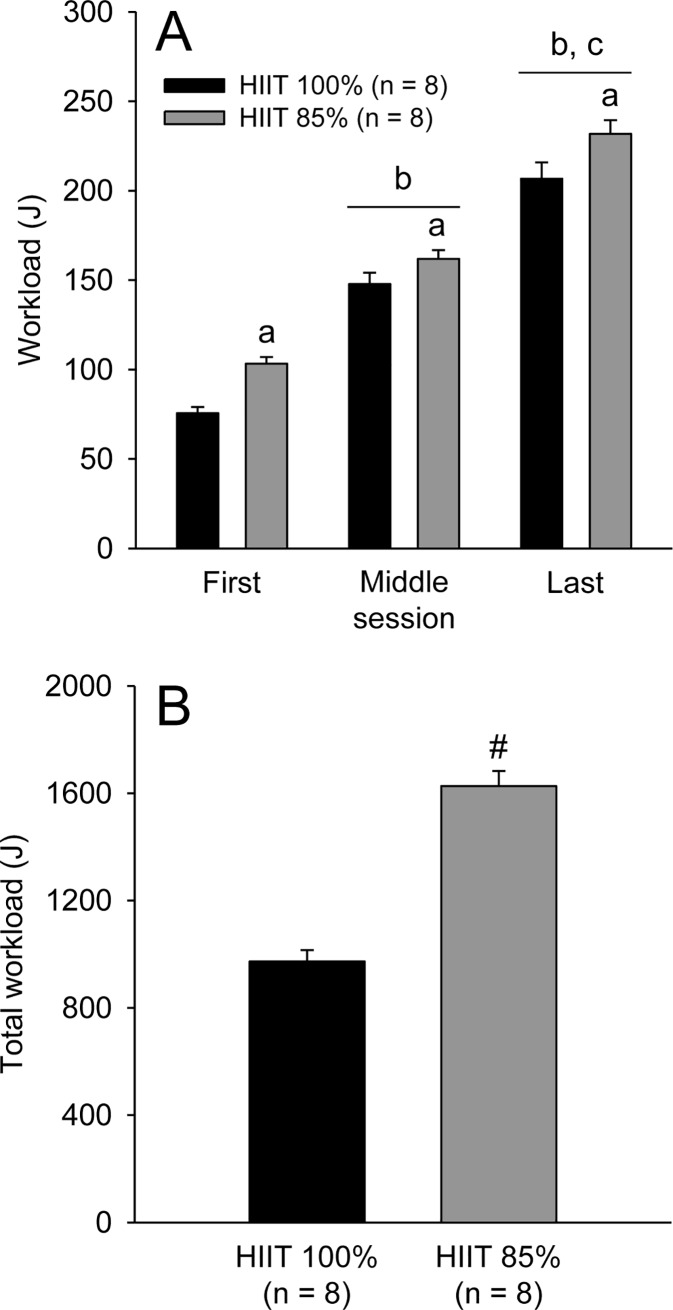
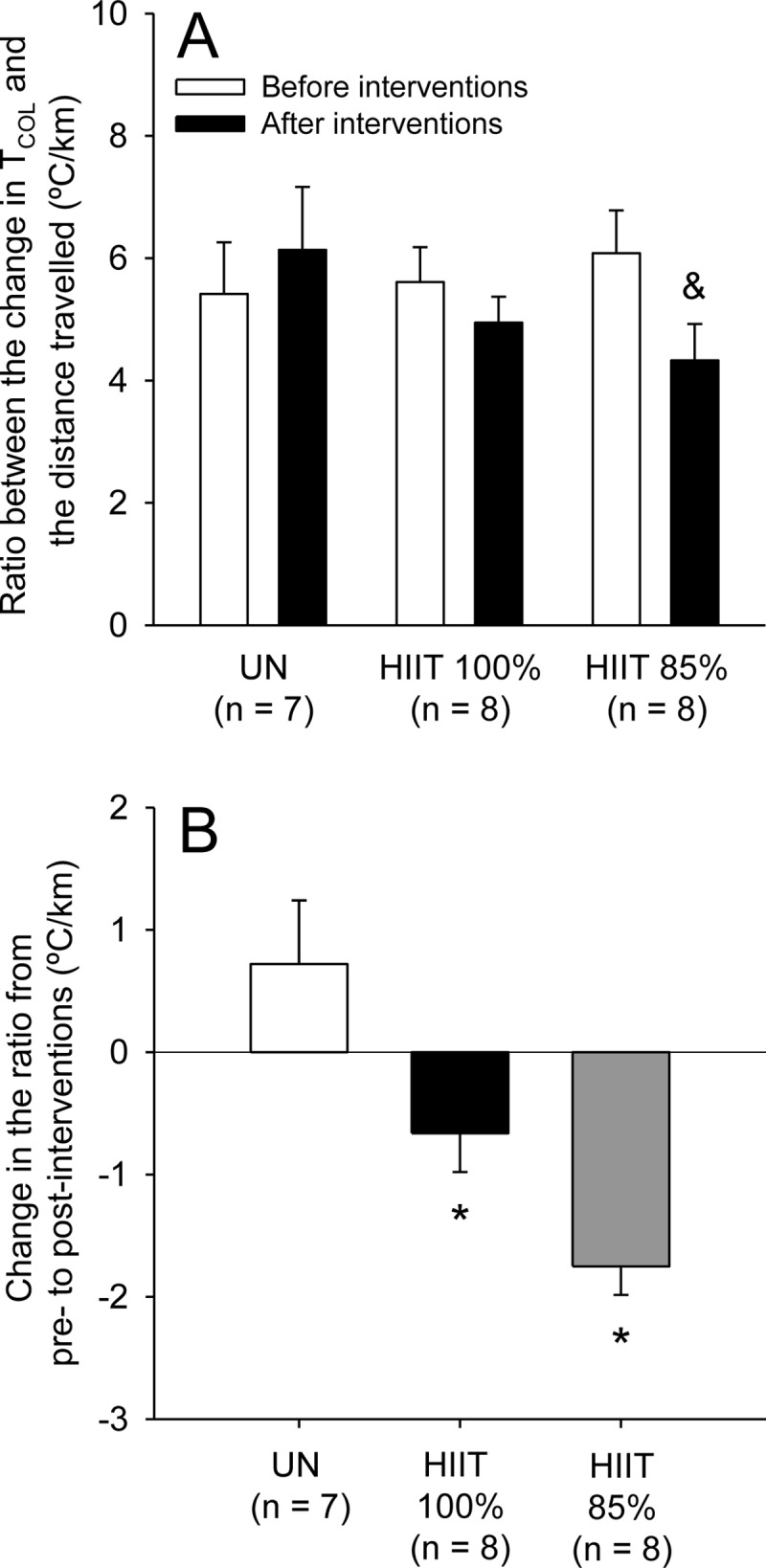
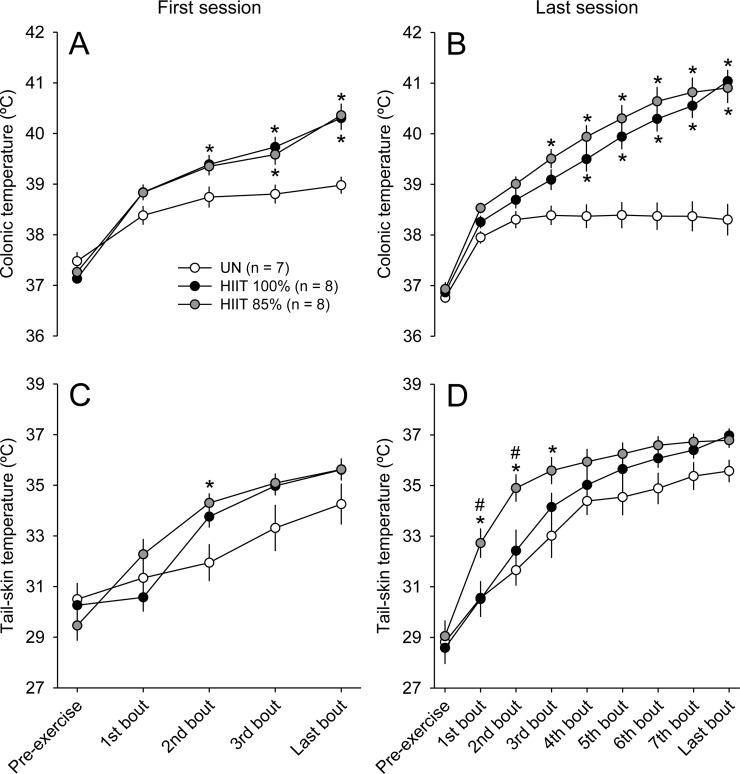
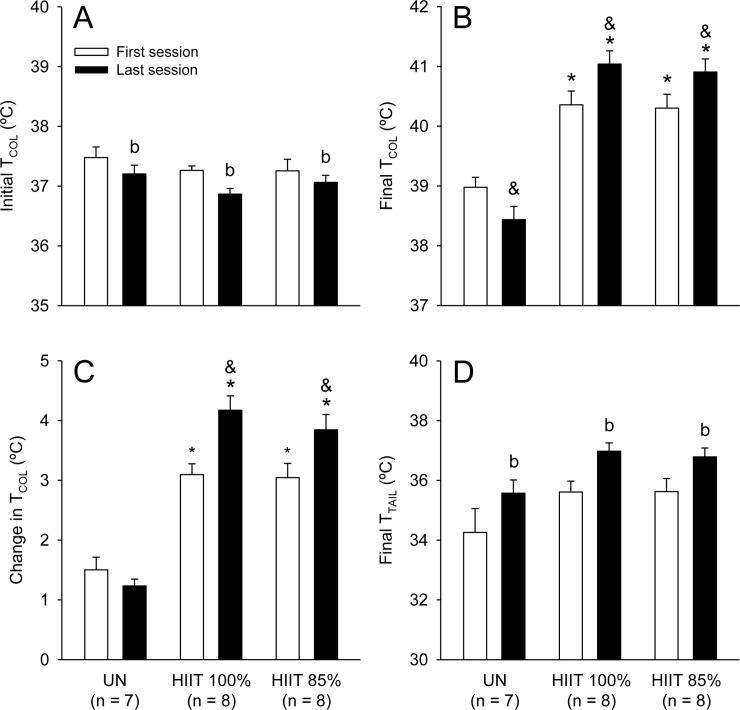
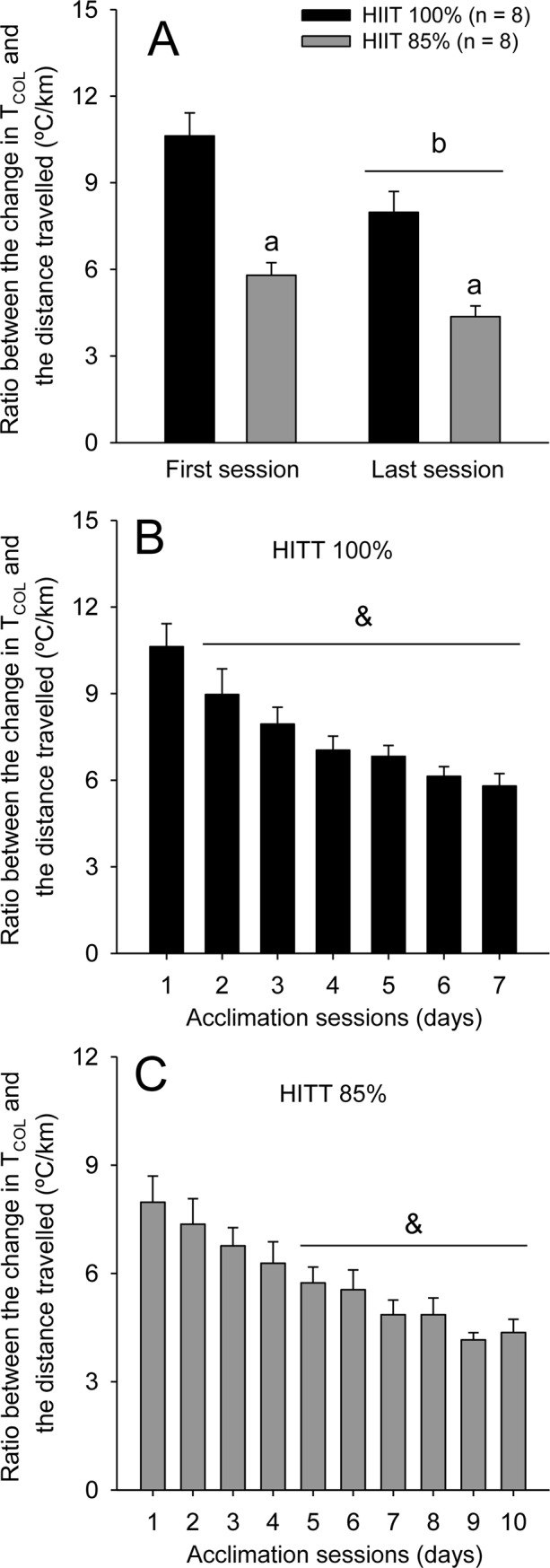
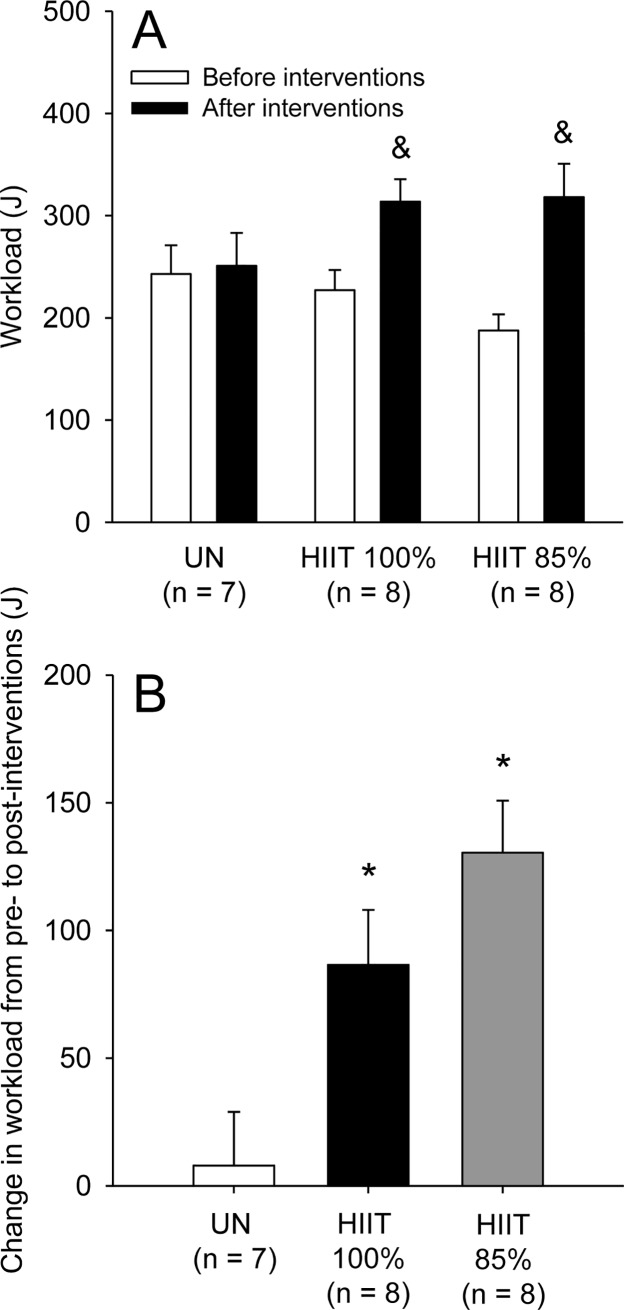
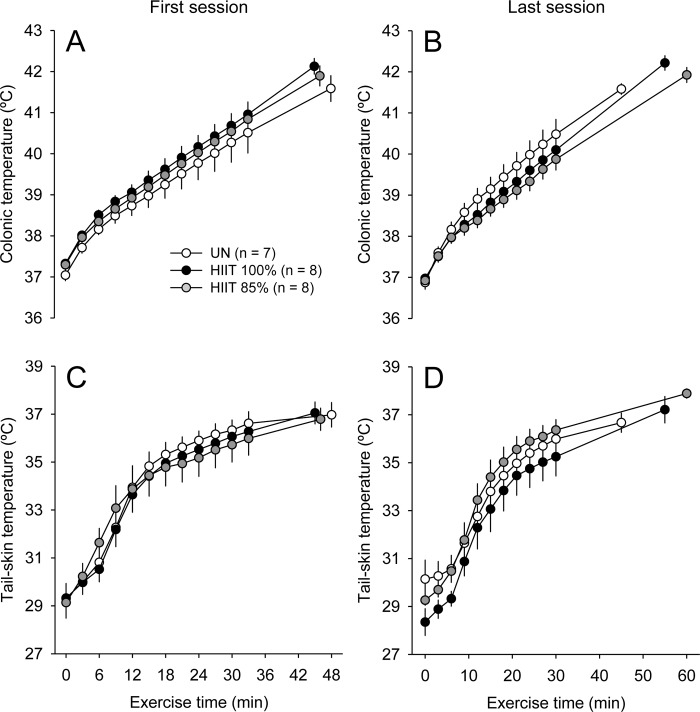
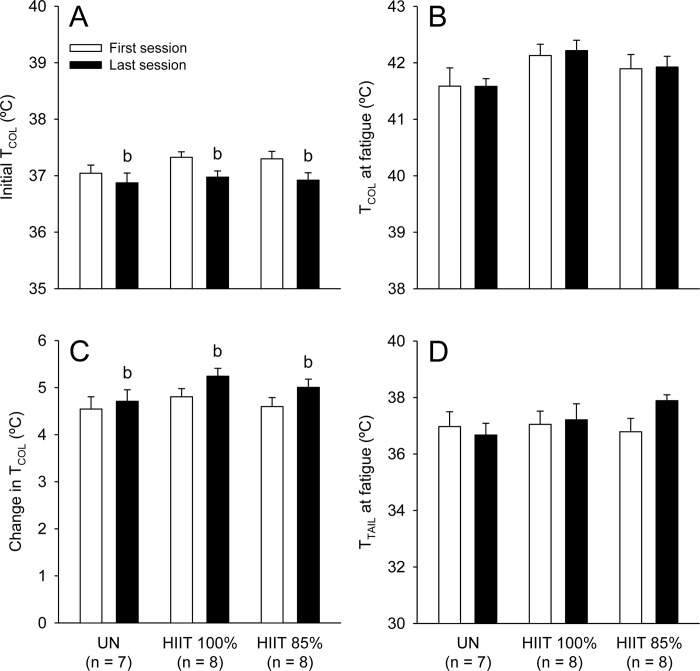
Acclimation resulting from low- to moderate-intensity physical exertion in the heat induces several thermoregulatory adaptations, including slower exercise-induced increases in core body temperature. However, few studies have investigated the thermoregulatory adaptations induced by high-intensity interval training (HIIT) protocols. Thus, the present study aimed to compare the adaptations in rats' thermoregulatory parameters and aerobic performance observed after two different heat acclimation regimens consisting of HIIT protocols performed in a hot environment. Twenty-three adult male Wistar rats were initially subjected to an incremental-speed exercise at 32°C until they were fatigued and then randomly assigned to one of the following three heat acclimation strategies: passive heat exposure without any exercise (untrained controls-UN; n = 7), HIIT performed at the maximal aerobic speed (HIIT100%; n = 8) and HIIT performed at a high but submaximal speed (HIIT85%; n = 8). Following the two weeks of interventions, the rats were again subjected to a fatiguing incremental exercise at 32°C, while their colonic temperature (TCOL) was recorded. The workload performed by the rats and their thermoregulatory efficiency were calculated. After the intervention period, rats subjected to both HIIT protocols attained greater workloads (HIIT100%: 313.7 ± 21.9 J vs. HIIT85%: 318.1 ± 32.6 J vs. UN: 250.8 ± 32.4 J; p < 0.01) and presented a lower ratio between the change in TCOL and the distance travelled (HIIT100%: 4.95 ± 0.42°C/km vs. HIIT85%: 4.33 ± 0.59°C/km vs. UN: 6.14 ± 1.03°C/km; p < 0.001) when compared to UN rats. The latter finding indicates better thermoregulatory efficiency in trained animals. No differences were observed between rats subjected to the two HIIT regimens. In conclusion, the two HIIT protocols induce greater thermoregulatory adaptations and performance improvements than passive heat exposure. These adaptations do not differ between the two training protocols investigated in the present study.
热环境中低到中等强度的体力活动引起的习服会导致几种体温调节适应,包括运动引起的核心体温升高变慢。然而,很少有研究调查高强度间歇训练(HIIT)方案引起的体温调节适应。因此,本研究旨在比较两种不同热习服方案引起的大鼠体温调节参数和有氧性能的适应,这两种方案由在热环境中进行的 HIIT 方案组成。23 只成年雄性 Wistar 大鼠最初在 32°C 下进行递增速度运动,直到疲劳,然后随机分配到以下三种热习服策略之一:无任何运动的被动热暴露(未训练对照-UN;n = 7)、在最大有氧速度下进行的 HIIT(HIIT100%;n = 8)和在高但亚最大速度下进行的 HIIT(HIIT85%;n = 8)。在两周的干预后,大鼠再次在 32°C 下进行疲劳递增运动,同时记录其结肠温度(TCOL)。计算大鼠的工作量和体温调节效率。干预期结束后,接受两种 HIIT 方案的大鼠完成了更大的工作量(HIIT100%:313.7 ± 21.9 J 比 HIIT85%:318.1 ± 32.6 J 比 UN:250.8 ± 32.4 J;p < 0.01),并且 TCOL 变化与行进距离之间的比值更低(HIIT100%:4.95 ± 0.42°C/km 比 HIIT85%:4.33 ± 0.59°C/km 比 UN:6.14 ± 1.03°C/km;p < 0.001),与 UN 大鼠相比。后一种发现表明,训练动物的体温调节效率更好。接受两种 HIIT 方案的大鼠之间没有差异。总之,两种 HIIT 方案比被动热暴露引起更大的体温调节适应和性能提高。在本研究中调查的两种训练方案之间,这些适应没有差异。