Department of Genetic Engineering, College of Life Science and Graduate School of Biotechnology, Kyung Hee University, Yong In, 17104, Republic of Korea.
Kyung Hee Institute of Regenerative Medicine, Kyung Hee University Hospital, Seoul, Republic of Korea.
Sci Rep. 2017 Aug 25;7(1):9417. doi: 10.1038/s41598-017-09639-7.
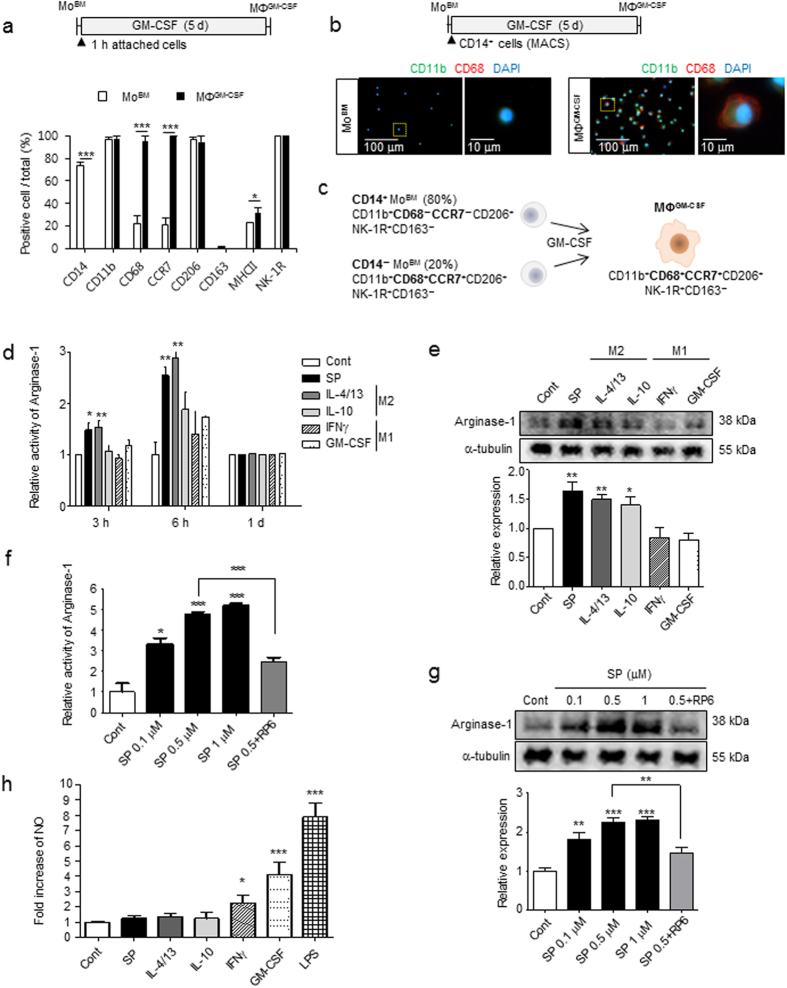
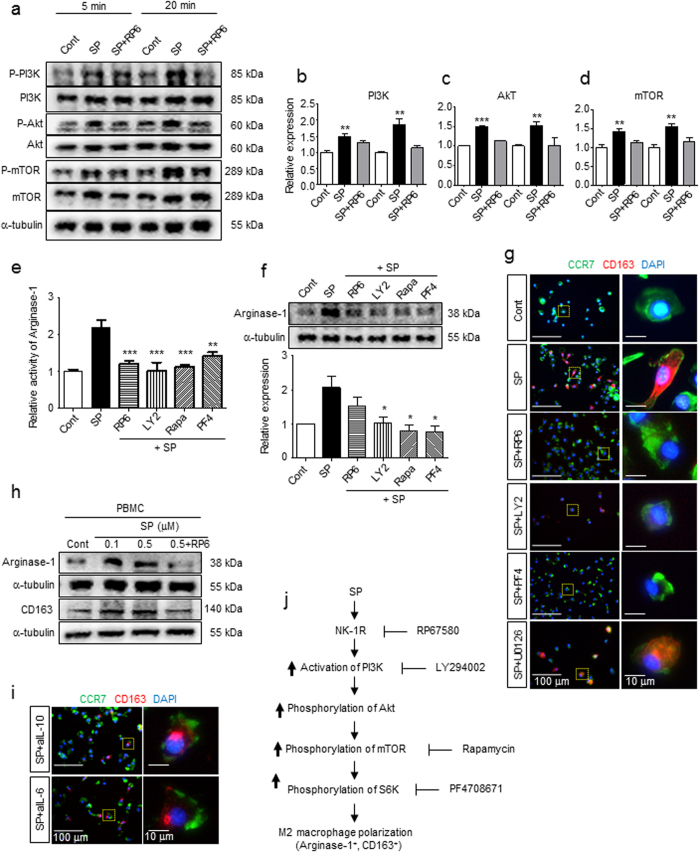
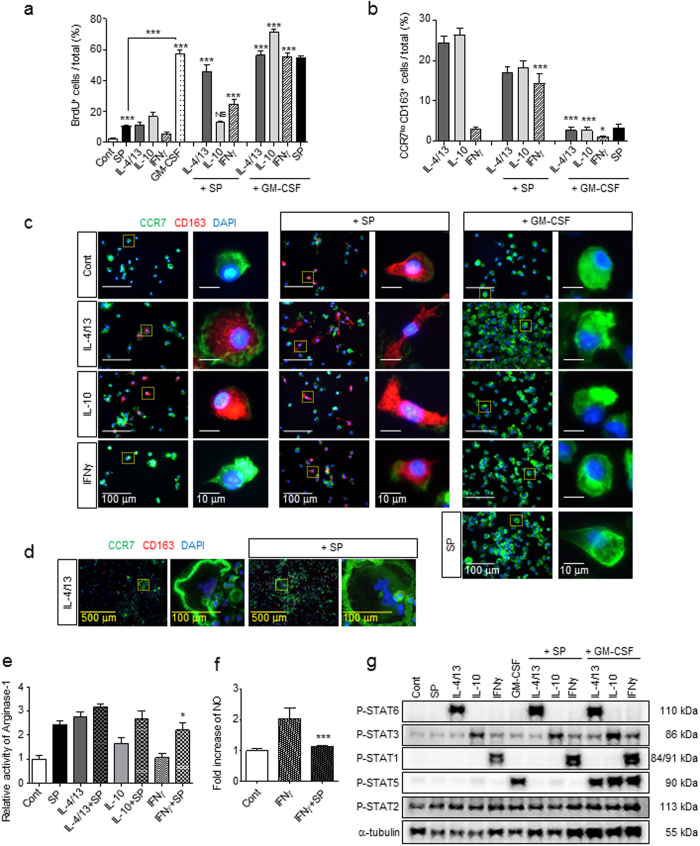
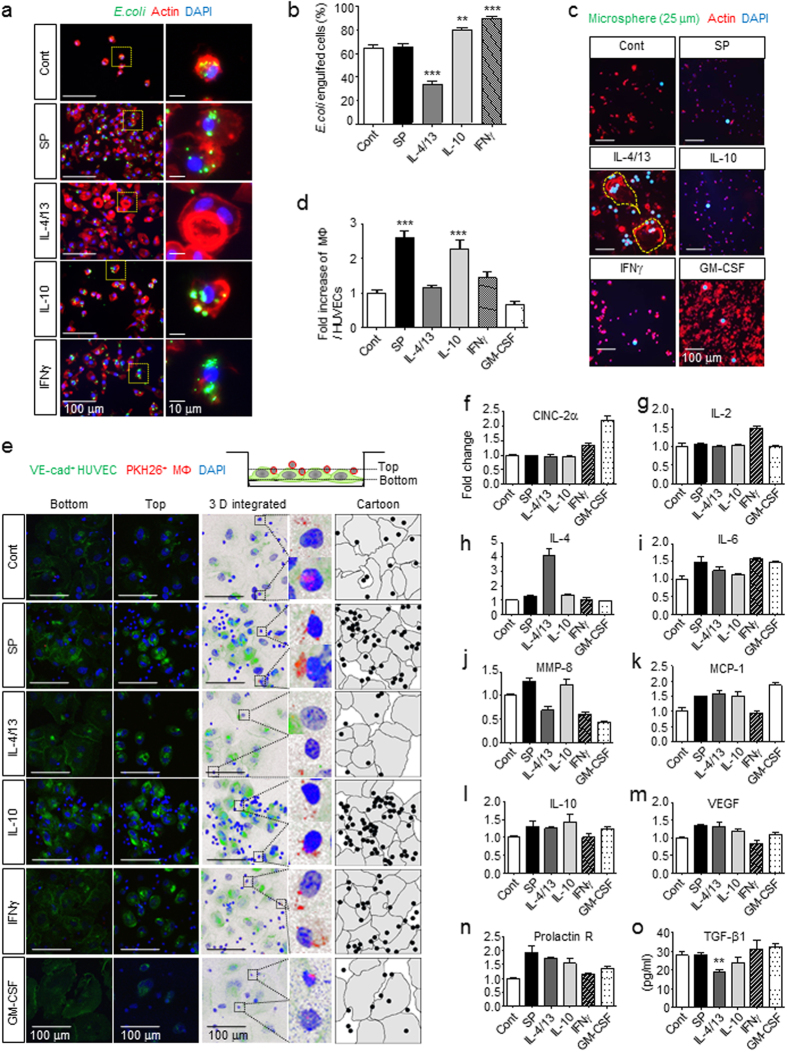
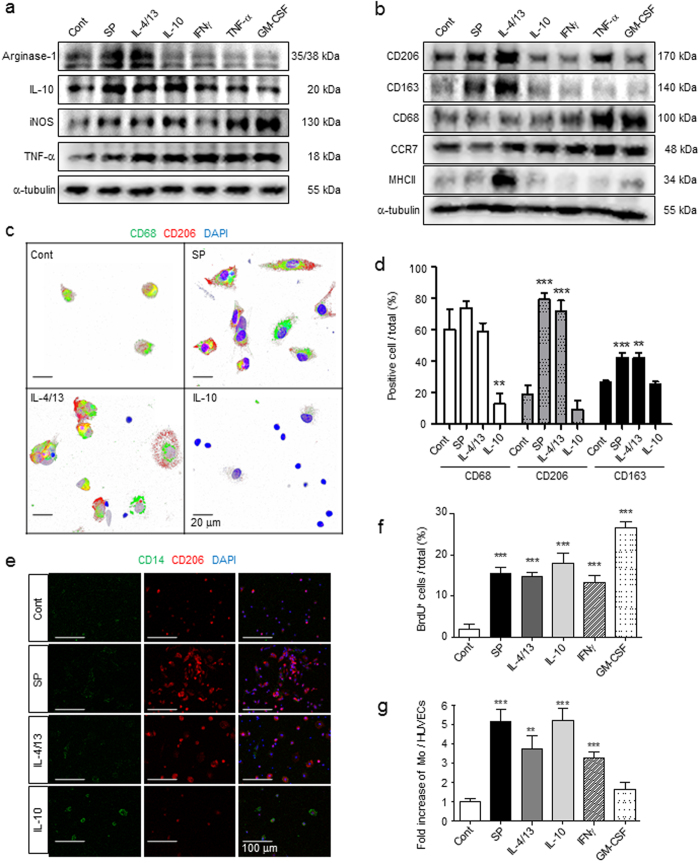
Macrophage polarization plays an important role in tissue damage and repair. In this study, we show that Substance-P (SP) can directly induce M2 polarization of inflammatory macrophages. SP induced the differentiation of GM-CSF-differentiated pro-inflammatory macrophages into alternatively activated phagocytic M2 like macrophages (M2) through direct activation of the PI3K/Akt/mTOR/S6kinase pathway and induction of Arginase-1, CD163, and CD206, all of which were nullified by pretreatment with the neurokinin-1 receptor (NK-1R) antagonist RP67580 and specific signaling pathway inhibitors. M2 were distinct from IL-4/IL-13-induced M2a and IL-10-induced M2c subtypes; they did not show STAT activation and exhibited high phagocytic and endothelial adhesive activity. Furthermore, SP had a dominant effect on M2 polarization over Interferon gamma (IFNγ), a potent M1-skewing cytokine, and effectively induced the M2 phenotype in monocytes and the human THP-1 cell line. Finally, adoptively transferred M2 migrated to a spinal cord injury (SCI) lesion site and improved functional recovery. Collectively, our findings show that SP, a neuropeptide, plays a role as a novel cytokine by inducing tissue-repairing M2 macrophages and thus may be developed for pharmacological intervention in diseases involving chronic inflammation and acute injury.
巨噬细胞极化在组织损伤和修复中起着重要作用。在这项研究中,我们表明 P 物质(SP)可以直接诱导炎症巨噬细胞向 M2 极化。SP 通过直接激活 PI3K/Akt/mTOR/S6kinase 途径和诱导精氨酸酶-1、CD163 和 CD206,将 GM-CSF 分化的促炎巨噬细胞诱导分化为具有替代激活吞噬作用的 M2 样巨噬细胞(M2),所有这些都被神经激肽-1 受体(NK-1R)拮抗剂 RP67580 和特定信号通路抑制剂预处理所消除。M2 与 IL-4/IL-13 诱导的 M2a 和 IL-10 诱导的 M2c 亚型不同;它们不表现出 STAT 激活,并且表现出高吞噬和内皮黏附活性。此外,SP 对 M2 极化的作用超过了干扰素γ(IFNγ),一种有效的 M1 极化细胞因子,并有效地在单核细胞和人 THP-1 细胞系中诱导 M2 表型。最后,过继转移的 M2 迁移到脊髓损伤(SCI)损伤部位,并改善了功能恢复。总之,我们的研究结果表明,作为一种新型细胞因子,神经肽 SP 通过诱导组织修复 M2 巨噬细胞发挥作用,因此可能被开发用于涉及慢性炎症和急性损伤的疾病的药物干预。