Alenko Anton, Fleming Aaron M, Burrows Cynthia J
Department of Chemistry, University of Utah , 315 South 1400 East, Salt Lake City, Utah 84112-0850, United States.
Biochemistry. 2017 Sep 26;56(38):5053-5064. doi: 10.1021/acs.biochem.7b00730. Epub 2017 Sep 11.
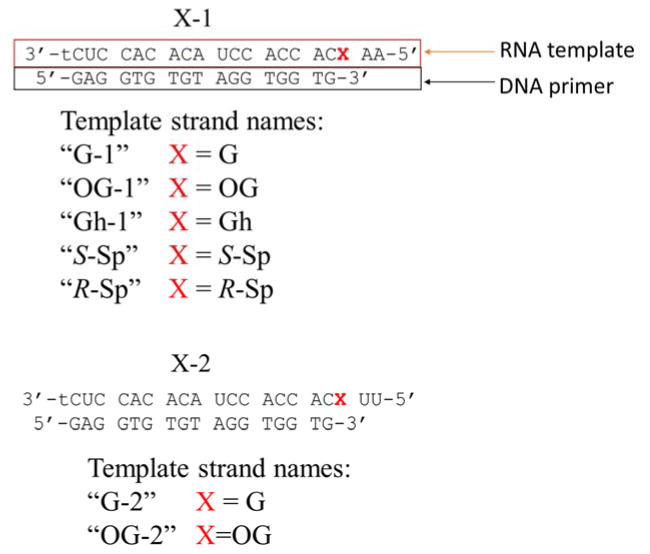
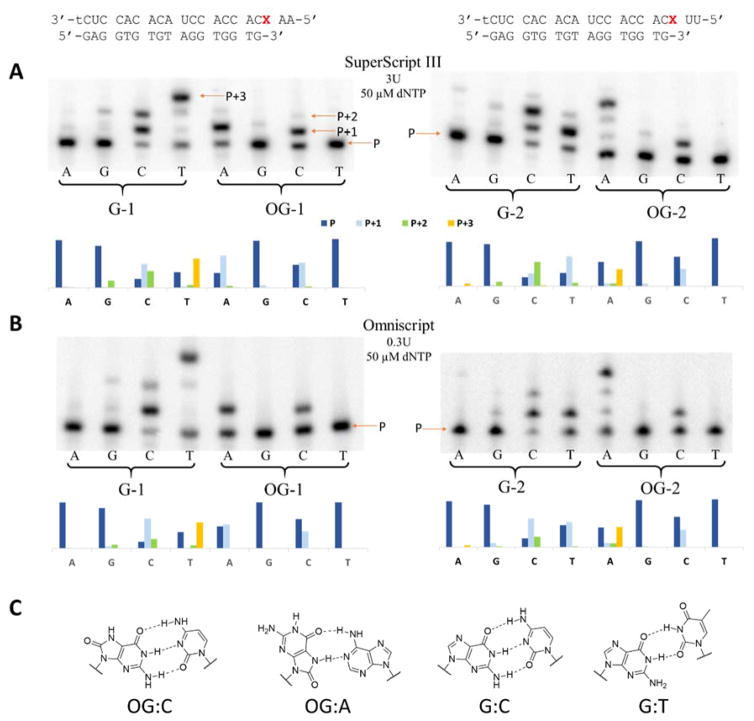
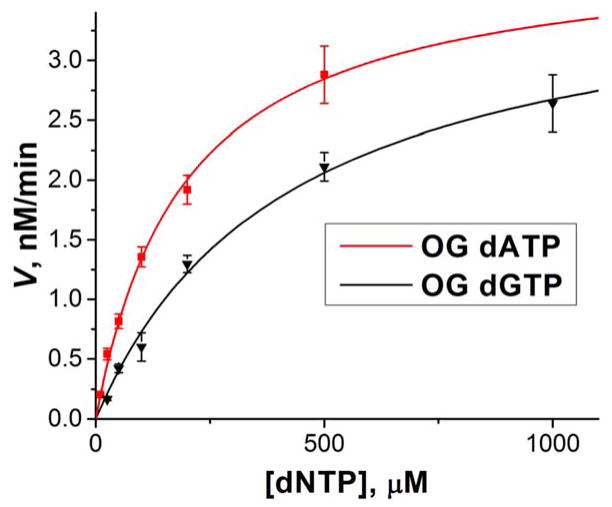
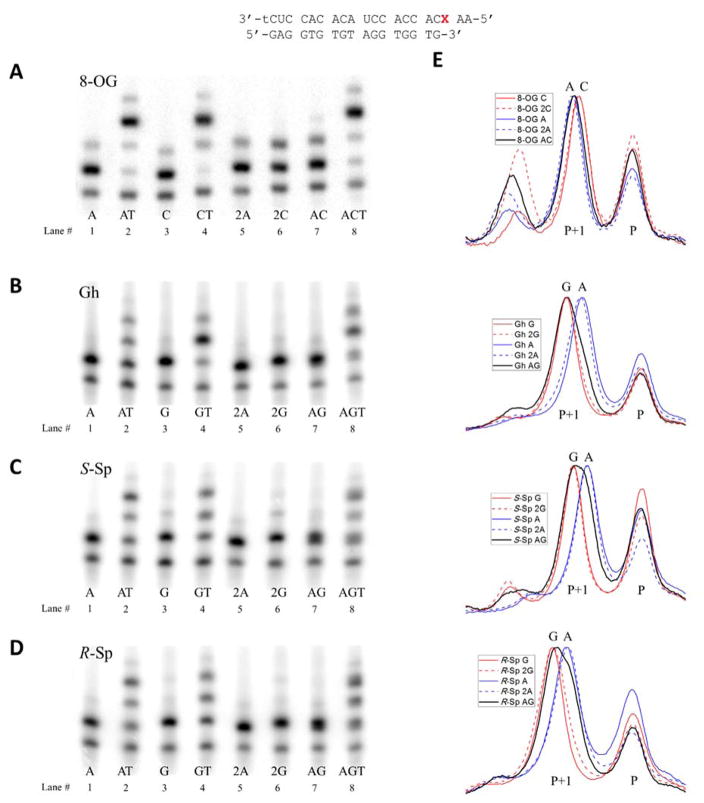
Reactive oxygen species, both endogenous and exogenous, can damage nucleobases of RNA and DNA. Among the nucleobases, guanine has the lowest redox potential, making it a major target of oxidation. Although RNA is more prone to oxidation than DNA is, oxidation of guanine in RNA has been studied to a significantly lesser extent. One of the reasons for this is that many tools that were previously developed to study oxidation of DNA cannot be used on RNA. In the study presented here, the lack of a method for seeking sites of modification in RNA where oxidation occurs is addressed. For this purpose, reverse transcription of RNA containing major products of guanine oxidation was used. Extension of a DNA primer annealed to an RNA template containing 8-oxo-7,8-dihydroguanine (OG), 5-guanidinohydantoin (Gh), or the R and S diastereomers of spiroiminodihydantoin (Sp) was studied under standing start conditions. SuperScript III reverse transcriptase is capable of bypassing these lesions in RNA inserting predominantly A opposite OG, predominantly G opposite Gh, and almost an equal mixture of A and G opposite the Sp diastereomers. These data should allow RNA sequencing of guanine oxidation products by following characteristic mutation signatures formed by the reverse transcriptase during primer elongation past G oxidation sites in the template RNA strand.
内源性和外源性活性氧均可损伤RNA和DNA的核碱基。在这些核碱基中,鸟嘌呤具有最低的氧化还原电位,使其成为氧化的主要靶点。尽管RNA比DNA更容易发生氧化,但对RNA中鸟嘌呤氧化的研究程度要低得多。原因之一是,以前开发的许多用于研究DNA氧化的工具不能用于RNA。在本文介绍的研究中,解决了缺乏一种寻找RNA中发生氧化修饰位点的方法的问题。为此,使用了含有鸟嘌呤氧化主要产物的RNA的逆转录。在起始条件下,研究了与含有8-氧代-7,8-二氢鸟嘌呤(OG)、5-胍基乙内酰脲(Gh)或螺环亚氨基二氢乙内酰脲(Sp)的R和S非对映异构体的RNA模板退火的DNA引物的延伸。SuperScript III逆转录酶能够绕过RNA中的这些损伤,在OG对面主要插入A,在Gh对面主要插入G,在Sp非对映异构体对面几乎等量混合插入A和G。这些数据应能通过追踪逆转录酶在引物延伸通过模板RNA链中G氧化位点时形成的特征性突变特征,对鸟嘌呤氧化产物进行RNA测序。