Division of Oral Biology, Tufts University School of Dental Medicine, Boston, MA, USA.
Key Laboratory of Oral Diseases, West China Hospital of Stomatology, Sichuan University, Chengdu, Sichuan, China.
J Bone Miner Res. 2017 Dec;32(12):2466-2475. doi: 10.1002/jbmr.3230. Epub 2017 Aug 28.
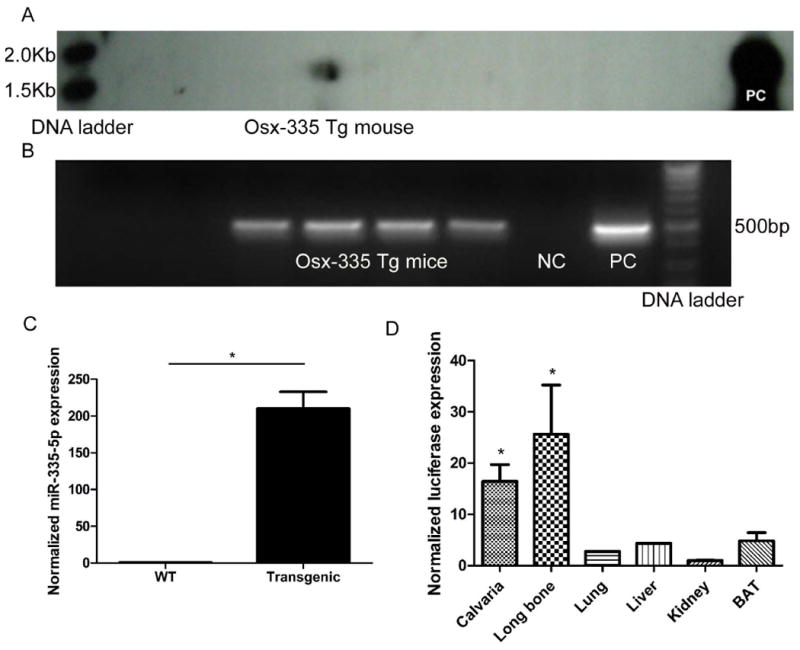
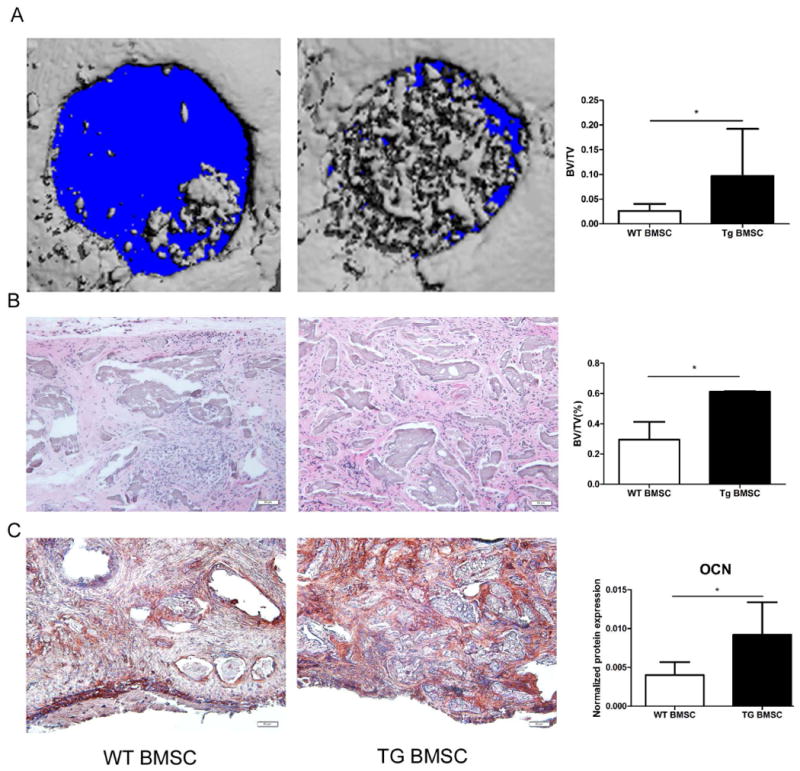
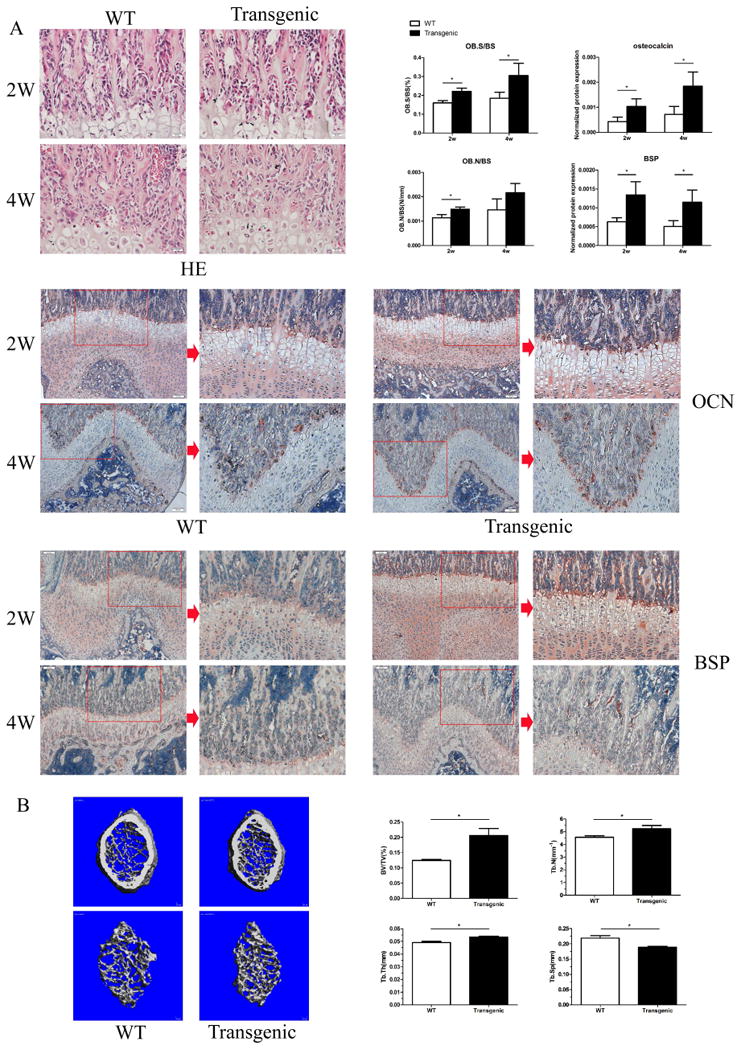
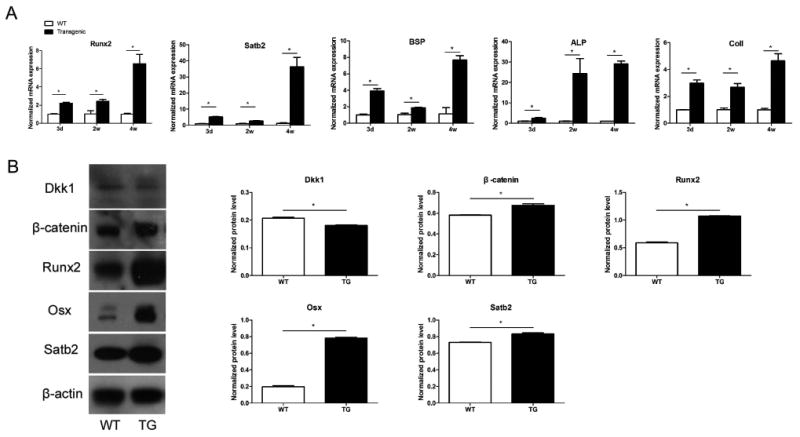
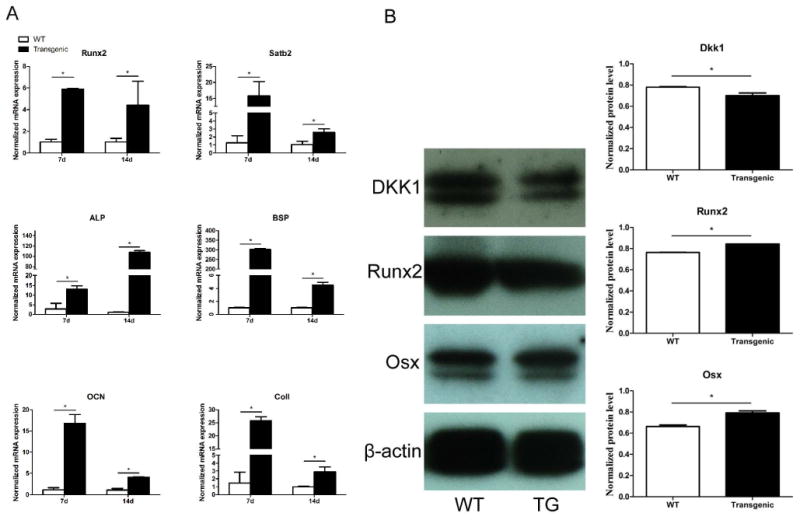
MicroRNAs (miRNAs) and the Wnt signaling pathway play critical roles in regulating bone development and homeostasis. Our previous study revealed high expression of miR-335-5p in osteoblasts and hypertrophic chondrocytes in mouse embryos and the ability of miR-335-5p to promote osteogenic differentiation by downregulating Wnt antagonist Dickkopf-1 (DKK1). The purpose of this study was to investigate the effects of miR-335-5p constitutive overexpression on bone formation and regeneration in vivo. To that end, we generated a transgenic mouse line specifically overexpressing miR-335-5p in osteoblasts lineage by the osterix promoter and characterized its bone phenotype. Bone histomorphometry and μCT analysis revealed higher bone mass and increased parameters of bone formation in transgenic mice than in wild-type littermates. Increased bone mass in transgenic mice bones also correlated with enhanced expression of osteogenic differentiation markers. Upon osteogenic induction, bone marrow stromal cells (BMSCs) isolated from transgenic mice displayed higher mRNA expression of osteogenic markers than wild-type mice BMSCs cultures. Protein expression of Runx2 and Osx was also upregulated in BMSC cultures of transgenic mice upon osteogenic induction, whereas that of DKK1 was downregulated. Most important, BMSCs from transgenic mice were able to repair craniofacial bone defects as shown by μCT analysis, H&E staining, and osteocalcin (OCN) immunohistochemistry of newly formed bone in defects treated with BMSCs. Taken together, our results demonstrate constitutive overexpression of miR-335-5p driven by an osterix promoter in the osteoblast lineage induces osteogenic differentiation and bone formation in mice and support the potential application of miR-335-5p-modified BMSCs in craniofacial bone regeneration. © 2017 American Society for Bone and Mineral Research.
微小 RNA(miRNAs)和 Wnt 信号通路在调节骨骼发育和稳态中发挥着关键作用。我们之前的研究表明,miR-335-5p 在小鼠胚胎成骨细胞和肥大软骨细胞中高表达,并能通过下调 Wnt 拮抗剂 Dickkopf-1(DKK1)促进成骨分化。本研究旨在探讨 miR-335-5p 组成型过表达对体内骨形成和再生的影响。为此,我们通过成骨细胞特异性启动子 osterix 生成了一个在成骨细胞中过表达 miR-335-5p 的转基因小鼠系,并对其骨骼表型进行了表征。骨组织形态计量学和 μCT 分析显示,转基因小鼠的骨量高于野生型同窝仔鼠,且骨形成参数增加。转基因小鼠骨量增加与成骨分化标志物的表达增强相关。在成骨诱导后,从转基因小鼠分离的骨髓基质细胞(BMSCs)的成骨标志物 mRNA 表达高于野生型小鼠 BMSCs 培养物。成骨诱导后,BMSC 培养物中的 Runx2 和 Osx 蛋白表达也上调,而 DKK1 蛋白表达下调。最重要的是,通过 μCT 分析、H&E 染色和新形成骨中的骨钙素(OCN)免疫组织化学染色,显示转基因小鼠的 BMSCs 能够修复颅面骨缺损。综上所述,我们的结果表明,成骨细胞特异性启动子 osterix 驱动的 miR-335-5p 组成型过表达可诱导小鼠成骨分化和骨形成,并支持 miR-335-5p 修饰的 BMSCs 在颅面骨再生中的潜在应用。 © 2017 美国骨矿研究协会。