Park Bumhee, Eo Jinseok, Park Hae-Jeong
Department of Statistics, Hankuk University of Foreign StudiesYong-In, South Korea.
BK21 PLUS Project for Medical ScienceSeoul, South Korea.
Front Hum Neurosci. 2017 Aug 10;11:408. doi: 10.3389/fnhum.2017.00408. eCollection 2017.
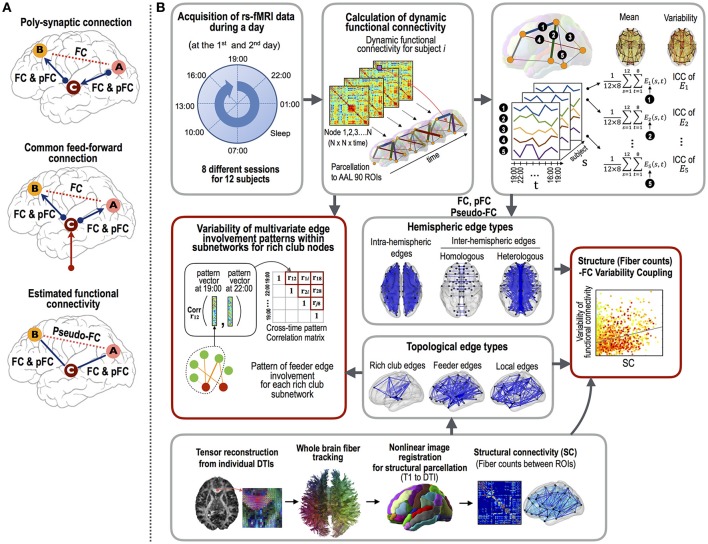
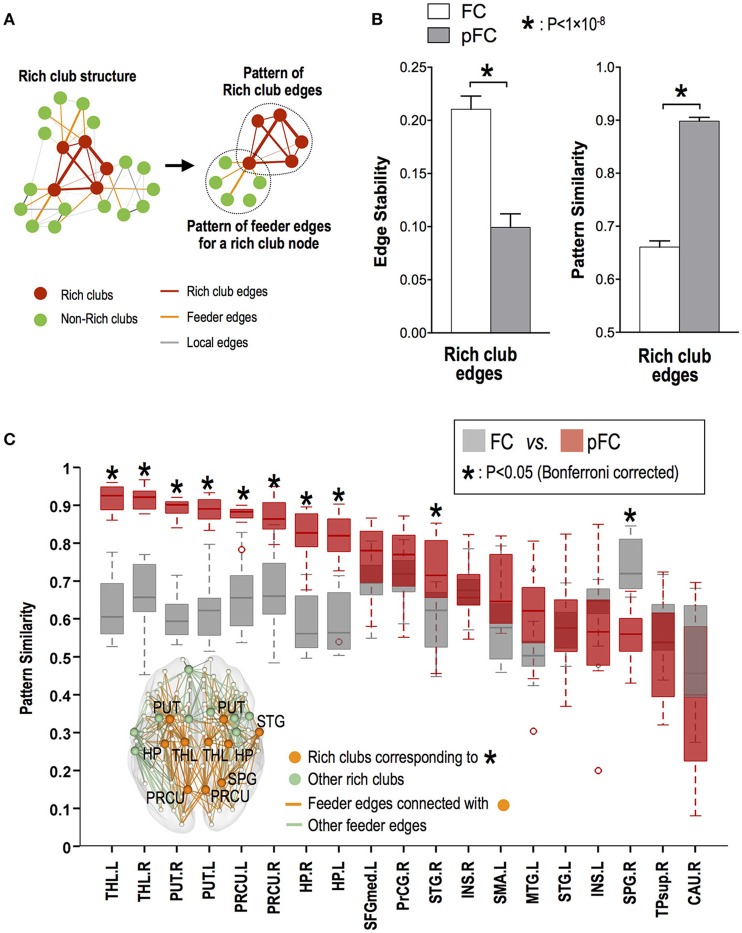
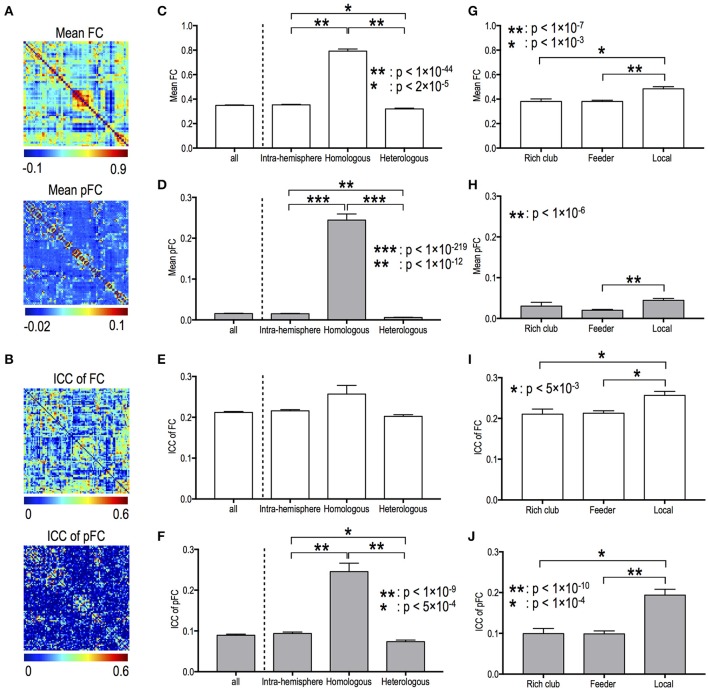
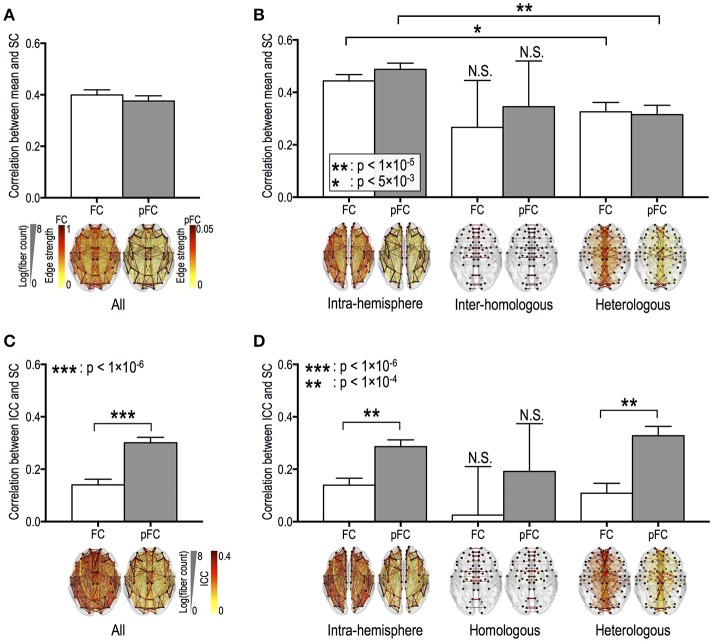
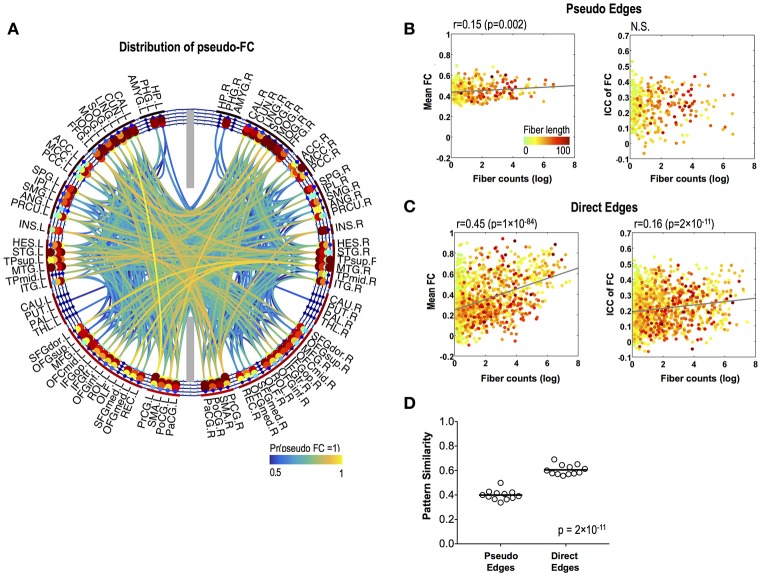
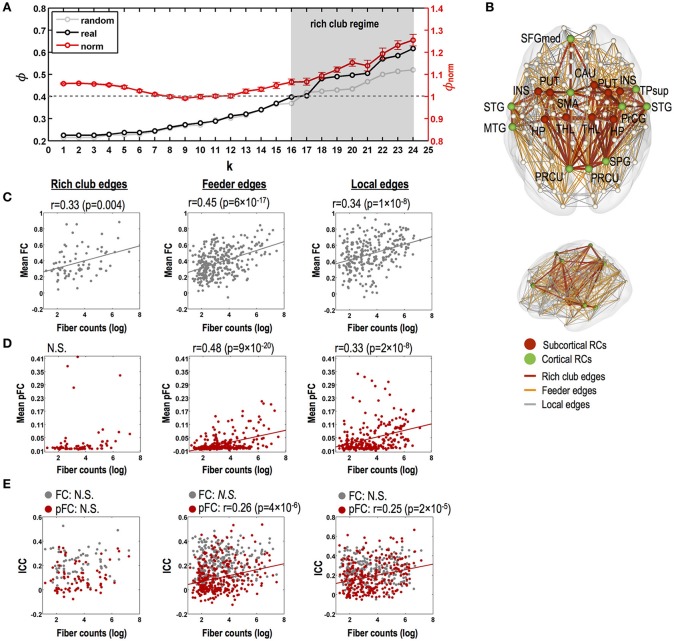
The idea that structural white matter connectivity constrains functional connectivity (interactions among brain regions) has widely been explored in studies of brain networks; studies have mostly focused on the "average" strength of functional connectivity. The question of how structural connectivity constrains the "variability" of functional connectivity remains unresolved. In this study, we investigated the variability of resting state functional connectivity that was acquired every 3 h within a single day from 12 participants (eight time sessions within a 24-h period, 165 scans per session). Three different types of functional connectivity (functional connectivity based on Pearson correlation, direct functional connectivity based on partial correlation, and the pseudo functional connectivity produced by their difference) were estimated from resting state functional magnetic resonance imaging data along with structural connectivity defined using fiber tractography of diffusion tensor imaging. Those types of functional connectivity were evaluated with regard to properties of structural connectivity (fiber streamline counts and lengths) and types of structural connectivity such as intra-/inter-hemispheric edges and topological edge types in the rich club organization. We observed that the structural connectivity constrained the variability of direct functional connectivity more than pseudo-functional connectivity and that the constraints depended strongly on structural connectivity types. The structural constraints were greater for intra-hemispheric and heterologous inter-hemispheric edges than homologous inter-hemispheric edges, and feeder and local edges than rich club edges in the rich club architecture. While each edge was highly variable, the multivariate patterns of edge involvement, especially the direct functional connectivity patterns among the rich club brain regions, showed low variability over time. This study suggests that structural connectivity not only constrains the strength of functional connectivity, but also the within-a-day variability of functional connectivity and connectivity patterns, particularly the direct functional connectivity among brain regions.
在脑网络研究中,结构白质连通性限制功能连通性(脑区之间的相互作用)这一观点已得到广泛探讨;研究大多聚焦于功能连通性的“平均”强度。然而,结构连通性如何限制功能连通性的“变异性”这一问题仍未得到解决。在本研究中,我们调查了12名参与者在一天内每隔3小时采集的静息态功能连通性的变异性(24小时内共8个时间段,每个时间段165次扫描)。从静息态功能磁共振成像数据中估计了三种不同类型的功能连通性(基于皮尔逊相关性的功能连通性、基于偏相关性的直接功能连通性以及由它们的差异产生的伪功能连通性),同时使用扩散张量成像的纤维束成像定义了结构连通性。针对这些类型的功能连通性,我们根据结构连通性的属性(纤维流线数量和长度)以及结构连通性的类型(如半球内/半球间边缘以及富俱乐部组织中的拓扑边缘类型)进行了评估。我们观察到,结构连通性对直接功能连通性变异性的限制比对伪功能连通性的限制更大,并且这种限制在很大程度上取决于结构连通性的类型。在富俱乐部架构中,半球内和异源半球间边缘的结构限制比同源半球间边缘更大,馈线和局部边缘比富俱乐部边缘更大。虽然每条边缘的变异性都很高,但边缘参与的多变量模式,尤其是富俱乐部脑区之间的直接功能连通性模式,随时间显示出较低的变异性。这项研究表明,结构连通性不仅限制功能连通性的强度,还限制功能连通性和连通性模式在一天内的变异性,特别是脑区之间的直接功能连通性。