Phua Chun Seng, Jayaram Lata, Wijeratne Tissa
Department of Medicine, Melbourne Clinical School, University of Melbourne, Melbourne, VIC, Australia.
Department of Neurology, Western Health, St. Albans, VIC, Australia.
Front Neurol. 2017 Aug 8;8:392. doi: 10.3389/fneur.2017.00392. eCollection 2017.
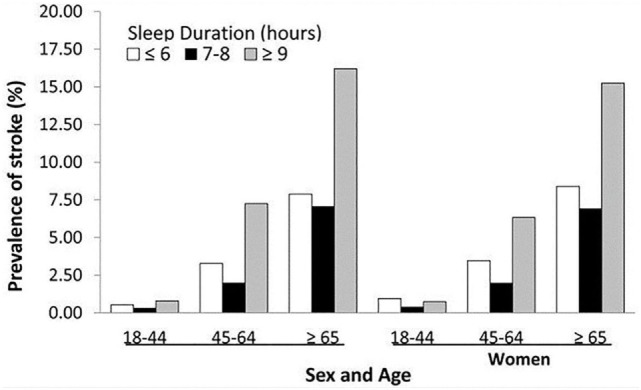
Stroke is a leading cause of death and disability worldwide. While various risk factors have been identified, sleep has only been considered a risk factor more recently. Various epidemiologic studies have associated stroke with sleep such as sleep duration, and laboratory and clinical studies have proposed various underlying mechanisms. The pathophysiology is multifactorial, especially considering sleep affects many common risk factors for stroke. This review aims to provide an outline of the effect of sleep duration on common stroke risk factors. Appropriate sleep duration, especially in patients who have stroke risk factors, and increasing awareness and screening for sleep quality may contribute to primary prevention of stroke.
中风是全球范围内导致死亡和残疾的主要原因。虽然已经确定了各种风险因素,但睡眠直到最近才被视为一种风险因素。各种流行病学研究已将中风与睡眠(如睡眠时间)联系起来,实验室和临床研究也提出了各种潜在机制。病理生理学是多因素的,尤其是考虑到睡眠会影响许多常见的中风风险因素。本综述旨在概述睡眠时间对常见中风风险因素的影响。适当的睡眠时间,尤其是对于有中风风险因素的患者,以及提高对睡眠质量的认识和筛查,可能有助于中风的一级预防。