Zaidi Ahmar Urooj, Hutchins Kelley K, Rajpurkar Madhvi
Division of Hematology Oncology, Carman and Ann Adams Department of Pediatrics, Wayne State University School of Medicine, Children's Hospital of Michigan, Detroit, MI, United States.
Front Pediatr. 2017 Aug 10;5:170. doi: 10.3389/fped.2017.00170. eCollection 2017.
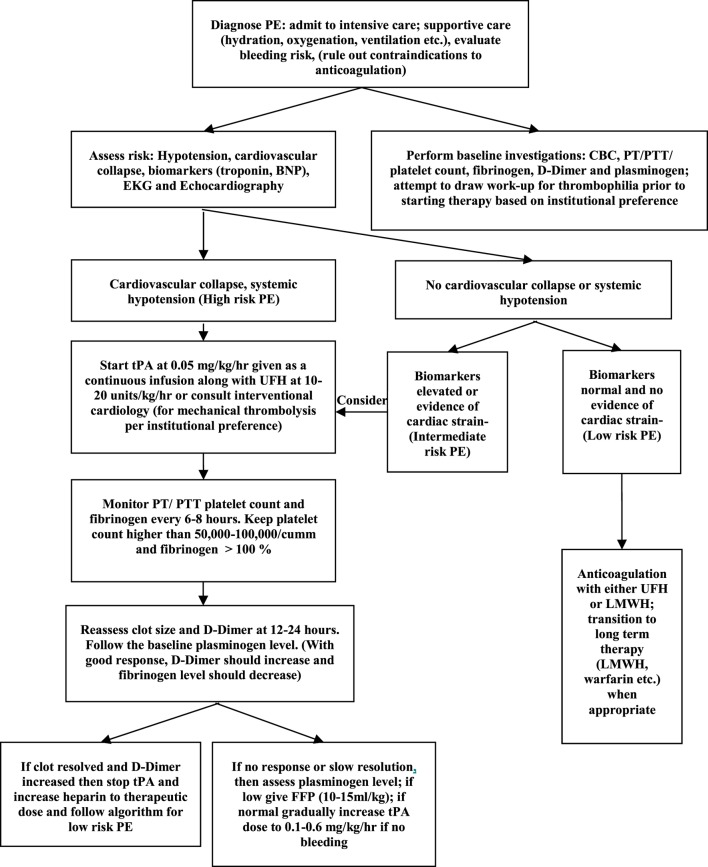
Pulmonary embolism (PE) in the pediatric population is relatively rare when compared to adults; however, the incidence is increasing and accurate and timely diagnosis is critical. A high clinical index of suspicion is warranted as PE often goes unrecognized among children leading to misdiagnosis and potentially increased morbidity and mortality. Evidence-based guidelines for the diagnosis, management, and follow-up of children with PE are lacking and current practices are extrapolated from adult data. Treatment options include thrombolysis and anticoagulation with heparins and oral vitamin K antagonists, with newer direct oral anticoagulants currently in clinical trials. Long-term sequelae of PE, although studied in adults, are vastly unknown among children and adolescents. Additional research is needed in order to provide pediatric focused care for patients with acute PE.
与成人相比,小儿肺栓塞(PE)相对少见;然而,其发病率正在上升,准确及时的诊断至关重要。由于儿童中的PE常常未被识别,导致误诊,并可能增加发病率和死亡率,因此有必要保持高度的临床怀疑指数。目前缺乏关于儿童PE诊断、管理及随访的循证指南,当前的做法是从成人数据推断而来。治疗选择包括溶栓以及使用肝素和口服维生素K拮抗剂进行抗凝,新型直接口服抗凝剂目前正在临床试验中。PE的长期后遗症,尽管在成人中已有研究,但在儿童和青少年中却知之甚少。需要开展更多研究,以便为急性PE患者提供以儿科为重点的护理。