Peskin Melissa F, Hernandez Belinda F, Gabay Efrat K, Cuccaro Paula, Li Dennis H, Ratliff Eric, Reed-Hirsch Kelly, Rivera Yanneth, Johnson-Baker Kimberly, Emery Susan Tortolero, Shegog Ross
University of Texas Health Science at Houston School of Public Health, Houston, TX, United States.
Northwestern University, Chicago, IL, United States.
Front Public Health. 2017 Aug 11;5:203. doi: 10.3389/fpubh.2017.00203. eCollection 2017.
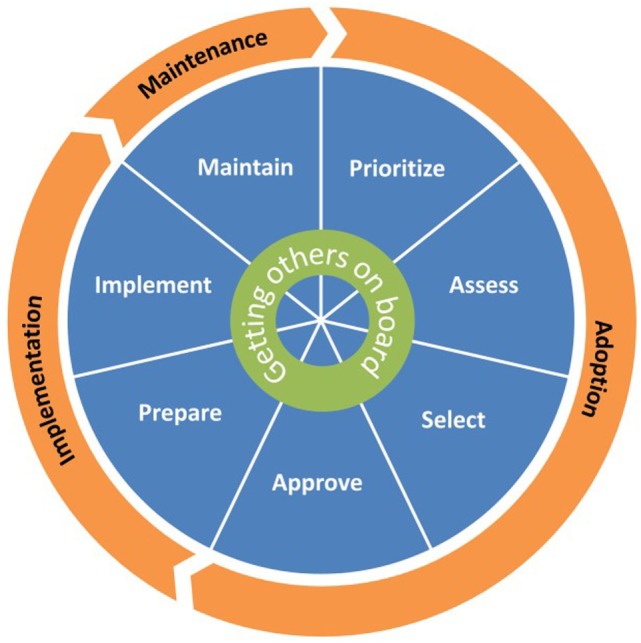
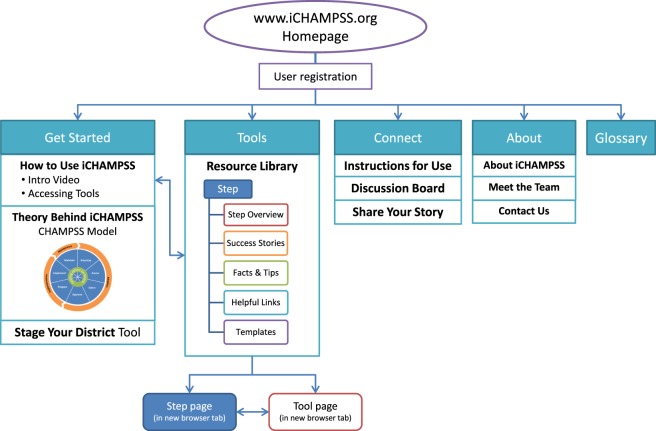
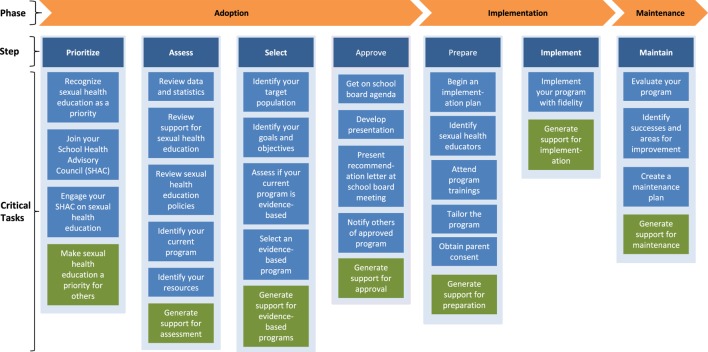
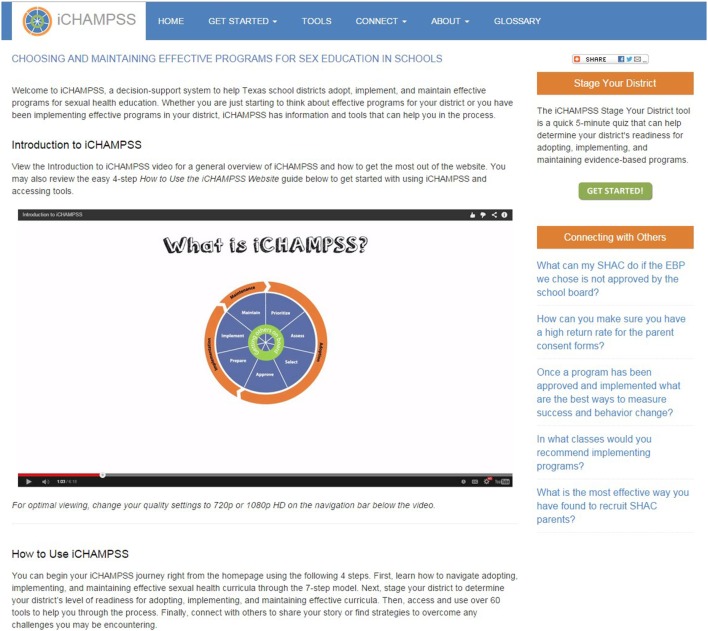
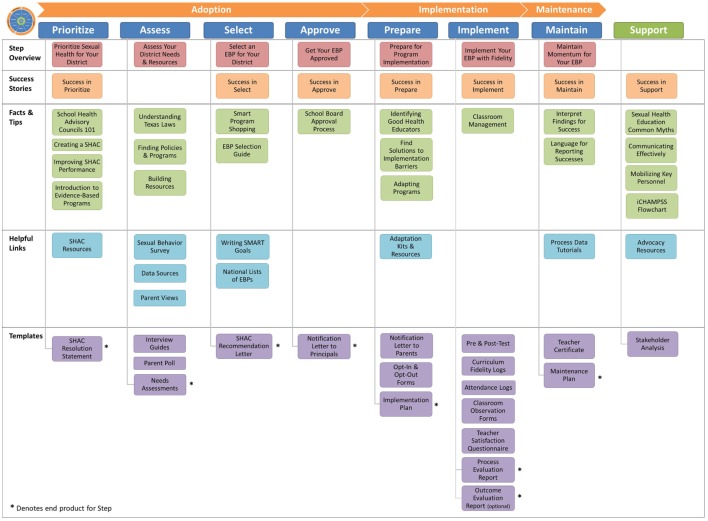
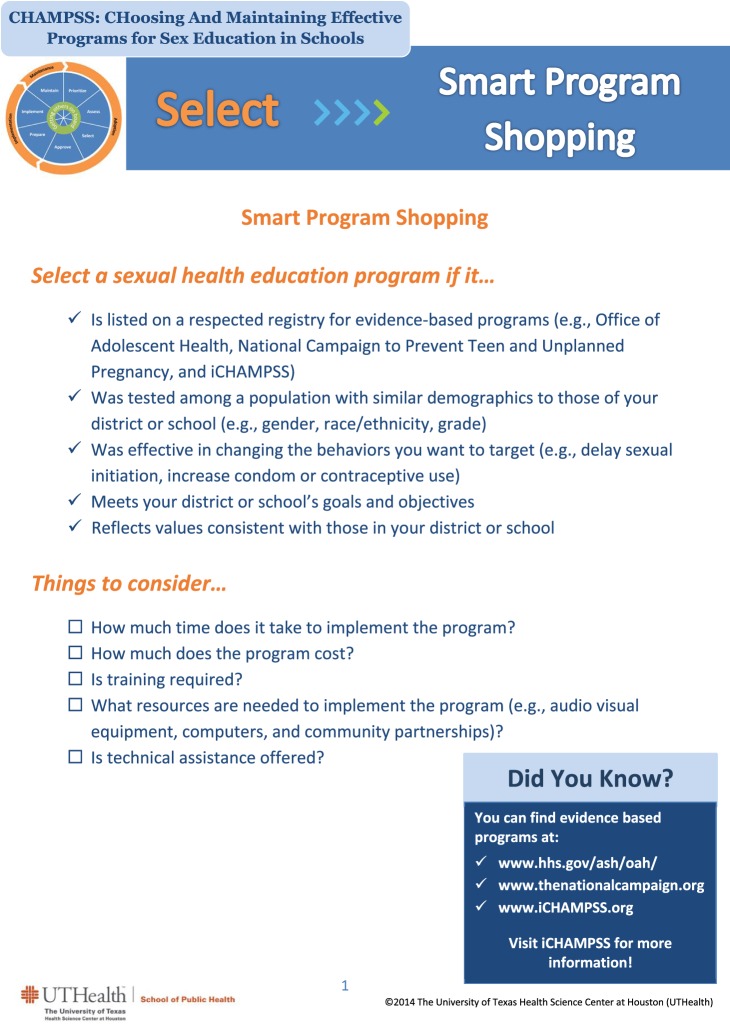
In Texas and across the United States, unintended pregnancy, HIV, and sexually transmitted infections (STIs) among adolescents remain serious public health issues. Sexual risk-taking behaviors, including early sexual initiation, contribute to these public health problems. Over 35 sexual health evidence-based programs (EBPs) have been shown to reduce sexual risk behaviors and/or prevent teen pregnancies or STIs. Because more than half of these EBPs are designed for schools, they could reach and impact a considerable number of adolescents if implemented in these settings. Most schools across the U.S. and in Texas, however, do not implement these programs. U.S. school districts face many barriers to the successful dissemination (i.e., adoption, implementation, and maintenance) of sexual health EBPs, including lack of knowledge about EBPs and where to find them, perceived lack of support from school administrators and parents, lack of guidance regarding the adoption process, competing priorities, and lack of specialized training on sexual health. Therefore, this paper describes how we used intervention mapping (Steps 3 and 4, in particular), a systematic design framework that uses theory, empirical evidence, and input from the community to develop oosing nd aintaining Effective rograms for ex Education in chools (), an online decision support system to help school districts adopt, implement, and maintain sexual health EBPs. Guided by this systematic intervention design approach, has the potential to increase dissemination of sexual health EBPs in school settings.
在得克萨斯州乃至美国全国,青少年意外怀孕、感染艾滋病毒和性传播感染(STIs)仍是严重的公共卫生问题。包括过早开始性行为在内的性冒险行为导致了这些公共卫生问题。超过35项基于证据的性健康项目(EBPs)已被证明可减少性冒险行为和/或预防青少年怀孕或性传播感染。由于这些基于证据的项目中一半以上是针对学校设计的,如果在这些环境中实施,它们可以覆盖并影响相当数量的青少年。然而,美国和得克萨斯州的大多数学校并未实施这些项目。美国学区在成功推广(即采用、实施和维持)性健康基于证据的项目方面面临许多障碍,包括对基于证据的项目及其获取途径缺乏了解、认为缺乏学校管理人员和家长的支持、缺乏关于采用过程的指导、相互竞争的优先事项以及缺乏性健康方面的专业培训。因此,本文描述了我们如何使用干预映射(特别是步骤3和4),这是一个系统的设计框架,利用理论、实证证据和社区意见来开发《选择并维持学校性教育有效项目》(CHOICES),这是一个在线决策支持系统,以帮助学区采用、实施和维持性健康基于证据的项目。在这种系统干预设计方法的指导下,CHOICES有可能增加性健康基于证据的项目在学校环境中的推广。