Department of Oral Medicine, Guanghua School of Stomatology, Guangdong Provincial Key Laboratory of Stomatology, Sun Yat‑Sen University, Guangzhou, Guangdong 510060, P.R. China.
Department of Oral and Maxillofacial Surgery, Affiliated Zhongshan Hospital, Sun Yat‑Sen University, Zhongshan, Guangdong 528403, P.R. China.
Mol Med Rep. 2017 Nov;16(5):5779-5786. doi: 10.3892/mmr.2017.7342. Epub 2017 Aug 23.
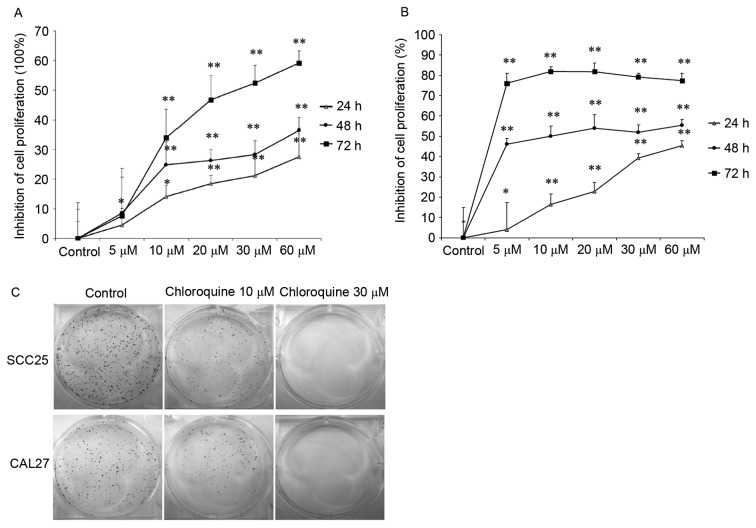
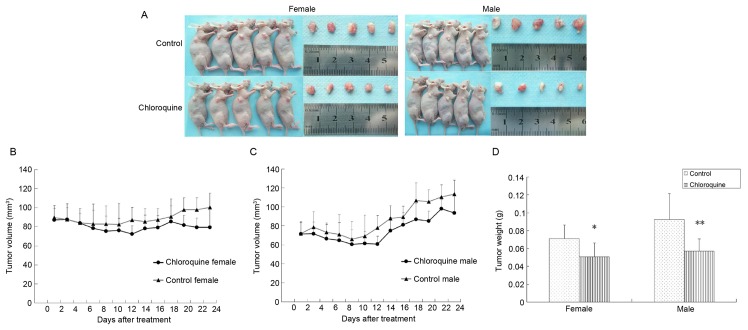
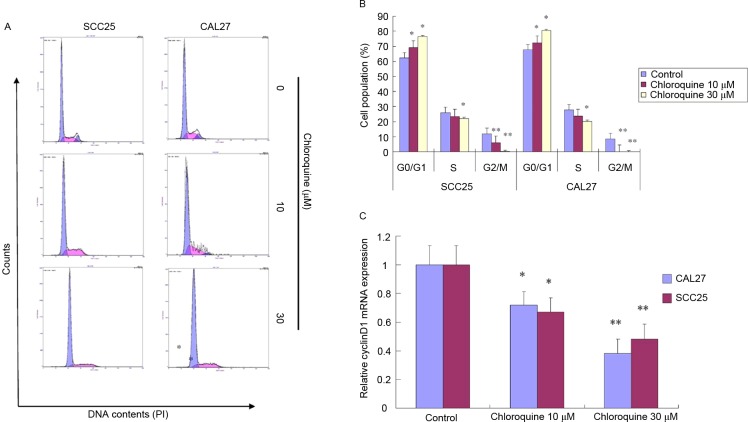
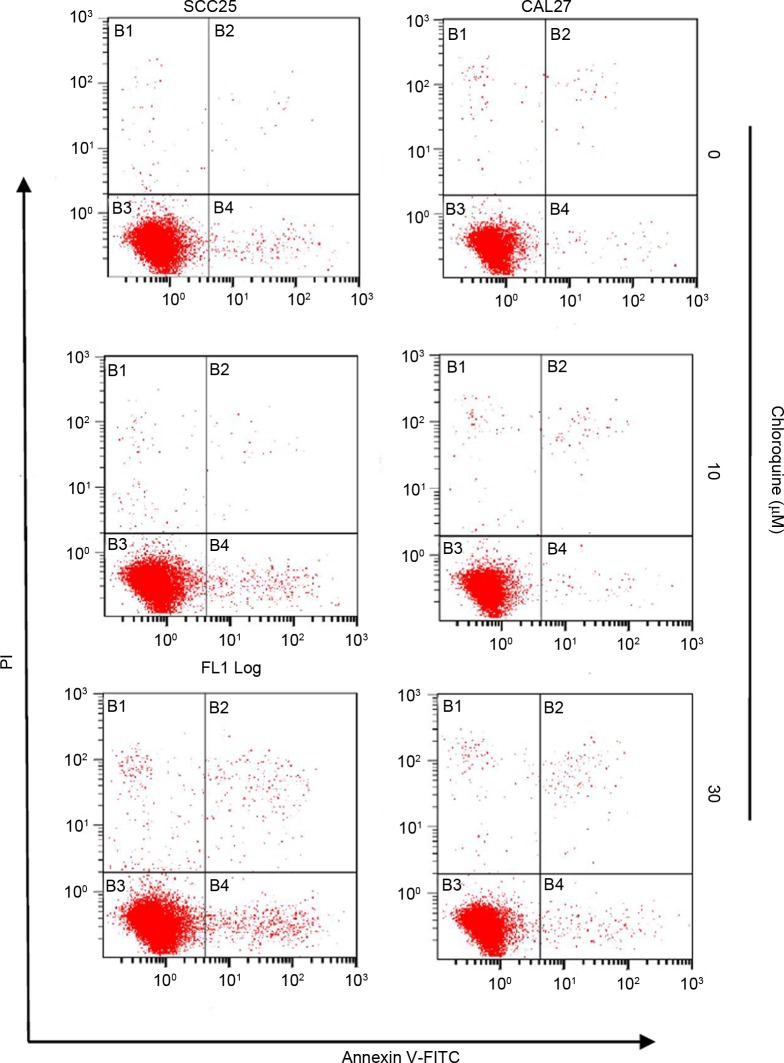
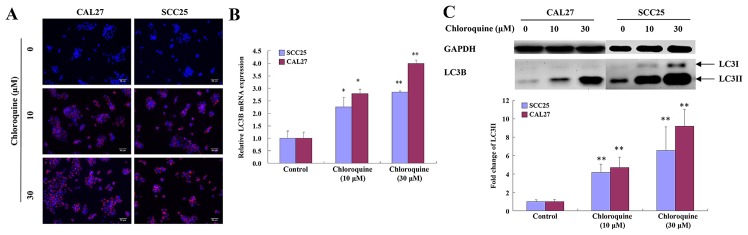
Chloroquine, which is a widely used antimalarial drug, has been reported to exert anticancer activity in some tumor types; however, its potential effects on oral squamous cell carcinoma (OSCC) remain unclear. The present study aimed to explore the effects and possible underlying mechanisms of chloroquine against OSCC. MTT and clonogenic assays were conducted to evaluate the effects of chloroquine on the human OSCC cell lines SCC25 and CAL27. Cell cycle progression and apoptosis were detected using flow cytometry. Autophagy was monitored using microtubule-associated protein 1A/1B‑light chain 3 as an autophagosomal marker. In order to determine the in vivo antitumor effects of chloroquine on OSCC, a CAL27 xenograft model was used. The results demonstrated that chloroquine markedly inhibited the proliferation and the colony‑forming ability of both OSCC cell lines in a dose‑ and time‑dependent manner in vitro. Chloroquine also disrupted the cell cycle, resulting in the cell cycle arrest of CAL27 and SCC25 cells at G0/G1 phase, via downregulation of cyclin D1. In addition, chloroquine inhibited autophagy, and induced autophagosome and autolysosome accumulation in the cytoplasm, thus interfering with degradation; however, OSCC apoptosis was barely affected by chloroquine. The results of the in vivo study demonstrated that chloroquine effectively inhibited OSCC tumor growth in the CAL27 xenograft model. In conclusion, the present study reported the in vitro and in vivo antitumor effects of chloroquine on OSCC, and the results indicated that chloroquine may be considered a potent therapeutic agent against human OSCC.
氯喹是一种广泛应用于抗疟疾的药物,据报道在一些肿瘤类型中具有抗癌活性;然而,其对口腔鳞状细胞癌(OSCC)的潜在影响尚不清楚。本研究旨在探讨氯喹对 OSCC 的作用及其可能的机制。MTT 和集落形成实验用于评估氯喹对人 OSCC 细胞系 SCC25 和 CAL27 的影响。通过流式细胞术检测细胞周期进展和细胞凋亡。使用微管相关蛋白 1A/1B-轻链 3 作为自噬体标记物来监测自噬。为了确定氯喹对 OSCC 的体内抗肿瘤作用,使用了 CAL27 异种移植模型。结果表明,氯喹在体外以剂量和时间依赖性方式显著抑制了两种 OSCC 细胞系的增殖和集落形成能力。氯喹还通过下调细胞周期蛋白 D1 破坏细胞周期,导致 CAL27 和 SCC25 细胞在 G0/G1 期的细胞周期停滞。此外,氯喹抑制自噬,并诱导自噬体和自溶酶体在细胞质中积累,从而干扰降解;然而,氯喹对 OSCC 凋亡几乎没有影响。体内研究的结果表明,氯喹有效地抑制了 CAL27 异种移植模型中的 OSCC 肿瘤生长。总之,本研究报道了氯喹对 OSCC 的体外和体内抗肿瘤作用,结果表明氯喹可能被认为是一种针对人类 OSCC 的有效治疗剂。