Graduate School of Engineering and Science, Shibaura Institute of Technology, 307 Fukasaku, Minuma-ku, Saitama-shi, Saitama, 337-8570, Japan.
Research Fellow of Japan Society for the Promotion of Science, 5-3-1 Kojimachi, Chiyoda-ku, Tokyo, 102-0083, Japan.
Eur J Appl Physiol. 2017 Oct;117(10):2109-2118. doi: 10.1007/s00421-017-3702-1. Epub 2017 Aug 28.
Unique neuromuscular activation of the quadriceps femoris is observed during multi-joint leg extensions: lower activation of the biarticular rectus femoris (RF) than monoarticular vasti muscles. As one of the potential mechanisms for the lower RF activation, Ia afferent-mediated inhibitory connections between synergistic muscles and/or between agonist and antagonist muscles have been proposed. If this is the major factor, it is hypothesized that RF activation during multi-joint leg extensions increases after prolonged vibration to synergistic and/or antagonist muscles. This study tested the hypothesis.
Fourteen men exerted maximal voluntary isometric knee extension and flexion and performed submaximal parallel squat before and after one of the following three interventions on different days: prolonged vibration to the vastus lateralis (VL, synergist) or biceps femoris (BF, antagonist), or quiet sitting for 30 min. Muscle activations of the quadriceps femoris and hamstrings were determined using surface electromyography.
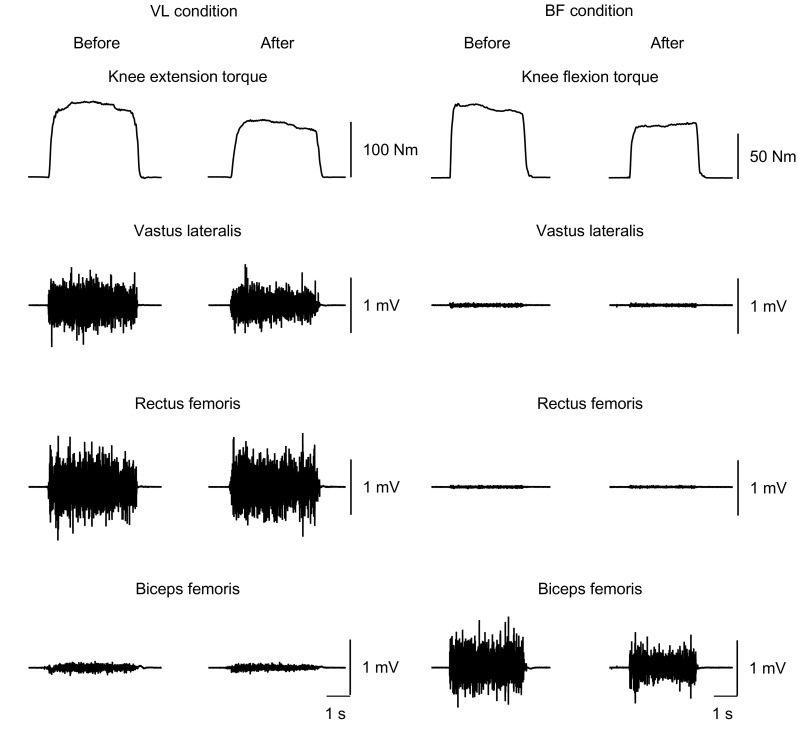
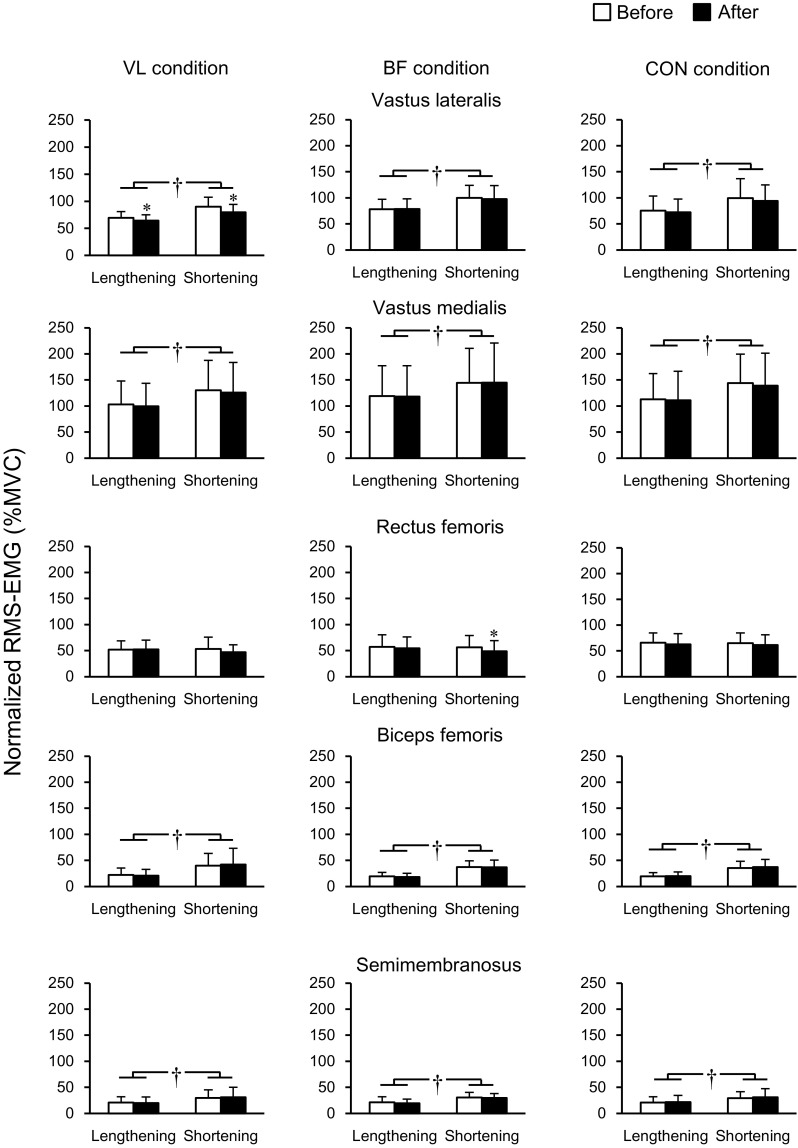
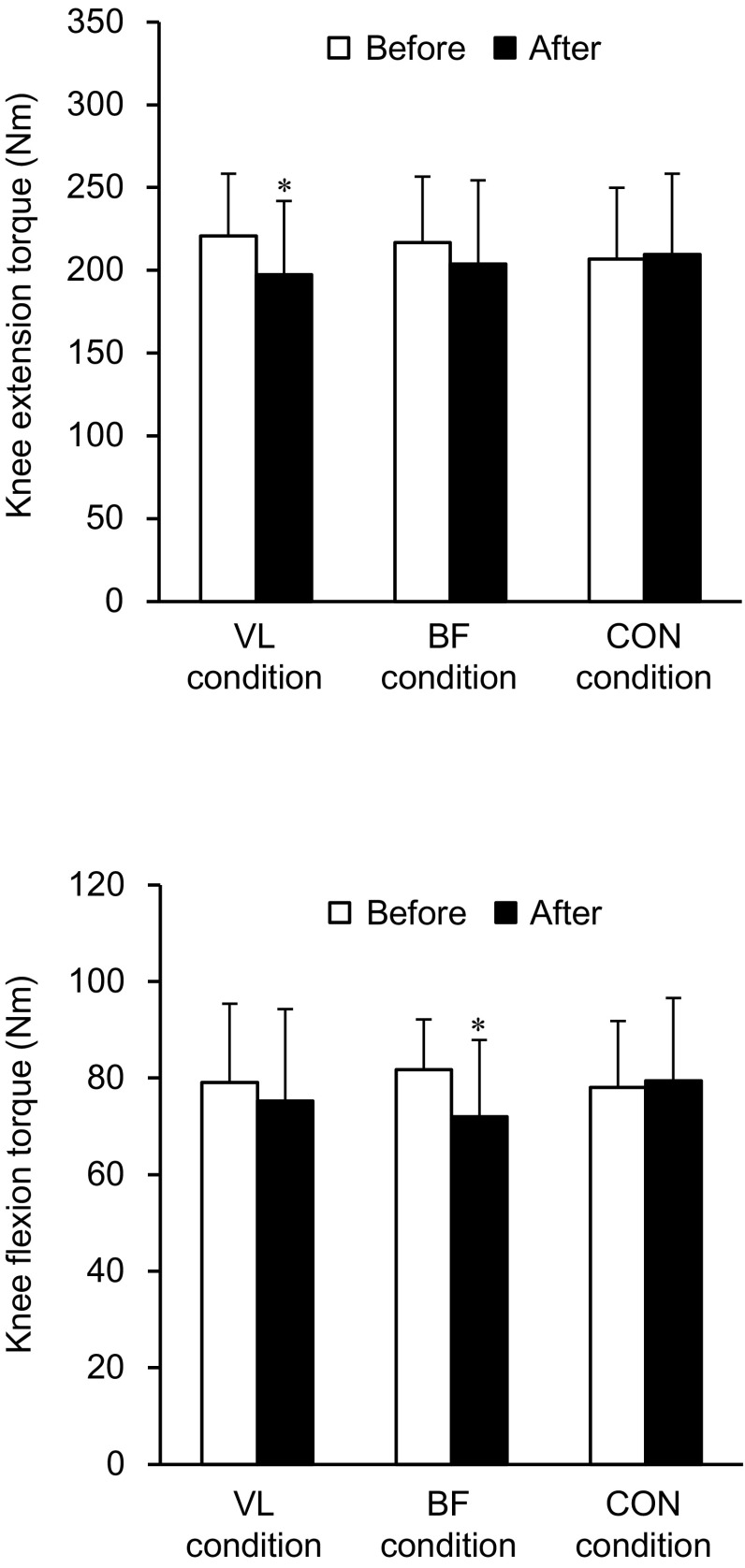
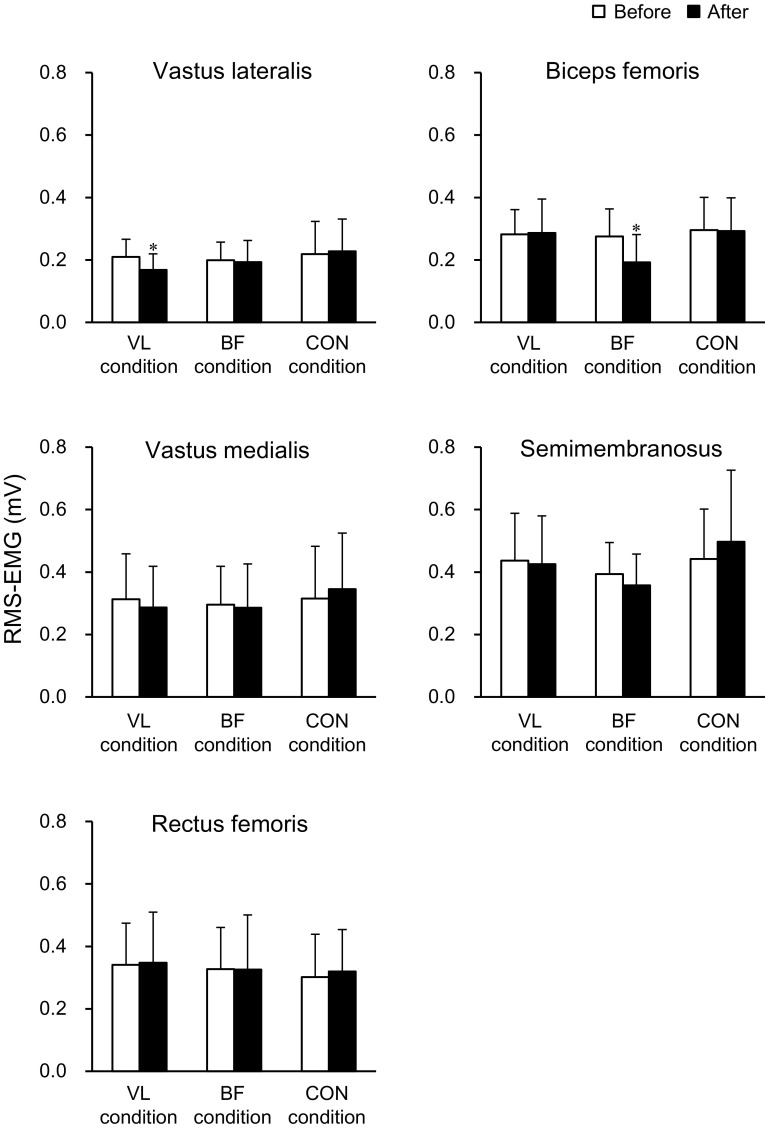
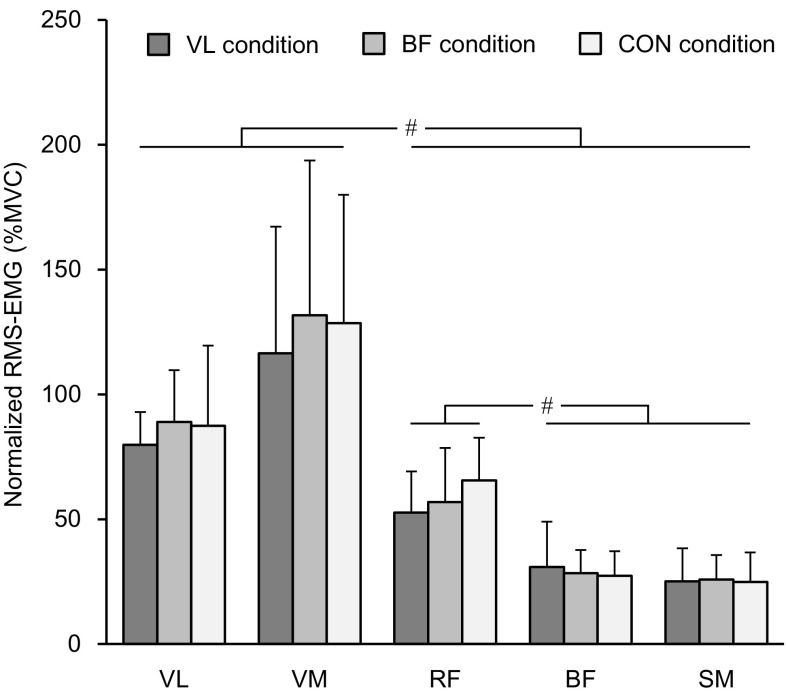
After prolonged VL or BF vibration, VL (21%) or BF (30%) activation during isometric contractions significantly decreased, which was significantly correlated with the reduction of the maximal isometric knee extension or flexion strength. The magnitude of RF activation during squat was significantly lower than those of VL and the vastus medialis. No significant increase in RF activation during squat was observed after vibrations.
The findings suggest that lower biarticular RF activation compared with the monoarticular vasti muscles during multi-joint exercises does not result from the modulation by peripheral inhibitory input from Ia afferents originating from synergist and/or antagonist muscles.
在多关节腿部伸展运动中观察到股四头肌的独特神经肌肉激活:双关节股直肌(RF)的激活低于单关节股外侧肌和股中间肌。作为协同肌和/或原动肌与拮抗肌之间 Ia 传入介导的抑制性连接的潜在机制之一,已经提出了这种可能性。如果这是主要因素,那么可以假设在多关节腿部伸展运动中,RF 的激活会在对协同肌和/或拮抗肌进行长时间振动后增加。本研究检验了这一假设。
14 名男性在不同的日子里分别接受以下三种干预措施之一,在接受干预之前和之后进行了最大自主等长膝关节伸展和弯曲以及次最大强度的平行深蹲:对股外侧肌(VL,协同肌)或股二头肌(BF,拮抗肌)进行长时间振动,或安静地坐 30 分钟。使用表面肌电图确定股四头肌和腘绳肌的肌肉激活。
在长时间振动 VL 或 BF 后,VL(21%)或 BF(30%)在等长收缩期间的激活显著降低,与最大等长膝关节伸展或弯曲强度的降低显著相关。在深蹲期间,RF 的激活程度明显低于 VL 和股中间肌。在振动后,深蹲期间 RF 的激活没有明显增加。
这些发现表明,与多关节运动中的单关节股外侧肌和股中间肌相比,RF 的双关节激活较低,这并不是源自来自协同肌和/或拮抗肌的 Ia 传入纤维的外周抑制性输入的调制。