Department of Biochemistry, University of Oxford, Oxford, United Kingdom.
Elife. 2017 Aug 31;6:e30127. doi: 10.7554/eLife.30127.
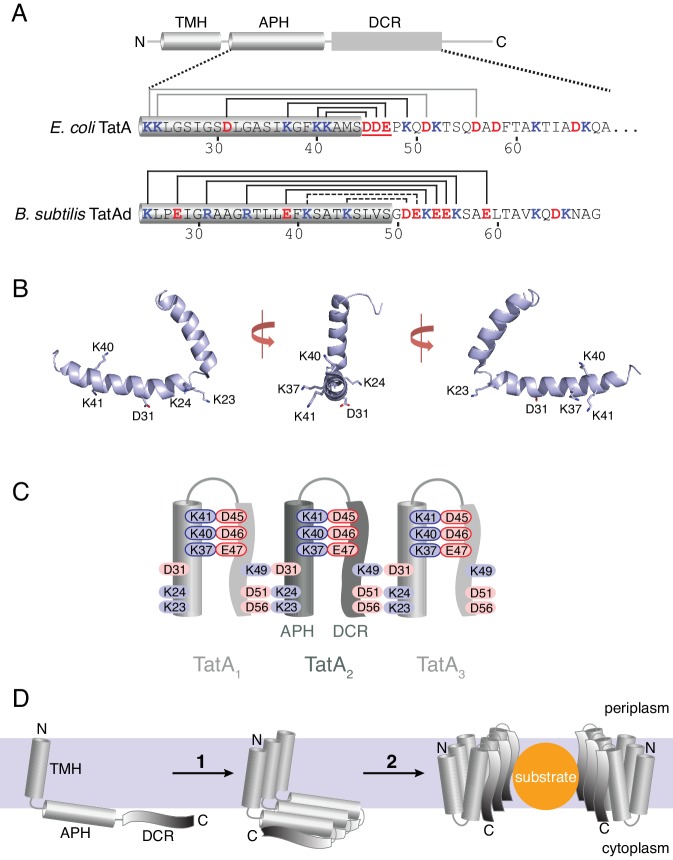
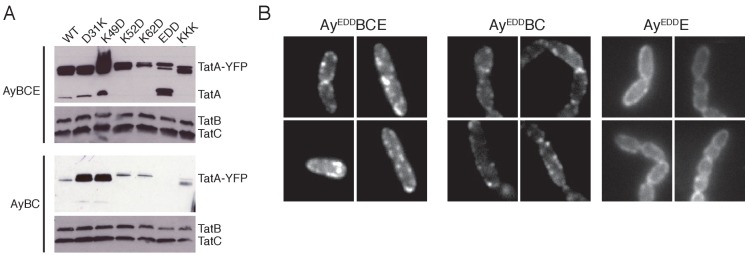
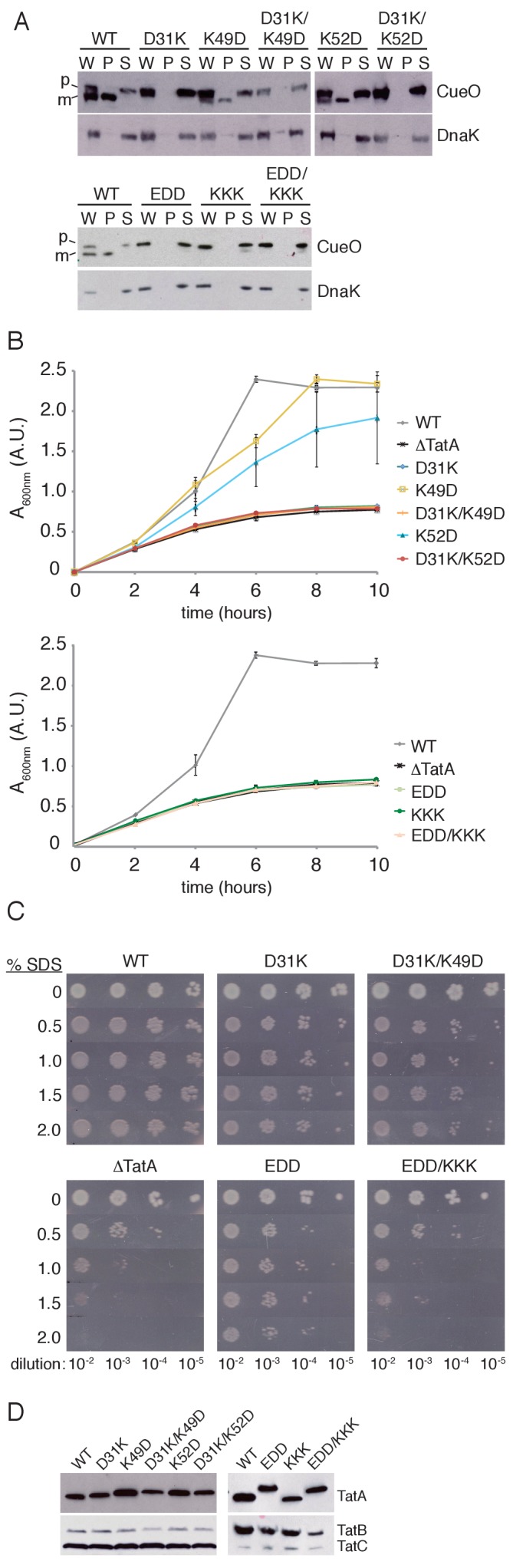
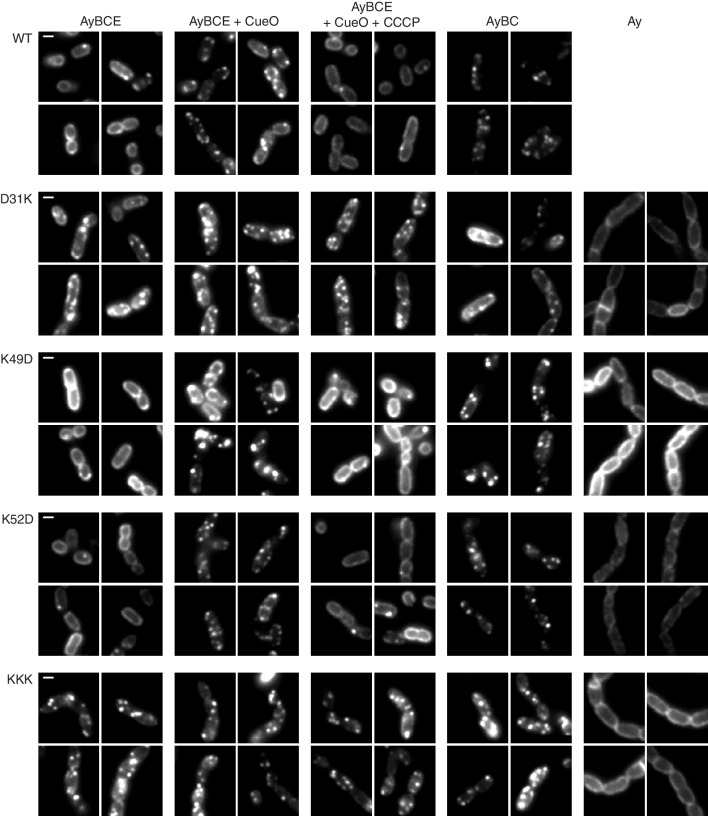
The twin-arginine translocase (Tat) transports folded proteins across the bacterial cytoplasmic membrane and the plant thylakoid membrane. The Tat translocation site is formed by substrate-triggered oligomerization of the protein TatA. Walther and co-workers have proposed a structural model for the TatA oligomer in which TatA monomers self-assemble using electrostatic 'charge zippers' ( (2013) 15945). This model was supported by in vitro analysis of the oligomeric state of TatA variants containing charge-inverting substitutions. Here we have used live cell assays of TatA assembly and function in to re-assess the roles of the charged residues of TatA. Our results do not support the charge zipper model. Instead, we observe that substitutions of charged residues located in the TatA amphipathic helix lock TatA in an assembled state, suggesting that these charged residues play a critical role in the protein translocation step that follows TatA assembly.
双精氨酸转运蛋白(Tat)将折叠的蛋白质穿过细菌细胞质膜和植物类囊体膜进行运输。Tat 转运位点是由底物触发的 TatA 蛋白寡聚化形成的。Walther 及其同事提出了 TatA 寡聚体的结构模型,其中 TatA 单体使用静电“电荷拉链”((2013) 15945)进行自组装。该模型得到了含有电荷反转取代的 TatA 变体的体外寡聚状态分析的支持。在这里,我们使用 TatA 组装和功能的活细胞测定在 中来重新评估 TatA 的带电残基的作用。我们的结果不支持电荷拉链模型。相反,我们观察到位于 TatA 两亲性螺旋中的带电残基的取代将 TatA 锁定在组装状态,表明这些带电残基在 TatA 组装后紧随的蛋白质转运步骤中起着关键作用。