Emmert Alexander, Straube Carmen, Buentzel Judith, Roever Christian
Department of Thoracic and Cardiovascular Surgery Department of Haematology and Oncology Department of Medical Statistics, University Medical Center, Georg-August University, Göttingen, Germany.
Medicine (Baltimore). 2017 Sep;96(35):e7633. doi: 10.1097/MD.0000000000007633.
Robotic video-assisted surgery (RVATS) has been reported to be equally effective to video-assisted surgery (VATS) in lung resection (pneumonectomy, lobectomy, and segmentectomy). Operation time, mortality, drainage duration, and length of hospitalization of patients undergoing either RVATS or VATS are compared in this meta-analysis.
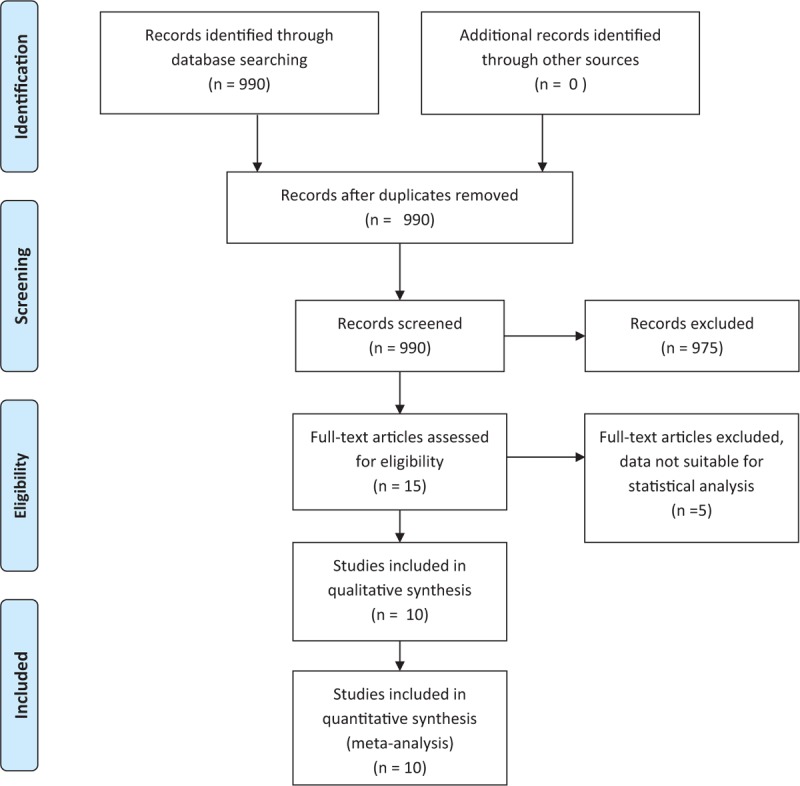
A systematic research for articles meeting our inclusion criteria was performed using the PubMed database. Articles published from January 2011 to January 2016 were included. We used results of reported mortality, operation time, drainage duration, and hospitalization length for performing this meta-analysis. Mean difference and logarithmic odds ratio were used as summary statistics.
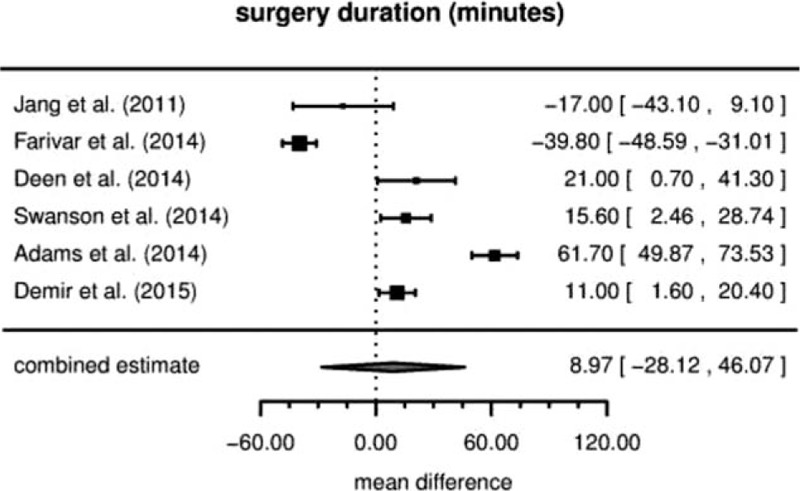
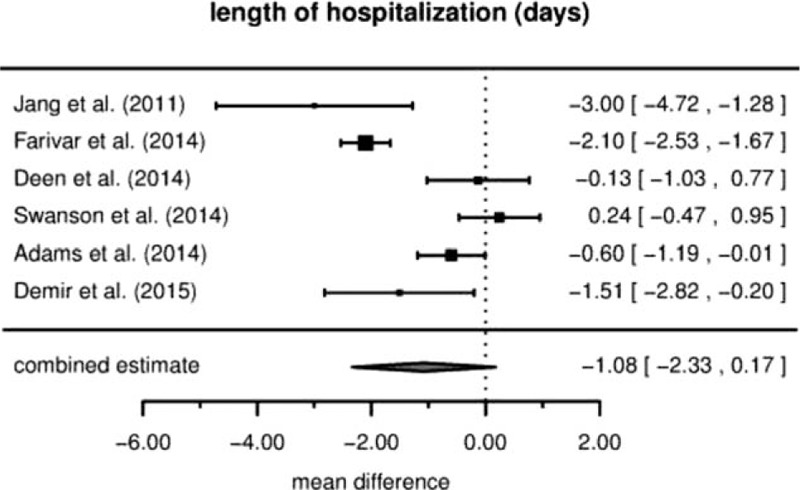
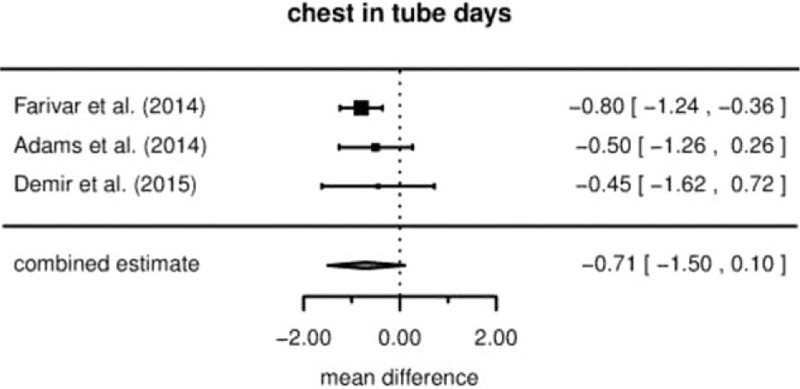
Ten studies eligible were included into this analysis (5 studies for operation time, 3 studies for chest in tube days, 4 studies for length of hospitalization, and 6 studies for mortality). We were able to include 3375 subjects for RVATS and 58,683 subjects for VATS. Patients were mainly treated for lung cancer, metastatic foci, and benign lesions. We could not detect any difference between operation time; however, we found 2 trends showing that drainage duration and length of hospitalization are shorter for following RVATS than for following VATS. Mortality also is lower in patients undergoing RVATS.
Therefore, we conclude that RVATS is a suitable minimal-invasive procedure for lung resection and suitable alternative to VATS. RVATS is as time-efficient as VATS and shows a trend to reduced hospital stay and drainage duration. More and better studies are required to provide reliable, unbiased evidence regarding the relative benefits of both methods.
据报道,在肺切除手术(肺切除术、肺叶切除术和肺段切除术)中,机器人电视辅助手术(RVATS)与电视辅助手术(VATS)同样有效。本荟萃分析比较了接受RVATS或VATS手术患者的手术时间、死亡率、引流持续时间和住院时间。
使用PubMed数据库对符合纳入标准的文章进行系统检索。纳入2011年1月至2016年1月发表的文章。我们使用报道的死亡率、手术时间、引流持续时间和住院时间的结果进行这项荟萃分析。平均差和对数比值比用作汇总统计量。
本分析纳入了10项符合条件的研究(5项关于手术时间,3项关于胸腔引流天数,4项关于住院时间,6项关于死亡率)。我们纳入了3375例接受RVATS手术的患者和58683例接受VATS手术的患者。患者主要接受肺癌、转移灶和良性病变的治疗。我们未发现手术时间有任何差异;然而,我们发现了2种趋势,即接受RVATS手术后的引流持续时间和住院时间比接受VATS手术后的短。接受RVATS手术的患者死亡率也较低。
因此,我们得出结论,RVATS是一种适合肺切除的微创手术,是VATS的合适替代方法。RVATS与VATS一样具有时间效率,且有缩短住院时间和引流持续时间的趋势。需要更多更好的研究来提供关于这两种方法相对益处的可靠、无偏倚的证据。